Debtor: Definition, Types, Rights, and Responsibilities
Complete guide to debtors: Understanding obligations, types, and legal protections in lending relationships.
Understanding Debtors: A Comprehensive Guide
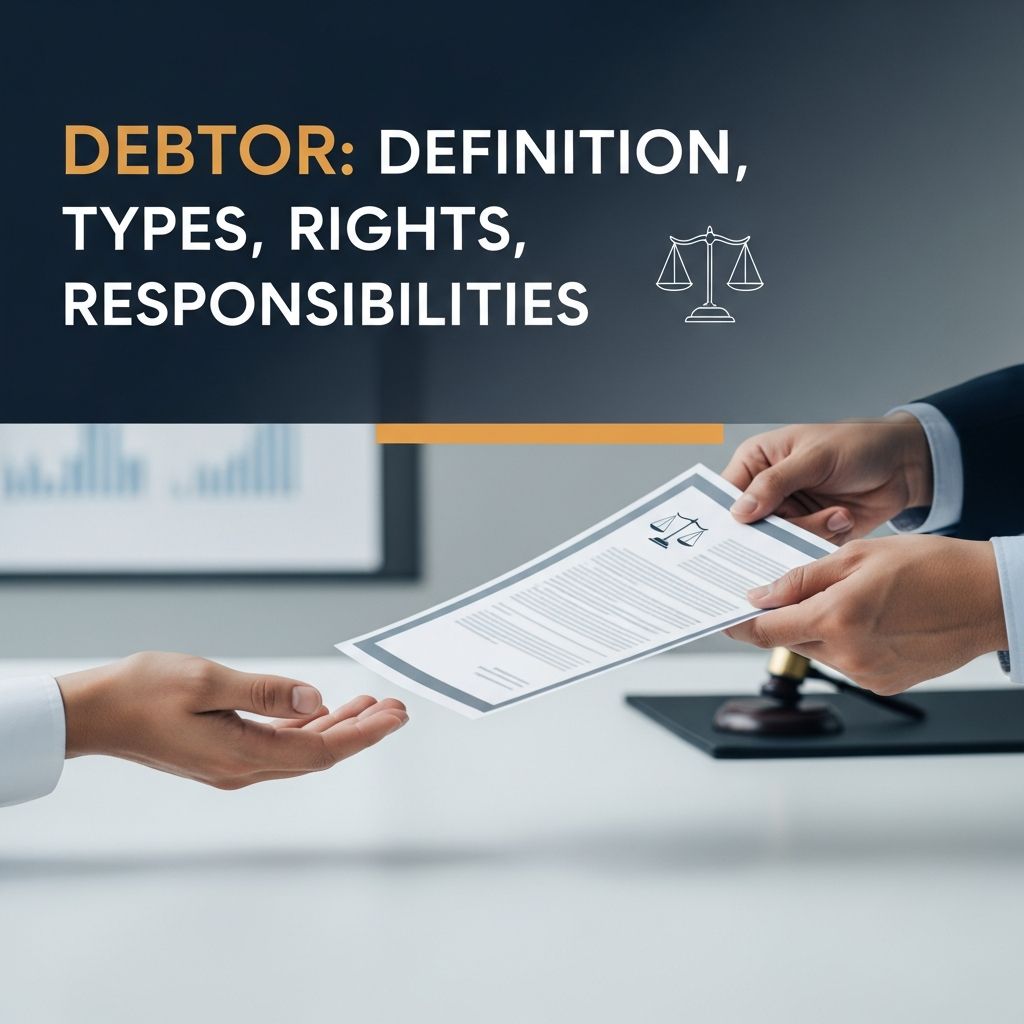
A debtor is a legal entity—whether an individual, business, government, or organization—that owes money or has a financial obligation to another party known as a creditor. The debtor-creditor relationship forms the foundation of modern commerce and finance, enabling transactions based on credit and trust. When you borrow money from a bank, you become the debtor, and the bank becomes the creditor. This fundamental concept shapes how businesses operate, how individuals manage personal finances, and how economies function globally.
The term “debtor” derives from the Latin word “debere,” meaning “to owe.” Understanding the role and responsibilities of a debtor is essential for anyone involved in borrowing, lending, or business operations. Unlike popular misconception, being a debtor is not inherently illegal or problematic—it is a normal part of financial transactions and economic activity. However, failing to meet debt obligations carries legal and financial consequences.
Definition and Basic Concepts
A debtor represents one side of a creditor-debtor relationship where a legal obligation exists to repay borrowed funds or fulfill financial commitments. The counterparty, the creditor, is the entity that has extended credit or lent money. This relationship can exist between individuals, between individuals and businesses, between businesses, or between any combination of legal entities.
When a debtor fails to meet payment obligations outlined in a debt agreement, the debtor has technically broken a contract or violated an agreement with the creditor. However, it is important to note that failure to pay a debt is not a crime in most modern legal systems. Instead, it creates a civil liability, allowing creditors to pursue legal remedies through the courts, such as garnishing wages, placing liens on property, or obtaining judgment against the debtor.
In accounting and business contexts, debtors appear on balance sheets as current assets. Trade receivables or accounts receivable represent amounts owed by customers to a business. These are classified as current assets because they are expected to convert to cash within one year, representing money flowing into the company.
Historical Context of Debtor-Creditor Relationships
The concept of debtor-creditor relationships predates modern currency systems. Anthropological research suggests that credit arrangements existed before the implementation of coinage, with trading beginning through promises to pay later for goods already received. This indicates that debtors and creditors have existed as long as commerce itself.
The formal term “debtor” gained prominence with the development of double-entry bookkeeping in the 1500s, particularly as accounting practices became standardized in business. This accounting method helped merchants and businesses maintain financial balance by tracking both sides of transactions—what was owed and what was owned. The evolution of formal legal systems surrounding debtor-creditor relationships followed, establishing frameworks for enforcement and protection of both parties’ interests.
Types of Debtors and Debt Obligations
Debtors can take many forms depending on the nature of the debt obligation. The variety of debt types reflects the complexity of modern financial systems and commercial relationships.
Common Types of Debt Include:
- Bank account debt and overdraft debt
- Credit card debt and payday loan debt
- Car loan debt and mortgage debt
- Personal loan debt and business loan debt
- Student loan debt and education financing
- Utility bill debts and phone debts
- Medical debt and healthcare obligations
- Tax debt and legal court debt
- Trade debtor obligations and supplier debt
According to data from major financial institutions, household debt in developed economies represents substantial amounts—student loan debt alone has reached unprecedented levels globally. Trade debtors, a term commonly used in accounting, represent businesses or individuals who have purchased goods or services on credit and owe payment to suppliers.
Debtor Rights and Legal Protections
Modern legal systems recognize that debtors require protection from harassment and unfair collection practices. In the United Kingdom, for example, the Administration of Justice Act 1970 protects debtors from harassment intended to coerce debt payment. Similar protections exist in many other jurisdictions, establishing that debtors have fundamental rights despite owing money.
Debtors generally have the right to:
- Know the exact amount owed and terms of repayment
- Receive clear documentation of debt obligations
- Request verification of debt from creditors
- Dispute incorrect charges or unauthorized debts
- Protection from harassment, threats, or illegal collection tactics
- File for bankruptcy protection in certain circumstances
- Negotiate payment plans or debt restructuring
- Receive fair treatment and due process in legal proceedings
Debtor Responsibilities and Obligations
While debtors have rights, they also carry significant responsibilities. The primary obligation of a debtor is to repay the debt according to the terms established in the debt agreement. This includes paying the agreed-upon amount on or before the scheduled due date.
Key debtor responsibilities include:
- Paying the full amount owed as specified in the contract
- Making payments by agreed-upon deadlines
- Paying any interest or fees as outlined in the debt agreement
- Maintaining communication with creditors regarding financial difficulties
- Providing accurate information when applying for credit
- Honoring the terms and conditions of the debt agreement
- Notifying creditors of address changes or contact information updates
If a debtor violates the terms of a debt agreement—such as missing payments or failing to meet contractual obligations—the creditor may pursue legal action, damage the debtor’s credit rating, or impose additional penalties and interest charges.
Default and Its Consequences
Default occurs when a debtor fails to meet legal obligations outlined in a debt contract. This might involve missing scheduled payments, violating specific covenants in the agreement, or failing to maintain required insurance or collateral. Default can apply to all types of debt obligations, including bonds, mortgages, loans, and promissory notes.
Default may occur for various reasons:
- The debtor is unwilling to pay the debt
- The debtor lacks sufficient funds to make payments
- The debtor faces unexpected financial hardship
- The debtor disputes the validity of the debt
- The debtor cannot locate or contact the creditor
When a debtor defaults, creditors typically initiate collection efforts, which may include sending collection notices, reporting the default to credit bureaus, pursuing legal action, or hiring collection agencies. Depending on the debt type and jurisdiction, creditors may garnish wages, place liens on property, or freeze bank accounts to recover amounts owed.
Insolvency and Bankruptcy
When debt obligations become so substantial that the debtor cannot realistically repay them, the debtor faces insolvency or bankruptcy. Insolvency occurs when a debtor’s liabilities exceed assets, meaning the debtor lacks sufficient resources to pay all obligations.
Bankruptcy represents a formal legal process that allows debtors to address overwhelming debt. Different bankruptcy chapters or structures exist depending on jurisdiction—some allow individuals to reorganize debts and create repayment plans, while others involve liquidating assets to pay creditors. In the United Kingdom and historically in certain U.S. states until the mid-19th century, debtors could be imprisoned in debtor’s prisons, a practice largely eliminated in modern legal systems.
An Individual Voluntary Arrangement (IVA) provides an alternative to bankruptcy in some jurisdictions. An IVA is a legally binding arrangement where a debtor reaches a compromise with creditors, typically offering greater repayment than would occur through bankruptcy, often through income contributions over a designated period.
Debtor-Creditor Relationship in Business
In business contexts, the debtor-creditor relationship operates differently than in personal finance. Companies that purchase goods or services on credit become debtors to their suppliers (trade creditors). The management of these relationships significantly impacts cash flow and working capital.
Businesses typically:
- Establish credit policies determining credit periods allowed to debtors
- Check creditworthiness and financial status before extending credit
- Charge interest on late payments to incentivize timely settlement
- Maintain time lags between receiving payments from debtors and making payments to creditors
- Track debtor accounts through subsidiary ledgers and control accounts
- Offer discounts for early payment to encourage faster cash inflow
On a company’s balance sheet, trade debtors appear as current assets under “accounts receivable” or “trade receivables,” while creditors appear as current liabilities. This distinction helps investors and analysts understand a company’s liquidity and short-term financial obligations.
Types of Creditors and Priority
Not all creditors hold equal standing when a debtor defaults or faces insolvency. Different creditor types have different claims to repayment:
| Creditor Type | Characteristics | Repayment Priority |
|---|---|---|
| Secured Creditors | Debt backed by pledged assets or collateral | Highest priority |
| Preferential Creditors | Tax authorities, employees, certain government claims | High priority |
| Unsecured Creditors | Debt with no asset backing; general creditors | Lower priority |
| Trade Creditors | Suppliers owed for goods or services | Varies based on agreement |
Debt Securities and Financial Instruments
Debt can take the form of securities—financial instruments representing borrowed money with fixed amounts, maturity dates, and specific interest rates. When entities borrow from governments or other organizations, they may issue debt securities, making the issuer a debtor to security holders.
Common debt securities include:
- Corporate bonds issued by companies
- Government bonds issued by national governments
- Municipal bonds issued by local governments
- Certificates of deposit (CDs)
- Treasury securities and bills
- Collateralized mortgage obligations (CMOs)
- Collateralized debt obligations (CDOs)
These instruments allow debtors to access capital markets and borrowers to invest in debt securities, creating sophisticated financial relationships beyond traditional borrower-lender arrangements.
Frequently Asked Questions
Q: Is being a debtor illegal?
A: No, being a debtor is not illegal. Owing money is a normal part of financial transactions. However, failing to pay debts when legally obligated to do so can result in civil legal action, not criminal charges in most jurisdictions.
Q: What happens if a debtor cannot pay?
A: If a debtor cannot pay, they may face collection actions, credit damage, wage garnishment, asset liens, or bankruptcy. Many jurisdictions offer debt relief options like restructuring plans or bankruptcy protection.
Q: Can debtors choose which debts to pay first?
A: Generally, yes. Except in bankruptcy situations, debtors can prioritize debt payments as they choose. However, creditors may pursue legal action if minimum payments or contractual obligations are not met.
Q: What is the difference between a debtor and a borrower?
A: All borrowers are debtors, but not all debtors are borrowers. A borrower specifically takes out a loan, while a debtor is anyone owing money, including those who purchased goods on credit or owe taxes.
Q: Can debtor information be verified?
A: Yes, creditors maintain records of debtor accounts, and credit bureaus track debtor payment histories. Debtors can request verification of debt and access their credit reports.
References
- Debtor — Wikipedia. 2024. https://en.wikipedia.org/wiki/Debtor
- Debtor and Creditor — EBSCO Research Starters. 2024. https://www.ebsco.com/research-starters/social-sciences-and-humanities/debtor-and-creditor
Similar Articles








Read full bio of Sneha Tete