Debt-to-Income Ratio for Mortgages Explained
Master your DTI ratio: Understanding how lenders evaluate your mortgage approval odds.

What Is a Debt-to-Income Ratio?
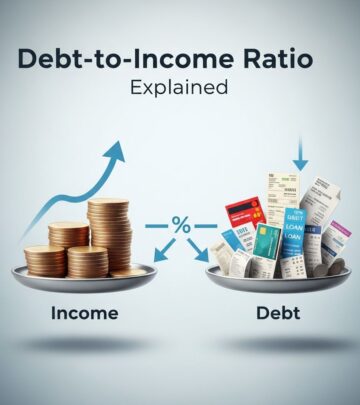
Your debt-to-income ratio (DTI) represents the percentage of your gross, or pretax, monthly income that you spend on recurring debt payments. This critical financial metric helps lenders determine whether you have the financial capacity to manage a mortgage payment alongside your existing obligations. Your DTI includes payments toward mortgages, rent, child support, credit card balances, auto loans, student loans, and other outstanding debts.
The income component of your DTI calculation includes all money you earn from your primary job, side employment, rental property income, Social Security payments, and other income sources. However, lenders typically use only the income that is stable and documented when calculating your ratio. Understanding your DTI is essential for prospective homebuyers because it directly influences whether you’ll qualify for a mortgage and what interest rates you may receive.
Why Debt-to-Income Ratio Matters in Mortgages
Lenders use your DTI as a key indicator of your creditworthiness and ability to repay borrowed funds. When you apply for a mortgage, lenders assess your DTI to evaluate whether you can handle the anticipated mortgage payment while still keeping up with your other monthly financial obligations. A lower DTI signals to lenders that you have manageable debt levels and sufficient income to cover new loan payments, making you a lower-risk borrower.
Your DTI matters because it affects three major aspects of your mortgage experience: approval odds, interest rate pricing, and loan terms. Borrowers with lower DTI ratios are more likely to receive mortgage approval, secure better interest rates, and access more favorable loan terms. Conversely, a high DTI ratio may result in mortgage denial or approval only at higher interest rates to compensate for perceived risk.
Types of DTI Ratios
Lenders typically focus on two distinct DTI calculations, each serving a different purpose in the mortgage approval process.
Front-End Ratio (Housing Ratio)
The front-end ratio, also called the housing ratio or mortgage-to-income ratio, shows what percentage of your gross monthly income would go toward housing expenses if you were approved for your mortgage. This ratio includes your monthly mortgage payment (principal and interest), property taxes, homeowners insurance premiums, mortgage insurance, and homeowners association fees if applicable. Most lenders prefer your front-end ratio to remain below 28 percent of your gross monthly income, though this can vary by loan type.
Back-End Ratio (Total Debt Ratio)
The back-end ratio demonstrates how much of your gross monthly income is required to pay all your monthly debt obligations. This comprehensive calculation includes your proposed mortgage payment plus all other recurring debt payments such as credit cards, auto loans, student loans, and personal loans. Living expenses like groceries, utilities, and entertainment are not included in this calculation. The back-end ratio provides a more complete picture of your overall financial obligations.
How to Calculate Your Debt-to-Income Ratio
Calculating your DTI is straightforward and requires only basic arithmetic. Follow these steps to determine your personal debt-to-income ratio:
Step 1: List All Monthly Debt Payments
Compile a comprehensive list of all recurring monthly debt obligations. Include mortgage or rent payments, auto loan payments, student loan payments, credit card minimum payments (use only the minimum, not your full balance), personal loan payments, child support, alimony, and any other long-term debt payments. Total these amounts to get your complete monthly debt payment figure.
Step 2: Calculate Your Gross Monthly Income
Determine your gross monthly income by taking your annual pretax income and dividing it by twelve. Include income from your primary employment, side businesses, rental properties, investments, Social Security, disability benefits, and any other stable income sources. Do not subtract taxes, retirement contributions, or health insurance premiums from this calculation.
Step 3: Divide Debt by Income
Divide your total monthly debt payments by your gross monthly income. For example, if your monthly debt payments total $2,500 and your gross monthly income is $7,000, you would divide $2,500 by $7,000, which equals 0.357.
Step 4: Convert to Percentage
Multiply your result by 100 to convert the decimal to a percentage. In the example above, 0.357 multiplied by 100 equals 35.7 percent DTI.
Calculation Example
Consider a practical example: You have a $2,000 monthly mortgage payment, a $300 monthly auto loan payment, and a $700 monthly credit card minimum payment. Your total monthly debt equals $3,000. If your gross monthly income is $7,000, your DTI would be calculated as follows: ($3,000 ÷ $7,000) × 100 = 42.8 percent.
Understanding DTI Limits and Preferences
Different lenders and loan programs maintain varying DTI requirements and preferences. Understanding these thresholds helps you gauge your mortgage approval likelihood and identify which loan programs might be most accessible to your financial situation.
Conventional Loan Requirements
For conventional mortgages backed by Fannie Mae or Freddie Mac, lenders typically prefer a maximum back-end DTI ratio of 36 percent of your stable monthly income. However, many conventional lenders will approve borrowers with DTI ratios as high as 45 percent, particularly when other compensating factors are present, such as a strong credit score, significant savings, or a large down payment. The specific threshold varies by lender and individual circumstances.
FHA Loan Requirements
Federal Housing Administration (FHA) loans, which offer financing assistance to homebuyers with lower credit scores or smaller down payments, generally require a DTI of 43 percent or less for standard approval. In extenuating circumstances, such as when a buyer provides a large down payment or demonstrates significant income, the DTI requirement may be waived or increased slightly. FHA loans are designed to be more flexible than conventional mortgages, making homeownership more accessible to borrowers with moderate debt levels.
USDA and VA Loan Requirements
USDA loans, designed for rural homebuyers, typically require a DTI of 41 percent or less. This stricter requirement exists because USDA loans often feature 100 percent financing (no down payment required), meaning the lender finances the entire purchase price without borrower equity as a protective buffer. VA loans, available to military service members and veterans, generally allow DTI ratios up to 41 percent, though individual lenders may have slightly different requirements.
Optimal DTI Ranges
While lenders have maximum DTI thresholds, they also have preferred ranges that result in better loan terms. Generally, a DTI ratio below 35 percent is considered excellent and will help you secure favorable interest rates and loan terms. DTI ratios between 35 and 43 percent are acceptable to most lenders but may result in standard or slightly higher interest rates. Ratios above 43 percent become increasingly difficult to qualify for and may be outright rejected by some lenders.
Factors That Influence DTI in Mortgage Decisions
While DTI is a crucial factor in mortgage approval, lenders consider it alongside other important financial metrics and personal circumstances. Understanding these additional factors helps explain why two borrowers with similar DTI ratios may receive different approval decisions.
Credit Score Impact
Your credit score significantly influences how strictly a lender applies DTI requirements. Borrowers with excellent credit scores (above 740) may receive approval despite higher DTI ratios, while those with fair credit may need lower DTI ratios to compensate for the perceived risk. Lenders view strong credit history as evidence of responsible debt management.
Loan-to-Value Ratio
The loan-to-value (LTV) ratio compares your loan amount to the home’s purchase price or appraised value. A lower LTV ratio (larger down payment) allows lenders to be more flexible with DTI requirements because their risk is reduced. Conversely, a higher LTV ratio (smaller down payment) may require stricter DTI limits to offset the lender’s increased exposure.
Cash Reserves and Savings
Demonstrating substantial savings and cash reserves makes lenders more comfortable approving higher DTI ratios. Reserves indicate your ability to handle financial emergencies and continue making mortgage payments during income disruptions. Lenders typically prefer to see reserves equivalent to two to three months of mortgage payments.
Income Stability and Documentation
The stability and documentation quality of your income sources affect DTI calculations. Lenders more readily accept income from long-term employment, while self-employment income or recent job changes may require additional documentation or may not be fully counted toward qualifying income.
What Debts Are Included in DTI Calculations
Lenders take a comprehensive approach when calculating your DTI, including most forms of monthly debt obligations. However, certain debts are treated specifically to ensure accurate assessment of your financial capacity.
All credit card accounts are included in DTI calculations, but lenders use only the minimum payment amount, not your full balance. If you pay your credit cards in full each month, lenders still calculate DTI based on the minimum required payment, not zero. Auto loans, student loans, personal loans, and installment contracts are fully included at their current monthly payment amounts.
Mortgage obligations, whether for your primary residence or investment properties, are counted in full. Child support and alimony payments must be included. Medical and legal judgments that require monthly payments are incorporated into DTI calculations. However, utilities, groceries, insurance premiums, phone bills, and other basic living expenses are generally not included in DTI calculations.
Strategies to Improve Your Debt-to-Income Ratio
If your current DTI is higher than your target or lender requirements, several strategies can help you improve this crucial metric before applying for a mortgage.
Pay Down Existing Debt
Reducing your outstanding debt balances directly lowers your monthly debt payments and improves your DTI. Focusing on high-interest credit cards or smaller loans can create quick wins. Even paying down $5,000 to $10,000 in credit card debt can meaningfully improve your ratio.
Increase Your Income
Documenting additional income sources can increase your qualifying income and lower your DTI ratio. This might include a promotion, side business income, rental property income, or additional family income if applying jointly. However, the income must be stable and documented for lenders to count it.
Avoid New Debt
Do not take on new debt obligations while preparing for a mortgage application. New car loans, personal loans, or credit cards all increase your monthly debt payments and worsen your DTI. Even inquiries for new credit can temporarily affect your credit score.
Time Your Application Strategically
If you have upcoming large debt payments (such as final auto loan payments), consider timing your mortgage application for after those debts are eliminated. This can result in a significantly lower DTI calculation.
The Relationship Between DTI and Interest Rates
Your DTI ratio directly influences the interest rate offered on your mortgage. Lenders use DTI as one measure of default risk. Borrowers with lower DTI ratios represent lower risk and receive lower interest rates as a reward for stronger financial profiles. A borrower with a 30 percent DTI may receive an interest rate 0.25 to 0.5 percent lower than a borrower with a 45 percent DTI, resulting in significant savings over a 30-year mortgage term.
Over a $300,000 mortgage, a 0.5 percent interest rate difference translates to approximately $150,000 in additional interest paid over the loan’s life. This demonstrates why improving your DTI before applying for a mortgage can yield substantial financial benefits.
Common Mistakes to Avoid with DTI
Many borrowers make avoidable mistakes that negatively impact their DTI or mortgage approval prospects. Being aware of these pitfalls helps protect your financial interests.
Do not assume that paying off credit cards completely will eliminate them from DTI calculations. Lenders still count minimum payment amounts. Do not apply for new credit or loans immediately before your mortgage application. Do not ignore student loan or car payments scheduled to end soon; timing your application strategically can help.
Do not forget to include all debt obligations, including medical debt or judgments. Do not use variable or inconsistent income sources without proper documentation. Most importantly, do not apply with multiple lenders simultaneously, as each application generates a hard inquiry that temporarily lowers your credit score.
Frequently Asked Questions
Q: What DTI ratio do most lenders prefer?
A: Most lenders prefer DTI ratios of 36 percent or below for conventional loans. However, qualified mortgages can have DTI ratios as high as 43 percent. A ratio below 35 percent typically results in the best interest rates and terms.
Q: Can I get a mortgage with a 50% DTI ratio?
A: Obtaining a mortgage with a 50 percent DTI is extremely difficult. Most lenders have maximum thresholds at 43-45 percent. Even if approved, you would likely face significantly higher interest rates or strict conditions.
Q: Should I pay off my credit cards before applying for a mortgage?
A: Yes, paying down credit card balances can improve your DTI. However, note that lenders calculate DTI based on minimum payments, not current balances. Still, reducing balances improves your credit score and overall financial profile.
Q: How much does DTI affect my mortgage interest rate?
A: DTI can impact your interest rate by 0.25 to 0.5 percent or more. A lower DTI typically results in a lower interest rate, potentially saving you tens of thousands of dollars over the loan’s life.
Q: Are there exceptions to DTI requirements?
A: Yes, lenders may approve higher DTI ratios with compensating factors such as excellent credit scores, substantial savings, large down payments, or significant income. Each lender has different policies regarding exceptions.
Q: Do student loan payments count toward DTI?
A: Yes, student loan payments are included in DTI calculations. Both traditional and income-driven repayment plans are counted. Loans in deferment or forbearance may not be counted if you can demonstrate they won’t resume.
References
- What Is A Debt-To-Income Ratio For A Mortgage? — Bankrate. 2025. https://www.bankrate.com/mortgages/why-debt-to-income-matters-in-mortgages/
- How the Debt-to-Income Ratio for a Mortgage Works — Citizens Bank. 2025. https://www.citizensbank.com/learning/debt-to-income-ratio-mortgage.aspx
- Debt-to-Income Ratios — Fannie Mae Selling Guide. 2025. https://selling-guide.fanniemae.com/sel/b3-6-02/debt-income-ratios
- What is a debt-to-income ratio? — Consumer Financial Protection Bureau. 2025. https://www.consumerfinance.gov/ask-cfpb/what-is-a-debt-to-income-ratio-en-1791/
- Debt-to-Income Ratio Explained — North Carolina Housing Finance Agency. 2025. https://www.nchfa.com/debt-income-ratio-explained
Similar Articles








Read full bio of medha deb