Debt-To-Income Ratio: 5 Ways To Lower Your DTI
Master your DTI to unlock better mortgage rates and homeownership success in today's market.

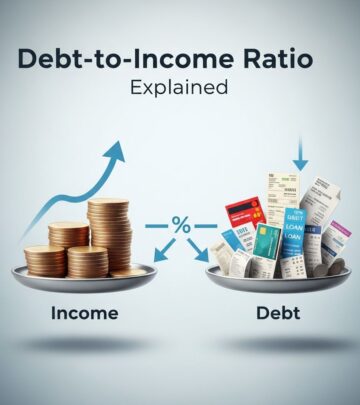
The debt-to-income (DTI) ratio is a critical financial metric that lenders use to evaluate your ability to manage monthly payments on a new mortgage alongside existing obligations. It represents the percentage of your gross monthly income dedicated to debt repayments, serving as a key determinant in loan approvals and interest rate offers.
Understanding the Fundamentals of DTI
At its core, DTI quantifies financial health by comparing total monthly debt payments to pretax income. Lenders calculate it using gross income, which includes wages, rental earnings, and benefits like Social Security before any deductions. This approach ensures a standardized assessment of borrowing capacity.
Excluding everyday expenses such as groceries or utilities, DTI focuses solely on recurring debts like loans and credit minimums. A balanced DTI indicates room in your budget for a mortgage without overextension, influencing not just approval but also favorable terms.
Distinguishing Front-End and Back-End Ratios
Lenders examine two primary DTI variants to gain a comprehensive view of affordability.
- Front-end DTI: This ratio isolates housing-related costs, including proposed principal, interest, taxes, insurance, and HOA fees if applicable. It reveals how much income would support homeownership expenses alone.
- Back-end DTI: A broader measure encompassing all debts—housing plus auto loans, student debt, credit cards, and support payments. This holistic view assesses overall debt burden.
While both matter, back-end DTI often carries more weight, particularly for conventional financing, as it reflects total financial commitments.
Step-by-Step DTI Calculation Process
Computing your DTI is straightforward and empowers proactive financial planning. Follow these steps for accuracy:
- Gather income data: Sum all verifiable gross monthly sources from pay stubs, tax returns, or benefit statements.
- List debt payments: Include minimums for credit cards, full amounts for loans, leases, and alimony/child support. Use only required payments, even if you pay more.
- Perform the division: For front-end, divide housing costs by income; for back-end, total debts by income.
- Convert to percentage: Multiply the decimal result by 100.
Practical Illustration: With $6,000 monthly gross income, $1,800 rent, $500 car loan, $150 student loans, and $200 credit cards: Front-end = ($1,800 / $6,000) × 100 = 30%. Back-end = ($2,650 / $6,000) × 100 = 44%.
Lender Thresholds Across Loan Programs
Acceptable DTI varies by loan type, reflecting risk tolerances and backing entities. The table below summarizes common limits:
| Loan Type | Front-End Limit | Back-End Limit | Exceptions |
|---|---|---|---|
| Conventional | 28% | 36% | 45-50% |
| FHA | 31-36% | 43% | Up to 50% |
| VA | Flexible | 41% recommended | Often >50% |
| USDA | 29% | 41% | Up to 44% |
Lower ratios enhance approval odds and secure superior rates, while exceeding thresholds may require compensating factors like reserves or credit strength.
Why DTI Drives Mortgage Decisions
Beyond approval, DTI shapes the entire lending process. Underwriters scrutinize it to predict long-term repayment reliability. A strong ratio signals discipline, potentially yielding lower rates and expanded options. Conversely, elevated figures prompt caution, possibly leading to denials or less advantageous terms.
In underwriting, DTI integrates with credit score, down payment, and assets. Programs like FHA offer flexibility for higher DTIs, aiding underserved borrowers, while conventional loans prioritize conservatism.
Effective Strategies to Reduce Your DTI
Improving DTI bolsters qualification prospects. Implement these targeted actions:
- Accelerate debt payoff: Prioritize high-interest balances or consolidate via balance transfers.
- Avoid new debt: Refrain from large purchases or loans pre-application to preserve ratios.
- Boost income: Pursue raises, side gigs, or co-applicant addition for dual incomes.
- Refinance obligations: Extend terms on auto or student loans to lower monthlies.
- Pay down revolving debt: Reduce credit utilization below 30% to minimize minimums.
Track progress monthly, as even modest reductions can shift outcomes significantly.
Common Oversights in DTI Assessments
Borrowers often miscalculate by including non-recurring costs or net income. Remember: gross income only, minimum debt payments exclusively. Overlooking co-signer impacts or variable-rate projections can also skew results. Consult tools from reputable lenders for precision.
DTI’s Role Beyond Mortgages
Though pivotal for home loans, DTI informs auto financing, credit lines, and personal loans. Banks apply similar benchmarks, underscoring its universal relevance in creditworthiness evaluation.
Navigating High DTI Scenarios
If ratios exceed ideals, explore flexible programs like VA or FHA, which accommodate up to 50% with strong compensating factors. Build liquidity reserves or improve credit to offset risks. Pre-approval clarifies standing early.
Frequently Asked Questions
What counts as debt in DTI?
Recurring minimums: mortgages, autos, students, credit cards, support. Exclude utilities, groceries.
Does DTI use gross or net income?
Gross monthly income before taxes/deductions.
Can I qualify with DTI over 43%?
Yes, via FHA/VA exceptions or strong profiles; conventional caps at 50% max.
How soon does paying debt improve DTI?
Immediately upon statements reflecting lower balances, typically 30 days.
Impact of a co-borrower on DTI?
Combines both incomes/debts, often lowering the ratio if partner’s finances are solid.
Long-Term Financial Planning with DTI
Regular DTI monitoring fosters discipline, aiding not just mortgages but wealth-building. Aim for under 36% for optimal flexibility, revisiting post-major changes like raises or payoffs.
References
- What Is A Debt-To-Income Ratio For A Mortgage? — Bankrate. 2023. https://www.bankrate.com/mortgages/why-debt-to-income-matters-in-mortgages/
- How the debt-to-income ratio for a mortgage works — Citizens Bank. 2024. https://www.citizensbank.com/learning/debt-to-income-ratio-mortgage.aspx
- Debt-to-income ratio — Cornell Law School Legal Information Institute. 2021-07-01. https://www.law.cornell.edu/wex/debt-to-income_ratio
- What is a debt-to-income ratio? — Consumer Financial Protection Bureau. 2023. https://www.consumerfinance.gov/ask-cfpb/what-is-a-debt-to-income-ratio-en-1791/
- The Debt-to-Income (DTI) Ratio Explained — Pennymac. 2024. https://www.pennymac.com/blog/what-is-dti-debt-to-income-ratio
Similar Articles








Read full bio of medha deb