Debt-To-Income Ratio: 5 Ways To Lower It, Plus Lender Ranges
Master your debt-to-income ratio to boost loan approvals and financial stability with practical calculations and strategies.

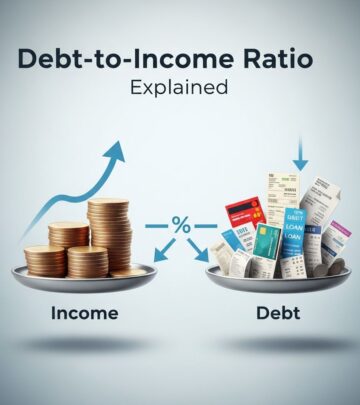
The debt-to-income (DTI) ratio is a critical financial metric that compares your monthly debt obligations to your gross monthly income, expressed as a percentage. Lenders use it to gauge your ability to manage additional debt responsibly.
Understanding the Fundamentals of DTI
At its core, DTI reveals the portion of your earnings dedicated to debt repayment, helping both individuals and financial institutions assess affordability. It excludes everyday expenses like groceries or utilities, focusing solely on recurring debt payments such as loans and credit card minimums.
There are two primary types: the front-end DTI, which considers only housing-related costs like mortgage or rent against income, and the back-end DTI, encompassing all debts. Mortgage providers often scrutinize both to ensure holistic financial stability.
Step-by-Step Guide to Calculating Your DTI
Computing your DTI is straightforward and requires gathering two key figures: total monthly debts and gross monthly income.
- List all monthly debt payments: Include mortgage/rent, auto loans, student loans, credit card minimums, child support, and other installment debts. Omit non-debt expenses.
- Determine gross monthly income: This is your pre-tax earnings from salary, side gigs, or self-employment averaged monthly.
- Perform the division: Divide total debts by gross income, then multiply by 100 for the percentage.
Formula: DTI = (Total Monthly Debts / Gross Monthly Income) × 100
Real-World Calculation Example
Suppose your monthly debts consist of $1,500 mortgage, $400 auto loan, $300 student loan, and $200 credit card minimum, totaling $2,400. With a gross monthly income of $7,000:
- $2,400 ÷ $7,000 = 0.3429
- 0.3429 × 100 = 34.29% DTI
This front-end would be just the mortgage: $1,500 ÷ $7,000 ≈ 21.43%.
Ideal DTI Ranges and Lender Expectations
Lenders view DTI differently based on loan type, but general benchmarks apply. A ratio under 36% signals strong manageability, while over 43% often poses risks for approval.
| DTI Range | Implication | Lender Perspective |
|---|---|---|
| < 35% | Excellent | High approval odds, best rates |
| 36-43% | Acceptable | Possible with strong credit |
| 44-50% | Risky | Limited options, higher scrutiny |
| > 50% | Poor | Denials common |
For mortgages, government-backed loans like FHA tolerate up to 50%, but conventional ones prefer below 36%.
Why DTI Matters Beyond Loan Applications
Even without borrowing, monitoring DTI promotes financial wellness by highlighting overextension risks. A high ratio correlates with stress, limited savings, and vulnerability to income disruptions.
It influences creditworthiness indirectly, as excessive debt can elevate utilization rates, impacting scores. Proactively managing DTI fosters budgeting discipline and long-term wealth building.
Strategies to Reduce Your DTI Effectively
Lowering DTI doesn’t require credit score changes; focus on income growth or debt reduction.
- Boost income: Seek raises, freelance, or side hustles to inflate the denominator.
- Pay down debts: Target high-minimum revolving debts like credit cards first.
- Refinance loans: Secure lower rates or extend terms to cut monthly outflows.
- Consolidate debts: Merge into a single lower-rate loan.
- Avoid new debt: Pause non-essential borrowing during improvements.
Review budgets quarterly; tools like spreadsheets track progress.
Quick Wins Table
| Action | Potential DTI Impact | Timeline |
|---|---|---|
| Increase income by 10% | Lowers DTI ~9% | 1-3 months |
| Pay off $500 card debt | Reduces by 5-10% | Immediate |
| Refinance mortgage | Saves $100-300/month | 1 month |
DTI in Specific Borrowing Scenarios
Home Mortgages
Front-end ideally <28%, back-end <36%. Qualified mortgages cap at 43% for consumer protection.
Auto Loans
Less stringent, but <45% preferred alongside stable employment.
Personal Loans and Credit Cards
Focus on back-end; high DTI limits approvals or raises rates.
Common DTI Misconceptions Debunked
- Myth: Net income is used. Fact: Always gross.
- Myth: One-time debts count. Fact: Only recurring.
- Myth: Utilities included. Fact: Excluded.
Tools and Resources for DTI Tracking
Online calculators from CFPB or banks simplify math. Excel formulas automate: = (SUM(debt_range) / income_cell) * 100. Apps like Mint integrate debts for real-time ratios.
Frequently Asked Questions
What counts as debt in DTI?
Recurring payments: loans, leases, minimums on revolving credit. Exclude utilities, groceries.
Does DTI affect credit score?
Indirectly via utilization; not a FICO factor.
Can self-employed calculate DTI?
Yes, use 12-month average gross income.
Joint DTI for couples?
Combine both incomes and debts.
High DTI but good credit?
Still risky; lenders prioritize DTI for capacity.
Regular DTI checks empower informed decisions, enhancing approval chances and security.
References
- Debt-to-Income Ratio (DTI): Why It’s Important and How to Calculate It — Navy Federal Credit Union. 2023. https://www.navyfederal.org/makingcents/credit-debt/debt-to-income-ratio.html
- Debt-to-income ratio — Cornell Law School Legal Information Institute. 2024. https://www.law.cornell.edu/wex/debt-to-income_ratio
- What is a debt-to-income ratio? — Consumer Financial Protection Bureau. 2024-02-06. https://www.consumerfinance.gov/ask-cfpb/what-is-a-debt-to-income-ratio-en-1791/
- Calculate your Debt-to-Income Ratio — Wells Fargo. 2023. https://www.wellsfargo.com/goals-credit/smarter-credit/credit-101/debt-to-income-ratio/
- What Is Debt-to-Income Ratio? — Experian. 2024. https://www.experian.com/blogs/ask-experian/credit-education/debt-to-income-ratio/
- What is a Good Debt to Income Ratio and How to Calculate Yours — AgSouth Farm Credit. 2023. https://www.agsouthfc.com/news/blog/what-good-debt-income-ratio-and-how-calculate-yours
- What Debt-to-Income Ratio Means and Why it’s Important — Sallie Mae. 2024. https://www.salliemae.com/blog/debt-to-income-ratio/
Similar Articles








Read full bio of Sneha Tete