Debt-To-Income Ratio: How To Calculate And Lower It
Master your debt-to-income ratio to unlock better loan approvals and financial stability in 2026.
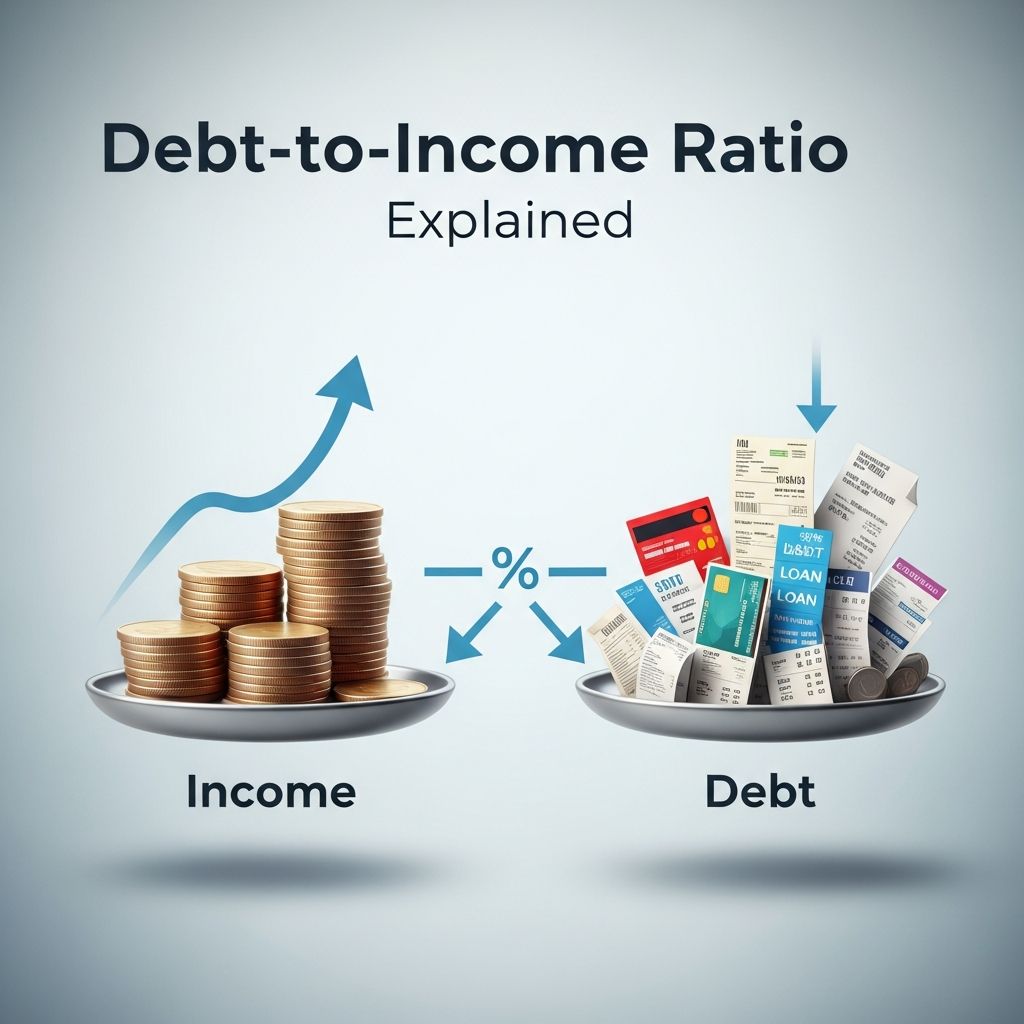
The debt-to-income (DTI) ratio is a critical financial metric that compares your monthly debt obligations to your gross monthly income, expressed as a percentage. Lenders rely on it to assess your ability to manage additional borrowing without overextending yourself financially.
Understanding the Fundamentals of DTI
At its core, DTI reveals how much of your pretax earnings is consumed by debt repayments. It serves as a snapshot of your financial health, helping both you and lenders gauge repayment capacity. Unlike credit scores, which focus on payment history, DTI emphasizes cash flow relative to liabilities.
There are two primary types: the front-end DTI, which considers only housing-related expenses like mortgage or rent against income, and the back-end DTI, encompassing all recurring debts. Lenders often scrutinize the back-end for a holistic view.
Step-by-Step Guide to Calculating Your DTI Ratio
Computing your DTI is straightforward and requires only your debt statements and income details. Follow these steps:
- Gather monthly debt payments: Sum minimum payments on mortgages, auto loans, student loans, credit cards, child support, and other installment debts. Exclude non-debt expenses like groceries or utilities.
- Determine gross monthly income: Add all pretax earnings, including salary, side gigs, and rentals. For self-employed individuals, average the prior months’ figures.
- Perform the division: Divide total monthly debts by gross income, then multiply by 100 for the percentage. Formula:
(Total Monthly Debt / Gross Monthly Income) × 100 = DTI%.
Practical Calculation Example
Consider an individual with $1,600 mortgage, $500 auto loan, $350 student loans, and $400 credit cards—totaling $2,850 monthly debt. With $6,000 gross income, DTI = ($2,850 / $6,000) × 100 = 47.5%. Front-end DTI (housing only) would be ($1,600 / $6,000) × 100 = 26.7%.
| Debt Type | Monthly Payment |
|---|---|
| Mortgage | $1,600 |
| Auto Loan | $500 |
| Student Loans | $350 |
| Credit Cards | $400 |
| Total Debt | $2,850 |
This table illustrates a typical breakdown, highlighting how various debts contribute to the total.
Benchmarks: What Counts as a Good DTI Ratio?
Lenders set varying thresholds, but general guidelines apply. A DTI under 36% is often ideal, signaling strong repayment ability and room for savings. Ratios below 35% boost chances for favorable rates on mortgages or autos.
- Excellent (0-35%): Low risk; ample buffer for emergencies and investments.
- Acceptable (36-43%): Viable for many loans, though rates may rise.
- High Risk (44-50%+): Approval challenging; may require larger down payments or co-signers.
For mortgages, government-backed programs like FHA tolerate up to 50%, but conventional loans prefer under 43%.
Why DTI Matters for Loans and Everyday Finance
Banks use DTI to predict default risk—higher ratios correlate with strained budgets. Beyond lending, monitoring DTI aids personal budgeting, retirement planning, and debt reduction strategies. A low DTI enhances negotiating power for better terms.
In 2026’s rising interest environment, maintaining a healthy DTI is vital for affordability, especially with variable-rate debts.
Proven Strategies to Lower Your DTI Ratio
Improving DTI doesn’t require credit score changes; focus on income and outflows:
- Boost income: Negotiate raises, freelance, or monetize hobbies—every extra dollar lowers the ratio.
- Pay down principal: Target high-interest debts first using snowball or avalanche methods.
- Refinance or consolidate: Secure lower rates or combine loans to cut payments.
- Cut discretionary spending: Review budgets to free cash for debts, avoiding new obligations.
- Increase down payments: Reduces loan size for mortgages or vehicles.
Track progress monthly; even small reductions yield big approval impacts.
DTI in Mortgage and Auto Loan Applications
For homebuyers, front-end DTI under 28% and back-end under 36% are gold standards per Fannie Mae guidelines. Auto lenders cap at 45-50%, factoring insurance. Exceeding limits? Shop credit unions or alternative programs.
Common DTI Myths Debunked
- Myth: Only loans count. No—recurring debts like alimony qualify.
- Myth: Net income suffices. Always use gross.
- Myth: High income fixes high DTI. Overspenders still struggle.
Frequently Asked Questions (FAQs)
What exactly goes into DTI calculation?
Include minimum payments on all debts; exclude utilities, taxes (unless escrowed), or one-time fees.
Does DTI affect my credit score?
No directly, but lowering debts improves utilization, indirectly boosting scores.
Can I qualify for a mortgage with high DTI?
Yes, via FHA (up to 50%) or compensating factors like reserves.
How often should I check my DTI?
Quarterly or before major financial moves.
Self-employed DTI tips?
Use two-year income averages; document thoroughly.
Tools and Resources for DTI Management
Free calculators from CFPB or banks simplify math. Pair with budgeting apps for ongoing tracking. Consult advisors for personalized plans.
Regular DTI audits empower proactive finance, turning potential denials into approvals.
References
- Debt-to-Income Ratio (DTI): Why It’s Important and How to Calculate It — Navy Federal Credit Union. 2023. https://www.navyfederal.org/makingcents/credit-debt/debt-to-income-ratio.html
- Debt-to-income ratio — Cornell Law School Legal Information Institute. 2024. https://www.law.cornell.edu/wex/debt-to-income_ratio
- What is a debt-to-income ratio? — Consumer Financial Protection Bureau. 2024-10-01. https://www.consumerfinance.gov/ask-cfpb/what-is-a-debt-to-income-ratio-en-1791/
- Calculate your Debt-to-Income Ratio — Wells Fargo. 2025. https://www.wellsfargo.com/goals-credit/smarter-credit/credit-101/debt-to-income-ratio/
- What Is Debt-to-Income Ratio? — Experian. 2025-01-15. https://www.experian.com/blogs/ask-experian/credit-education/debt-to-income-ratio/
- What Debt-to-Income Ratio Means and Why it’s Important — Sallie Mae. 2024. https://www.salliemae.com/blog/debt-to-income-ratio/
- What is a Good Debt to Income Ratio and How to Calculate Yours — AgSouth Farm Credit. 2024-11-20. https://www.agsouthfc.com/news/blog/what-good-debt-income-ratio-and-how-calculate-yours
Similar Articles








Read full bio of Sneha Tete