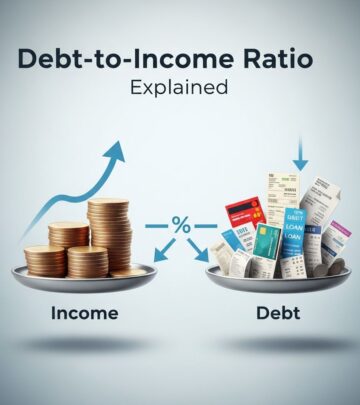
Debt-to-Income Ratio: Definition, Calculation & Impact
Master DTI: Learn how lenders calculate your debt-to-income ratio and what it means for your finances.

When applying for a mortgage or other significant loans, lenders evaluate your financial health using various metrics. One of the most critical measurements is your debt-to-income ratio, commonly abbreviated as DTI. This fundamental financial metric plays a pivotal role in determining whether you qualify for a loan and at what terms. Understanding how DTI works, why it matters, and how to improve yours can significantly impact your financial future and borrowing capacity.
What is Debt-to-Income Ratio?
Debt-to-income ratio is a financial metric that lenders use to assess your ability to manage monthly debt obligations relative to your gross income. Expressed as a percentage, your DTI reveals what proportion of your monthly earnings goes toward debt payments. The calculation is straightforward: divide your total monthly debt payments by your gross monthly income, then multiply by 100 to get a percentage.
For example, if you earn $5,000 gross monthly income and have $1,500 in total monthly debt payments, your DTI would be 30% ($1,500 ÷ $5,000 × 100 = 30%). This metric serves as a quick snapshot of your financial obligations relative to your earning capacity, helping lenders determine your creditworthiness and repayment likelihood.
DTI is particularly important in the mortgage industry, where it serves as a primary qualification criterion alongside credit scores and down payment amounts. Lenders view DTI as a predictor of financial stress; a higher ratio suggests you’re already committed to significant debt obligations, leaving less room in your budget for additional mortgage payments.
The Two Types of DTI Ratios
Lenders typically use two distinct DTI calculations, each providing different insights into your financial situation. Understanding both helps you better prepare for loan applications and know what lenders are evaluating.
Front-End DTI (Housing Ratio)
The front-end DTI, also called the housing ratio, focuses specifically on housing-related expenses. This ratio divides your total monthly housing costs by your gross monthly income. Housing costs typically include mortgage principal and interest, property taxes, homeowner’s insurance, and homeowners association (HOA) fees if applicable.
Lenders prefer this ratio because it isolates the specific expense they’re considering—the new mortgage. Most traditional lenders aim for a front-end DTI of 28% or less, though some may accept up to 31% depending on other factors like credit score and down payment size. This conservative threshold reflects lenders’ experience with housing affordability and payment reliability.
Back-End DTI (Total Debt Ratio)
The back-end DTI provides a more comprehensive view of your financial obligations. This ratio includes all monthly debt payments—not just housing expenses—divided by gross monthly income. It encompasses mortgage or rent, car loans, student loans, credit card payments, personal loans, medical debt, and any other recurring monthly obligations.
Back-end DTI generally has a higher acceptable threshold, typically between 36% and 43%, depending on the lender and loan type. This higher tolerance acknowledges that borrowers naturally accumulate various debts, but lenders want to ensure the total burden remains manageable. The back-end ratio provides lenders with a holistic view of your debt situation and financial stress level.
How DTI is Calculated
Calculating your DTI accurately requires identifying all relevant monthly debt payments and your gross monthly income. Here’s a practical breakdown of the calculation process:
Step 1: Identify All Monthly Debt Payments
Begin by listing every monthly debt obligation. This includes:
– Mortgage payments (principal, interest, property taxes, insurance)- Car loans and auto financing- Student loans- Credit card minimum payments- Personal loans- Medical debt payments- Alimony or child support- Other loan obligations
When calculating credit card debt, use the minimum payment required, not the full balance. This gives a realistic picture of your monthly cash flow obligations.
Step 2: Calculate Gross Monthly Income
Determine your gross monthly income before taxes and deductions. This includes:
– W-2 salary or wages- Self-employment income- Rental income- Investment income- Bonuses and commissions (often averaged over two years)- Social Security or pension benefits
Lenders typically use gross income because it reflects your actual earning capacity before tax obligations reduce your take-home pay.
Step 3: Divide and Multiply
Apply the basic formula: (Total Monthly Debt ÷ Gross Monthly Income) × 100 = DTI Percentage. This calculation gives you your overall back-end DTI for a complete financial picture.
DTI Requirements and Lending Standards
Different loan types and lenders maintain varying DTI thresholds based on risk assessment and lending standards. Understanding typical requirements helps you set realistic borrowing expectations.
Conventional Mortgage Requirements
Conventional loans, not backed by government agencies, typically have strict DTI requirements. Most conventional lenders prefer:
– Front-end DTI: 28% or lower- Back-end DTI: 36-43%
However, borrowers with exceptional credit scores, substantial down payments (20% or more), or other compensating factors may qualify with ratios up to 50%.
FHA Loans
Federal Housing Administration loans, designed for borrowers with lower credit scores or limited down payments, typically allow higher DTI ratios:
– Front-end DTI: Up to 31%- Back-end DTI: Up to 43-50%
FHA loans provide more flexibility because they include mortgage insurance protection for lenders.
VA and USDA Loans
Veterans Administration and USDA loans often allow the most generous DTI ratios, sometimes exceeding 41% back-end DTI, depending on individual circumstances and lender policies.
Why Lenders Use DTI as a Qualification Tool
Lenders employ DTI calculations because this metric offers predictive value regarding repayment likelihood. A borrower with a high DTI is financially stretched, juggling numerous obligations that consume most of their income. When unexpected expenses arise—job loss, medical emergencies, home repairs—financially stressed borrowers struggle to meet obligations, increasing default risk.
DTI serves as an early warning system. By setting maximum acceptable ratios, lenders reduce their risk portfolio and maintain portfolio quality. This conservative approach protects both lender profitability and borrower financial security by preventing over-leveraging.
Additionally, DTI works in tandem with credit scores to provide a complete risk assessment. While credit scores reflect past payment behavior, DTI indicates current financial capacity. A borrower with an excellent credit score but very high DTI might represent significant risk because their current obligations leave little margin for additional payments.
What Debts Count Toward Your DTI
Understanding which obligations count toward DTI calculations helps you accurately assess your ratio and identify potential improvements. Generally, recurring monthly obligations count toward DTI calculations:
Debts Included in DTI
– Mortgage payments (principal, interest, taxes, insurance)- Car loans and vehicle financing- Student loans (federal and private)- Credit card minimum payments- Personal loans- Medical debt payments- Alimony and child support- HOA fees- Property taxes- Homeowner’s insurance- Rental payments
Debts Often Excluded from DTI
Certain obligations typically don’t count toward DTI calculations because they’re one-time expenses or don’t represent ongoing monthly commitments:
– Utility bills- Grocery and food expenses- Gas and transportation (non-loan)- Subscription services- One-time purchases- Childcare (though some lenders may include this)
The distinction between included and excluded debts emphasizes that lenders focus on formal debt obligations rather than general living expenses.
How to Lower Your Debt-to-Income Ratio
If your DTI exceeds acceptable lender thresholds, several strategies can improve your ratio. These approaches fall into two categories: increasing income or decreasing debt obligations.
Increase Your Income
Seek a salary increase: Negotiating higher compensation at your current job directly increases your gross income, lowering your DTI percentage. Even modest increases accumulate over time.
Take on additional income: Freelance work, part-time employment, rental income, or investment returns all contribute to gross income. However, lenders typically average irregular income over two years to ensure consistency.
Wait for bonus or commission: If your compensation includes variable components, allowing time to demonstrate consistent bonus or commission income strengthens your application.
Pay Down Existing Debts
Prioritize high-balance debts: Paying off or significantly reducing car loans, student loans, or personal loans reduces your total monthly obligations. Even one substantial payment can meaningfully lower your DTI.
Close credit cards strategically: While paying down credit card balances helps DTI, closing accounts can potentially harm credit scores. Focus on paying down balances rather than closing accounts.
Eliminate consumer debt: Personal loans and smaller debts are often easier to eliminate than mortgages or car loans. Clearing these obligations frees up monthly cash flow.
Consolidate Debt
Debt consolidation combines multiple payments into a single loan with potentially lower interest rates and longer repayment periods. This reduces monthly obligations without changing total debt, directly lowering DTI. For example, consolidating three credit cards into one personal loan with 60-month repayment could substantially reduce monthly payments.
Adjust Loan Terms
Refinancing existing loans with longer repayment periods lowers monthly payments, reducing DTI. While you pay more interest over the loan’s life, this strategy improves short-term qualification prospects.
Verification of Income and Documentation
Lenders don’t simply accept your DTI calculation; they verify income through documentation to ensure accuracy and prevent fraud. Typical income verification documents include:
– Recent pay stubs (typically last two months)- W-2 forms (typically last two years)- Tax returns (typically last two years)- Profit and loss statements (for self-employed individuals)- Bank statements (demonstrating income deposits)- Offer letters (for new employment)- Social Security statements (for retirement income)
This verification process, while sometimes invasive, protects lenders from misrepresentation and ensures accurate DTI calculations. Providing complete, organized documentation expedites the application process.
DTI Impact on Loan Approval and Terms
Your DTI significantly influences not only whether you qualify for a loan but also the terms and interest rates offered. Borrowers with lower DTI ratios demonstrate superior financial management and represent reduced risk to lenders, resulting in more favorable loan terms.
Approval odds: Staying within lender DTI thresholds dramatically increases approval likelihood. Exceeding maximums typically results in denial unless compensating factors exist.
Interest rates: Borrowers with lower DTI often qualify for better interest rates. Lenders reward lower-risk borrowers with pricing advantages that can save thousands of dollars over a loan’s life.
Loan amounts: DTI calculations often determine maximum loan amounts. Higher DTI limits the size loan you can afford to qualify for under the lender’s criteria.
Down payment requirements: Some lenders may require larger down payments from higher-DTI borrowers to reduce risk exposure.
Common DTI Mistakes to Avoid
Understanding frequent errors helps borrowers present the strongest possible application. Common DTI mistakes include incorrectly calculating income, forgetting to include all debts, or not accounting for new obligations before applying.
Underestimating debt payments or forgetting installment obligations that will show on credit reports creates false confidence and disappoints during underwriting. Overestimating income by including inconsistent or one-time earnings similarly damages credibility when verified.
Additionally, taking on new debt immediately before a mortgage application—new car purchase, credit card applications, personal loans—worsens DTI and suggests financial instability to lenders. Waiting to make major purchases until after mortgage closing protects your qualification.
Frequently Asked Questions
Q: What is a good debt-to-income ratio?
A: For mortgage qualification, a DTI below 28% front-end and 36% back-end is considered excellent. Most lenders prefer back-end DTI of 43% or lower, though this varies by loan type and lender.
Q: Does DTI include utilities and living expenses?
A: No, DTI focuses on debt obligations like loans and payment plans, not general living expenses such as utilities, groceries, or transportation fuel.
Q: How quickly can I improve my DTI?
A: DTI can improve relatively quickly by paying down debts. Paying off $5,000 in credit card debt might lower your ratio by several percentage points immediately. Income increases take longer to verify but provide lasting improvements.
Q: Can I get a mortgage with a DTI above 43%?
A: Some borrowers with exceptional credit scores, significant down payments, substantial assets, or specialized loan programs may qualify with DTI ratios exceeding typical thresholds, but standard lending limits around 43% for most borrowers.
Q: Does refinancing my student loans affect my DTI?
A: Refinancing with a longer repayment period lowers monthly payments, directly reducing DTI. However, private refinancing removes federal protections, so evaluate carefully before refinancing federal student loans.
Q: How do self-employed individuals calculate income for DTI?
A: Lenders typically average self-employed income over two years using tax returns and profit-and-loss statements. Recent significant income changes may require additional documentation.
Q: Should I pay off all debt before applying for a mortgage?
A: While lowering DTI helps, completely eliminating all debt isn’t necessary. Focus on reducing DTI to acceptable levels. Maintaining some active credit accounts and paying on-time actually benefits credit scores.
References
- What is a Debt-to-Income Ratio? — Consumer Financial Protection Bureau. Accessed 2025. https://www.consumerfinance.gov/ask-cfpb/what-is-a-debt-to-income-ratio-en-1791/
- Understanding Debt-to-Income Ratio — Experian. Accessed 2025. https://www.experian.com/blogs/ask-experian/credit-education/debt-to-income-ratio/
- What Counts as Debts and Income When Calculating DTI Ratio — Investopedia. Accessed 2025. https://www.investopedia.com/ask/answers/081414/what-counts-debts-and-income-when-calculating-my-debttoincome-dti-ratio.asp
- Debt-to-Income Ratio vs. Debt-to-Credit Ratio — Equifax. Accessed 2025. https://www.equifax.com/personal/education/credit/score/articles/learn/debt-to-income-ratio-vs-debt-to-credit-ratio/
- Mortgage Requirements by Loan Type — Federal Housing Administration. Accessed 2025. https://www.hud.gov/program_offices/public_indian_housing/programs/hamp/
Similar Articles








Read full bio of Sneha Tete