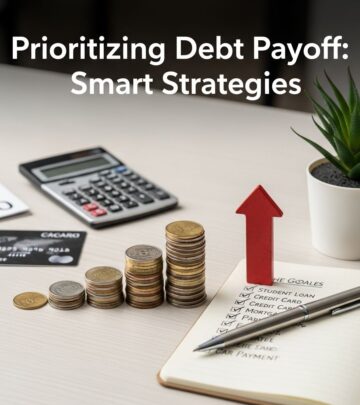
Effective Debt Repayment Strategies for 2026
Master proven techniques to eliminate debt and build lasting financial freedom

Debt can feel like an insurmountable obstacle to financial stability, yet millions of people successfully navigate their way to freedom each year through structured, deliberate approaches. The path forward doesn’t require dramatic life changes or unrealistic sacrifices—rather, it demands clarity about your situation and commitment to a method that aligns with your circumstances and psychology. Whether you’re carrying thousands in credit card balances, student loans, or multiple obligations, understanding the mechanics of debt elimination empowers you to make informed decisions and reclaim control of your finances.
Assessing Your Current Financial Position
Before selecting a repayment strategy, you must develop a complete picture of your debt landscape. This foundational step prevents misguided efforts and ensures your chosen method fits your actual situation rather than an imagined one.
Begin by documenting every outstanding obligation. List each creditor, the current balance, the interest rate, and the minimum monthly payment. This inventory reveals patterns you might have overlooked—perhaps you’re paying significantly higher rates on certain accounts, or you have numerous small balances scattered across different providers. Understanding the composition of your debt illuminates which strategy will yield the fastest results or the greatest psychological momentum.
Next, calculate what percentage of your gross income goes toward debt payments. Financial professionals generally recommend that debt payments remain below 36% of gross income. If you exceed this threshold substantially, your situation likely calls for more aggressive intervention, such as consolidation or professional assistance. If you’re comfortably below it, you have more flexibility in choosing a method based on personal preference and motivation style.
Finally, examine your cash flow. Determine how much money remains after covering essential expenses like housing, utilities, food, and transportation. This disposable income represents your debt-fighting arsenal. Even modest additional funds—$50 or $100 monthly—accelerate payoff timelines and reduce total interest paid.
The Smallest-to-Largest Elimination Method
This approach prioritizes psychological momentum and quick wins. You commit to eliminating your smallest debt first while maintaining minimum payments on all others. Once that account reaches zero, you redirect the money previously allocated to it toward the next smallest balance. This creates a rolling effect where your payment amounts grow progressively larger.
The primary advantage lies in motivation sustainability. Humans respond powerfully to visible progress and tangible achievements. Watching account balances disappear—even if they’re small—triggers dopamine responses that reinforce your commitment. For individuals who struggle with discipline or who find abstract financial goals demotivating, this method provides frequent checkpoints that prove your strategy works.
This method also simplifies your life operationally. With fewer creditors to track, you experience reduced administrative burden and lower risk of missed payments. The psychological relief of consolidating multiple obligations into fewer accounts shouldn’t be underestimated.
When this approach excels: You have moderate debt loads distributed across multiple accounts. You respond well to visible progress. You need motivation more than mathematical optimization.
Potential limitations: If your largest balances carry the highest interest rates, this method may cost more in total interest than alternatives. The order of elimination doesn’t necessarily align with mathematical efficiency.
The Highest-Interest-Rate Elimination Method
This mathematically optimized approach targets your most expensive debt first. You identify the account with the highest interest rate, direct all available extra funds toward it while paying minimums elsewhere, then proceed to the next highest rate. This strategy minimizes total interest paid and reduces your overall debt repayment timeline.
Consider a practical illustration: credit card debt typically carries 18-24% annual interest, while personal loans might charge 8-12%, and student loans often fall between 4-8%. By prioritizing the credit card, you eliminate the most expensive obligation and redirect those dollars faster toward principal reduction rather than interest payments. Over time, this compounds into substantial savings.
This method appeals to analytically-minded individuals who find motivation in optimization and long-term savings. It rewards mathematical thinking and provides clear evidence that you’re making the most efficient use of every dollar.
When this approach excels: Your debt structure includes significantly varied interest rates. You’re motivated by numerical optimization and long-term savings calculations. You have sufficient discipline to maintain the strategy even when initial progress feels slow.
Potential limitations: If your highest-interest debt carries a large balance, you might not see account elimination for months or years. This delayed gratification can undermine motivation for some people. The strategy prioritizes mathematical efficiency over psychological wins.
Debt Consolidation Strategies
When multiple obligations overwhelm your capacity or when interest rates consistently work against you, consolidation reorganizes your debt structure entirely. Rather than tackling individual accounts separately, you combine them into a single obligation with ideally lower rates and simplified management.
Balance Transfer Approaches
Credit card companies frequently offer promotional periods with zero or reduced interest rates for transferred balances. If you qualify for such an offer, you can move high-interest credit card balances to a card with a lower temporary rate, creating breathing room to attack principal without fighting interest accumulation.
Success with this method requires discipline. The promotional period typically lasts 6-21 months. You must commit to eliminating the balance before standard rates resume, or you’ll face the original problem with added frustration. Additionally, balance transfer cards often charge transfer fees (typically 3-5% of the amount transferred), which you should factor into your calculations.
Personal Consolidation Loans
Banks and specialized lenders offer personal loans designed specifically for debt consolidation. These loans typically feature fixed interest rates, predictable monthly payments, and defined repayment periods. If your credit score qualifies you for rates lower than your current obligations, consolidation can reduce total interest paid and simplify your payment structure significantly.
The mechanics are straightforward: you borrow enough to pay off multiple existing debts, then owe a single payment to the new lender. This transforms a complex landscape of varied due dates and amounts into one predictable monthly obligation.
Nonprofit Credit Counseling Programs
Nonprofit credit counseling agencies offer Debt Management Plans (DMPs) that negotiate with creditors on your behalf. These programs typically reduce interest rates, waive certain fees, and consolidate multiple payments into one monthly amount directed to the agency, which then distributes funds to creditors.
DMPs involve modest fees and typically span three to five years. They don’t require excellent credit and don’t borrow new money—instead, they reorganize existing obligations on more favorable terms. However, enrolling in a DMP will appear on your credit report, potentially affecting your ability to obtain new credit during the program duration.
Budgeting Foundations for Debt Elimination
Regardless of which repayment method you select, sustainable progress requires disciplined budgeting that creates consistent surplus funds for debt reduction.
The 50-30-20 Framework
A widely recommended budgeting structure allocates 50% of your net income to necessities (housing, utilities, food, basic transportation, minimum debt payments), 30% to discretionary wants (entertainment, dining out, hobbies), and 20% to savings and additional debt payments. This framework provides structure while maintaining lifestyle sustainability.
For aggressive debt elimination, you might adjust these percentages temporarily—perhaps shifting discretionary spending to 20% and debt repayment to 30%. The specific allocation matters less than establishing a framework that ensures consistent surplus direction toward your goal.
Identifying Spending Leaks
Most people discover discretionary spending categories that don’t align with their priorities once they examine actual expenses. Subscription services, convenience purchases, restaurant meals, and impulse buys accumulate silently. Auditing your spending reveals opportunities to redirect $100, $200, or more monthly toward debt elimination without sacrificing genuine quality of life.
Tools and apps that categorize expenses automatically can illuminate patterns you might miss through casual observation. Once aware, you can make deliberate choices about what truly deserves your money.
Accelerating Your Progress
Beyond selecting a core strategy and establishing a budget, several tactical approaches can meaningfully accelerate your debt elimination timeline:
- Negotiate lower interest rates: Contacting creditors—particularly credit card companies—to request rate reductions often succeeds, especially if you maintain a good payment history. Even a 2-3% reduction compounds into substantial interest savings over time.
- Redirect windfalls strategically: Tax refunds, bonuses, inheritance, or unexpected income should go directly to debt elimination rather than lifestyle upgrades. These lump-sum payments disproportionately reduce balances when applied to principal.
- Pursue income growth: Side hustles, freelance work, gig economy opportunities, or negotiated raises create additional ammunition for debt attack. Committing to direct this extra income toward debt rather than increased lifestyle spending maximizes its impact.
- Reduce fixed expenses: Renegotiating insurance rates, switching service providers, eliminating redundant subscriptions, or refinancing loans can permanently lower your monthly obligations, freeing resources for debt reduction.
- Automate payments: Setting up automatic payments ensures consistency, prevents missed deadlines that trigger fees and credit damage, and removes temptation to redirect money elsewhere.
Psychological Elements of Sustained Progress
The financial mechanics of debt elimination matter less than your ability to maintain consistent effort over months or years. Successful debt elimination requires acknowledging psychological realities alongside mathematical strategies.
Celebrating milestones—however modestly—sustains motivation. When you eliminate your first account, acknowledge the achievement. When you reach halfway through your debt, recognize the progress. These celebrations need not be expensive; they simply need to mark meaningful progress and reinforce your identity as someone taking control of their finances.
Avoiding lifestyle inflation preserves the financial capacity that debt elimination requires. When your income increases, resist the natural human tendency to upgrade your lifestyle proportionally. Maintaining modest spending habits while income grows creates expanding surplus that accelerates your timeline.
Connecting your debt elimination to broader life goals—freedom, security, opportunity, stress reduction—maintains motivation when the process feels tedious. Debt elimination isn’t merely accounting; it’s reconstructing your relationship with money and reclaiming agency over your future.
Choosing Your Optimal Path Forward
The “best” debt elimination strategy isn’t universally optimal—it’s the one you’ll execute consistently. If mathematical optimization excites you and you can maintain discipline through delayed gratification, the highest-interest-rate method maximizes efficiency. If you need frequent wins and psychological momentum, the smallest-balance method delivers motivation. If your situation involves multiple high-interest obligations, consolidation might fundamentally improve your circumstances.
Consider your personality, your debt structure, your income stability, and your psychological needs when selecting your approach. Then commit fully to execution, knowing that consistency over time produces results regardless of which valid method you choose.
Frequently Asked Questions
How long does debt elimination typically require?
Timelines vary dramatically based on debt size, interest rates, and additional payment capacity. Some people eliminate modest debt within 12-24 months, while larger obligations might span 5-10 years. Consolidation and increased income can compress timelines substantially.
Will debt elimination affect my credit score?
Eliminating debt generally improves your credit score over time, though the relationship is complex. Paying down balances reduces your credit utilization ratio, which benefits your score. However, closing accounts after paying them off can temporarily reduce your score. The long-term trend invariably moves positive as you demonstrate responsible obligation management.
Should I save simultaneously while paying off debt?
Building a modest emergency fund (typically $1,000-$2,000) before aggressive debt elimination prevents new debt accumulation when unexpected expenses arise. After establishing this cushion, you can prioritize debt elimination while maintaining minimum savings contributions.
What if my debt feels genuinely unmanageable?
If your debt exceeds 50% of your gross income or if you’ve missed payments despite genuine effort, professional assistance through nonprofit credit counseling or exploring more formal debt relief options may be warranted. These options carry trade-offs but provide structured pathways when personal efforts prove insufficient.
References
- How to Pay Off Debt: Top Strategies for 2026 — NerdWallet. 2026. https://www.nerdwallet.com/personal-loans/learn/pay-off-debt
- The Ultimate Guide To Paying Off Debt In 2026 — Town & Country Federal Credit Union. 2026. https://www.tcfcu.com/budget/the-ultimate-guide-to-paying-off-debt-in-2026/
- 7 Steps to Get Out of Debt in 2026 — Experian. 2026. https://www.experian.com/blogs/ask-experian/steps-to-get-out-of-debt/
- Gift Yourself Financial Peace: How Be Debt-Free in 2026 — Harvard Federal Credit Union. 2026. https://blog.harvardfcu.org/gift-yourself-financial-peace-how-be-debt-free-in-2026
Similar Articles








Read full bio of Sneha Tete