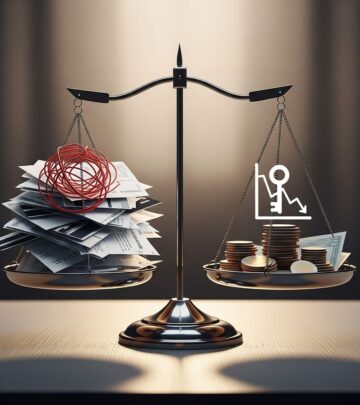
Debt Relief Without Credit Damage
Discover proven strategies to merge your debts into one manageable payment while safeguarding or even boosting your credit profile for long-term financial freedom.

Combining multiple debts into a single payment can simplify your finances and potentially save on interest, but it requires careful planning to avoid negative effects on your credit score. Responsible execution often leads to improvements over time through better payment habits and reduced utilization ratios.
Understanding Debt Consolidation Basics
Debt consolidation involves taking out a new form of credit to pay off existing obligations, resulting in one streamlined monthly payment. This approach is particularly useful for high-interest revolving debts like credit cards, where rates can exceed 20% annually. By shifting to a fixed-rate loan, borrowers may secure terms between 6% and 36%, depending on creditworthiness.
The process typically starts with assessing total owed amounts, interest rates, and minimum payments across accounts. Tools like online calculators help project savings, but success hinges on avoiding new debt accumulation post-consolidation. Common methods include personal loans, balance transfer cards, and secured options like home equity products.
Key Methods for Combining Debts
- Personal Loans: Unsecured loans from banks or online lenders pay off various debts directly. They offer fixed payments and terms from 12 to 84 months, with versatility for credit cards, medical bills, or auto loans. Qualification often requires a score above 670, but some lenders accommodate lower ranges.
- Balance Transfer Cards: These provide 0% introductory APR periods, usually 12-21 months, ideal for revolving debt. Transfer fees range from 3-5%, but savings on interest can outweigh costs if paid off promptly.
- Home Equity Options: For homeowners, HELOCs or loans leverage property value for lower rates around 8-10%. Risks include foreclosure if payments lapse, making this suitable only for those with stable income.
Each method suits different profiles: renters favor unsecured loans, while equity-rich owners might opt for secured paths. Always compare APRs, fees, and eligibility before applying.
Short-Term Credit Score Considerations
Initial impacts stem from hard inquiries, which ding scores by 5-10 points for up to 12 months, though effects fade after 6 months. Opening new accounts also shortens average account age, comprising 15% of FICO scores.
Credit utilization, at 30% of scores, fluctuates: paying off cards drops it beneficially, but closing accounts post-payoff raises it by reducing available limits. For instance, consolidating $10,000 across cards with $20,000 limits (50% utilization) to a loan zeros card balances, potentially lifting scores 20-50 points if utilization falls below 30%[10].
| Factor | Potential Impact | Duration |
|---|---|---|
| Hard Inquiry | -5 to -10 points | 6-12 months |
| New Account Age | Slight drop | Until averages normalize |
| Utilization Change | +20-50 points if lowered | Ongoing |
Long-Term Benefits to Your Credit Profile
Payment history, 35-40% of scores, strengthens with consistent on-time payments on the new account. Simplified budgeting reduces missed payments, a top score killer. Lower overall debt via interest savings accelerates payoff, further dropping utilization.
Diversifying credit mix—adding installment loans to revolving cards—adds 10% positive weight. Over 12-24 months, disciplined users see net gains, with studies showing average 20-40 point increases.
Strategies to Minimize Negative Effects
- Pre-qualify with soft checks to gauge rates without inquiries.
- Keep old accounts open to preserve limits and utilization.
- Apply for one product at a time, spacing inquiries 3-6 months.
- Target utilization under 30% post-consolidation[10].
- Automate payments to ensure timeliness.
Budgeting apps track progress, while extra principal payments shorten terms and save thousands in interest.
Who Qualifies and Common Pitfalls
Best candidates have scores above 670, stable income, and debt-to-income ratios under 40%. Subprime borrowers (below 600) face high rates or denials, potentially worsening situations. Pitfalls include racking up new card debt after payoff, negating benefits, or choosing loans with prepayment penalties.
Fees like origination (1-8%) or transfers erode savings; calculate break-even points. Bankruptcy or default histories complicate access, pushing toward nonprofit credit counseling instead.
Alternatives When Consolidation Isn’t Ideal
Not everyone needs new credit. Debt management plans via nonprofits negotiate lower rates without loans, preserving scores better. Snowball or avalanche methods prioritize payoffs organically. 0% store cards or family loans offer low-impact relief for small balances.
Real-World Scenarios and Projections
Consider $15,000 at 22% across cards: minimum payments barely dent principal. A 7% 36-month loan drops monthly outlay from $450 to $470 but saves $5,000+ interest, with score rebound in 6 months. Homeowners with $50,000 equity might halve rates via HELOC, risking assets.
Track via free weekly reports from AnnualCreditReport.com, monitoring inquiries and utilization monthly.
Frequently Asked Questions
Will debt consolidation always lower my score initially?
Yes, due to inquiries and new accounts, but drops are temporary (under 10 points) and often offset quickly.
Can I consolidate without a hard inquiry?
Pre-qualifications use soft pulls; some lenders offer them. Balance transfers on existing cards avoid new apps.
Is it better than bankruptcy?
Typically yes—consolidation avoids 7-10 year black marks, rebuilding faster with payments.
How long until I see improvements?
1-3 months for utilization boosts; 6-12 for full recovery and gains.
What if my score is too low?
Secured loans or counseling help; focus on 3-6 months of on-time payments first.
Steps to Get Started Safely
- List all debts, rates, balances.
- Check score and reports for errors.
- Compare 3-5 lender offers.
- Calculate total costs including fees.
- Commit to no new debt.
Professional advice from certified counselors (NFCC.org) ensures fit. With discipline, consolidation transforms overwhelming debt into a manageable path to freedom.
References
- The Real Impact of Debt Consolidation on Your Credit Score — Atlas Credit. 2025. https://atlascredit.com/blog/post/debt-consolidation
- How Does Debt Consolidation Affect Your Credit Score? — Synovus. 2025. https://www.synovus.com/personal/resource-center/managing-your-finances/how-does-debt-consolidation-affect-your-credit-score/
- How Does Debt Consolidation Affect Your Credit Score? — Citi. 2025-04-23. https://www.citi.com/personal-loans/learning-center/debt-consolidation/how-does-debt-consolidation-affect-your-credit
- Does Debt Consolidation Hurt Your Credit Scores? — Credit Karma. 2025. https://www.creditkarma.com/credit/i/how-debt-consolidation-affect-credit-score
- Does Debt Consolidation Hurt Your Credit? — Discover. 2025. https://www.discover.com/credit-cards/card-smarts/does-debt-consolidation-hurt-credit/
- Does Debt Consolidation Hurt Your Credit? — Experian. 2025. https://www.experian.com/blogs/ask-experian/can-debt-consolidation-affect-your-credit-score/
Similar Articles








Read full bio of medha deb