Debt Relief vs. Debt Settlement: Key Differences
Understand the key differences between debt relief and debt settlement to make informed financial decisions.
Understanding Debt Relief and Debt Settlement
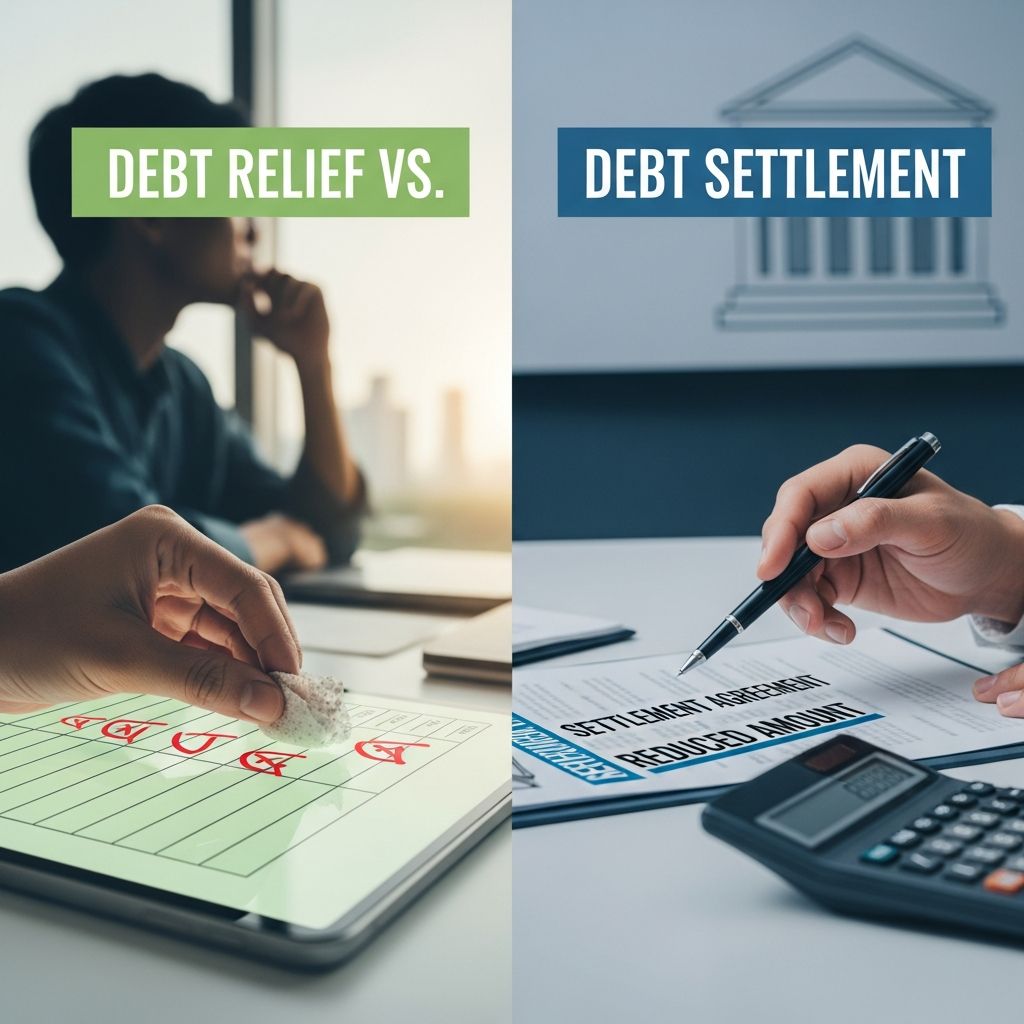
When facing overwhelming debt, many borrowers seek ways to reduce their financial burden. Two commonly discussed options are debt relief and debt settlement. While these terms are often used interchangeably, understanding the nuances between them can help you make an informed decision about your financial future. Debt relief is a broad umbrella term that encompasses various strategies to ease your debt burden, while debt settlement specifically refers to negotiating with creditors to pay less than the full amount owed.
The journey toward financial stability often requires exploring multiple pathways. Whether you’re drowning in credit card debt, personal loans, or other unsecured obligations, knowing the difference between these debt management strategies is crucial. This comprehensive guide will help you understand how each process works, their respective advantages and disadvantages, and how to determine which approach aligns best with your unique financial circumstances.
How Debt Relief Works
Debt relief represents a negotiation process between borrowers and creditors aimed at reducing the total amount owed. This process goes by several names, including debt settlement, debt negotiation, and debt resolution—all referring to the same fundamental concept of working with creditors to accept a lesser amount than originally owed. When successful, debt relief involves creditors writing off a portion of your debt, a process commonly referred to as debt forgiveness.
The mechanics of debt relief involve creditors agreeing to accept partial payment in exchange for considering the remaining balance settled. This arrangement benefits both parties: creditors recover at least some portion of the debt rather than risking complete default, while borrowers reduce their overall financial obligation and can potentially achieve debt freedom faster.
The Do-It-Yourself Approach
Many borrowers successfully navigate debt relief independently without professional assistance. The DIY method involves several key steps. First, compile a comprehensive list of all your debts, including creditor names, outstanding balances, interest rates, and minimum payments. Next, contact your creditors directly to explain your financial hardship and why you cannot pay the full amount owed. Prepare an explicit settlement offer that reflects what you can realistically afford to pay. This offer should be specific, mentioning both the lump-sum amount or payment plan you can manage.
While taking the DIY route can save you money on professional fees, success rates vary. Some creditors are more willing to negotiate than others, and lacking experience in debt negotiation may put you at a disadvantage. You’ll need persistence, clear communication skills, and the ability to handle potential rejection or counteroffers from creditors.
Working With a Debt Relief Company
Professional debt relief companies offer an alternative to negotiating independently. These firms typically have established relationships with creditors and experienced negotiators who understand the nuances of debt settlement discussions. The process with a debt relief company generally follows this structure:
When you enroll with a debt relief company, you’ll begin making monthly deposits into a dedicated savings account that you control. The debt relief company does not hold your funds; instead, a neutral third party administers the account, ensuring transparency and protecting your interests. As funds accumulate in this account, the company will initiate negotiations with your creditors on your behalf.
Once the company negotiates a settlement agreement and you approve the terms, the agreed-upon amount is paid to the creditor directly from your savings account. After the creditor receives their payment, the debt relief company withdraws their fees from the remaining funds in your account. This arrangement ensures that no fees are collected before debts are actually settled—a protection mandated by law.
Types of Debt Suitable for Relief
Not all debts are equally suitable for settlement through debt relief programs. Understanding which debts can be negotiated is essential for determining whether this strategy will work for your situation.
Unsecured Debt: The Ideal Candidate
Debt settlement works best with unsecured debt, which includes obligations not backed by collateral or assets. Common examples of unsecured debt include credit card balances, personal loans, medical bills, and payday loans. Because unsecured debt poses greater risk to lenders—they have no asset to seize if you default—creditors are often more willing to negotiate and accept less than the full amount owed.
Lenders understand that in cases of unsecured debt, their alternatives are limited. They can pursue collection efforts or legal action, but these options are costly and time-consuming. Consequently, they may prefer settling for a partial payment rather than engaging in prolonged collection battles.
Secured Debt: Generally Not Negotiable
Secured debts—mortgages, auto loans, and other obligations backed by collateral—are generally not suitable for debt settlement. With secured debt, the lender has significant leverage: they can simply seize the asset securing the loan (your home, car, boat, or other collateral) rather than accept a reduced payment. Because the creditor has this valuable security backing the debt, they have little motivation to negotiate or accept less than owed.
For secured debts, alternative strategies such as loan modification, refinancing, or working directly with your lender to adjust payment terms may be more appropriate than pursuing settlement.
Alternative Debt Relief Strategies
Beyond traditional debt settlement, several other approaches can provide relief from debt burden. Many of these options are sometimes grouped under the broader term of “debt relief” because they offer relief from debt pressure by modifying repayment terms or restructuring obligations.
Debt Consolidation
Consolidating multiple balances into a single loan simplifies your payment structure. Rather than managing numerous creditors and payment dates, you make one monthly payment to a consolidation loan provider. While consolidation doesn’t necessarily reduce the total amount owed, it can lower your overall interest rate and monthly payment obligations, making debt more manageable.
Refinancing
Refinancing involves replacing existing debts with new loans featuring better terms, typically lower interest rates. This strategy can significantly reduce your long-term interest payments and monthly obligations, though it requires qualifying based on creditworthiness.
Interest Rate Reduction
Simply calling your creditors and requesting a reduced interest rate can provide meaningful relief. Some creditors will lower rates for customers with good payment histories or those facing temporary hardship. This approach requires no third-party involvement and can result in substantial savings over time.
Payment Adjustment
Working directly with your lender to lower or adjust monthly payments can make debt more manageable during periods of financial difficulty. Lenders may offer temporary forbearance, deferment, or modified payment plans that reduce immediate financial pressure.
Credit Counseling and Debt Management Plans
Partnering with a credit counseling agency can help you develop a comprehensive debt management plan. These non-profit organizations provide financial education, help you budget effectively, and may negotiate with creditors on your behalf to establish structured repayment arrangements, typically spanning three to five years.
Debt Settlement: Pros and Cons
Understanding the advantages and disadvantages of debt settlement helps you evaluate whether this strategy aligns with your financial goals and circumstances.
Advantages of Debt Settlement
The primary benefit of debt settlement is significant debt reduction. Successfully negotiating settlements can reduce your total debt by 30% to 50% or more, substantially lowering the amount you must repay. This reduced obligation also means lower monthly payments and less interest accumulated over time.
Debt settlement offers accessibility regardless of current credit score. Unlike many debt management options that require decent credit, debt settlement programs accept individuals with poor credit histories. Additionally, settlement typically takes 2 to 4 years to complete, which is faster than many traditional repayment plans spanning 5 to 15 years.
Another significant advantage is flexibility in approach. You can choose to negotiate independently or hire professional assistance, depending on your comfort level and circumstances. For those considering bankruptcy, successful debt settlement can provide a less restrictive alternative that avoids the severe long-term credit damage bankruptcy causes.
Disadvantages of Debt Settlement
Creditors are under no obligation to accept settlement offers. They may refuse your proposal, demand full payment, or escalate collection efforts and legal action against you. This uncertainty creates emotional and financial stress.
Debt settlement negatively impacts your credit score. As accounts are settled for less than the full amount owed, credit bureaus report them as “settled for less,” which damages your credit profile. Additionally, creditors may pursue lawsuits and wage garnishment if they refuse settlement offers.
Forgiven debt creates tax implications. The amount creditors write off is typically considered taxable income, meaning you may owe federal taxes on the forgiven portion of your debt. Collection calls and ongoing contact from creditors or debt collectors can also create significant stress during the settlement process.
Debt Settlement vs. Debt Management Plans
While both debt settlement and debt management plans address debt problems, they operate through fundamentally different mechanisms and have distinct outcomes.
| Feature | Debt Management Plans | Debt Settlement |
|---|---|---|
| Provider Type | Typically non-profit organizations | For-profit companies |
| Primary Goal | Help you follow a plan to eliminate debt without adding new debt | Negotiate with creditors to accept less than owed |
| Completion Time | About 3–5 years | About 2–4 years |
| Credit Impact | Much less damaging | Significant negative impact |
| Tax Implications | None | Forgiven debt may be taxable |
| Financial Education | Includes financial education and counseling | Not typically included |
Debt management plans provide structured repayment arrangements where you commit to paying your full debt over an extended period, typically 3 to 5 years. A credit counseling agency negotiates with your creditors for reduced interest rates, waived fees, and manageable monthly payments. Your obligation is to repay the entire debt amount under the agreed-upon terms.
Debt settlement, conversely, focuses on reducing the actual amount owed. You negotiate to pay less than the full balance, and creditors write off the difference. This approach is faster but causes more credit damage and carries tax consequences.
Choosing Your Path Forward
Determining whether debt relief or alternative strategies suit your situation depends on several personal factors, including your current credit score, total debt amount, income stability, and willingness to handle potential credit score damage.
If you have low credit scores and minimal ability to qualify for traditional loans, debt settlement may be your most accessible option. However, if maintaining your credit score is important and you can commit to a structured repayment plan, debt management may be preferable. Those seeking the fastest resolution with maximum debt reduction should consider settlement, while those prioritizing credit preservation and receiving financial education should explore management plans.
Frequently Asked Questions
Q: Is debt relief the same as debt settlement?
A: While often used interchangeably, debt relief is a broader term encompassing various debt reduction strategies, while debt settlement specifically refers to negotiating to pay less than owed. Debt relief includes consolidation, refinancing, and management plans in addition to settlement.
Q: Can I settle secured debts like mortgages or auto loans?
A: Generally, no. Secured debts are backed by collateral, giving lenders strong incentive to enforce their security interest rather than negotiate. Debt settlement works primarily with unsecured debts like credit cards and personal loans.
Q: How much can I save through debt settlement?
A: Savings vary widely based on your negotiating position and creditor willingness. Many people save 30% to 50% of their debt through successful settlements, though some achieve greater reductions. Success depends on factors including debt type, creditor relationships, and your financial hardship claim.
Q: Will debt settlement hurt my credit score?
A: Yes, debt settlement significantly impacts credit scores. Settled accounts are reported as “settled for less than full amount,” which damages your credit profile. However, the credit impact is typically less severe than bankruptcy.
Q: Is it illegal for debt relief companies to charge upfront fees?
A: Yes, federal law prohibits debt relief companies from charging fees before actually settling your debts. Any company requesting payment before settlement completes is operating illegally.
Q: Do I pay taxes on forgiven debt?
A: Generally, yes. Forgiven debt is typically considered taxable income. If a creditor forgives $5,000, you may owe taxes on that amount as income to the IRS.
Q: How long does the debt settlement process take?
A: Most debt settlement programs take 2 to 4 years to complete, though timing depends on the number of debts, creditor cooperation, and the settlement amounts negotiated.
References
- Debt Relief vs. Debt Settlement: What’s the Difference? — Money Magazine. 2025. https://money.com/difference-between-debt-relief-and-debt-settlement/
- Debt Settlement vs. Debt Management Programs — Experian. 2025. https://www.experian.com/blogs/ask-experian/debt-settlement-vs-debt-management-programs/
- What’s the Difference Between Debt Management Programs and Debt Settlement? — Navy Federal Credit Union. 2025. https://www.navyfederal.org/makingcents/credit-debt/debt-management-vs-settlement.html
- What is the difference between credit counseling and debt settlement? — Consumer Finance Protection Bureau. 2025. https://www.consumerfinance.gov/ask-cfpb/what-is-the-difference-between-credit-counseling-and-debt-settlement-debt-consolidation-or-credit-repair-en-1449/
- Debt Consolidation Vs Debt Settlement — JG Wentworth. 2025. https://www.jgwentworth.com/resources/debt-consolidation-vs-debt-settlement
- Debt Relief vs. Debt Consolidation: Pros and Cons — Freedom Debt Relief. 2025. https://www.freedomdebtrelief.com/learn/debt-solutions/debt-settlement-vs-debt-consolidation/
- Comparing Debt Management and Debt Settlement — Financial Counseling Association of America. 2025. https://fcaa.org/2025/09/09/comparing-debt-management-and-debt-settlement/
Similar Articles








Read full bio of Sneha Tete