Debt Relief Options Beyond Balance Transfers
Explore effective strategies for managing credit card debt when balance transfers aren't viable.

Credit card debt can feel overwhelming, especially when interest rates compound monthly and minimum payments barely make a dent in your principal balance. While balance transfer credit cards are frequently marketed as a solution to high-interest debt, this approach doesn’t work for everyone. Not all consumers qualify for competitive balance transfer offers, and some may find that the terms don’t align with their financial situation. Understanding alternative pathways to debt relief is crucial for making informed financial decisions.
Why Balance Transfers Fall Short for Many Borrowers
Balance transfer cards require solid credit credentials to access meaningful benefits. Lenders typically reserve their best offers—those with extended 0% introductory periods and minimal fees—for borrowers with good to excellent credit scores and stable income profiles. If your credit history includes missed payments, high existing debt levels, or recent financial setbacks, you may not qualify for cards offering substantial interest relief periods.
Additionally, balance transfer cards come with structural limitations that can create complications. Most cards impose strict timeframes for completing the transfer, usually between 3 and 4 months from account opening. If you miss this window, you’re locked into regular balance transfer fees that can range from 3% to 5% of the amount transferred. Furthermore, many balance transfer cards only waive interest on transferred balances, not new purchases, which means accumulated debt can continue growing if you use the card for additional spending.
Debt Consolidation Loans: A Structured Approach to Repayment
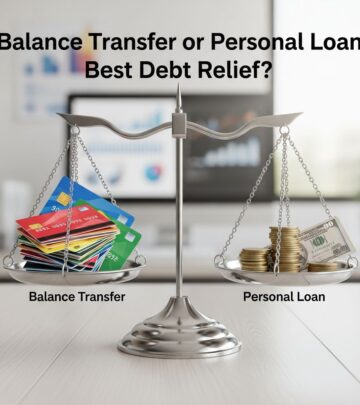
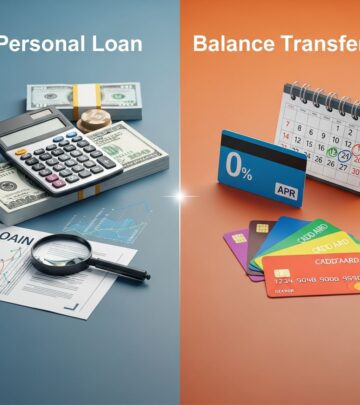
Personal loans designed for debt consolidation offer a fundamentally different structure than balance transfer cards. Instead of moving debt between credit products, consolidation loans provide a lump sum of cash that borrowers use to pay off existing debts in full. This approach transforms multiple high-interest obligations into a single monthly payment with predictable terms.
Key advantages of debt consolidation loans include:
- Fixed interest rates that remain stable throughout the loan term, providing budgeting certainty
- Predictable monthly payments that don’t fluctuate based on balance changes
- Longer repayment timeframes (typically 3 to 7 years) that can reduce monthly obligations compared to credit card minimums
- Accessibility for borrowers with fair or improving credit scores, as many lenders serve a broader credit spectrum than premium credit card issuers
- Potential reduction in your credit utilization ratio once credit cards are paid off, which can improve credit scores over time
The fundamental distinction lies in how these products approach debt reduction. While balance transfer cards offer temporary interest relief designed to push you toward aggressive payoff during the promotional period, consolidation loans emphasize steady, manageable payments across an extended timeline. This makes consolidation particularly attractive for individuals carrying substantial debt loads or those with limited monthly cash flow available for accelerated repayment.
Strategic Debt Payoff Methodologies
Beyond formal financial products, structured repayment strategies can transform your approach to debt elimination. These psychological and mathematical frameworks help borrowers maintain motivation while systematically reducing their total debt burden.
The Avalanche Method focuses on mathematical efficiency. Under this approach, you direct all available funds toward the debt with the highest interest rate while maintaining minimum payments on other obligations. Once the highest-rate debt is eliminated, you redirect that payment amount toward the next-highest rate obligation. This methodology minimizes total interest paid across all debts, making it mathematically optimal for borrowers primarily concerned with reducing overall costs.
The Snowball Method prioritizes psychological momentum. Rather than targeting the highest interest rate, you focus on eliminating the smallest debt balance first, regardless of its interest rate. Each time you eliminate a debt, you redirect that payment toward the next-smallest balance, creating a snowball effect of growing payments. While this approach typically costs more in total interest compared to the avalanche method, many borrowers find the psychological wins of eliminating debts motivating, increasing their likelihood of following through on their repayment plan.
Both methodologies require discipline and consistent execution but demand no upfront fees, credit qualification processes, or formal loan applications. They work equally well whether you’re paying down existing credit card balances or managing debts consolidated through a personal loan.
Professional Debt Management Programs
When personal efforts prove insufficient or overwhelming, nonprofit credit counseling agencies offer structured debt management plans. These programs position a neutral third party between you and your creditors, negotiating modified payment terms designed to accelerate debt elimination.
A legitimate debt management plan typically involves:
- Comprehensive financial assessment by a certified credit counselor who evaluates your complete financial picture
- Creditor negotiations to potentially reduce interest rates or waive certain fees
- Consolidation of multiple creditor payments into a single monthly payment to the counseling agency
- Structured timeline for complete debt elimination, often spanning 3 to 5 years
- Financial education and budgeting guidance to prevent future debt accumulation
Important distinctions separate legitimate debt management plans from predatory debt settlement services. Genuine programs work with creditors cooperatively and don’t require you to stop paying debts or tank your credit score intentionally. They’re offered by nonprofit organizations and typically involve modest or no upfront fees. Avoid services promising dramatic debt reduction through settlement or those requiring substantial fees before delivering results.
Comparative Analysis: Which Approach Fits Your Situation?
| Strategy | Best For | Primary Advantage | Main Limitation | Timeline |
|---|---|---|---|---|
| Balance Transfer Card | Borrowers with good credit, modest debt, and aggressive repayment capacity | 0% interest during introductory period | Requires strong credit; limited qualification and transfer windows | 6-21 months typically |
| Consolidation Loan | Borrowers with substantial debt needing manageable monthly payments | Fixed rates and predictable payments; accessible to various credit profiles | Interest charges throughout loan term; extended payoff period | 3-7 years typically |
| DIY Payoff Strategy | Borrowers with discipline and available cash flow for accelerated payments | No fees; maximum control; builds financial discipline | Requires self-direction; no creditor negotiation | Varies based on effort |
| Debt Management Plan | Borrowers with overwhelming debt and limited negotiation skills | Professional creditor negotiations; structured guidance; reduced complexity | Potential credit score impact; monthly fees; requires commitment to program | 3-5 years typically |
Evaluating Your Credit Profile and Financial Capacity
The optimal debt relief strategy depends on three primary factors: your credit score, the total debt amount, and your available monthly cash flow.
Credit Score Considerations: If you maintain a credit score above 700, balance transfer cards become viable options worth exploring for modest debt loads. Scores between 650-700 may qualify for consolidation loans with competitive rates. Below 650, traditional consolidation may be challenging, but nonprofit debt management plans remain accessible.
Debt Amount Significance: Small balances under $5,000 might be eliminated quickly through focused effort and the avalanche or snowball method. Moderate debt between $5,000 and $20,000 could benefit from balance transfer cards or consolidation loans. Large debt exceeding $20,000 typically requires the extended timeline and structured approach of consolidation loans or professional debt management plans.
Monthly Cash Flow Reality: Honestly assess how much you can allocate toward debt monthly beyond minimum payments. If you can commit $300-500 monthly to accelerated payoff, strategic methods or balance transfers make sense. If maximum available is $50-100 beyond minimums, longer-term consolidation loans provide more realistic terms.
Common Mistakes to Avoid When Selecting Debt Solutions
Understanding pitfalls helps prevent costly errors:
- Assuming all consolidation loans carry identical rates and terms—shop multiple lenders to compare offers
- Ignoring balance transfer fees and time windows, which can quickly offset interest savings
- Opening new credit accounts without understanding the credit score impacts of hard inquiries and new account age
- Failing to address underlying spending patterns, which can result in re-accumulating debt while paying off existing balances
- Confusing legitimate nonprofit credit counseling with for-profit debt settlement companies offering unrealistic promises
Building Sustainable Financial Habits Moving Forward
Regardless which debt relief strategy you choose, long-term financial health requires addressing the behaviors that created the debt initially. This might involve creating realistic budgets, establishing emergency funds, or reducing discretionary spending. Many successful debt payoff journeys include behavioral modifications that persist long after the final payment is made, preventing future debt cycles.
Whichever path you pursue—whether consolidating through a personal loan, executing a strategic payoff plan, working with credit counselors, or combining multiple approaches—the critical element is taking deliberate action rather than remaining paralyzed by overwhelming debt. Each option offers legitimate value for different financial situations and borrower profiles.
References
- 11 Best Balance Transfer Credit Cards of April 2026 — NerdWallet. March 2026. https://www.nerdwallet.com/credit-cards/best/balance-transfer
- 3 Alternatives to a Balance Transfer — Experian Ask Experian Blog. https://www.experian.com/blogs/ask-experian/balance-transfer-alternatives/
- Best Balance Transfer Cards Of March 2026 — Bankrate. March 2026. https://www.bankrate.com/credit-cards/balance-transfer/best-balance-transfer-cards/
- 2026 Guide to Balance Transfer Cards vs. Consolidation Loans — MoneyLion Learn. 2026. https://www.moneylion.com/learn/balance-transfer-cards-vs-consolidation-loans
- Best Balance Transfer Cards for March 2026 — Intuit Credit Karma. March 2026. https://www.creditkarma.com/credit-cards/balance-transfer
Similar Articles








Read full bio of Sneha Tete