5 Debt Management Questions You’re Too Embarrassed to Ask
Honest answers to your toughest debt questions without judgment or shame.

Dealing with debt can feel isolating and shameful. Many people struggle with financial questions they’re afraid to ask friends, family, or even professionals. The truth is, debt management is a common challenge that affects millions of people, and seeking clarity about your options is a sign of strength, not weakness. This guide addresses five critical debt management questions that people often feel too embarrassed to ask, providing honest, practical answers to help you move forward with confidence.
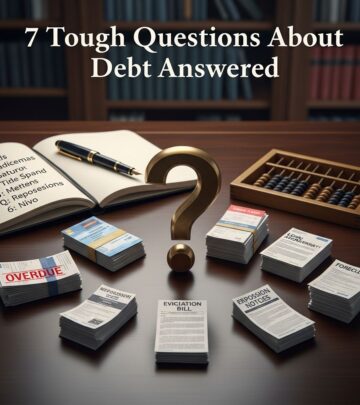
Question 1: Should I Declare Bankruptcy?
Bankruptcy is often viewed as a last resort, and for many people in serious debt, it can seem like the only option. However, determining whether bankruptcy is right for your situation requires careful analysis of your financial circumstances.
The first step in evaluating bankruptcy is to conduct a comprehensive assessment of your financial position. Add up all of your assets—savings accounts, investments, property, vehicles, and other valuable possessions—and compare this total to all of your debts, including credit cards, personal loans, mortgages, and any other outstanding obligations. If your total debt significantly exceeds your assets, and creditors are contacting you repeatedly throughout the day and night, bankruptcy may warrant serious consideration.
Before pursuing bankruptcy, it’s important to understand that this is a major financial decision with long-lasting consequences. Bankruptcy remains on your credit report for 7 to 10 years, affecting your ability to secure loans, credit cards, and even employment. However, for those in severe financial distress with no realistic path to repayment, bankruptcy can provide a fresh start.
Understanding Chapter 7 Bankruptcy: Chapter 7, commonly referred to as straight bankruptcy, is the simplest and most common form of personal bankruptcy. Under Chapter 7, your current assets are liquidated if you have any, and the proceeds are used to pay off as much of your debt as possible. The remaining debt is then negotiated. Some debts can be forgiven, while others are structured into a repayment plan that you can realistically manage. The primary drawback of Chapter 7 is substantial: you may lose nearly everything you own, including your home, automobile, and other possessions of value. While it does provide a fresh start, it comes at a significant personal cost.
Understanding Chapter 13 Bankruptcy: Chapter 13 bankruptcy, also known as a reorganization bankruptcy, allows you to keep your assets while restructuring your debts into a manageable repayment plan, typically lasting three to five years. This option is better for those with steady income who want to avoid losing their property.
Question 2: What Can I Do About High Credit Card Interest Rates?
High credit card interest rates can feel suffocating, especially when you’re making minimum payments that barely dent your principal balance. The good news is that you have several legitimate options to reduce the interest you’re paying.
Balance Transfer Strategy: One of the most effective approaches is to explore transferring your high-interest debt to loans or credit cards with significantly lower rates. A Home Equity Line of Credit (HELOC) typically offers substantially lower interest rates compared to standard credit cards, and the repayment terms are generally more flexible and manageable. If you’re a homeowner, this can be an excellent option.
Many credit card companies also offer balance transfer promotions that provide zero percent interest on transferred balances for a limited period. These offers typically include a small fee—usually between 2% and 3% of the balance being transferred—though some cards occasionally waive this fee entirely. It’s crucial to shop around and compare offers from multiple credit card companies to find the best deal for your situation.
Important Considerations: When pursuing a balance transfer, be careful not to accumulate new debt on your original card while paying off the transfer. Additionally, understand the terms of your promotional period, as the interest rate will likely increase significantly once the promotional period ends.
Question 3: How Can I Accelerate My Debt Payoff?
If you want to pay off your debt faster, there are several practical strategies you can implement immediately, all without requiring a large windfall or dramatic life changes.
Reduce Your Expenses: Begin by honestly evaluating where your money is being spent. Ask yourself critical questions: Are you actively using your gym membership? Do you need all of those cable channels? Can you reduce the frequency of dining out? Are there magazine or streaming subscriptions you can eliminate? The goal isn’t to deprive yourself permanently but to identify areas where you can cut expenses in the short term and redirect that money toward debt elimination.
Look for small savings throughout your budget:
- Eliminate unused subscriptions and memberships
- Reduce dining out and entertainment expenses
- Shop for better insurance rates
- Cut discretionary spending on non-essentials
- Find ways to reduce utility costs
Every dollar you find through expense reduction can be applied directly to your credit card payments, accelerating your path to debt freedom.
The Snowball Method: The debt snowball is a powerful psychological tool for accelerating debt payoff. Here’s how it works: Apply as much money as you can toward paying off the credit card with the smallest balance while making minimum payments on all other cards. Once that smallest balance reaches zero, take all of the payment you were making on that card and apply it to the card with the next smallest balance. Continue this process down the line.
This method works exceptionally well because it provides psychological wins along the way. As you eliminate each card completely, you experience a sense of accomplishment that motivates you to continue. Additionally, as you pay off each card, your payment amounts grow larger and larger, creating a snowball effect that accelerates toward your final card. This strategy maintains motivation when debt payoff feels like a long-term slog.
Question 4: How Do I Repair My Credit Score?
A damaged credit score can feel like a permanent scarlet letter, but the truth is that credit scores are designed to improve over time with responsible behavior. Repairing your credit score is absolutely achievable through a systematic approach.
Get Your Credit Report and Check for Errors: The first step is to obtain a free copy of your credit report from AnnualCreditReport.com, the official government-authorized source for free credit reports. Carefully review this report for accuracy. Mistakes happen more frequently than most people realize, and errors on your credit report can significantly damage your score unfairly.
Look specifically for:
- Late payments that weren’t actually late
- Accounts that don’t belong to you
- Duplicate reporting of the same debt
- Delinquencies that have been incorrectly marked or aren’t yours
- Incorrect account balances or credit limits
If you identify errors, dispute them immediately. When faulty late payments and delinquencies are removed from your report, your credit score will rise accordingly.
Strategic Credit Card Management: Next, examine all of your credit card balances. If you have small amounts spread across numerous cards, consolidate those debts onto just a few cards and use only those cards going forward. This simplification makes your finances easier to manage and reduces the number of active accounts.
However, here’s a critical point: do not close the other credit cards. This is a common mistake that actually hurts your credit score. Instead, leave them open. These cards serve as a history of responsible credit use and improve your credit utilization ratio—a metric that measures how much of your available credit you have free to use. A lower credit utilization ratio (typically below 30%) positively impacts your credit score.
Question 5: Is My Debt Good Debt or Bad Debt?
Not all debt is created equal. Understanding the difference between good debt and bad debt helps you prioritize your payoff strategy and make smarter financial decisions going forward.
Understanding Good Debt: Good debt is any borrowing that creates value over time. These investments in your future typically generate returns that exceed the interest costs of the debt.
Common examples of good debt include:
- Mortgage debt: Most people consider a home purchase good debt because real estate typically appreciates over time, and your investment grows in value. Over the long term, your home will likely be worth significantly more than what you paid for it, and you’re building equity rather than paying rent.
- Student loans: Educational debt is generally considered good debt because it represents an investment in yourself and your future earning potential. A degree or certification typically leads to higher income throughout your career.
- Business loans: Borrowing to start or expand a business can be good debt because it should ultimately generate greater revenue and profit, paying for itself many times over.
It’s important to note that these examples have been complicated by real-world factors. The housing market collapse damaged the home investment narrative for many people, and the student debt crisis has raised serious questions about the value of higher education. Additionally, some business ventures don’t generate the anticipated returns. However, as a general principle, these types of debt are still considered good debt because of their potential to create lasting value.
Understanding Bad Debt: Bad debt is borrowing used for consumption—purchasing things that depreciate in value or don’t generate future income. Bad debt consumes your money without providing any lasting benefit.
Clear examples of bad debt include:
- Credit card purchases for everyday expenses like groceries or gas
- Car loans for vehicles that depreciate rapidly
- Personal loans used for vacations or entertainment
- Payday loans or other predatory lending
- Financing depreciating consumer goods
The Gray Area: Some purchases can be either good or bad debt depending on how you approach them. For example, buying a professional suit for work with a credit card might seem like a legitimate business expense, but if it’s not directly leading to a legitimate financial payoff—like a higher-paying job—then it’s actually bad debt. Even dining out registers as bad debt if you keep charging it to a credit card and only paying interest each month without paying down the principal.
The key question to ask yourself is: Will this purchase create lasting value or generate future income that exceeds its cost? If the answer is no, it’s bad debt, and you should avoid financing it with high-interest credit.
Frequently Asked Questions
Q: How long does bankruptcy stay on my credit report?
A: Bankruptcy remains on your credit report for 7 to 10 years, depending on whether it’s Chapter 7 or Chapter 13. During this time, it can affect your ability to obtain credit, secure favorable interest rates, and even impact employment opportunities.
Q: Can I negotiate my credit card debt directly with my creditor?
A: Yes, it’s often possible to negotiate with credit card companies, particularly if you have substantial debt. Many companies will negotiate settlements or modified payment plans. Consider seeking help from a nonprofit credit counseling agency to assist with negotiations.
Q: Will closing old credit cards improve my credit score?
A: No, closing old credit cards typically hurts your credit score because it reduces your available credit and negatively impacts your credit utilization ratio. Keep old cards open with zero balances to maintain a healthy credit profile.
Q: How quickly can I raise my credit score after addressing errors?
A: Credit scores can begin improving within 30 to 60 days after errors are corrected and removed from your report. However, significant improvements typically take several months of responsible credit behavior.
Q: Is it better to pay off high-interest debt first or smallest balances first?
A: Mathematically, paying off high-interest debt first saves more money. However, psychologically, paying off smallest balances first (the snowball method) provides motivation through quick wins. Choose the strategy that will keep you committed to your goal.
References
- 5 Debt Management Questions You’re Too Embarrassed to Ask — Wise Bread. https://www.wisebread.com/5-debt-management-questions-youre-too-embarrassed-to-ask
- Slow and Steady Wins the Debt Race — Wise Bread. https://www.wisebread.com/slow-and-steady-wins-the-debt-race
- Acknowledge You Have a Problem with Debt — Wise Bread. https://www.wisebread.com/acknowledge-you-have-a-problem-with-debt
- Annual Credit Report — Federal Trade Commission. https://www.annualcreditreport.com
- Understanding Bankruptcy — United States Courts. https://www.uscourts.gov/services-forms/bankruptcy/bankruptcy-basics
Similar Articles








Read full bio of medha deb