Debt: Definition, Types, and Financial Impact
Understanding debt: Types, implications, and strategies for effective management.

What Is Debt?
Debt is a fundamental concept in modern finance, representing an obligation to pay back money or other resources that have been borrowed from a lender or creditor. When individuals, businesses, or governments borrow money, they enter into a contractual agreement to repay the principal amount along with interest over a specified period. Debt plays a crucial role in the economy, enabling individuals to purchase homes, fund education, and start businesses, while allowing companies to expand operations and governments to finance public projects.
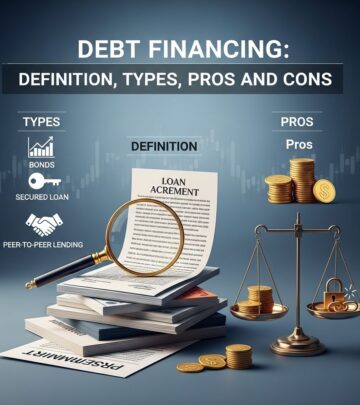
At its core, debt represents a transfer of money from a lender to a borrower, with the expectation of repayment. The terms of this agreement, including interest rates, repayment schedules, and collateral requirements, are typically documented in a formal loan agreement. Understanding the mechanics and implications of debt is essential for making informed financial decisions.
Understanding the Basics of Debt
Debt operates on a simple principle: a creditor extends credit to a debtor with the expectation that the borrowed amount plus interest will be repaid within a specified timeframe. The interest charged compensates the lender for the risk they undertake and the opportunity cost of lending money. Different types of debt carry different risk levels, which is reflected in the interest rates charged.
Key components of any debt arrangement include:
- Principal: The original amount borrowed
- Interest rate: The cost of borrowing expressed as a percentage
- Term: The time period over which the debt must be repaid
- Collateral: Assets pledged to secure the loan (if applicable)
- Covenants: Terms and conditions that the borrower must adhere to
Types of Debt
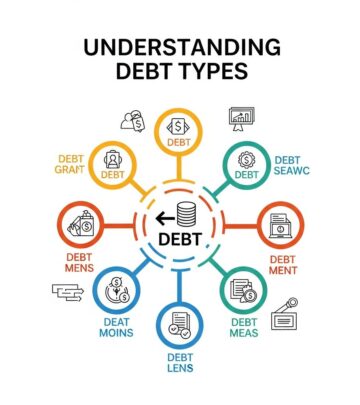
Debt can be categorized in several ways, each serving different purposes and carrying distinct characteristics:
Secured Debt
Secured debt is backed by collateral, which the lender can claim if the borrower defaults. Examples include mortgages, where the property serves as collateral, and auto loans, where the vehicle is held as security. Because secured debt is backed by assets, lenders typically offer lower interest rates compared to unsecured debt, as their risk is reduced.
Unsecured Debt
Unsecured debt is not backed by any collateral, making it riskier for lenders. Credit card debt, personal loans, and medical bills are common examples of unsecured debt. Due to the higher risk, lenders charge higher interest rates on unsecured debt. In case of default, the lender must pursue legal action to recover funds rather than seizing assets.
Revolving Debt
Revolving debt allows borrowers to access funds up to a certain credit limit and repay them flexibly. Credit cards and home equity lines of credit are examples of revolving debt. Borrowers can use the funds, pay them down, and borrow again without reapplying for credit.
Installment Debt
Installment debt requires fixed payments at regular intervals over a specified period. Auto loans, personal loans, and student loans are typical examples. The borrower knows the exact repayment schedule and the total cost of borrowing at the beginning of the loan.
Bonds and Corporate Debt
Businesses and governments often issue bonds to raise capital. Bondholders become creditors and receive interest payments (coupon payments) at regular intervals, with the principal repaid at maturity. Bonds represent a longer-term form of debt financing.
Advantages of Debt
While debt often carries a negative connotation, it offers several legitimate advantages when used responsibly:
- Access to Capital: Debt enables individuals and businesses to access funds they might not otherwise have available, facilitating major purchases and investments.
- Building Credit History: Responsible debt management helps establish and improve credit scores, making future borrowing easier and cheaper.
- Tax Benefits: In many jurisdictions, interest paid on certain types of debt, such as mortgages and business loans, may be tax-deductible.
- Leveraging Investments: Businesses can use debt financing to fund growth opportunities that generate returns exceeding the cost of debt.
- Inflation Hedge: Borrowing at fixed interest rates can be beneficial during inflationary periods, as the real cost of debt decreases over time.
- Preserved Ownership: Unlike equity financing, debt does not dilute business ownership or control.
Disadvantages of Debt
Debt also carries significant risks and disadvantages that must be carefully considered:
- Interest Costs: The amount paid in interest can substantially exceed the principal borrowed, especially with high-interest debt like credit cards.
- Financial Risk: Excessive debt creates financial vulnerability, as monthly obligations reduce financial flexibility and emergency resilience.
- Credit Impact: Missed payments or defaults damage credit scores, making future borrowing more expensive and sometimes unavailable.
- Debt Stress: High debt levels can create psychological stress and negatively affect mental health and well-being.
- Reduced Cash Flow: Large debt payments consume resources that could be used for other priorities or investments.
- Risk of Default: Inability to make payments can lead to asset seizure, bankruptcy, or legal consequences.
- Opportunity Cost: Resources devoted to debt repayment cannot be invested elsewhere or used for savings.
Debt-to-Income Ratio
The debt-to-income (DTI) ratio is a critical metric that measures the percentage of gross income consumed by debt payments. It is calculated by dividing total monthly debt payments by gross monthly income. Lenders use this ratio to assess borrowing capacity and creditworthiness.
A lower debt-to-income ratio indicates better financial health and borrowing capacity. Most lenders prefer a DTI ratio below 43%, though some may accept higher ratios depending on credit scores and other factors. Individuals with high DTI ratios face difficulty obtaining new credit and may struggle to meet existing obligations.
Debt Management Strategies
Effective debt management is essential for maintaining financial health and achieving long-term financial goals:
Create a Budget
Developing a comprehensive budget helps track income and expenses, identifying areas where spending can be reduced to allocate more resources toward debt repayment.
Prioritize High-Interest Debt
Focus on eliminating high-interest debt first, such as credit card balances, as these consume the most resources through interest payments. This approach, known as the avalanche method, minimizes total interest paid.
Consolidate Debt
Debt consolidation combines multiple debts into a single loan, potentially lowering the overall interest rate and simplifying repayment. This strategy works best when the new interest rate is lower than the weighted average of existing debts.
Negotiate with Creditors
Contact creditors to discuss hardship options, including lower interest rates, extended payment terms, or settlement arrangements. Many creditors prefer working with borrowers to avoid defaults.
Increase Income
Pursuing additional income sources or career advancement can accelerate debt repayment without requiring lifestyle sacrifices.
Avoid Additional Debt
Preventing new debt accumulation is crucial during the repayment process. This requires disciplined spending and limiting credit usage.
Personal Debt vs. Business Debt
While the principles of debt apply across contexts, personal and business debt serve different purposes and carry distinct implications.
| Aspect | Personal Debt | Business Debt |
|---|---|---|
| Purpose | Consumption, education, housing | Growth, operations, expansion |
| Repayment Source | Personal income | Business revenue |
| Tax Implications | Limited deductibility | Interest often tax-deductible |
| Default Risk | Personal bankruptcy | Business closure or restructuring |
| Lender Assessment | Credit score, income, assets | Business financials, cash flow, industry |
Government and National Debt
Governments borrow by issuing bonds and treasury securities to finance operations and investments. National debt accumulates when government spending exceeds revenue. While moderate debt levels can be manageable, excessive government debt can lead to inflation, higher interest rates, and reduced economic growth. Different countries manage debt differently based on their economic conditions and fiscal policies.
Debt and Credit Scores
Debt significantly influences credit scores, which range from 300 to 850 in the United States. Payment history accounts for 35% of credit score calculations, making timely debt payments crucial. Credit utilization, representing the percentage of available credit used, comprises 30% of the score. Carrying high balances on credit cards negatively impacts scores, while maintaining low utilization improves creditworthiness.
Regular on-time payments, diverse debt types, and low credit utilization collectively build strong credit profiles, enabling access to better interest rates and favorable lending terms in the future.
Frequently Asked Questions
Q: What is considered good debt versus bad debt?
A: Good debt typically finances assets that appreciate or generate income, such as mortgages or student loans. Bad debt finances consumption or depreciating assets, such as credit card debt for vacations or expensive purchases. The distinction depends on whether the debt enables wealth building or merely consumption.
Q: How can I reduce my debt quickly?
A: Strategies include increasing income, reducing expenses to allocate more toward repayment, consolidating high-interest debt, negotiating lower rates, and using methods like the avalanche (highest interest first) or snowball (smallest balance first) approach.
Q: Does all debt hurt my credit score?
A: Not necessarily. Responsible debt management, including on-time payments and low credit utilization, actually improves credit scores. However, missed payments, high balances, and defaults damage creditworthiness.
Q: What happens if I can’t pay my debt?
A: Consequences include damaged credit scores, asset seizure, wage garnishment, legal action, and potentially bankruptcy. It is important to contact creditors immediately if facing payment difficulties to explore options like hardship programs or settlement arrangements.
Q: Is it better to pay off debt or invest?
A: This depends on interest rates and investment returns. Generally, paying off high-interest debt (above 10%) is preferable. For lower-interest debt, investing may generate higher returns, though this involves risk and should consider personal financial goals and risk tolerance.
Q: How does debt consolidation work?
A: Debt consolidation combines multiple debts into a single loan, typically with a lower overall interest rate. This simplifies payments and reduces total interest paid if the new rate is favorable. Options include personal loans, balance transfer cards, or home equity loans.
References
- Consumer Financial Protection Bureau – Debt Collection — U.S. Consumer Financial Protection Bureau. 2024. https://www.consumerfinance.gov/ask-cfpb/what-is-debt-collection-en-1128/
- Federal Reserve – Credit and Debt — Board of Governors of the Federal Reserve System. 2024. https://www.federalreserve.gov/
- Fair Isaac Corporation – Credit Score Factors — FICO. 2024. https://www.fico.com/en/products/fico-score
- U.S. Securities and Exchange Commission – Bonds and Bond Investing — SEC Office of Investor Education and Advocacy. 2024. https://www.sec.gov/investor/pubs/assetbk.htm
- National Foundation for Credit Counseling – Debt Management — NFCC. 2024. https://www.nfcc.org/
Similar Articles








Read full bio of Sneha Tete