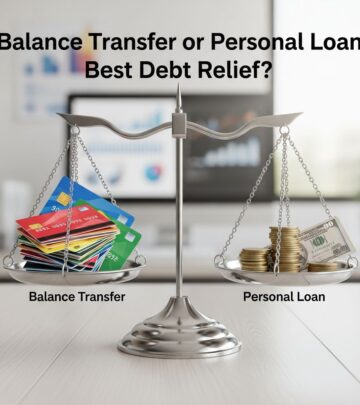
Debt Crusher: Balance Transfer or Personal Loan?
Discover which debt relief strategy—balance transfer cards or personal loans—accelerates your path to financial freedom based on your debt size and repayment ability.
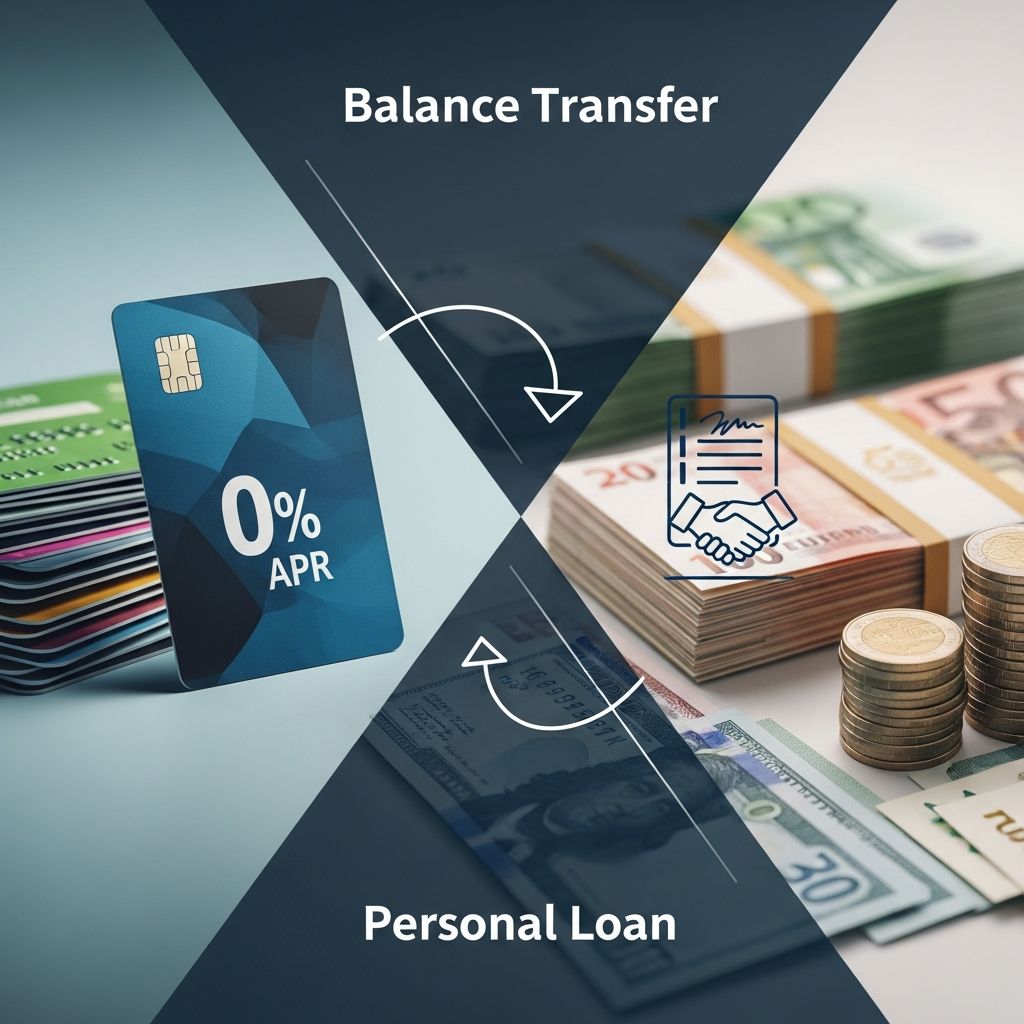
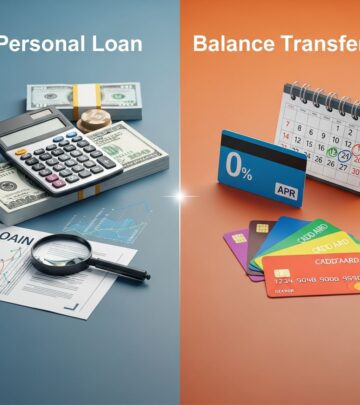
High-interest credit card debt can spiral quickly, but two proven strategies stand out for consolidation: balance transfer credit cards and personal loans. Balance transfers move debt to a card with a temporary 0% introductory rate, while personal loans provide a lump sum at a fixed rate for structured repayment. The right choice hinges on debt amount, credit profile, and payoff timeline. This guide breaks down mechanics, costs, ideal use cases, and comparisons to help you select the faster path to debt freedom.
Understanding Balance Transfer Credit Cards
Balance transfer cards allow you to shift existing credit card balances to a new card offering a promotional 0% APR, typically lasting 12 to 21 months. During this window, payments reduce principal directly without interest accrual, accelerating payoff if you stay disciplined.
Eligibility requires good to excellent credit scores, often 670+, as issuers target low-risk borrowers. Transfer limits usually cap at $15,000, with fees of 3% to 5% added to the balance—for a $10,000 transfer at 3%, that’s $300 upfront.
Advantages of Balance Transfers
- Zero interest initially: Full payments attack principal, potentially saving thousands versus 20%+ card rates.
- Quick setup: Online applications process in minutes, with funds available immediately.
- Revolving flexibility: No fixed term means adjustable payments if income fluctuates.
Drawbacks to Watch For
- Post-promo penalty rates: APRs jump to 20-29% after intro period, risking more debt if unpaid.
- Fees erode savings: 3-5% charges on large transfers add hundreds.
- High minimum payments: To clear debt in time, monthly outlays can exceed $1,000 for mid-sized balances.
Best for debts under $15,000 payable within 12-18 months by disciplined payers with strong credit.
Exploring Personal Loans for Debt Relief
Personal loans deliver a one-time lump sum to pay off cards and other unsecured debts, replaced by fixed monthly payments over 2-7 years at rates averaging 12.5% for good credit.
Unlike transfers, they suit broader credit ranges (fair to excellent) and larger amounts up to $50,000+. Origination fees (1-8%) apply but are often lower percentage-wise on big loans. No promo period means interest starts day one, but predictability aids budgeting.
Key Benefits
- Fixed structure: Equal payments simplify cash flow, ideal for steady incomes.
- Higher limits: Tackle $30,000+ debts across multiple sources.
- Credit building: On-time payments boost scores; stops card temptation.
Potential Downsides
- Immediate interest: No grace period, so total cost rises over time.
- Fees and rates: Origination plus APRs up to 36% for weaker credit.
- Rigidity: Fixed terms limit early payoff flexibility without prepay penalties (check lender).
Optimal for larger debts, variable incomes needing lower payments, or consolidating non-card debts.
Head-to-Head Cost Analysis
Real-world math reveals trade-offs. Consider a $30,000 debt scenario:
| Option | Key Terms | Monthly Payment | Total Fees/Interest | Total Cost |
|---|---|---|---|---|
| Balance Transfer | 0% for 18 months, 3% fee | $1,716 | $900 fee | $30,900 (if paid off) |
| Personal Loan | 12% APR, 60 months | $667 | $10,040 interest | $40,040 |
Transfers win short-term if aggressive payoff succeeds, saving ~$9,000 vs. loan. But failure post-promo balloons costs. Loans preserve $1,000+ monthly liquidity for life expenses.
For $10,000 debt:
- Transfer (15 months, 3% fee): ~$692/month, total $10,300.
- Loan (36 months, 11% APR): ~$341/month, total $12,300.
Transfers edge smaller debts; loans scale better for big ones.
Factors to Determine Your Best Fit
Assess these to choose:
- Debt size: <$15,000? Transfer. Larger? Loan.
- Payoff speed: 12-21 months feasible? Transfer. Need 3-5 years? Loan.
- Credit/income: Excellent score? Both viable. Fair credit/variable pay? Loan.
- Debt types: Cards only? Transfer. Mixed unsecured? Loan.
Pre-qualify for loans without score dings; shop transfers via card match tools.
Maximizing Savings and Avoiding Traps
Hybrid approach: Use transfer for portion payable fast, loan for rest. Automate payments, cut spending. Post-payoff, build emergency fund to prevent recurrence. 85% of consolidators report savings, averaging $428/month lower payments.
Traps: New card spending on transfers; loan shopping rate hikes credit use. Payoff discipline is key—transfers fail without it.
Frequently Asked Questions
Can I use both strategies together?
Yes, transfer small balances to 0% card while loaning larger ones for structure.
Do balance transfers hurt credit?
Temporarily—hard inquiry, utilization spike—but payoff improves mix.
Are personal loan rates fixed?
Typically yes, shielding from hikes unlike variable cards.
What’s the average personal loan APR?
~12.5% for good credit, higher for subprime.
How long do intro 0% periods last?
12-21 months average.
Steps to Implement Your Strategy
- Calculate total debt and minimum payments.
- Check credit score via free reports.
- Pre-qualify options online.
- Compare total costs with calculators.
- Apply, pay off cards immediately.
- Track progress monthly.
Debt freedom demands action—pick, commit, execute.
References
- Personal Loan vs. Balance Transfer: Which Saves You More — BHG Financial. 2024-01-15. https://bhgfinancial.com/personal-loans/debt-consolidation/personal-loan-vs-balance-transfer-which-saves-you-more
- Balance Transfer VS. Personal Loan: Which One Wins? — Arro Finance. 2024-05-20. https://www.arrofinance.com/blog/balance-transfer-or-personal-loan-what-is-the-right-fit-for-you
- Balance transfer vs. personal loan vs. HELOC — CBS News. 2024-08-10. https://www.cbsnews.com/news/balance-transfer-vs-personal-loan-vs-heloc-which-works-for-credit-card-debt/
- Balance Transfer or Personal Loan: Which Is Right for You? — Discover. 2024-03-05. https://www.discover.com/personal-loans/resources/consolidate-debt/personal-loans-vs-balance-transfers/
- Balance Transfer Card or Personal Loan: Which Is Best? — NerdWallet. 2024-11-12. https://www.nerdwallet.com/personal-loans/learn/debt-consolidation-credit-card-balance-transfer
- Balance Transfer or Personal Loan — OneMain Financial. 2024-06-18. https://www.onemainfinancial.com/resources/loan-basics/balance-transfer-or-personal-loan
- Debt consolidation loan vs. balance transfer credit card — Bankrate. 2024-09-22. https://www.bankrate.com/loans/personal-loans/balance-transfer-credit-card-vs-personal-loan/
Similar Articles








Read full bio of Sneha Tete