Debt Consolidation or Restructuring: Your Best Choice?
Explore debt consolidation and restructuring options to find the ideal strategy for simplifying payments or reducing your debt load effectively.
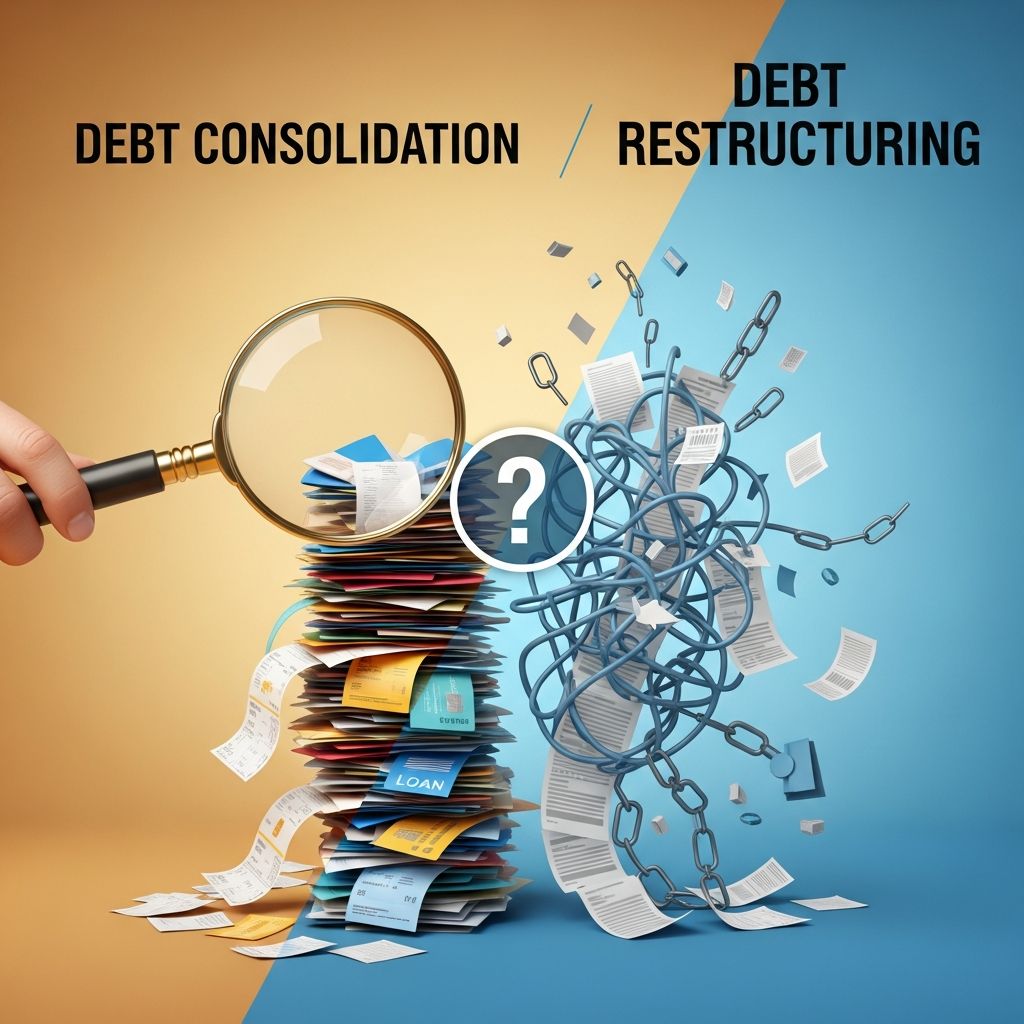
Navigating overwhelming debt requires strategic choices, and two prominent options stand out:
debt consolidation
anddebt restructuring
. Debt consolidation streamlines multiple obligations into one manageable payment, often at a reduced interest rate, while debt restructuring modifies existing terms with creditors to lower the owed amount or extend timelines. The right path hinges on your credit health, debt severity, and long-term goals.Understanding Debt Consolidation Fundamentals
Debt consolidation merges various debts, such as credit cards, personal loans, and medical bills, into a single loan or account. This approach simplifies budgeting by replacing scattered payments with one monthly obligation, potentially at a lower interest rate than the originals.
Common methods include personal loans from banks, balance transfer credit cards with promotional rates, or home equity loans for homeowners. For example, if you have three credit cards with rates above 20%, a consolidation loan at 10% could halve your interest costs, accelerating payoff.
Qualifying typically demands decent credit scores (above 670) and steady income, as lenders assess repayment ability. This option suits those not yet in crisis but burdened by high-interest, multiple debts.
Decoding Debt Restructuring Mechanics
Debt restructuring entails negotiating directly with creditors to revise loan terms, often reducing principal, slashing interest rates, or prolonging repayment periods. Unlike consolidation, it doesn’t create new debt; it alters existing agreements.
This is reactive, ideal for those facing default or hardship. Creditors may agree to forgive portions of debt (e.g., settling for 60% of owed) to recover funds rather than pursue collections or bankruptcy. It’s common for mortgages, where modifications extend terms from 30 to 40 years while dropping rates from 6% to 3%.
Accessibility favors those in distress, regardless of credit, as it’s about proving hardship over perfection. Programs like debt management plans (DMPs) through nonprofits can facilitate this for unsecured debts.
Core Differences: A Side-by-Side Analysis
While both ease debt burdens, their mechanisms diverge significantly. Consolidation organizes without forgiving debt; restructuring often cuts the principal.
| Aspect | Debt Consolidation | Debt Restructuring |
|---|---|---|
| Debt Reduction | No principal forgiveness; full repayment required | Often reduces amount owed via settlements |
| Number of Debts | Handles multiple debts into one | Typically one debt, though possible for multiples |
| Credit Requirement | Good credit needed for best rates | Available in hardship, poor credit OK |
| Process | New loan pays off old creditors | Negotiate changes to current terms |
| Timing | Preventive, before crisis | Reactive, during financial strain |
Advantages and Drawbacks of Consolidation
- Pros: Simplifies payments, potentially lowers interest (6%-36% based on credit), preserves credit if paid on time, no tax on forgiven debt.
- Cons: Requires solid credit; doesn’t shrink debt total; risk of new debt accumulation; fixed payments strain tight budgets.
A 36-month consolidation at 12% might save thousands versus 25% credit cards, but missing payments triggers delinquencies.
Pros and Cons of Restructuring
- Pros: Substantial relief via principal cuts, lower rates, extended terms; flexible for hardship cases; may consolidate payments.
- Cons: Hurts credit score (settlements seen as losses); possible taxes on forgiven amounts; not all creditors agree; bankruptcy-linked versions severe.
For a $50,000 debt, restructuring to $30,000 payable over 60 months eases immediate pressure but flags credit reports for 7 years.
Credit Score Implications Compared
Consolidation impacts credit mildly: hard inquiries and closed accounts drop scores temporarily (10-50 points), but consistent payments rebuild it. Restructuring signals distress—late payments or settlements slash scores 100+ points, lingering 7 years.
Post-consolidation, scores often rise within a year; restructuring recovery takes longer, complicating future borrowing.
When to Choose Debt Consolidation
Opt for consolidation if you have fair-to-good credit, multiple high-interest debts under $50,000, and stable income. It’s proactive for streamlining without credit dings. Avoid if income is erratic or debts include mortgages/taxes better suited for restructuring.
Ideal Scenarios for Debt Restructuring
Pursue restructuring amid job loss, medical crises, or near-default, especially for large single debts like mortgages or business loans. It’s a lifeline when consolidation loans are unattainable.
Steps to Implement Debt Consolidation
- Calculate total debt and minimum payments.
- Check credit score and prequalify for loans.
- Compare rates/terms from banks, credit unions.
- Apply, use funds to pay off debts immediately.
- Enroll in autopay; cut up old cards.
Navigating the Restructuring Process
- Document hardship (income statements, bills).
- Contact creditors or hire a nonprofit counselor.
- Propose terms (e.g., 50% reduction).
- Secure written agreements before payments.
- Monitor credit and budget strictly.
Alternatives to Consider
Beyond these, debt settlement negotiates lumpsum reductions (taxable), management plans waive fees/lower rates without new loans, or bankruptcy offers court protection. DMPs span 36-60 months interest-free.
Real-Life Case Studies
Take Sarah, with $25,000 in credit cards at 22%. Consolidation into a 7% loan saved $8,000 in interest over 5 years, boosting her score. Conversely, Mike’s $100,000 mortgage restructuring halved payments post-layoff, averting foreclosure despite a credit dip.
Frequently Asked Questions (FAQs)
Does debt consolidation hurt your credit?
Short-term dip from inquiries, but on-time payments improve it long-term.
Can restructuring eliminate debt entirely?
Not always; settlements reduce it, bankruptcy discharges some types.
Is consolidation better for multiple small debts?
Yes, it excels at unifying payments for cards/loans.
What taxes apply to restructured debt?
Forgiven amounts over $600 may be taxable income.
How long do credit effects last?
Consolidation: 1-2 years recovery; restructuring/settlement: up to 7 years.
Tips for Debt Freedom Success
Track spending with apps, build 3-6 months’ emergency funds, boost income via side gigs. Avoid new debt; review progress quarterly. Professional advice from NFCC-certified counselors ensures tailored plans.
Ultimately, assess your situation: consolidate for organization, restructure for relief. Both demand discipline for lasting recovery.
References
- Debt Consolidation vs Debt Restructuring — Study.com. 2023. https://study.com/academy/lesson/debt-consolidation-vs-debt-restructuring.html
- Debt Restructuring vs Debt Consolidation: Key Differences Explained — National Debt Relief. 2024. https://www.nationaldebtrelief.com/blog/debt-guide/debt-consolidation/debt-consolidation-debt-restructuring/
- Debt Resolution vs Debt Consolidation — Money Management International. 2025-03-15. https://www.moneymanagement.org/debt-resolution/debt-resolution-vs-debt-consolidation
- Debt Relief vs Debt Consolidation: What’s the Difference — AF Morgan Law. 2024. https://afmorganlaw.com/debt-relief-vs-debt-consolidation/
- Differences Between Debt Consolidation and Debt Restructuring — Walinski Law. 2023-08-10. https://www.walinskilaw.com/chicago-collections-lawyer/differences-between-debt-consolidation-and-debt-restructuring
- Debt Consolidation, Debt Restructuring, & Debt Settlements — YouTube (The Approved). 2024-06-20. https://www.youtube.com/watch?v=-tZwpbY4e_I
- Debt Restructuring or Debt Consolidation – Which is Right for You? — CFO Selections. 2024. https://www.cfoselections.com/perspective/debt-restructuring-or-debt-consolidation-which-is-right-for-you
Similar Articles








Read full bio of medha deb