Debt Consolidation vs. Debt Settlement Explained
Understand how debt consolidation and debt settlement differ so you can choose the most realistic, cost-effective path out of unsecured debt.
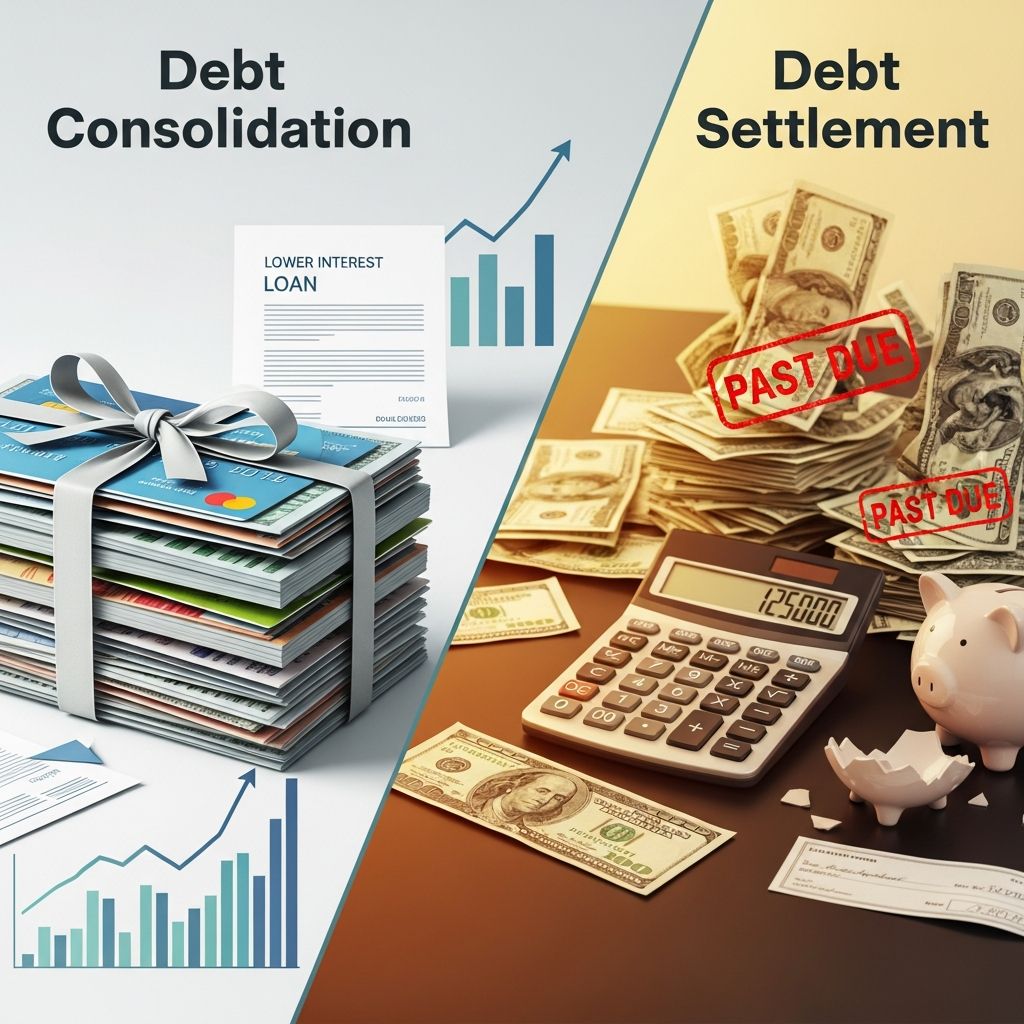
When unsecured debt starts to feel unmanageable, two options that often come up are debt consolidation and debt settlement. They sound similar, but they solve debt problems in very different ways. Understanding how each strategy works, what it costs, and how it affects your credit can help you choose the option that best fits your situation.
Overview: Two Very Different Paths to Debt Relief
Both debt consolidation and debt settlement aim to help you deal with high-interest unsecured debts, such as credit cards, personal loans, and medical bills. However, they differ on three core points:
- Goal: Consolidation focuses on simplifying repayment and often reducing interest, while settlement focuses on reducing the principal you owe.
- Method: Consolidation replaces multiple debts with a new loan or credit line; settlement involves negotiating with creditors to accept less than the full balance.
- Credit impact: Consolidation can be relatively gentle on your credit if you pay on time; settlement usually causes more severe and longer-lasting damage to your credit profile.
Because of these differences, the right choice depends on your income stability, credit score, and how far behind you are on your bills.
What Is Debt Consolidation?
Debt consolidation means taking out one new loan or credit line to pay off multiple existing debts. After consolidating, you make a single monthly payment to the new lender instead of multiple payments to different creditors.
How Debt Consolidation Works
Debt consolidation typically involves one of the following:
- Debt consolidation loan: A personal loan used to pay off several high-interest debts, leaving you with one fixed-rate, fixed-term payment.
- Balance transfer credit card: A new credit card with an introductory low or 0% APR that you use to move multiple credit card balances onto one card.
- Home equity products: A home equity loan or line of credit (HELOC) that taps your home’s equity to pay off unsecured debts, usually at a lower rate but with your house as collateral.
The main aims are to simplify repayment and ideally lower your interest rate, so more of each payment goes toward the principal rather than interest charges.
Pros of Debt Consolidation
- Single monthly payment: Easier budgeting and fewer chances to miss payments because you only owe one lender.
- Potentially lower interest rate: If you qualify for better terms than your current credit cards or loans, you can reduce interest costs and pay debt off faster.
- Predictable payoff schedule: A fixed-rate loan offers a clear end date and consistent payment amount each month.
- Less damage to credit: Your credit score may dip briefly when you apply for a new account, but on-time payments can help your score over time.
Cons of Debt Consolidation
- Requires qualifying credit: You generally need at least fair to good credit to access attractive rates; otherwise, consolidation may not save you money.
- Does not reduce principal: You still repay the full amount you owe, plus interest and any fees.
- Risk of more debt: If you run up balances again on old credit cards after consolidating, you can end up with more overall debt.
- Possible fees: Origination fees on loans or balance transfer fees on credit cards can reduce your savings.
Who Debt Consolidation May Be Right For
Debt consolidation is generally better suited to people who:
- Have a steady income and can afford regular payments.
- Hold a good or improving credit score that qualifies them for favorable terms.
- Are still current or only slightly behind on their debts.
- Want to simplify payments rather than seek a reduction in the amount owed.
What Is Debt Settlement?
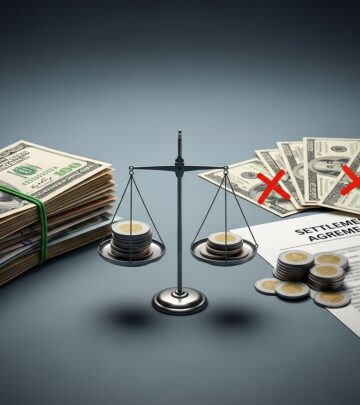
Debt settlement (sometimes called debt relief or debt resolution) is the process of negotiating with creditors to pay less than the total amount you owe on an account. The remaining balance is then forgiven as part of the settlement.
How Debt Settlement Works
Debt settlement can be done on your own or through a for-profit debt settlement company. Typical steps include:
- You stop paying creditors directly and instead deposit money into a dedicated account each month.
- Once a sufficient balance builds up, you or the settlement company offer a lump-sum payment to each creditor that is less than the full amount owed.
- If the creditor agrees, they mark the account as “settled” or “paid for less than the full balance” and forgive the remaining amount.
Debt settlement typically targets unsecured debts, such as credit cards, medical bills, and personal loans. Secured debts (like mortgages and auto loans) are generally not included because the lender can repossess collateral instead.
Pros of Debt Settlement
- Reduces total amount owed: Successful settlements can significantly cut your overall principal, sometimes leading to faster resolution than paying in full.
- Alternative to bankruptcy: For some consumers in deep distress, settlement can provide a path out of debt without filing for bankruptcy.
- No minimum credit score requirement: Creditors are often more open to settlement when you are already behind, so poor credit does not necessarily block this option.
Cons of Debt Settlement
- Severe credit damage: Missed payments and “settled for less than full balance” notations can significantly lower your credit score and remain on your report for years.
- Collection pressure: While you are not paying creditors, you may face collection calls, late fees, interest accrual, and potential lawsuits.
- Tax consequences: Forgiven debt over certain thresholds may be treated as taxable income by the IRS, depending on your situation.
- Fees and risks: Settlement companies charge fees, and there is no guarantee creditors will accept settlement offers.
Who Debt Settlement May Be Right For
Debt settlement is usually considered by people who:
- Are already significantly delinquent on unsecured debts.
- Cannot realistically afford to repay the full balances, even with consolidation.
- Are trying to avoid or compare alternatives to bankruptcy.
- Accept that their credit score will suffer for the sake of lowering the total amount paid.
Debt Consolidation vs. Debt Settlement: Side-by-Side Comparison
The table below summarizes key differences between these two debt relief strategies.
| Feature | Debt Consolidation | Debt Settlement |
|---|---|---|
| Main goal | Simplify payments and lower interest | Reduce total amount of debt owed |
| How it works | New loan/credit line pays off multiple debts; you repay the new account | Negotiate with creditors to accept less than full balance |
| Debt types | Mainly unsecured debts; some options use home equity as collateral | Primarily unsecured debts; secured loans usually excluded |
| Credit score needed | Generally fair-to-good or better to get attractive rates | No minimum; often used by borrowers with poor credit |
| Effect on principal | Principal is not reduced; you repay 100% over time | Principal may be reduced via negotiated settlements |
| Credit impact | Short-term dip; can improve with consistent on-time payments | Major, long-lasting damage; late payments and settled accounts |
| Timeline | Often several years of structured repayment | Programs may last 2–4 years, depending on negotiations |
| Costs | Interest, origination fees, or balance transfer fees | Program fees, ongoing late fees/interest, and potential tax on forgiven debt |
Key Factors to Consider Before Choosing an Option
Before deciding between consolidation and settlement, it helps to take a clear look at your financial picture and long-term goals.
1. Your Credit Score and Access to New Credit
- If your credit score is strong, consolidation may allow you to secure a lower interest rate and preserve your credit profile.
- If your credit is already badly damaged, settlement or even bankruptcy may be more realistic than a new consolidation loan.
2. Ability to Afford Monthly Payments
- Consolidation works best if you can reliably make the new required payment each month.
- Settlement is sometimes used when you cannot afford regular payments at current levels and need to reduce the overall balance owed.
3. Risk Tolerance and Time Horizon
- Consolidation typically offers a clear, structured plan with predictable payments.
- Settlement involves uncertainty: creditors may reject offers, and accounts may continue to accrue fees and interest during negotiations.
4. Long-Term Financial Goals
- If you aim to qualify for a mortgage or major loan in the near future, a consolidation strategy (or another less damaging option) may better support that goal.
- If your priority is to exit debt as cheaply as possible and you can accept major credit damage, settlement may be considered alongside other last-resort options.
Other Alternatives to Explore
Debt consolidation and settlement are not the only tools available. Depending on your situation, you might consider:
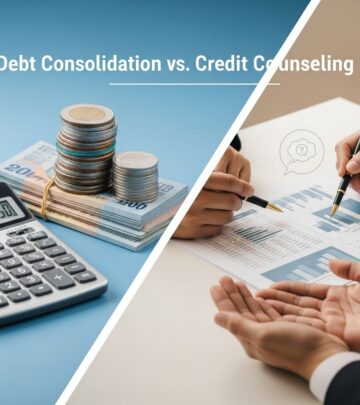
- Credit counseling and debt management plans: Nonprofit credit counseling agencies can help you create a budget and may arrange a structured plan with creditors at reduced interest rates without settling for less than the full amount.
- Negotiating directly with creditors: Sometimes you can request hardship arrangements, lower interest rates, or modified payment plans without entering a formal settlement program.
- Bankruptcy: Chapter 7 or Chapter 13 bankruptcy may discharge or restructure debts under court supervision; this has serious, long-lasting credit implications but can be a necessary safety net in extreme cases.
Frequently Asked Questions (FAQs)
Q: Does debt consolidation hurt my credit score?
Applying for a new consolidation loan or credit card can cause a small, temporary drop in your credit score due to a hard inquiry and a new account on your report. Over time, however, making payments on time and lowering your overall balances can help your score recover and possibly improve.
Q: How badly does debt settlement affect my credit?
Debt settlement usually causes significant and long-lasting harm to your credit. Missed payments, collection activity, and the “settled for less than full balance” notation on your credit reports can all lower your score and remain visible for several years, which may make it harder to obtain new credit on favorable terms.
Q: Can I consolidate both secured and unsecured debts?
Most consolidation strategies focus on unsecured debts like credit cards and personal loans. Some borrowers use home equity loans or lines of credit to consolidate unsecured debts at lower rates, but this effectively turns unsecured debts into debts secured by your home, increasing the risk of losing your property if you cannot keep up with payments.
Q: Are forgiven debts from settlement taxable?
In many cases, the IRS may treat forgiven debt as taxable income, which means you could owe taxes on the amount that was forgiven. There are exceptions based on insolvency and other factors, so it is important to consult a tax professional to understand your specific situation.
Q: Should I work with a debt settlement company?
Debt settlement companies charge fees and cannot guarantee that creditors will agree to settle your debts. Regulators such as the Consumer Financial Protection Bureau recommend carefully researching any company, understanding all fees, and considering nonprofit credit counseling as an alternative before signing up for a settlement program.
References
- Debt Consolidation vs. Debt Settlement: Which Is Better? — Experian. 2023-05-30. https://www.experian.com/blogs/ask-experian/debt-settlement-vs-debt-consolidation/
- Debt Consolidation vs. Debt Settlement: How They Compare — National Debt Relief. 2024-01-10. https://www.nationaldebtrelief.com/blog/debt-guide/debt-consolidation/debt-consolidation-vs-debt-settlement-how-they-compare/
- Debt Consolidation vs Debt Settlement: Weighing Your Options — InCharge Debt Solutions. 2023-08-15. https://www.incharge.org/debt-relief/consolidation-vs-settlement/
- Debt Settlement vs. Debt Consolidation: Pros & Cons — Debt.org. 2023-06-22. https://www.debt.org/settlement/vs-consolidation/
- What is the difference between credit counseling and debt settlement, debt consolidation, or credit repair? — Consumer Financial Protection Bureau. 2022-08-08. https://www.consumerfinance.gov/ask-cfpb/what-is-the-difference-between-credit-counseling-and-debt-settlement-debt-consolidation-or-credit-repair-en-1449/
- Debt Consolidation vs Debt Settlement: Which Is Better? — MIDFLORIDA Credit Union. 2023-04-05. https://www.midflorida.com/resources/insights-and-blogs/insights/loans-credit/debt-consolidation-vs-debt-settlement-which-is-better
Similar Articles








Read full bio of Sneha Tete