Debt Consolidation vs. Credit Counseling
Compare debt consolidation and credit counseling so you can choose the most effective, affordable strategy to regain financial stability.
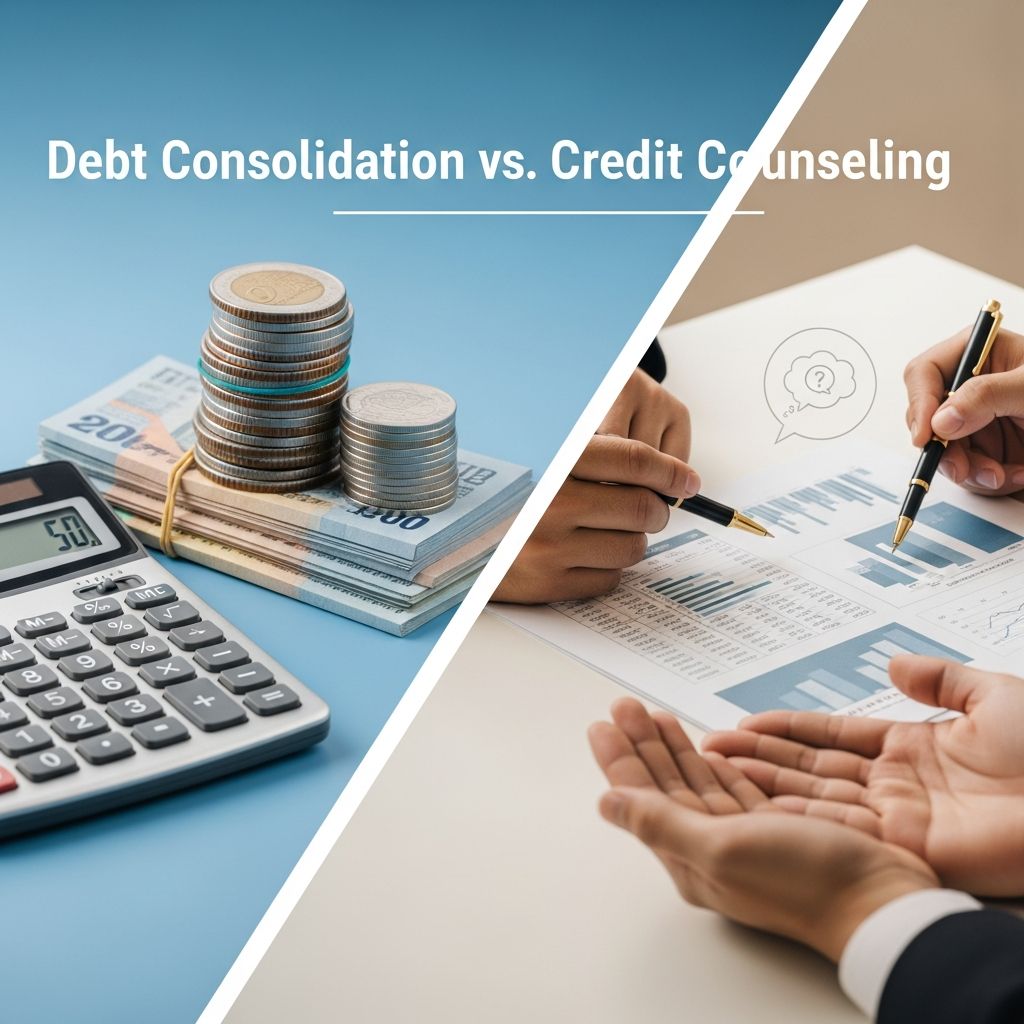
When multiple debts become hard to manage, two popular relief strategies are debt consolidation and credit counseling. Both aim to simplify repayment and reduce financial stress, but they work very differently and are better suited to different types of borrowers.
This guide explains how each option works, the pros and cons, potential costs, impacts on credit, and how to decide which path is right for your situation.
What Is Debt Consolidation?
Debt consolidation is the process of combining multiple debts into a single new account, ideally with a lower interest rate and a fixed payoff schedule.
Most commonly, people consolidate:
- Credit card balances
- Personal loans
- Medical bills
- Other high-interest, unsecured debts
Common Types of Debt Consolidation
The most frequent consolidation tools include:
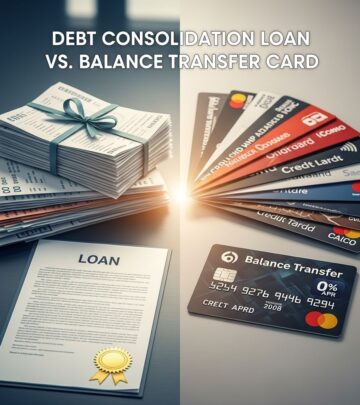
- Debt consolidation loan – A new fixed-rate personal loan used to pay off multiple existing debts. You then make one monthly payment on the new loan.
- Balance transfer credit card – A credit card offering a low or 0% introductory APR for transferred balances over a promotional period.
- Home equity loan or line of credit (HELOC) – Using home equity to pay off unsecured debts; this can lower interest costs but puts your home at risk if you cannot pay.
How Debt Consolidation Works in Practice
While the details vary, the general process is:
- You review your existing debts, including balances, interest rates, and minimum payments.
- You apply for a consolidation product (loan, card, or line of credit).
- If approved, the lender either pays your creditors directly or gives you funds to do so.
- You repay the new account in fixed monthly payments over a defined term, usually 2–7 years for a personal loan.
Pros and Cons of Debt Consolidation
| Pros | Cons |
|---|---|
|
|
What Is Credit Counseling?
Credit counseling is a service where a trained counselor reviews your finances, helps you build a budget, and may enroll you in a debt management plan (DMP) to repay unsecured debts in an organized way.
Most credit counseling agencies are nonprofit, though they can charge reasonable fees for certain services.
How Credit Counseling Works
According to the Consumer Financial Protection Bureau (CFPB), reputable credit counseling agencies usually offer:
- Initial sessions of around an hour to review income, expenses, debts, and goals
- Budgeting help and guidance on managing money and credit
- Free educational materials and sometimes workshops or online tools
If your situation calls for more structured help, the counselor may propose a debt management plan.
Debt Management Plans (DMPs)
A DMP is not a loan. Instead, it is a repayment program administered by the counseling agency:
- You make one monthly payment to the credit counseling organization.
- The agency sends payments to your creditors according to agreed terms.
- Counselors may negotiate lower interest rates or fee waivers, but they do not reduce the principal you owe.
- DMPs typically last around 3–5 years.
Pros and Cons of Credit Counseling
| Pros | Cons |
|---|---|
|
|
Key Differences Between Debt Consolidation and Credit Counseling
Although both strategies simplify payments, the mechanisms and implications differ in important ways.
| Feature | Debt Consolidation | Credit Counseling / DMP |
|---|---|---|
| Basic structure | New loan or credit account used to pay off multiple existing debts | Counseling and optional DMP that redistributes payments to creditors |
| Type of solution | Credit product | Service plus a repayment program |
| Debt reduction | Usually no principal reduction; savings come from lower interest rates or shorter payoff period | No principal reduction; counselors may obtain lower interest or fee concessions |
| Credit score impact | Initial hard inquiry; long-term improvement possible with disciplined repayment | Counseling alone does not directly lower your score; a DMP may indirectly affect access to new credit, but on-time payments can support long-term improvement |
| New borrowing required? | Yes, except in some informal consolidation strategies | No new loans; uses existing accounts under a managed plan |
| Typical timeframe | Often 2–7 years for consolidation loans | Commonly 3–5 years for DMPs |
| Best for | Borrowers with decent credit who can qualify for lower interest rates and who mainly need payment simplification | Borrowers overwhelmed by budgeting, struggling with multiple creditors, or needing structured guidance, not new debt |
Costs and Fees: What Will You Pay?
Debt Consolidation Costs
Potential costs include:
- Interest charges over the life of the new loan or credit line
- Origination fees on personal loans
- Balance transfer fees on credit cards (often 3–5% of the amount transferred)
- Possible annual fees on certain cards or lines of credit
Consolidation is most beneficial when the effective interest rate on the new debt, plus any fees, is significantly lower than the weighted average rate on your existing debts, and when you do not extend the term so much that total interest rises.
Credit Counseling and DMP Costs
According to the CFPB and large credit counseling organizations, you may encounter:
- One-time setup fee for a DMP
- Monthly maintenance fee while enrolled
Nonprofit agencies often scale fees based on income and may reduce or waive them in cases of financial hardship. Many basic counseling sessions and educational materials are free.
Impact on Your Credit Score
Debt Consolidation and Credit
Debt consolidation affects credit primarily through:
- Hard inquiry when you apply for a new loan or card, which can cause a small, temporary score dip
- Changes in your credit utilization ratio (total balances vs. limits). Paying off revolving balances with an installment loan can improve utilization on cards and support score gains over time, as long as you avoid reaccumulating debt
- Your payment history on the new account. On-time payments steadily help your score; missed payments can have serious negative effects
Credit Counseling, DMPs, and Credit
The CFPB notes that credit counseling itself does not directly damage your credit score. However, a DMP can influence credit in several ways:
- Some creditors and bureaus may note your participation in a DMP on your file, but this is not treated the same way as bankruptcy or default.
- You may be required to close or suspend credit card accounts included in the plan, which can affect utilization and average account age.
- Consistent on-time payments through the plan can improve your payment history over time.
Which Option Is Right for You?
No single approach is best for everyone. Your decision should reflect your income stability, credit profile, discipline with spending, and comfort with taking on new credit.
Debt Consolidation May Be Better If You:
- Have good or excellent credit and can qualify for a lower interest rate than your current debts
- Primarily want to simplify payments and save on interest, without needing extensive coaching or budgeting help
- Have steady income and are confident you can commit to the new monthly payment
- Will avoid running up balances again on the cards you pay off
Credit Counseling May Be Better If You:
- Feel overwhelmed by your bills and do not know where to start
- Struggle to keep up with multiple due dates and minimum payments
- Want professional guidance on budgeting, spending habits, and long-term financial planning
- Prefer a structured program that does not require taking on new debt
- Have mostly unsecured consumer debts (credit cards, personal loans, some medical bills)
How to Choose a Reputable Provider
Choosing a Debt Consolidation Lender
When evaluating lenders for a consolidation loan or balance transfer card, consider:
- APR and fees – Compare interest rates, origination fees, balance transfer fees, and any annual charges.
- Loan term – Shorter terms mean higher monthly payments but less total interest.
- Reputation and transparency – Look for clear disclosures and check independent reviews or complaints with appropriate regulators.
- Prequalification – Some lenders let you check your rate with a soft inquiry before formally applying.
Choosing a Credit Counseling Agency
The CFPB and other regulators recommend:
- Favor nonprofit agencies that are accredited and whose counselors are certified.
- Ask for a detailed explanation of all fees in writing before you enroll.
- Confirm that basic counseling and educational materials are available at low or no cost.
- Be cautious of agencies that rush you into a DMP without thoroughly reviewing your budget and alternatives.
- Avoid organizations that promise specific credit score increases or tell you to stop communicating with your creditors.
Frequently Asked Questions (FAQs)
Q: Does debt consolidation reduce the total amount I owe?
A: Typically no. Debt consolidation mainly restructures your existing obligations into a single account, ideally at a lower interest rate. You generally still repay the full principal plus interest, though you may save money if the new rate and term are more favorable.
Q: Can credit counseling get my debts forgiven?
A: Credit counseling agencies do not erase or forgive your debts. Instead, they help you design a realistic budget and, if needed, enroll you in a debt management plan in which you repay what you owe over time, often with reduced interest and fees.
Q: Is credit counseling bad for my credit score?
A: Meeting with a credit counselor does not directly lower your credit score. If you join a DMP, you may have to close some accounts, which can affect factors like credit utilization and account age, but making consistent on-time payments through the plan can support score improvement over the long term.
Q: How long does it take to get out of debt with these options?
A: Many consolidation loans and debt management plans aim for payoff periods of about three to five years, though your exact timeline depends on the amount of debt, interest rate, and monthly payment you can afford.
Q: What if I cannot afford either a consolidation payment or a DMP?
A: If your income is too limited to support either option, you may need to explore other forms of debt relief, such as negotiating directly with creditors, hardship programs, or in some cases bankruptcy. A reputable credit counselor can help you evaluate these alternatives based on your specific situation.
References
- What is the difference between credit counseling and debt settlement, debt consolidation, or credit repair? — Consumer Financial Protection Bureau. 2023-03-08. https://www.consumerfinance.gov/ask-cfpb/what-is-the-difference-between-credit-counseling-and-debt-settlement-debt-consolidation-or-credit-repair-en-1449/
- Credit Counseling vs. Debt Consolidation: Which Is for You? — LendingTree. 2024-04-15. https://www.lendingtree.com/debt-consolidation/credit-counseling-vs-debt-consolidation-which-is-best/
- Debt Consolidation Loans vs. Debt Management Plans: What’s the Difference? — Experian. 2023-07-18. https://www.experian.com/blogs/ask-experian/debt-consolidation-loans-vs-debt-management-programs-whats-the-difference/
- Credit Counseling — InCharge Debt Solutions. 2024-01-05. https://www.incharge.org/debt-relief/credit-counseling/vs-settlement/
- Credit Counseling vs. Debt Relief: Which is better for borrowers? — CBS News. 2023-08-09. https://www.cbsnews.com/news/credit-counseling-vs-debt-relief-which-is-better-for-borrowers/
- Credit Counselling vs Debt Consolidation — Sands & Associates. 2023-02-14. https://www.sands-trustee.com/blog/difference-between-credit-counselling-and-debt-consolidation/
- Debt Consolidation Loans vs Credit Counseling — Consolidated Credit. 2023-11-20. https://www.consolidatedcredit.org/debt-consolidation/consolidation-loans-vs-credit-counseling/
Similar Articles








Read full bio of medha deb