Debt Consolidation vs. Bankruptcy: How to Choose
Compare debt consolidation and bankruptcy, how each works, their pros and cons, and how to decide which debt relief option fits your situation.
When debt becomes difficult to manage, many people compare debt consolidation with bankruptcy as potential solutions. Both strategies can provide relief, but they work in very different ways, have different risks, and are appropriate for different financial situations.
This guide explains how each option works, their advantages and drawbacks, how they affect your credit and long-term finances, and how to decide which path may be right for you.
What Is Debt Consolidation?
Debt consolidation is a strategy that combines multiple debts into a single new account, usually with one monthly payment and, ideally, a lower interest rate. You still repay what you owe, but you may be able to simplify payments and reduce total interest costs.
Debt consolidation is usually done through one of the following:
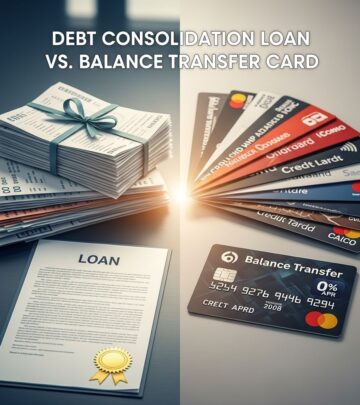
- Debt consolidation loan – A new personal loan used to pay off existing unsecured debts like credit cards and medical bills, leaving you with one fixed payment.
- Balance transfer credit card – A credit card offering a low or 0% introductory APR to which you transfer existing card balances.
- Home equity loan or HELOC – A loan secured by your home used to pay off higher-interest debts. This can reduce rates but puts your home at risk if you cannot repay.
- Debt management plan – A structured repayment program arranged by a nonprofit credit counseling agency, where creditors may reduce rates or fees.
How Debt Consolidation Works
The basic process is similar regardless of the tool you choose:
- Apply for a new loan, line of credit, or balance transfer card based on your income and credit profile.
- Use the new account to pay off multiple existing unsecured debts.
- Make one monthly payment on the new account until it is paid off.
To be effective, the new debt should carry a lower interest rate than the debts you are consolidating and a payment that fits comfortably within your budget.
Who Typically Qualifies for Debt Consolidation?
Debt consolidation generally works best for people who:
- Have a reliable income and can afford a consistent payment.
- Have at least fair to good credit to qualify for a reasonable interest rate on the new loan or card.
- Carry mainly unsecured debts (credit cards, personal loans, some medical debt) rather than secured debts like mortgages or auto loans.
- Can realistically repay what they owe in a few years if interest is reduced.
What Is Bankruptcy?
Bankruptcy is a court-supervised legal process that can eliminate or restructure certain debts when you can no longer reasonably repay them. In the United States, individuals most often file under Chapter 7 or Chapter 13 of the Bankruptcy Code.
Bankruptcy is more serious than consolidation. It can provide a stronger level of relief but has deeper and longer-lasting consequences for your credit and financial record.
Chapter 7 vs. Chapter 13 Bankruptcy
| Feature | Chapter 7 Bankruptcy | Chapter 13 Bankruptcy |
|---|---|---|
| Basic idea | Liquidation of nonexempt assets to discharge most unsecured debts. | 3–5 year court-approved repayment plan; remaining eligible balances discharged at the end. |
| Eligibility | Must pass a means test based on income and expenses. | Available to individuals with regular income; different debt limits apply. |
| Timeline | Typically 4–6 months from filing to discharge. | Generally 3–5 years for plan completion and discharge. |
| Asset impact | Some nonexempt property may be sold to repay creditors; certain assets are protected by exemptions. | Allows you to keep more property; used to catch up on secured debts like mortgages and car loans. |
| Credit impact | Can stay on credit reports for up to 10 years. | Generally remains on credit reports for up to 7 years from filing. |
Key Features of Bankruptcy
- Automatic stay – When you file, most collection activities, wage garnishments, foreclosures, and lawsuits are immediately paused by court order.
- Court oversight – A bankruptcy judge and trustee oversee your case, ensuring creditors follow the law and the terms of the plan.
- Discharge of eligible debts – At the end of the process, many unsecured debts can be permanently wiped out, giving you a legal fresh start.
- Public record – Bankruptcy filings become part of the public record, unlike private consolidation loans.
Debt Consolidation vs. Bankruptcy: Key Differences
Although both strategies address problem debt, they operate very differently. The table below summarizes some of the main contrasts.
| Aspect | Debt Consolidation | Bankruptcy |
|---|---|---|
| Type of process | Private financial arrangement with a lender or agency. | Formal legal process in federal court. |
| What happens to your debt? | Multiple debts combined into one new debt; total amount generally unchanged. | Debts may be discharged (Chapter 7) or partially repaid then discharged (Chapter 13). |
| Credit impact | May cause a modest, temporary drop; on-time payments can help improve scores over time. | Severely damages credit; Chapter 7 can remain for 10 years, Chapter 13 around 7 years. |
| Eligibility | Requires sufficient income and usually at least fair credit to access good terms. | Chapter 7 requires a means test; Chapter 13 requires enough income to support a plan. |
| Protection from collections | No automatic legal protection; creditors can still sue or garnish wages. | Automatic stay halts most collection actions during the case. |
| Public vs. private | Loan or plan is private and does not become a court record. | Filing and many details are part of public records. |
| Asset risk | Home or other collateral may be at risk if used to secure the new loan. | Some nonexempt assets may be sold in Chapter 7; Chapter 13 helps protect property if payments are maintained. |
Pros and Cons of Debt Consolidation
Advantages of Debt Consolidation
- Simplified payments – One monthly payment instead of several can make budgeting easier and reduce missed payments.
- Potential interest savings – If you qualify for a lower rate, you may pay less overall interest and get out of debt faster.
- Lower credit impact than bankruptcy – Consolidation is generally less damaging to your credit profile and may improve it over time with timely payments.
- Keeps debt out of court – You avoid a bankruptcy filing on your public record.
- Flexibility – You can often choose the loan term, payment amount, and whether to use collateral.
Drawbacks of Debt Consolidation
- Requires qualification – Without adequate credit and income, you may only qualify for high-rate loans, making consolidation ineffective.
- Does not reduce principal – You still owe the full amount; consolidation only restructures how you repay.
- Risk of deeper debt – If you continue using credit cards after consolidating them, you can end up with more debt than before.
- Possible fees – Origination fees, balance transfer fees, and closing costs can reduce savings.
- Collateral risk – Using home equity or other secured loans puts important assets at risk if you cannot repay.
Pros and Cons of Bankruptcy
Advantages of Bankruptcy
- Stronger debt relief – Chapter 7 can wipe out many unsecured debts in a matter of months, and Chapter 13 may substantially reduce and reorganize what you must pay.
- Automatic stay protection – Filing immediately stops most collection efforts, including lawsuits, garnishments, and foreclosure actions, while the case proceeds.
- Defined legal process – Bankruptcy provides a clear, court-supervised path with a legal end point, rather than open-ended negotiations.
- Fresh start – At discharge, remaining eligible debts are legally forgiven, giving you a chance to rebuild on a cleaner slate.
- Asset protection through exemptions – Many basic assets, such as a portion of home equity, retirement accounts, and essential personal property, can be protected under federal or state exemption rules.
Drawbacks of Bankruptcy
- Severe credit impact – Bankruptcy is one of the most damaging negative marks on your credit report and can affect access to new credit, housing, and sometimes employment.
- Public record and stigma – The filing is public, and some people feel personal or professional stigma about declaring bankruptcy.
- Potential loss of assets – In Chapter 7, nonexempt property can be liquidated, and in Chapter 13 you must commit disposable income to repayment over several years.
- Cost and complexity – Legal fees and court costs can be significant, and the process requires detailed documentation and ongoing cooperation with the court and trustee.
- Not all debts are dischargeable – Certain obligations, such as most student loans, recent taxes, and child support, usually cannot be eliminated.
When Debt Consolidation May Be the Better Choice
Debt consolidation is often recommended as a first-line option when you are struggling with multiple debts but still have sufficient income and at least moderate credit.
You might lean toward debt consolidation if:
- You have good or fair credit and can qualify for improved interest rates on a new loan or balance transfer card.
- Your total debt is manageable and could realistically be paid off in a few years with a lower rate.
- You are primarily dealing with unsecured debts such as credit cards, personal loans, and medical bills.
- You want to avoid a bankruptcy filing and its long-term impact on your credit and public record.
- Your credit is still strong enough that preserving it is a priority, for example if you plan to buy a home in the near future.
When Bankruptcy May Be the Better Choice
Bankruptcy may be the more realistic or effective option when your debt burden is too large to be repaid through budgeting and consolidation alone.
Consider bankruptcy if:
- You are severely behind on payments, facing lawsuits, collections, garnishments, or imminent foreclosure.
- Your debt is so large that you cannot reasonably pay it off within the next 2–5 years, even with consolidation and strict budgeting.
- Your credit score is already poor, making it difficult to qualify for helpful consolidation options.
- You need the protection of an automatic stay to stop aggressive collection actions while you work out a solution.
- You want a legally enforceable fresh start that can discharge most unsecured debts rather than stretching them out indefinitely.
Because the rules are complex and vary by state, speaking with a qualified bankruptcy attorney or accredited nonprofit credit counselor can help you evaluate whether you meet eligibility requirements and what you may be able to protect.
Questions to Ask Before Choosing Debt Consolidation or Bankruptcy
To narrow down your options, consider asking yourself the following questions:
- How much do I owe, and on what types of debt (credit cards, medical bills, personal loans, secured loans, taxes, etc.)?
- Can I realistically repay my debts within 3–5 years if interest is lowered and I stick to a budget?
- What is my current credit score, and do I qualify for decent rates on a consolidation loan or balance transfer?
- Am I already facing lawsuits, garnishments, or foreclosure that may require legal intervention?
- Am I comfortable with a bankruptcy filing being part of the public record for several years?
- Which option will most effectively protect the assets that matter most to me, such as my home, car, or retirement funds?
Frequently Asked Questions (FAQs)
Q: Will debt consolidation hurt my credit score?
A: Debt consolidation can cause a small, temporary drop in your credit score due to a hard inquiry and new account. Over time, however, making on-time payments and reducing your balances can help your score improve, so the long-term impact is often better than missing payments or filing bankruptcy.
Q: How long does bankruptcy stay on my credit report?
A: A Chapter 7 bankruptcy can remain on your credit report for up to 10 years from the filing date, while Chapter 13 usually appears for around 7 years. During that time, lenders may view you as higher risk, although some forms of credit can become available again as you rebuild your profile.
Q: Can I keep my house or car if I file for bankruptcy?
A: Many filers are able to keep essential property, especially in Chapter 13, where you repay debts under a court-approved plan and can catch up on past-due mortgage or auto payments. In Chapter 7, some nonexempt equity may be at risk of liquidation, but federal and state exemption rules protect certain amounts of home equity and necessary personal property.
Q: Is debt consolidation always better than bankruptcy?
A: Debt consolidation is often preferable when you can qualify for better rates and realistically repay what you owe, largely because the damage to your credit is usually less severe. However, if your debt is overwhelming and you cannot pay it off in a reasonable timeframe, bankruptcy may provide more meaningful relief and a legal fresh start.
Q: Should I talk to a professional before deciding?
A: Yes. Consulting a nonprofit credit counseling agency or a qualified bankruptcy attorney can help you review your full financial picture, understand the laws that apply in your state, and compare realistic outcomes of debt consolidation versus bankruptcy based on your income, assets, and goals.
References
- Debt Relief Options — U.S. Department of Justice, Office of the U.S. Trustee. 2022-08-01. https://www.justice.gov/ust/consumer-information
- Debt consolidation vs. bankruptcy: Which is right for you? — Bankrate. 2023-06-15. https://www.bankrate.com/personal-finance/debt/debt-consolidation-vs-bankruptcy/
- Debt Consolidation vs. Bankruptcy: What’s the Difference? — MIDFLORIDA Credit Union. 2023-03-10. https://www.midflorida.com/resources/insights-and-blogs/insights/loans-credit/debt-consolidation-vs-bankruptcy-whats-the-difference
- Differences Between Chapter 13 Bankruptcy and Debt Consolidation — Brock & Stout Attorneys at Law. 2022-09-20. https://www.brockandstout.com/blog/differences-between-chapter-13-bankruptcy-and-debt-consolidation/
- Debt consolidation vs. bankruptcy: What’s the difference? — CBS News. 2023-04-05. https://www.cbsnews.com/news/debt-consolidation-vs-bankruptcy-whats-the-difference/
- Bankruptcy vs. Debt Consolidation: Which Is Better for You? — Experian. 2023-02-21. https://www.experian.com/blogs/ask-experian/bankruptcy-or-debt-consolidation-which-is-better-for-you/
- Debt Consolidation vs. Bankruptcy — LendingTree. 2023-01-18. https://www.lendingtree.com/debt-consolidation/debt-consolidation-vs-bankruptcy/
Similar Articles








Read full bio of medha deb