Debt Consolidation Programs Explained
Discover how debt consolidation programs can simplify your finances, lower interest rates, and accelerate debt payoff with our comprehensive guide.

Debt consolidation programs offer a structured approach to handling multiple debts by merging them into a single manageable payment, often at reduced interest rates. These strategies can lower overall costs and streamline budgeting for individuals overwhelmed by credit card balances or other unsecured loans.
Understanding the Basics of Debt Consolidation
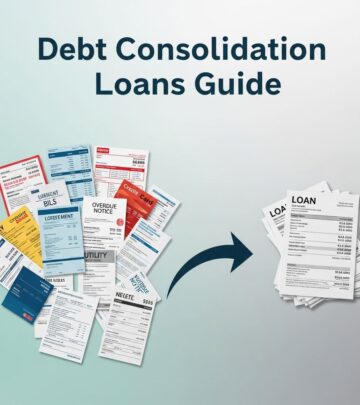
At its core, debt consolidation involves taking various outstanding obligations—such as credit card debts, personal loans, or medical bills—and combining them into one account. This process simplifies tracking payments and can lead to financial relief through negotiated lower rates or extended terms.
People often pursue consolidation when facing high-interest debts that accumulate quickly. For instance, credit cards typically carry annual percentage rates (APRs) exceeding 20%, making minimum payments inefficient for payoff. By contrast, a consolidation option might offer rates under 10% for qualified borrowers, significantly cutting total interest paid over time.
Primary Types of Debt Consolidation Strategies
Several methods exist, each suited to different financial profiles. The choice depends on credit health, debt amount, and repayment goals. Below, we break down the most common approaches.
Debt Management Plans Through Credit Counseling
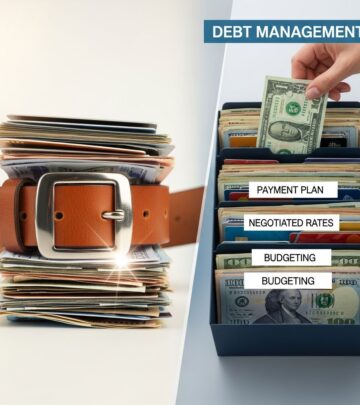
Credit counseling agencies, often nonprofits, create a debt management plan (DMP) by negotiating with creditors on your behalf. You make a single monthly deposit to the agency, which distributes funds to lenders after securing concessions like reduced APRs or waived fees.
- Affordable payments tailored to your budget, typically spanning 3-5 years.
- No new credit inquiry required, preserving your score during enrollment.
- Access to personalized budgeting advice and financial education.
However, participation means closing revolving accounts, limiting new credit access, and paying agency fees—usually $20-50 monthly plus a one-time setup cost.
Personal Loans for Consolidation
A debt consolidation loan is an installment product where you borrow a lump sum to clear existing debts, then repay the lender in fixed installments. Terms range from 1-7 years, with eligibility favoring those with credit scores above 670.
Key advantages include predictable payments and potential savings. For example, consolidating $7,000 at 20% APR across cards into a 5-year loan at 8% could slash monthly outlays and total interest by thousands.
| Scenario | Monthly Payment | Total Interest | Term |
|---|---|---|---|
| Separate Credit Cards (Min Payments) | $218 | $12,000+ | Indefinite |
| 24-Month Consolidation Loan | $370 | $860 | 2 Years |
| 60-Month Consolidation Loan | $178 | $2,200 | 5 Years |
This table illustrates hypothetical savings based on typical rates; actual figures vary by creditworthiness.
Drawbacks involve origination fees (1-6% of loan amount) and the risk of accruing new debt on freed-up cards.
Debt Settlement as an Alternative
For severe cases, debt settlement negotiates lump-sum payoffs for less than owed, forgiving the remainder. Individuals or firms handle talks with creditors or collectors.
Success rates improve with savings set aside in a dedicated account, but expect credit damage from delinquencies during negotiation—often 6-36 months. Forgiven amounts over $600 may trigger taxable income.
Evaluating Eligibility and Suitability
Not everyone qualifies for every program. DMPs suit those with steady income but high-interest unsecured debt under $50,000. Loans demand good credit (FICO 670+), while settlement fits dire situations with hardship proof.
- Credit Impact: Loans add a hard inquiry and new account, initially dipping scores 5-10 points; on-time payments boost long-term profiles.
- Income Verification: Lenders assess debt-to-income ratios below 40% for approval.
- Debt Types: Best for unsecured debts; mortgages or auto loans rarely qualify.
Step-by-Step Guide to Implementing Consolidation
- Assess Total Debt: List balances, APRs, and minimums to calculate full scope.
- Check Credit Report: Review for errors via AnnualCreditReport.com; aim for scores supporting best rates.
- Compare Options: Use lender prequalification tools without credit hits.
- Calculate Savings: Project costs with online calculators, factoring fees.
- Enroll and Monitor: Secure the plan, close old accounts if needed, and track progress monthly.
Post-consolidation, adopt habits like emergency funds (3-6 months’ expenses) and 50/30/20 budgeting to prevent recurrence.
Potential Pitfalls and How to Avoid Them
While beneficial, pitfalls abound. Extending terms inflates total interest despite lower payments. Temptation to reuse paid cards undermines progress.
Mitigate by:
- Destroying cards or requesting credit limit reductions.
- Choosing shortest feasible terms.
- Selecting reputable providers—verify NFCC accreditation for counselors.
Scams target desperate borrowers; legitimate programs never demand upfront fees for settlement.
Real-World Examples and Outcomes
Consider Jane with $15,000 across three cards at 22% APR. Minimum payments barely cover interest. A DMP reduces rates to 9%, enabling $450 monthly payoffs over 48 months, saving $5,000 in interest.
Alternatively, Mike’s 680 score secures a 4-year loan at 7.5%, merging payments into $380/month—faster payoff than minimums, with $3,200 saved.
Frequently Asked Questions
Does debt consolidation build credit?
Yes, consistent payments improve payment history (35% of FICO). New accounts temporarily lower averages, but benefits outweigh for disciplined users.
Can I consolidate secured debts?
Rarely; focus remains unsecured. Home equity options exist but risk assets.
Is bankruptcy better than consolidation?
Bankruptcy offers discharge but tanks credit 7-10 years. Consolidation preserves scores better for repayable debts.
How long until I see savings?
Immediately via lower rates; full payoff accelerates 2-5x versus minimums.
What if I miss a consolidation payment?
Fees and credit dings apply, similar to originals. Automate to avoid.
Long-Term Financial Health Post-Consolidation
Beyond payoff, build wealth: max retirement contributions, high-yield savings, and insurance reviews. Track net worth quarterly for sustained progress.
Debt consolidation isn’t a cure-all but a tool. Paired with discipline, it transforms burdensome obligations into achievable goals, fostering stability.
References
- How Do Debt Consolidation Programs Work? — Experian. 2023. https://www.experian.com/blogs/ask-experian/how-does-a-debt-consolidation-program-work/
- What Is Debt Consolidation & How Does It Work? — PNC Bank. 2024. https://www.pnc.com/insights/personal-finance/borrow/what-is-debt-consolidation-and-how-does-it-work.html
- How Debt Consolidation Loans Work — Bankrate. 2025-03-15. https://www.bankrate.com/loans/personal-loans/how-debt-consolidation-loans-work/
- Debt Consolidation Options — MyCreditUnion.gov (NCUA). 2024. https://mycreditunion.gov/manage-your-money/dealing-debt/debt-consolidation-options
- Debt Consolidation: Does it Hurt Your Credit? — Equifax. 2024. https://www.equifax.com/personal/education/debt-management/articles/-/learn/what-is-debt-consolidation/
- Debt Consolidation Guide: How It Works — Debt.org. 2026-03-01. https://www.debt.org/consolidation/
- What is a debt relief program and how do I know if I should use one? — Consumer Financial Protection Bureau. 2024. https://www.consumerfinance.gov/ask-cfpb/what-is-a-debt-relief-program-and-how-do-i-know-if-i-should-use-one-en-1457/
Similar Articles








Read full bio of medha deb