Debt Consolidation Loan: 6 Steps To Apply And Save
Simplify your finances and potentially save on interest with a debt consolidation loan that combines multiple debts into one manageable payment.

A
debt consolidation loan
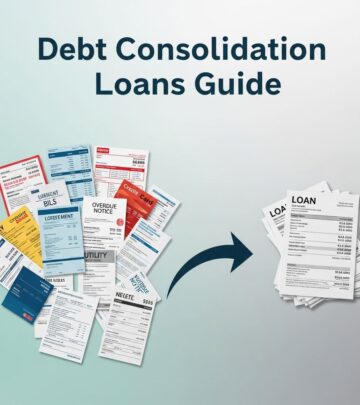
is a type of personal loan designed to combine multiple high-interest debts, such as credit card balances, medical bills, or other unsecured loans, into a single loan with potentially lower interest rates and more manageable monthly payments. This approach streamlines your finances by replacing various due dates and payment amounts with one consistent obligation, reducing stress and the risk of missed payments that could harm your credit score.What is a Debt Consolidation Loan?
A debt consolidation loan allows borrowers to pay off existing debts using funds from a new loan, effectively rolling all obligations into one. Typically unsecured, these loans do not require collateral like your home or car, making them accessible for those with fair to good credit. The primary goal is to secure a lower average interest rate than what you’re currently paying on individual debts, which often exceed 20% APR on credit cards, compared to personal loan rates that can range from 6% to 36% based on creditworthiness.
By consolidating, you eliminate multiple creditor accounts, simplify budgeting, and focus on a fixed repayment schedule. For example, if you have $10,000 in credit card debt at 18% APR across three cards, a $10,000 consolidation loan at 10% APR could save thousands in interest over time while lowering your monthly outlay.
How Does Debt Consolidation Work?
The process begins with applying for a loan large enough to cover your outstanding balances. Once approved, the lender either sends funds directly to your creditors or disburses them to you for payoff. You then repay the new loan in fixed monthly installments over a term of 2-7 years. This replaces variable minimum payments with predictable ones, often at a lower rate if your credit has improved since incurring the original debts.
Key steps include:
- Assess your debts: List all balances, interest rates, and minimum payments to calculate total owed.
- Check eligibility: Review your credit score (ideally 670+ FICO), debt-to-income ratio (under 36%), and income stability.
- Shop lenders: Compare APRs, fees, and terms from banks, credit unions, and online lenders.
- Apply and pay off: Use loan proceeds to clear debts, then make on-time payments to the new lender.
- Monitor progress: Track your credit utilization dropping as cards are paid off, boosting your score.
This method works best for those with high-interest, revolving debt who can qualify for better terms.
Pros of Debt Consolidation Loans
Debt consolidation offers several advantages, particularly for managing overwhelming debt loads:
- Simplified Finances: One payment instead of many reduces administrative burden and late fee risks.
- Lower Interest Rates: Consolidating high-APR credit card debt (avg. 20%+) into loans at 7-15% saves money long-term.
- Reduced Monthly Payments: Longer terms spread costs, freeing cash for essentials, though total interest may rise.
- Improved Credit Score: Paying off cards lowers utilization (key FICO factor) and shows positive payment history.
- Faster Payoff Potential: More principal reduction per payment accelerates debt freedom.
- Stress Reduction: Fewer accounts mean less mental load and financial anxiety.
Overall, these benefits shine for disciplined borrowers committed to avoiding new debt.
Cons of Debt Consolidation Loans
While beneficial, debt consolidation isn’t ideal for everyone:
- Potential for More Interest: Extending terms (e.g., 5 years vs. paying cards in 2) increases total cost despite lower rates.
- Qualification Hurdles: Poor credit may lead to high rates or denial, negating savings.
- Temptation to Reuse Credit: Paid-off cards can lure new spending, worsening debt.
- Fees and Costs: Origination fees (1-8%), balance transfer fees (3-5%), or prepayment penalties add expenses.
- Temporary Credit Dip: Hard inquiries and new accounts may lower scores short-term.
- Not for Secured Debt: Mortgages or auto loans often don’t qualify or require separate handling.
Weigh these against your situation; alternatives like debt management plans may suit high-risk cases.
Who Qualifies for a Debt Consolidation Loan?
Eligibility varies by lender but generally requires:
| Factor | Ideal Range | Impact |
|---|---|---|
| Credit Score | 670+ FICO | Higher scores unlock best rates (6-12% APR). |
| Debt-to-Income (DTI) | <36% | Lower DTI signals repayment ability. |
| Income | $30,000+ annually | Stable employment verifies affordability. |
| Debt Amount | $5,000-$50,000 | Matches typical loan limits. |
| History | No recent bankruptcies | Avoids automatic denials. |
Even with fair credit (580-669), options exist at higher rates. Improve odds by reducing utilization below 30% pre-application.
Best Debt Consolidation Loan Lenders
Top providers offer competitive rates, fast funding, and borrower-friendly terms:
- SoFi: Low rates (8-25% APR), no fees, unemployment protection; best for excellent credit.
- LightStream: Same-day funding, 6.99%+ APR, high limits up to $100,000; unsecured and flexible.
- Discover: 6.99-24.99% APR, no origination fees, credit line options post-payoff.
- LendingClub: Peer-to-peer, 8-36% APR, joint applications for cosigners.
- Prosper: Similar to LendingClub, good for fair credit with rates from 7.99%.
- Credit Unions (e.g., Navy Federal): Member perks, rates as low as 7%, personalized service.
Compare via prequalification to avoid inquiries; online lenders often approve faster than banks.
Debt Consolidation Loan vs. Balance Transfer Cards
| Aspect | Debt Consolidation Loan | Balance Transfer Card |
|---|---|---|
| Interest Rate | Fixed 6-36% APR | 0% intro (12-21 mos), then 15-25%. |
| Fees | 0-8% origination | 3-5% transfer fee |
| Amount | Up to $100,000 | Limited by credit limit |
| Term | 2-7 years | Promo period only |
| Best For | Multiple debt types | Credit card debt only |
Loans suit larger, diverse debts; cards work for short-term credit card payoffs if you can clear balance quickly.
Current Debt Consolidation Loan Rates
As of early 2026, average rates hover at 11.5% for good credit, per recent data. Expect:
- Excellent (720+): 6-10%
- Good (670-719): 10-14%
- Fair (580-669): 15-25%
- Poor (<580): 25%+ or alternatives needed.
Rates fluctuate with Fed policy; lock in fixed APRs for stability.
Steps to Get a Debt Consolidation Loan
- Calculate totals: Sum debts and project savings using online calculators.
- Prequalify: Check rates from 3-5 lenders without credit impact.
- Gather docs: ID, income proof, debt statements.
- Apply: Choose best offer; approval in 1-3 days.
- Payoff debts: Direct funds to creditors.
- Set autopay: Ensure on-time payments; close unused cards.
Avoid new debt to maximize benefits.
Frequently Asked Questions (FAQs)
Is a debt consolidation loan a good idea?
Yes, if you have high-interest debt, good credit for lower rates, and discipline to avoid new spending. It simplifies payments and saves interest.
How much can I save with debt consolidation?
Savings vary; consolidating $20,000 from 20% cards to 10% loan over 5 years could save $5,000+ in interest.
Will debt consolidation hurt my credit?
Short-term dip from inquiries, but long-term gains from lower utilization and on-time payments.
Can I consolidate debt with bad credit?
Possible via lenders like Upstart or credit unions, but expect higher rates; improve score first if feasible.
What if I can’t qualify for a loan?
Consider credit counseling, debt management plans, or balance transfers as alternatives.
References
- Consolidating Debt: The Pros and Cons — Exchange Bank. 2024. https://www.ebnemo.com/blog/post/consolidating-debt-the-pros-and-cons
- How to Consolidate Debt — Santander Bank. 2025. https://www.santanderbank.com/personal/resources/personal-loans/how-to-consolidate-debt
- What Are the Benefits of Debt Consolidation? — FightBills. 2024-12. https://www.fightbills.com/blog/2024/december/what-are-the-benefits-of-debt-consolidation-/
- What Is Debt Consolidation & How Does It Work? — PNC Insights. 2025. https://www.pnc.com/insights/personal-finance/borrow/what-is-debt-consolidation-and-how-does-it-work.html
- Pros and Cons of Debt Consolidation — Experian. 2025. https://www.experian.com/blogs/ask-experian/pros-and-cons-of-debt-consolidation/
- Personal Banking Guide: How Debt Consolidation Works — UMB Bank. 2024. https://blog.umb.com/personal-banking-guide-how-debt-consolidation-works/
- Debt Consolidation Options — MyCreditUnion.gov (NCUA). 2025. https://mycreditunion.gov/manage-your-money/dealing-debt/debt-consolidation-options
Similar Articles








Read full bio of medha deb