Debt Consolidation: Simplify Your Finances Today
Master debt consolidation strategies to simplify payments and save on interest.

Understanding Debt Consolidation
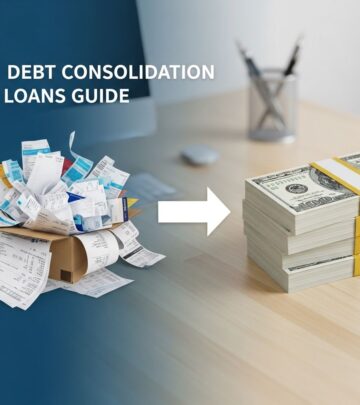
Debt consolidation is the process of combining multiple debts into a single loan or line of credit. Instead of juggling multiple monthly payments to different creditors, you make just one monthly payment to the consolidation loan provider. This strategy can help simplify your finances and potentially lower your overall interest costs, making it an attractive option for those struggling with multiple debt obligations.
The fundamental concept behind debt consolidation is straightforward: by merging your debts, you gain better control over your finances and can focus your energy on paying down what you owe rather than managing numerous payment dates and varying interest rates. However, it’s important to understand that debt consolidation does not eliminate your debt—it simply reorganizes it into a more manageable structure.
Key Benefits of Debt Consolidation
Consolidating your debts offers several compelling advantages that can improve your financial situation:
- Single Monthly Payment: Instead of tracking multiple payment due dates across various creditors, you make one predictable payment each month.
- Lower Interest Rates: If your consolidation loan offers a lower interest rate than your current debts, you can save significantly on interest over time.
- Fixed Repayment Schedule: Most debt consolidation loans come with fixed terms, so you know exactly how much you need to pay each month and when your debt will be paid in full.
- Simplified Financial Management: Consolidation reduces the complexity of managing multiple accounts and creditors, helping you stay organized.
- Potential Credit Score Improvement: By consolidating high-interest credit card debt, you may lower your credit utilization ratio, which can positively impact your credit score over time.
Who Qualifies for Debt Consolidation?
Many people are eligible for debt consolidation, but each lender maintains specific requirements for income and credit standards. To qualify, you may need to provide documentation such as a letter of employment, tax statements, statements for each loan you wish to pay off, or letters from creditors.
Before pursuing debt consolidation, lenders will examine your income and total debt, and pull your credit reports to determine what rate you’ll be offered. It’s important to ensure your spending habits are in check, that you’re making your current payments on time, and that your credit score is in good shape before applying.
Popular Debt Consolidation Methods
There are several effective ways to consolidate your debt. Understanding each option will help you choose the strategy that best fits your financial situation.
Personal Loans
A personal loan is one of the most straightforward debt consolidation methods. With this approach, you borrow a lump sum to pay off existing debts and then repay the loan over time with fixed monthly payments. Personal loans typically have repayment terms ranging from 1 to 7 years and may include origination fees ranging from 0% to 12%.
The advantage of personal loans is that they don’t require collateral, making them accessible to more borrowers. To calculate your potential savings through consolidation using a personal loan, use a credit card payoff calculator and a personal loan calculator to compare different scenarios.
Balance Transfer Credit Cards
Many credit card companies offer zero percent or low-interest balance transfers to combine debt from multiple cards onto one card. This option allows you to transfer your balance from one or more credit cards onto a single card, so you only have one bill to pay each month.
A 0 percent balance transfer card typically allows you to consolidate several cards into a new one with no interest payments for a set introductory period, usually 12 to 21 months. However, issuers may limit the maximum amount you can transfer and typically charge a transfer fee between 3 and 5 percent. Additionally, you typically need good-to-excellent credit to qualify for these offers.
Home Equity Loans and HELOCs
A home equity loan and a home equity line of credit (HELOC) allow you to borrow money against the equity in your home to pay off debts. These are known as secured loans because they are backed by your home as collateral. The secured nature of these loans makes them easier to obtain and typically results in lower interest rates than unsecured options.
The three most common methods to tap your home’s equity—home equity loans, HELOCs, and cash-out refinancing—can be low-interest ways to borrow the funds you need to consolidate debt. However, it’s crucial to understand that each of these options is secured by your home, and if you default on the loan, you risk foreclosure. Home equity loans typically have closing costs ranging from 2% to 5% and can offer repayment periods of up to 30 years.
Steps to Consolidate Your Debt
Successfully consolidating your debt requires a systematic approach. Follow these essential steps to create an effective consolidation plan:
1. Decide Which Debt You Want to Consolidate
The first step is to determine how much debt you want to consolidate. Make note of the current balances of all credit cards, unsecured loans, medical bills, and other debts you want to consolidate. Online balances are usually more accurate than credit card monitoring services. It usually doesn’t make sense to consolidate debt unless you can get a lower rate.
2. Crunch the Numbers
Compare short and longer repayment terms to decide which payment best fits your budget. Remember that unlike credit cards, you won’t have a minimum payment option with most consolidation loans—be sure the payment is affordable. For example, if you’re consolidating credit card debt with balances totaling $8,000 across multiple cards with high interest rates, a 5-year consolidation loan might reduce your monthly payment by $40.33, save you over $9,800 in total interest, and allow your debt to be paid off in 60 months.
3. Organize Creditor Information
The process for paying off a credit card or other types of loans may vary, so gather all the information ahead of time. Depending on the lender and the size of your loan, you may have access to your funds as soon as the same day you apply. The longer you wait to pay the debt off, the more interest accrues.
4. Decide Who Pays Off Your Creditors
Some lenders, like Happy Money, handle debt repayment on your behalf. You may even get a rate discount if you let the lender do the payoff work for you. However, direct creditor repayment may take a few weeks, so keep an eye on your accounts to ensure you don’t inadvertently miss a payment due date.
5. Create a Holistic Financial Plan
Consolidating your debt will require a holistic financial plan that includes all of your assets and debt. Discuss your financial goals with your financial partner and see how paying down your debt would help you achieve them. This ensures your consolidation strategy aligns with your broader financial objectives.
Alternative Strategies Before Consolidating
Before pursuing formal debt consolidation, consider these alternative approaches:
- Contact Your Creditors: Reach out to your current creditors to ask if you have any options available for lower monthly payments or reduced interest rates. Some creditors might be willing to accept lower minimum monthly payments, waive certain fees, reduce your interest rate, or change your monthly due date to match up better to when you get paid.
- Create a Budget: Figure out if you can pay off your existing debt by adjusting the way you spend for a period of time.
- Understand Debt Settlement vs. Consolidation: Debt settlement differs from consolidation—settlement involves negotiating with creditors to reduce the amount owed, while consolidation reorganizes existing debt without reducing the principal.
Alternative Debt Payoff Methods
If you decide not to consolidate, there are other strategies to tackle your debt systematically.
Debt Snowball Method
This strategy involves paying more than the minimum toward the debt with the lowest balance while making minimum payments on the others. As each debt is paid off, you move to the next lowest balance until all debts are paid in full. This method is great for building motivation since tackling the smallest balance first leads to an early “win”.
Debt Avalanche Method
With this option, you focus on paying off the highest-APR debts first while making minimum payments on the others. Starting with the highest-interest debt can help you save more money on interest compared to the debt snowball method.
Comparing Debt Consolidation Options
Different consolidation methods offer varying terms, requirements, and benefits. Here’s how the main options compare:
| Method | Upfront Costs | Repayment Terms | Collateral Required | Credit Score Requirement |
|---|---|---|---|---|
| Personal Loan | Origination fee: 0%-12% | 1-7 years | No | Generally good credit or better |
| Balance Transfer Card | Transfer fee: 3%-5% | No set repayment term | No | Generally good credit or better |
| Home Equity Loan | Closing costs: 2%-5% | Up to 30 years | Yes | 680 or higher preferred |
| HELOC | Closing costs: 2%-5% | Draw period up to 10 years; repayment up to 20 years | Yes | 680 or higher preferred |
Getting Approved for a Debt Consolidation Loan
The process for getting a debt consolidation loan isn’t very different from getting a traditional personal loan, though there are a few extra steps involved.
Applying online, by phone, or in person for a personal loan or line of credit only takes a few minutes and is issued based on your creditworthiness. For a home equity loan or line of credit, you can also apply online, by phone, or in person. The length of time to process the application varies depending on your situation.
Once your personal loan or line of credit is approved, you can log in to your mobile app or online banking and make a one-time payment or set up autopay. For home equity loan and line of credit one-time payments, you may follow similar steps or consult your lender’s FAQ for more details. After you’ve signed the documents at closing, the funds will be available after a waiting period of three business days on accounts secured by a primary residence.
Frequently Asked Questions
Q: Does debt consolidation hurt my credit score?
A: Debt consolidation may initially cause a small dip in your credit score due to a hard inquiry and new account opening, but it can improve your score over time by lowering your credit utilization ratio and establishing a consistent payment history.
Q: How much money can I save with debt consolidation?
A: Your savings depend on your current interest rates and the terms of your consolidation loan. For example, consolidating $8,000 in credit card debt with a 5-year loan could save you over $9,800 in interest.
Q: What is the difference between debt consolidation and debt settlement?
A: Debt consolidation combines multiple debts into one loan without reducing the principal amount owed. Debt settlement involves negotiating with creditors to reduce the amount you owe.
Q: How long does the debt consolidation process take?
A: For personal loans, approval and funding can happen within days. For home equity loans, the process may take longer due to closing requirements.
Q: Can I consolidate all types of debt?
A: Most types of unsecured debt like credit cards and personal loans can be consolidated. Some lenders may also allow you to consolidate medical bills.
Q: Should I consolidate my debt?
A: You should consider consolidation if you can secure a lower interest rate than your current debts, have the discipline to avoid accumulating new debt, and need help managing multiple payments.
References
- Should you consider debt consolidation? Here’s how it works — UMB, 2024. https://blog.umb.com/personal-banking-guide-how-debt-consolidation-works/
- How Debt Consolidation Loans Work — Bankrate, 2025. https://www.bankrate.com/loans/personal-loans/how-debt-consolidation-loans-work/
- Debt Consolidation Options — MyCreditUnion.gov, 2024. https://mycreditunion.gov/manage-your-money/dealing-debt/debt-consolidation-options
- How does debt consolidation work? — U.S. Bank, 2025. https://www.usbank.com/loans-credit-lines/debt-consolidation.html
- What Is Debt Consolidation and How Does It Work? — Experian, 2025. https://www.experian.com/blogs/ask-experian/what-is-debt-consolidation/
- What do I need to know about consolidating my credit card debt? — Consumer Finance Protection Bureau, 2024. https://www.consumerfinance.gov/ask-cfpb/what-do-i-need-to-know-if-im-thinking-about-consolidating-my-credit-card-debt-en-1861/
Similar Articles








Read full bio of medha deb