Days Sales Outstanding (DSO): Formula and Calculation
Master DSO calculation to optimize cash flow and improve collection efficiency

Understanding Days Sales Outstanding (DSO)
Days Sales Outstanding (DSO) is a critical working capital metric that measures the average number of days required for a business to collect payment after completing a sale. This metric provides valuable insight into how efficiently a company converts credit sales into cash, which is essential for maintaining healthy cash flow and operational stability. DSO represents one of the most important indicators of a company’s liquidity position, as it directly affects the amount of capital tied up in accounts receivable at any given time.
For businesses that extend credit to customers, understanding and managing DSO is crucial to financial health. A lower DSO indicates that a company collects payments quickly, maintaining better liquidity and reducing the risk of bad debts. Conversely, a higher DSO suggests that cash remains tied up in receivables for extended periods, potentially straining the company’s ability to fund operations or invest in growth initiatives.
The DSO Formula and Calculation Method
Calculating DSO involves a straightforward formula that any business can apply regardless of size or industry: The standard Days Sales Outstanding formula is:
DSO = (Accounts Receivable ÷ Net Credit Sales) × Number of Days in Period
To use this formula effectively, you need to gather three essential components. First, determine the accounts receivable balance, which represents the total amount of money customers owe to your business at the end of the measurement period. Second, identify the net credit sales for the same period, excluding any cash transactions. Third, specify the number of days in your measurement period—typically 30, 90, or 365 days depending on whether you’re calculating monthly, quarterly, or annual DSO.
Step-by-Step Calculation Process
Follow these steps to calculate your company’s DSO accurately:
Step 1: Determine Your Measurement Period – Decide whether you want to measure DSO for a month, quarter, or full year. Each timeframe offers different insights into your collection patterns.
Step 2: Gather Accounts Receivable Data – Obtain the total accounts receivable balance at the end of your chosen period from your balance sheet.
Step 3: Calculate Total Credit Sales – Sum all sales made on credit during the same period, excluding cash sales entirely.
Step 4: Apply the Formula – Divide accounts receivable by credit sales, then multiply by the number of days in your period.
Step 5: Interpret Your Results – The resulting number indicates the average days required to collect payments from credit customers.
DSO Calculation Example
Consider a practical example to illustrate how DSO calculation works in real-world scenarios. Imagine a company with $700,000 in sales revenue and $400,000 in accounts receivable for the month of May, which contains 31 days. Using the DSO formula:
DSO = ($400,000 ÷ $700,000) × 31 = 17.71 days
This result indicates that the company takes approximately 18 days on average to collect payment after making a sale. This relatively low DSO suggests efficient collection processes and healthy customer payment behavior.
Another example demonstrates a different scenario. If a company has $30,000 in accounts receivable and $200,000 in annual revenue, the calculation would be: DSO = ($30,000 ÷ $200,000) × 365 = 54.75 days. This higher DSO indicates that customers take roughly 55 days to pay their invoices, suggesting the need for collection process improvements or credit term adjustments.
What DSO Reveals About Business Operations
Days Sales Outstanding serves as a comprehensive diagnostic tool that reveals multiple aspects of business performance and financial health:
Sales Volume Trends – DSO helps assess the volume of credit sales over time, providing insight into business growth patterns and market demand fluctuations.
Cash Investment in Receivables – The metric indicates the estimated amount of capital currently invested in outstanding receivables, showing how much cash is unavailable for other business purposes.
Customer Payment Speed – DSO directly reflects how promptly customers pay their invoices, revealing payment behavior patterns that impact cash flow stability.
Collection Department Efficiency – The metric serves as a performance indicator for your collections team, showing whether they’re effectively pursuing outstanding payments.
Customer Satisfaction Levels – Whether the company is preserving customer satisfaction while maintaining reasonable collection practices.
Credit Policy Effectiveness – Whether credit is being granted appropriately or extended to customers who may pose credit risks.
Factors Contributing to Higher DSO Values
Several operational and strategic factors can cause a company’s DSO to increase: Extended payment terms offered by the sales team in hopes of generating higher sales volumes represent a primary factor. Similarly, companies may encourage credit purchases with the intention of selling more products and services, accepting longer collection periods as a trade-off. Collection department inefficiencies, including poor follow-up procedures or inadequate staffing, can significantly extend DSO. Additionally, customers with preexisting negative credit standing may pay more slowly, contributing to overall DSO increases.
Industry Benchmarking and DSO Standards
Because DSO varies significantly across different industries, meaningful comparison requires benchmarking against competitors within your sector. Industry-specific factors influence appropriate DSO levels substantially. Business models determine typical payment cycles, with service industries generally showing lower DSO than manufacturing or wholesale sectors. Customer payment behaviors differ dramatically—individual consumers typically pay faster than large corporations with standardized payment processes. Seasonal trends affect collection patterns, particularly in retail and agriculture industries.
General industry benchmarking guidelines provide reference points for evaluation: DSO under 45 days is generally considered favorable for most industries, indicating faster cash collection and efficient receivables management. Higher DSO values are common in industries offering extended credit terms, particularly manufacturing and wholesale businesses, though elevated DSO in these sectors may still indicate cash flow risks. Government contracts typically require substantially longer DSO due to bureaucratic payment processes, sometimes extending to 60–90+ days.
To gain deeper insights, companies should track DSO trends monthly or quarterly and compare these metrics against industry peers through published financial benchmarks, industry associations, and financial databases.
The Importance of DSO for Business Performance
Monitoring and managing DSO directly impacts multiple dimensions of business success. Lower DSO values demonstrate that a company efficiently converts credit sales into cash, maintaining superior liquidity and financial flexibility. This efficiency enables businesses to reinvest capital into operations, pay suppliers promptly, or pursue growth opportunities without external financing.
Higher DSO values may indicate operational inefficiencies requiring corrective action, as extended collection periods tie up working capital that could otherwise support business objectives. If DSO increases significantly over time compared to historical periods, this trend signals operational challenges that need addressing through process improvements or policy changes. Conversely, declining DSO trends represent positive performance indicators, suggesting improving collection efficiency and enhanced cash availability.
Strategies for Improving DSO
Companies seeking to optimize DSO and accelerate cash collection should implement comprehensive strategies addressing multiple touchpoints in the collection process. Establishing clear payment terms and communicating expectations explicitly from the outset reduces payment delays. Offering early-payment discounts incentivizes customers to settle invoices faster while improving cash flow predictability.
Before extending credit, assess customer creditworthiness through thorough credit checks and establish appropriate credit limits. Sending invoices immediately after sales completion or project milestones speeds the payment cycle considerably. Offering multiple payment options—including online payments, automatic transfers, and customer portals—removes friction from the payment process and encourages faster settlement. Integration with sales teams ensures collections efforts maintain positive customer relationships while pursuing outstanding balances.
Advanced approaches include implementing predictive analytics to identify customers with deteriorating payment patterns and forecast cash flow implications. Machine learning algorithms can continuously improve DSO predictions and enable proactive risk management by flagging high-risk accounts before payment problems escalate.
Key Performance Indicators Related to DSO
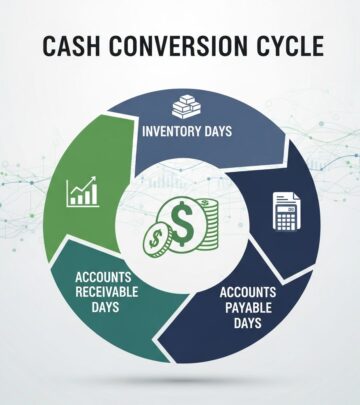
Understanding DSO requires context from related metrics that provide comprehensive working capital analysis. Collection efficiency measures the percentage of outstanding receivables collected during a period. Days inventory outstanding (DIO) complements DSO by measuring how long inventory remains before sale. Days payable outstanding (DPO) indicates how long companies take to pay suppliers—ideally longer than DSO to maintain positive cash flow cycles. Together, these metrics form the cash conversion cycle, which reveals how long capital remains tied up in operations before returning as cash.
Frequently Asked Questions About DSO
Q: What is an acceptable DSO for small businesses?
A: For most small businesses, a DSO between 30 to 45 days is considered acceptable, though this varies by industry. Manufacturing and wholesale businesses commonly experience higher DSO due to extended credit terms, while service providers typically maintain lower DSO.
Q: How does DSO affect cash flow?
A: Higher DSO directly reduces cash flow by tying up more capital in accounts receivable. This reduces liquidity and may require external financing to support operations. Lower DSO improves cash flow by converting sales into cash more quickly.
Q: Should DSO be calculated monthly, quarterly, or annually?
A: DSO can be calculated at any interval, though most businesses benefit from monthly or quarterly calculations to identify trends quickly. Annual DSO provides comprehensive annual performance assessment but may mask seasonal variations.
Q: Why do large corporations often have higher DSO than small businesses?
A: Large corporations typically operate under standardized payment processes with extended payment cycles, and they often have sufficient bargaining power to negotiate longer terms. Additionally, government contracts and enterprise sales naturally involve longer collection periods.
Q: How can technology improve DSO?
A: Automated invoicing systems send bills immediately after sales. Online payment portals remove payment friction. Predictive analytics identify high-risk accounts. Integration between systems eliminates manual data entry delays. Machine learning continuously optimizes collection strategies.
Q: Is a very low DSO always desirable?
A: While lower DSO generally indicates better collection efficiency, extremely low DSO might suggest overly restrictive credit policies that limit sales opportunities. Companies must balance collection efficiency with competitive credit terms that attract customers.
References
- Days Sales Outstanding (DSO) — TechTarget. 2024. https://www.techtarget.com/searchbusinessanalytics/definition/days-sales-outstanding-DSO
- Days Sales Outstanding (DSO): How to Calculate and Improve — Salesforce. 2024. https://www.salesforce.com/sales/revenue-lifecycle-management/days-sales-outstanding-dso/
- Days Sales Outstanding (DSO) – Formula, Example, Define — Corporate Finance Institute. 2024. https://corporatefinanceinstitute.com/resources/accounting/days-sales-outstanding/
- Days Sales Outstanding (DSO) | Formula + Calculator — Wall Street Prep. 2024. https://www.wallstreetprep.com/knowledge/days-sales-outstanding-dso/
Similar Articles








Read full bio of medha deb