Days Sales in Inventory (DSI): Definition and Calculation
Master DSI calculations to optimize inventory management and improve cash flow efficiency.

Days Sales in Inventory (DSI), also known as inventory days on hand, days inventory outstanding, or days sales of inventory, is a critical financial metric that measures the average number of days required for a company to convert its inventory into sales revenue. This metric provides valuable insights into how efficiently a business manages its stock and converts it into cash, making it essential for financial analysis, operational management, and investment decisions.
Understanding DSI is particularly important for retailers, manufacturers, and wholesalers who hold significant inventory balances. A lower DSI indicates that a company is converting inventory to sales quickly, which is generally favorable for cash flow and working capital management. Conversely, a higher DSI suggests that inventory is sitting longer in warehouses, tying up valuable capital and increasing the risk of obsolescence and storage costs.
Understanding Days Sales in Inventory
At its core, DSI represents the relationship between a company’s inventory levels and its sales velocity. The metric answers a fundamental business question: “How many days does it take, on average, for our company to sell through its entire inventory?”
This metric is particularly useful for evaluating inventory management practices because it allows management to assess the business’s inventory performance against industry standards and historical performance. Different industries have vastly different DSI benchmarks. For example, a grocery store might have a DSI of just 5-10 days because perishable goods move quickly, while a furniture retailer might have a DSI of 60-90 days due to the nature of the products and customer purchasing patterns.
DSI serves as a bridge between two important concepts in finance: inventory levels and sales performance. By combining these elements, DSI provides a comprehensive view of how effectively a company is managing one of its most significant assets.
The Days Sales in Inventory Formula
The standard formula for calculating DSI is straightforward and consists of three main components:
DSI = (Average Inventory ÷ Cost of Goods Sold) × Number of Days
Where the number of days is typically 365 for annual calculations. However, this can be adjusted to 90, 60, or 30 days depending on the analysis period required.
To properly calculate DSI, you need to determine each component:
Average Inventory: This is calculated by adding the beginning inventory and ending inventory for the period and dividing by two. This smooths out fluctuations and provides a more representative value than using a single point-in-time measurement. Average Inventory = (Beginning Inventory + Ending Inventory) ÷ 2
Cost of Goods Sold (COGS): This represents the direct costs of producing goods sold by the company during a specific period. COGS includes raw materials, direct labor, and manufacturing overhead but excludes indirect expenses like marketing and distribution. The formula for COGS is: COGS = Starting Inventory + Purchases – Ending Inventory
Period Length: The most common period used in DSI calculations is 365 days for annual analysis, though shorter periods can provide more granular insights.
Step-by-Step Calculation Guide
Step 1: Determine Average Inventory
Calculate your average inventory by taking the sum of opening and closing inventory for the period and dividing by two. This approach smooths out seasonal fluctuations and provides a more accurate baseline than a single snapshot. You should use actual inventory values from your balance sheet, including raw materials, work-in-progress items, and finished goods.
Step 2: Calculate Cost of Goods Sold
Obtain your total COGS for the same period as your inventory measurements. Ensure that COGS includes only direct production costs—raw materials, direct labor, and direct manufacturing overhead—and excludes indirect costs like marketing, distribution, and administrative expenses. Aligning the time periods of your inventory and COGS measurements is crucial for accuracy.
Step 3: Select Your Period Length
Determine the appropriate time period for your analysis. While 365 days is the standard for annual analysis, you might calculate DSI for quarterly periods (using 90 days) or monthly periods (using 30 days) depending on your analytical needs.
Step 4: Apply the Formula
Divide average inventory by COGS, then multiply the result by your selected period length. The output is your DSI, expressed in days.
Days Sales in Inventory Calculation Example
To illustrate how DSI calculations work in practice, consider this detailed example:
Suppose a company has the following financial data:
- Beginning Inventory: $150,000
- Ending Inventory: $200,000
- Annual Cost of Goods Sold: $1,000,000
Step 1: Calculate average inventory: ($150,000 + $200,000) ÷ 2 = $175,000
Step 2: Apply the DSI formula: ($175,000 ÷ $1,000,000) × 365 = 0.175 × 365 = 63.875 days
This result means the company takes approximately 64 days to convert its inventory into sales. Whether this is good or bad depends entirely on the industry context—for a grocery retailer, this would be concerning, but for a furniture manufacturer, it would be reasonable.
Let’s examine another example with different figures:
Company data:
- Average Inventory: $10,000,000
- Annual COGS: $80,000,000
DSI = ($10,000,000 ÷ $80,000,000) × 365 = 0.125 × 365 = 45.625 days
This company converts inventory to sales in approximately 46 days, indicating relatively efficient inventory management.
Interpreting Days Sales in Inventory Results
Interpreting DSI requires understanding what the numbers actually mean for your business:
Lower DSI Values: A lower DSI indicates faster inventory turnover and suggests the company is efficiently converting stock into sales. This is generally positive because it means capital isn’t sitting idle in inventory and the risk of product obsolescence is reduced. Companies with lower DSI typically have better cash flow and require less working capital to operate.
Higher DSI Values: A higher DSI suggests inventory is moving slowly through the business. This ties up working capital, increases storage costs, and raises the risk that products will become outdated or obsolete. However, context matters—some industries naturally have higher DSI due to product characteristics or customer purchasing patterns.
Industry Context Matters: DSI benchmarks vary significantly by industry. Fast-moving consumer goods retailers typically have DSI values of 10-30 days, while automotive manufacturers might have DSI values of 60-90 days. Always compare a company’s DSI to industry peers rather than using absolute values.
Days Sales in Inventory vs. Inventory Turnover Ratio
While often confused, DSI and inventory turnover ratio are related but distinct metrics that measure different aspects of inventory management.
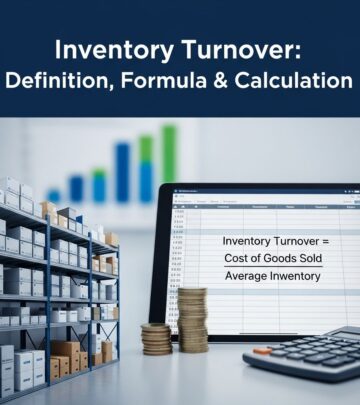
Inventory Turnover Ratio: This metric shows how many times a company sells and replaces its entire inventory during a period, typically annually. The formula is: Inventory Turnover = COGS ÷ Average Inventory. A higher inventory turnover ratio indicates faster inventory movement.
Days Sales in Inventory: This metric converts inventory turnover into a time-based measure, showing the average number of days required to sell through inventory. The formula is: DSI = 365 ÷ Inventory Turnover Ratio.
These metrics have an inverse relationship—when DSI is low, inventory turnover is high, and vice versa. Both should be used together for a complete picture of inventory management efficiency.
Common Mistakes When Calculating DSI
Several common errors can distort DSI calculations and lead to inaccurate conclusions:
Using Ending Inventory Only: Some analysts use only the ending inventory figure rather than averaging beginning and ending inventory. While this provides a quick snapshot, it can significantly distort results if inventory levels fluctuate seasonally.
Including Non-Saleable Inventory: Avoid including obsolete inventory, damaged goods, or items in transit before they are available for sale. DSI should measure only inventory available for fulfilling customer demand.
Ignoring Returns and Cancellations: Returns and order cancellations reduce the effective volume of goods sold. Excluding them understates COGS and makes DSI appear better than it actually is.
Using Retail Prices Instead of Cost: DSI should be calculated using inventory at cost, not retail prices. Using retail prices inflates the ratio and produces less accurate results for financial analysis.
Misaligning Time Periods: Ensure the inventory and COGS figures come from the same accounting period. Misaligned periods can significantly distort the metric.
Applications and Benefits of DSI
DSI provides valuable insights for multiple stakeholders within an organization:
For Operations Management: DSI helps identify bottlenecks in the inventory conversion process and highlight opportunities for efficiency improvements. By calculating DSI at the SKU level or by warehouse, operations teams can identify problem products and slow-moving locations.
For Financial Planning: DSI directly impacts working capital requirements. Companies with lower DSI need less capital tied up in inventory, freeing resources for other investments or debt repayment.
For Strategic Decision-Making: Comparing DSI trends over time reveals whether inventory management is improving or deteriorating. Comparing DSI to competitors provides benchmarking insights that inform strategic decisions about inventory levels and purchasing strategies.
For Investor Analysis: Investors use DSI as an indicator of operational efficiency and financial health. Companies with optimal DSI for their industry typically demonstrate better management quality and lower financial risk.
Strategies to Improve DSI
Short-term Improvements (Around 30 Days):
- Implement promotional campaigns or clearance sales to move excess inventory quickly
- Review and adjust pricing strategies to improve sales velocity without sacrificing margins
- Analyze and reduce safety stock for slow-moving items
Medium-term Changes (Around 60 Days):
- Negotiate shorter lead times with suppliers to reduce the need for high safety stock
- Set safety-stock levels by individual product (SKU) instead of applying blanket policies
- Adjust manufacturing or purchase lot sizes to prevent inventory accumulation
Long-term Strategic Changes (90+ Days):
- Implement just-in-time inventory management systems
- Develop better demand forecasting capabilities using data analytics
- Redesign supply chain relationships with suppliers to enable more responsive inventory management
- Invest in inventory management technology and systems for real-time visibility
Frequently Asked Questions
Q: What is a good DSI?
A: There is no universal “good” DSI—it depends entirely on your industry. Fast-moving consumer goods typically have DSI values of 10-30 days, while manufacturing and furniture retail might have 60-90 days. Always benchmark against your industry peers and track your own DSI trend over time.
Q: How often should I calculate DSI?
A: Most companies calculate DSI quarterly and annually for financial reporting purposes. However, for operational insights, some organizations calculate it monthly or even weekly for specific product categories to catch inventory problems early.
Q: Can DSI be negative?
A: No, DSI cannot be negative because both average inventory and COGS are positive values. If your calculation produces a negative result, there is likely an error in your data or calculation.
Q: How does DSI affect cash flow?
A: Higher DSI means inventory sits longer, tying up cash that could be used elsewhere in the business. Lower DSI means faster conversion to sales and cash collection, improving overall cash flow and reducing working capital requirements.
Q: Should I use the same DSI calculation for all products?
A: While the formula is the same, calculating DSI separately by product category or warehouse location can provide more actionable insights. This helps identify specifically which products or locations have inventory issues rather than relying solely on a company-wide average.
References
- How to Calculate Days Sales in Inventory (DSI)? Formula & Examples — Prediko. 2024. https://www.prediko.io/blog/days-sales-in-inventory
- Days Sales in Inventory (DSI) | Formula + Calculator — Wall Street Prep. 2024. https://www.wallstreetprep.com/knowledge/days-sales-inventory-dsi/
- Day Sales of Inventory: Formula & Definition — Netstock. 2024. https://www.netstock.com/blog/days-sales-of-inventory-formula-definition/
- Days Sales in Inventory (DSI): What it is & Formula — Fishbowl Inventory. 2024. https://www.fishbowlinventory.com/blog/days-sales-in-inventory-101-an-introductory-guide
- Days Sales of Inventory Formula: How to Calculate Your DSI — Inflow Inventory. 2024. https://www.inflowinventory.com/blog/days-sales-of-inventory-formula-how-to-calculate-your-dsi/
Similar Articles








Read full bio of medha deb