Day Trading: Basics and How to Get Started
Master day trading strategies: Learn the fundamentals, risks, and essential tools for successful short-term trading.
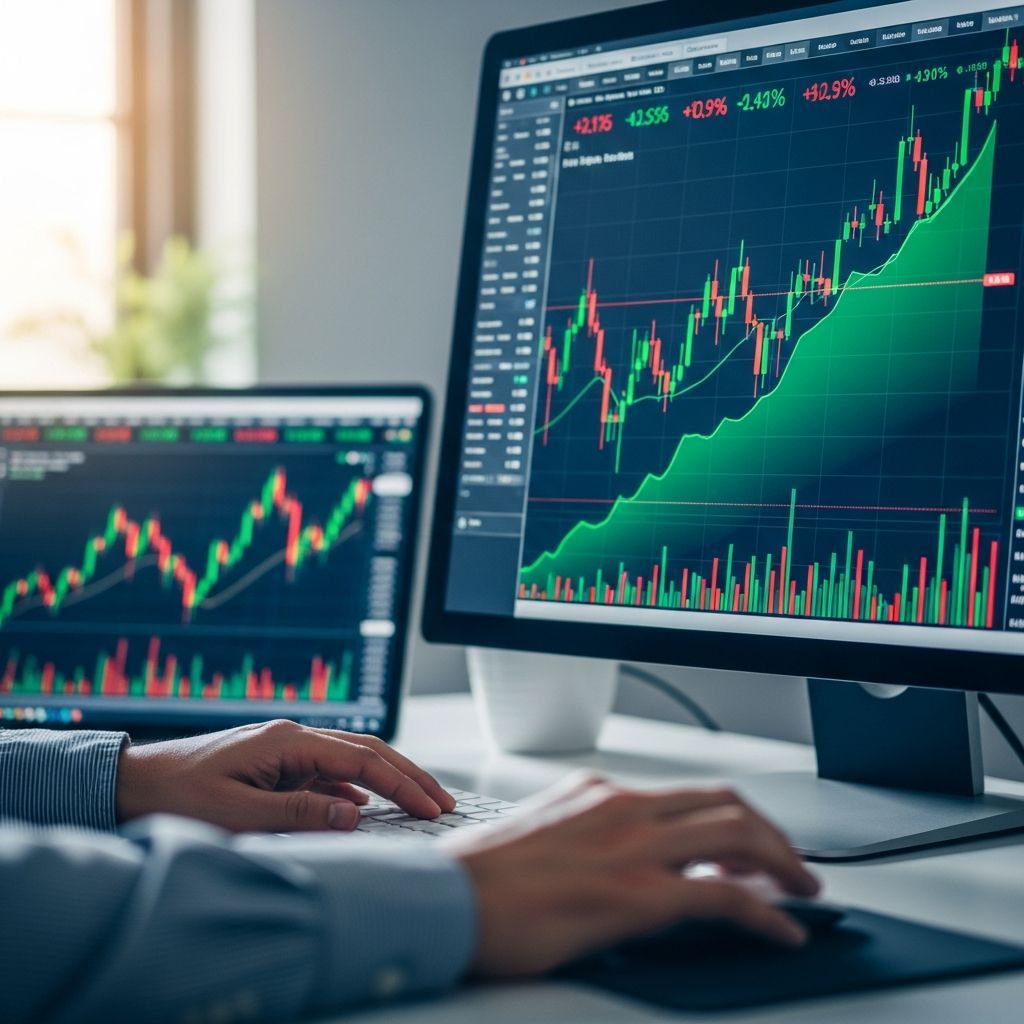
Day trading is a dynamic and fast-paced investment strategy that differs fundamentally from traditional long-term investing. Unlike conventional investors who purchase securities with the intention of holding them for extended periods, day traders engage in buying and selling financial instruments within the same trading day. This approach requires significant capital, sophisticated technology, and deep market knowledge to be profitable.
What is Day Trading?
Day trading is an investment strategy employed by certain investors and stockbrokers that involves the buying and selling of financial securities within a single day. The primary objective is to capitalize on short-term price fluctuations in the market. Unlike traditional investing, where investors hope that the value of their securities will gradually increase over time, day traders focus on exploiting minor price movements that occur throughout the trading day.
The fundamental principle behind day trading is that even small price increases can generate substantial profits when large sums of money are invested. For example, a day trader might invest a significant amount in a specific security and then sell it when the price rises by just a fraction of a percent. Due to the large capital amounts involved, these minimal increases can translate into considerable gains.
Day Trading vs. Traditional Investing
The distinction between day trading and traditional investing is significant and worth understanding:
| Aspect | Day Trading | Traditional Investing |
|---|---|---|
| Time Horizon | Same day or intraday | Months to years |
| Capital Required | Large amounts | Varies, can be smaller |
| Profit Strategy | Small price fluctuations | Long-term appreciation |
| Risk Level | Very high | Moderate to high |
| Knowledge Required | Deep market expertise | Basic market understanding |
| Technology Needs | Specialized software required | Basic brokerage platform |
Who Day Trades?
Day trading is typically pursued by well-funded, financially competent individuals and organizations. These traders are usually experienced investors with substantial capital reserves and the ability to sustain potential losses. Most successful day traders are professionals who dedicate significant time and resources to market analysis and execution.
Professional day traders often work for financial institutions, investment firms, or operate as independent traders with institutional backing. They possess the expertise, technology access, and financial resources necessary to navigate the volatile and fast-paced world of intraday trading.
Essential Requirements for Day Trading Success
Successful day trading requires more than just capital and ambition. Several critical factors must be in place:
Deep Market Knowledge
Day traders must possess an in-depth understanding of how the stock market functions. This includes knowledge of market mechanics, price discovery processes, and the factors that influence short-term price movements. Without this foundational knowledge, traders are essentially gambling rather than making calculated decisions.
Analytical Skills
The ability to analyze market data swiftly and accurately is crucial. Day traders must be capable of interpreting technical indicators, recognizing price patterns, and making rapid decisions based on complex data. This requires both natural aptitude and extensive training.
Financial Capital
Day trading requires substantial financial resources. Traders must invest large sums to generate meaningful profits from small price movements. Additionally, they must have capital reserves to absorb losses, as no trader can consistently predict market movements.
Disciplined Risk Management
Successful day traders only utilize capital they can afford to lose. They understand that mistakes can be extremely costly and that market fluctuations cannot be completely predicted. Proper risk management involves setting stop-losses, limiting position sizes, and maintaining strict trading rules.
Technical Analysis and Information Gathering
Day traders rely heavily on multiple sources of information to make buy and sell decisions. This multifaceted approach helps reduce uncertainty and improve trading outcomes.
News and Market Information
Successful day traders constantly monitor news from numerous sources. By staying informed about global events, economic data releases, and company-specific announcements, traders can anticipate market movements. Knowledge of significant events in advance can insulate traders from sudden price drops that might otherwise catch them off-guard.
Technical Analysis
Technical analysis is a cornerstone of day trading strategy. It involves evaluating investments and identifying trading opportunities by analyzing statistical trends gathered from trading activity. Day traders use various technical indicators and chart patterns to predict future price movements and determine optimal entry and exit points.
Pattern Recognition
Experienced day traders develop the ability to recognize recurring patterns in market behavior. By studying historical price movements and analyzing their past trades, successful traders can identify patterns that repeat under similar market conditions. This pattern recognition ability is often enhanced through the use of specialized software and data analytics.
Technology and Trading Platforms
Technology has dramatically transformed day trading in the twenty-first century, making it more accessible while also more sophisticated. Modern day traders rely on several technological tools:
Specialized Trading Software
Advanced software platforms allow day traders to track market trends, analyze real-time data, and execute trades at lightning speed. These platforms provide:
- Real-time price feeds and market data
- Technical analysis tools and indicators
- Automated trading capabilities
- Trade execution and management features
- Performance tracking and analysis
- Risk management tools
Data Analytics
Modern data analytics has revolutionized how day traders analyze market trends. Advanced algorithms can process massive amounts of market data and identify patterns that would be impossible to spot manually. This computational advantage allows traders to make more informed decisions faster than ever before.
Mobile Applications and Online Brokers
The rise of mobile applications and online brokerage firms has made day trading increasingly accessible to a broader audience. Traders can now execute trades from virtually anywhere, using smartphones or tablets, as long as they have an internet connection.
Direct Access Trading (DAT)
High-profile and well-established day traders often have access to Direct Access Trading (DAT) systems. This technology allows traders to make trades happen instantaneously, without the delays that might occur with traditional brokerage systems. The advantages of DAT include:
- Instantaneous trade execution
- Ability to trade large quantities quickly
- Capability to capitalize on temporary market shifts
- Competitive advantage through faster execution than other traders
- Access to multiple market venues simultaneously
Risks Associated with Day Trading
Day trading carries significantly more risk than traditional forms of investing. Understanding these risks is essential before pursuing this strategy:
Market Volatility Risk
Day trading profits depend on short-term price movements that can be unpredictable. Sudden market shifts due to unexpected news or economic data can result in rapid losses.
Financial Loss Risk
Because day traders operate with large amounts of capital, even small miscalculations can result in substantial financial losses. A single bad trade can wipe out profits from multiple successful trades.
Emotional Decision-Making
The fast-paced nature of day trading can lead to emotional decisions. Fear and greed can override sound judgment, resulting in poor trading decisions.
Technology Failure Risk
Dependence on technology means that system failures, connectivity issues, or software glitches can result in missed trading opportunities or unwanted executions.
Scam Risk
Day trading is sometimes used in Internet scams where unscrupulous individuals offer exorbitant returns on investments in exchange for significant fees. These promised returns are unrealistic, and the investments primarily profit the scammers rather than the investors. Prospective day traders should be cautious of any promises of guaranteed returns or unusually high profits.
Why Professional Investment Managers Avoid Day Trading
Many professional investment managers deliberately avoid day trading despite having the resources and expertise to engage in it. Their avoidance is based on several factors:
- The high level of risk relative to potential rewards
- The difficulty of consistently beating the market on a short-term basis
- The significant time and resource commitment required
- The unpredictability of short-term price movements
- Preference for longer-term wealth accumulation strategies
Getting Started with Day Trading
If you are considering day trading, here are the essential steps and considerations:
Education and Training
Before committing capital, invest significant time in learning about markets, technical analysis, and trading strategies. Many resources are available online, through books, courses, and mentorship programs.
Start with Sufficient Capital
Ensure you have adequate capital to absorb potential losses. Most day trading accounts require minimum deposits, often in the range of $25,000 or more, depending on regulatory requirements and brokerage firms.
Choose the Right Broker
Select a broker that offers tools and platforms specifically designed for day trading. Look for low commissions, fast execution, and robust research tools.
Develop a Trading Plan
Create a detailed trading strategy that outlines your approach, risk tolerance, and profit targets. Stick to your plan rather than making emotional decisions.
Practice with Simulation
Many brokers offer paper trading or simulation accounts where you can practice without risking real money. Use this opportunity to test your strategies and build confidence.
Start Small
When you begin trading with real money, start with small positions. As you gain experience and confidence, you can gradually increase position sizes.
Frequently Asked Questions
Q: How much money do I need to start day trading?
A: The amount varies by broker and regulatory requirements, but most day trading accounts require a minimum of $25,000. However, having additional capital beyond the minimum is advisable to manage losses and maintain adequate margin.
Q: Is day trading profitable?
A: Day trading can be profitable for experienced traders with significant capital and strong analytical skills. However, studies show that the majority of day traders lose money, making it a high-risk endeavor unsuitable for most investors.
Q: Can I day trade with a full-time job?
A: While technically possible, day trading requires significant time and attention during market hours. Most successful day traders dedicate their full attention to trading during business hours, making it difficult to balance with a full-time job.
Q: What is the Pattern Day Trader (PDT) rule?
A: The PDT rule requires that accounts designated as day trading accounts maintain a minimum equity of $25,000. Accounts that fall below this threshold cannot engage in day trading until the balance is restored.
Q: What are the most common day trading strategies?
A: Common strategies include scalping (trading on small price movements), momentum trading (following price trends), and swing trading (holding positions for hours rather than minutes). Each strategy has different risk-reward characteristics.
Q: How important is technical analysis in day trading?
A: Technical analysis is crucial for day traders. It helps them identify entry and exit points, recognize trends, and manage risk. Most successful day traders rely heavily on technical analysis combined with news monitoring.
Q: What should I avoid when starting day trading?
A: Avoid trading with money you cannot afford to lose, neglecting proper risk management, making emotional decisions, ignoring stop-loss orders, and believing promises of guaranteed returns. Additionally, avoid scams offering unrealistic profit guarantees.
Conclusion
Day trading represents a fundamentally different approach to investing than traditional long-term strategies. While it offers the potential for substantial profits through the exploitation of short-term price movements, it comes with considerable risks that must be carefully managed. Success in day trading requires deep market knowledge, analytical skills, substantial capital, and disciplined execution. For most investors, the risks outweigh the potential benefits, which is why professional investment managers often avoid this approach. However, for those with the requisite expertise, resources, and risk tolerance, day trading can be a viable investment strategy when pursued with proper planning, education, and risk management protocols.
References
- Day Trading: The Basics and How to Get Started — Investopedia. 2024-07-26. https://www.investopedia.com/articles/trading/05/011705.asp
- Direct Access Trading (DAT): What It is, How It Works, Benefits — Investopedia. https://www.investopedia.com/terms/d/direct-access-broker.asp
- Best Technical Analysis Trading Software — Investopedia. 2024-08-08. https://www.investopedia.com/articles/active-trading/121014/best-technical-analysis-trading-software.asp
- Day Trading: Smart or Stupid? — Forbes. 2017-07-16. https://www.forbes.com/sites/nealegodfrey/2017/07/16/day-trading-smart-or-stupid/
- SEC: Day Trading — U.S. Securities and Exchange Commission. https://www.sec.gov/investor/pubs/daytips.htm
Similar Articles








Read full bio of medha deb