Data Analytics: Definition, Types, and Business Applications
Master data analytics: Learn how organizations transform raw data into actionable business insights.
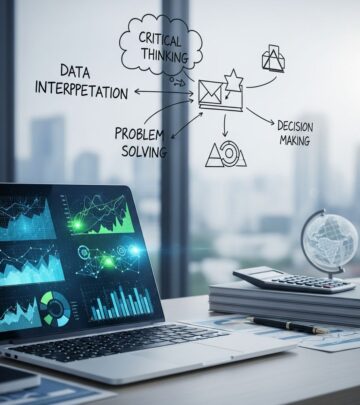
What Is Data Analytics?
Data analytics is the science of analyzing raw data to make conclusions about that information. It is the process of collecting, transforming, and organizing data in order to draw conclusions, make predictions, and drive informed decision-making. In today’s digital age, organizations across industries generate vast amounts of data daily. Data analytics enables businesses to turn this raw information into valuable business intelligence that fuels strategic decision-making and competitive advantage.
The primary objective of data analytics is to uncover patterns, correlations, and insights hidden within complex datasets. By employing a multidisciplinary approach that combines mathematics, statistics, and computer science, organizations can extract actionable intelligence that directly impacts their bottom line. Whether it’s a sneaker manufacturer analyzing sales trends or a healthcare provider optimizing inventory management, data analytics has become indispensable for organizations seeking to remain competitive in their respective industries.
Understanding Data Analytics
The Definition and Core Concept
Data analytics encompasses the entire process of examining large, complex datasets to derive meaningful insights that inform business strategy and operations. Unlike raw data collection, which is simply the gathering of information, data analytics involves sophisticated analysis, interpretation, and visualization of that data. The field is broad, including everything from basic data examination to theoretical approaches for collecting data and creating frameworks for storage and retrieval.
The fundamental premise of data analytics is straightforward: organizations that make decisions based on data rather than intuition tend to be more confident, proactive, and financially successful. This data-driven approach has transformed how businesses operate, from identifying market opportunities to optimizing operational efficiency.
Data Analytics in Everyday Life
While data analytics might seem like a complex, specialized field reserved for large corporations, it actually plays a role in many everyday decisions. Consider measuring coffee beans for your morning brew, checking weather forecasts before deciding what to wear, or tracking daily steps with a fitness device—these are all forms of data analysis. On a professional level, the importance becomes even more pronounced, with organizations relying on data analytics to answer critical business questions and drive strategic initiatives.
How Data Analytics Works: The Five-Step Process
Understanding the mechanics of data analytics requires examining the systematic process through which organizations extract insights from raw data. The following five steps form the foundation of effective data analytics:
Step 1: Data Collection
The first phase involves gathering data from diverse sources such as databases, sensors, online transactions, customer interactions, and operational systems. Collecting diverse datasets is crucial to gaining comprehensive insights. Organizations must identify which data sources are relevant to their specific business questions and ensure they capture data consistently and accurately.
Step 2: Data Cleansing
Raw data is rarely perfect. Once collected, datasets often contain errors, duplicates, missing values, and inconsistencies. Data cleansing is the critical process of identifying and correcting these issues to ensure accuracy and reliability in subsequent analyses. This step is essential because poor data quality can lead to flawed conclusions and misguided business decisions.
Step 3: Data Transformation
After cleansing, data must be transformed into a usable format. This involves normalizing values, aggregating information, and formatting data into consistent structures. Data transformation prepares the dataset for efficient analysis by converting it into suitable formats that analytical tools can process effectively.
Step 4: Data Modeling
In this phase, statistical models and algorithms are applied to identify patterns, correlations, and trends. Data modeling helps predict future outcomes and provides the foundation for informed decision-making. This stage leverages advanced statistical techniques and machine learning to uncover relationships within the data.
Step 5: Data Interpretation and Action
The final step involves interpreting the results of the analysis and translating findings into actionable business insights. Data analysts present these conclusions through visualizations, reports, and recommendations that stakeholders can understand and act upon.
The Four Types of Data Analytics
Data analytics professionals employ different analytical approaches depending on their business objectives. Understanding these four types helps organizations leverage data most effectively:
Descriptive Analytics
Descriptive analytics examines historical data to identify trends and patterns, answering the fundamental question: “What happened?” This type uses techniques like data aggregation and data mining to provide insights into past performance. Common examples include monthly sales performance reports, customer satisfaction survey results, and web traffic analyses measuring engagement rates. Descriptive analytics forms the foundation for all other analytical approaches, providing the context needed to ask deeper questions.
Diagnostic Analytics
Diagnostic analytics delves deeper into data to understand the underlying causes of past events, addressing the question: “Why did it happen?” This type employs techniques such as drill-down analysis, data discovery, data mining, and correlation studies. For example, if a retailer experiences a sales decline in a particular month, diagnostic analytics would examine various factors—such as inventory levels, marketing spend, competitor activity, or seasonal trends—to identify the root causes.
Predictive Analytics
Predictive analytics uses statistical models and machine learning techniques to forecast future outcomes based on historical data patterns. It answers the crucial question: “What could happen?” By identifying trends and analyzing historical patterns, organizations can anticipate future events and prepare accordingly. A practical example is a bank using predictive analytics to forecast the likelihood of a customer defaulting on a loan, allowing the institution to manage risk more effectively.
Prescriptive Analytics
Prescriptive analytics recommends specific actions based on data analyses, addressing the strategic question: “What should we do?” This most advanced form of analytics uses optimization and simulation algorithms to suggest the best course of action. For instance, a logistics company might use prescriptive analytics to determine the most efficient delivery routes for its fleet, considering factors like traffic patterns, fuel costs, and time constraints.
Specialized Areas of Data Analytics
Big Data Analytics
Big Data analytics focuses on processing and analyzing large volumes of data that traditional analytical methods cannot manage effectively. This approach often involves distributed computing and storage solutions to process vast amounts of information, enabling organizations to leverage Big Data for strategic insights that would be impossible to extract using conventional tools.
Real-Time Analytics
Industries such as finance and retail increasingly adopt real-time analytics to make instantaneous decisions. This involves analyzing streaming data continuously to detect fraud, manage inventory levels dynamically, and personalize customer interactions as they happen. Real-time analytics enables organizations to respond to market changes and customer needs with unprecedented agility.
Blockchain Data Analytics
In sectors like finance and supply chain management, blockchain analytics is utilized to verify transactions, track assets, and ensure transparency. Analyzing blockchain data helps organizations detect anomalies, prevent fraud, and ensure the integrity of transactions across decentralized networks.
Data Analytics vs. Data Science: Understanding the Distinction
| Aspect | Data Analytics | Data Science |
|---|---|---|
| Focus | Examining datasets to draw conclusions and identify patterns; analyzing past behavior and predicting future outcomes | Broader scope including analytics, algorithm development, and creating new data products; integrating computer science, statistics, and domain expertise |
| Tools and Techniques | Statistical analysis, data visualization, business intelligence tools, data mining, text analytics, and sentiment analysis | Advanced machine learning, artificial intelligence, Big Data technologies, programming languages like Python and R, frameworks like TensorFlow |
| Objective | Providing actionable insights to improve business performance, optimize processes, and support decision-making; application-driven, focusing on specific business problems | Uncovering new insights through exploratory analysis, creating predictive models, and innovating through data-driven solutions; solving complex problems and generating new questions |
| Scope | More focused and specific; addresses defined business questions | More expansive; explores broader possibilities and creates new frameworks |
Essential Skills for Data Analytics Professionals
Succeeding in data analytics requires a diverse skill set spanning technical, analytical, and business competencies. Key skills include:
Technical Skills
Structured Query Language (SQL): A programming language commonly used for database management and data extraction.
Statistical Programming Languages: Languages such as R and Python are widely used to create advanced data analysis programs and statistical models.
Machine Learning: A branch of artificial intelligence involving algorithms designed to spot data patterns and make predictions.
Data Visualization: The ability to use charts, graphs, and interactive dashboards to communicate data stories effectively.
Analytical Skills
Probability and Statistics: Common mathematical approaches to analyze, interpret, and understand data trends.
Econometrics: The ability to use data trends to create mathematical models that forecast future trends based on historical data.
Data Management: The practices around collecting, organizing, storing, and maintaining data quality.
Career Opportunities and Salary Prospects
Data analytics has emerged as one of the most promising career fields in recent years. According to the U.S. Bureau of Labor Statistics, careers in data analytics fields are projected to grow by 23 percent between 2023 and 2033—much faster than the average for all occupations—and are estimated to offer higher-than-average annual income of $91,290. This robust job growth reflects the increasing importance of data-driven decision-making across industries.
As generative artificial intelligence continues to evolve, organizations are investing in stronger data foundations, with 49 percent focusing on data quality and 46 percent prioritizing data integration to drive successful outcomes. This trend ensures continued strong demand for skilled data analytics professionals who can help organizations build and leverage sophisticated data ecosystems.
Frequently Asked Questions
Q: What is the main difference between data analytics and data analysis?
A: While these terms are often used interchangeably, data analytics typically refers to the entire field and process, while data analysis is a component within that process. Data analysis is the actual examination and interpretation of data, whereas data analytics encompasses the broader discipline including tools, methodologies, and frameworks for extracting insights.
Q: How long does it take to learn data analytics?
A: The timeline varies based on your background and goals. Entry-level proficiency can typically be achieved in 3-6 months through focused training programs, though developing expertise requires ongoing learning as technologies and methodologies evolve continually.
Q: What industries use data analytics most?
A: Data analytics is utilized across virtually all industries including finance, healthcare, retail, manufacturing, technology, education, and government. Each industry applies analytics to unique challenges, from fraud detection in finance to patient outcomes optimization in healthcare.
Q: Can I transition to data analytics from a non-technical background?
A: Yes, many professionals successfully transition into data analytics from non-technical backgrounds. While technical skills are important, analytical thinking, problem-solving abilities, and domain expertise can provide valuable advantages. Structured training programs can help bridge technical skill gaps.
Q: What role does artificial intelligence play in data analytics?
A: Artificial intelligence enhances data analytics through machine learning algorithms that can identify complex patterns, automate routine analysis tasks, and improve prediction accuracy. AI enables analysts to work with larger datasets and discover insights that might be missed through traditional methods.
References
- What Is Data Analytics? — SAP. 2024. https://www.sap.com/resources/what-is-data-analytics
- Data Analytics: Definition, Uses, Examples, and More — Coursera. 2024. https://www.coursera.org/articles/data-analytics
Similar Articles








Read full bio of medha deb