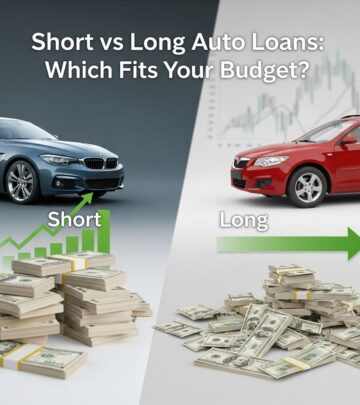
Dangers of Extended Auto Loans
Discover why stretching your car loan beyond 60 months can trap you in debt, inflate costs, and undermine your financial health.

Opting for an auto loan that spans 72 months or more might appear as a practical choice for managing cash flow, yet it frequently results in substantial financial drawbacks. These prolonged repayment schedules amplify total expenses through elevated interest accumulation and expose borrowers to scenarios where they owe more than their vehicle’s worth.
The Allure and Hidden Pitfalls of Lengthy Car Financing
Buyers often select extended terms to ease monthly obligations, enabling purchases of pricier models without immediate strain. However, this strategy overlooks the compounding effects of time on debt. Lenders view longer commitments as riskier, prompting them to impose steeper annual percentage rates (APRs), which erode savings from reduced installments.
Consider a typical scenario: financing a $30,000 vehicle. A 48-month loan at 5% APR yields lower overall interest compared to an 84-month option at 7%, despite the latter’s smaller payments. Over the loan’s duration, the extended version could add thousands in extra charges.
Elevated Borrowing Costs Over Time
One primary concern with loans exceeding 60 months is the surge in interest payments. Lenders compensate for prolonged exposure by hiking rates; data indicates APRs for 84-month terms average 1-2 percentage points above shorter durations.
- Higher base rates due to perceived default risk.
- Extended payment periods allow interest to accrue on a larger principal for longer.
- Total repayment often exceeds the vehicle’s purchase price by 20-50% more than shorter loans.
For instance, on a $35,000 loan, a 60-month term at 6% might total $6,500 in interest, while an 84-month at 7.5% balloons to over $11,000. This disparity underscores how affordability illusions mask true expense.
Risk of Negative Equity Traps
Negative equity, or being ‘upside down,’ occurs when a car’s market value falls below the outstanding loan balance. Vehicles depreciate rapidly—losing 20-30% in the first year alone—while long loans delay principal reduction.
| Loan Term | Avg. Depreciation Impact | Equity Build Time |
|---|---|---|
| 48 months | Moderate | 2-3 years |
| 60 months | Significant | 3-4 years |
| 84 months | Severe | 5+ years |
This table illustrates how longer terms prolong vulnerability. If totaled in an accident, insurance payouts cover only current value, leaving borrowers to cover shortfalls.
Cascading Debt Cycles from Rollover Practices
Negative equity fuels a vicious cycle. When upgrading vehicles, dealers may roll deficits into new financing, inflating subsequent loans. This practice, common with extended terms, perpetuates high balances and necessitates further lengthening for payment manageability.
- Trade-in shortfalls compound across purchases.
- New loans start with built-in deficits, hiking rates further.
- Breaks financial freedom for major life changes like home buying.
Experts note this pattern traps consumers in perpetual auto debt, averaging $10,000+ rollovers per cycle.
Burden of Maintenance on Aging Vehicles
By loan end, an 84-month financed car often exceeds 100,000 miles, coinciding with spiked repair needs. Tires, brakes, and transmissions demand costly attention, doubling expenses alongside payments.
A vehicle bought new under an 84-month plan reaches 10 years old at payoff, when annual upkeep can surpass $2,000. Shorter terms align repayment with peak reliability periods, minimizing overlap.
Reduced Financial Maneuverability
Long commitments lock funds, curtailing responses to life shifts like job changes or emergencies. Lenders scrutinize debt-to-income ratios, potentially blocking mortgages or other credit.
Moreover, extended loans correlate with higher default rates amid economic downturns, as fixed obligations strain budgets.
Comparing Loan Terms: A Cost Breakdown
| Term (Months) | Monthly Payment ($30k @ Avg. APR) | Total Interest | Upside-Down Risk |
|---|---|---|---|
| 48 | $707 (5.2%) | $4,000 | Low |
| 60 | $580 (5.8%) | $5,000 | Medium |
| 72 | $500 (6.5%) | $7,000 | High |
| 84 | $440 (7.2%) | $9,200 | Very High |
This comparison, drawn from industry averages, highlights escalating costs and risks with duration.
Smarter Strategies for Vehicle Financing
To sidestep these issues, prioritize terms under 60 months. Boost down payments to 20%+, reducing financed amounts and equity gaps.
- Save aggressively pre-purchase for larger upfront cash.
- Shop multiple lenders for optimal rates.
- Consider certified pre-owned models with slower depreciation.
Refinancing shorter-term loans later can adjust as finances improve, preserving flexibility.
Impact on Credit Health and Future Borrowing
Prolonged loans extend debt histories, potentially aiding scores via on-time payments but weighing heavily if missed. High utilization from lingering balances hampers new credit access.
Federal Reserve data shows average new auto loan terms hit 69 months in 2024, correlating with rising delinquencies.
FAQs on Extended Auto Loans
Are 84-month loans ever advisable?
Rarely; only for those with exceptional credit securing 0% promotions and stable incomes exceeding needs by 50%+.
How to escape negative equity?
Accelerate payments, sell privately for max value, or refinance—though options dwindle with poor equity.
Does loan length affect insurance?
Indirectly; upside-down status raises gap coverage needs, inflating premiums.
What’s the ideal car loan duration?
36-60 months balances affordability, cost control, and equity building.
Can I pay off early without penalty?
Most lack prepayment fees post-2020 regulations; confirm terms upfront.
Building a Path to Debt-Free Mobility
Rejecting extended auto loans empowers sustainable ownership. Focus on total ownership costs—purchase, fuel, insurance, maintenance—beyond monthly figures. Tools like amortization calculators reveal true impacts, fostering informed decisions that safeguard wealth.
Shorter terms demand discipline but yield freedom sooner, averting depreciation mismatches and interest overloads. Pair with budgeting for repairs and emergencies to ensure vehicular reliability without fiscal peril.
References
- The Pros and Cons of Long-Term Auto Loans — Orange County Credit Union. 2023. https://www.orangecountyscu.org/stories/the-pros-and-cons-of-long-term-auto-loans/
- Long Term Auto Loans: A Road to Financial Regret — DMCC. 2024. https://www.dmcccorp.org/edu/long-term-auto-loans-may-not-be-a-good-idea/
- 84-Month Auto Loans – Good or Bad Idea? — SoFi. 2025-02-15. https://www.sofi.com/learn/content/long-term-auto-loans/
- Are 84-Month and Longer Auto Loans A Good or Bad Idea? — NerdWallet. 2025. https://www.nerdwallet.com/auto-loans/learn/5-reasons-say-no-long-car-loans
- How Long Should a Car Loan Be? — Edmunds. 2025. https://www.edmunds.com/car-loan/how-long-should-my-car-loan-be.html
- Why an 84-Month Car Loan Is an Expensive Risk — Consumer Reports. 2024-11-20. https://www.consumerreports.org/money/car-financing/dont-rush-into-an-84-month-car-loan-a9535693332/
Similar Articles








Read full bio of Sneha Tete