Daily Compounding: Maximize Your Earnings Potential
Discover how daily compounding can transform your savings and investments over time.
How Much Can You Earn With Daily Compounding?
Compound interest is one of the most powerful tools available to anyone looking to grow their wealth over time. Among the various compounding frequencies available to savers and investors, daily compounding stands out as particularly advantageous. Unlike simple interest, where you only earn returns on your original principal, compound interest allows you to earn interest on your interest, creating an accelerating growth pattern that can significantly amplify your financial gains.
Daily compounding represents the most frequent standard compounding method offered by most financial institutions. This means that interest is calculated and added to your account balance every single day, allowing your money to work harder for you around the clock. Understanding how daily compounding works and how to leverage it effectively can be the difference between modest savings growth and substantial wealth accumulation over decades.
Understanding the Fundamentals of Compound Interest
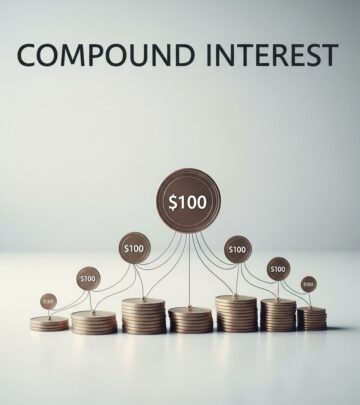
At its core, compound interest is the process of earning returns not just on your original investment, but on all accumulated interest as well. This creates a snowball effect where your money generates earnings, and those earnings generate their own earnings. The impact becomes increasingly dramatic over longer time periods, making time one of the most valuable assets in wealth building.
To illustrate this concept, consider a simple example. If you invest $5,000 at a 5% annual interest rate and leave it untouched for 30 years with annual compounding, you would end up with $21,609.71. That’s more than four times your initial investment, without adding a single additional dollar. The power becomes even more apparent when you understand that the majority of this growth occurs in the later years of the investment period.
The key difference between simple and compound interest is substantial. With simple interest, you would only earn $250 per year (5% of $5,000). With compound interest, your earnings in year one are $250, but in year two you earn 5% on $5,250, giving you $262.50 in that year alone. This seemingly small difference compounds dramatically over time, resulting in significantly higher returns.
The Advantage of Daily Compounding Over Other Frequencies
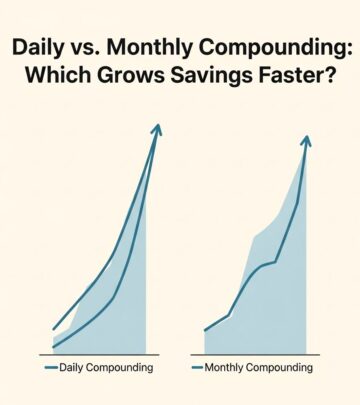
While compound interest can occur at various intervals—annually, semi-annually, quarterly, monthly, weekly, or daily—the frequency at which interest compounds directly impacts your total returns. The more frequently interest is compounded, the more money you will earn overall.
Consider this comparison: a $3,000 savings account earning 2% interest compounded annually would grow to $6,625 after 40 years. The same $3,000 at the same interest rate, but compounded monthly, would reach $6,673 after 40 years. While the difference of $48 might seem negligible, it represents an 0.7% increase in returns simply by changing the compounding frequency. When daily compounding is applied instead, the results become even more compelling.
Daily compounding essentially gives your money the maximum opportunity to generate returns. With 365 compounding events per year instead of just 12 (monthly) or 1 (annually), the interest earned each day becomes part of your principal the very next day, creating a compounding effect that builds momentum throughout the year.
The following table illustrates how compounding frequency impacts growth on a $10,000 initial investment at 4% annual interest over 10 years:
| Compounding Frequency | Final Amount | Interest Earned |
|---|---|---|
| Annual | $14,802.44 | $4,802.44 |
| Semi-Annual | $14,859.47 | $4,859.47 |
| Quarterly | $14,889.64 | $4,889.64 |
| Monthly | $14,907.68 | $4,907.68 |
| Daily | $14,918.28 | $4,918.28 |
The Compound Interest Formula and Calculations
To calculate the exact amount you’ll earn with daily compounding, financial professionals use the compound interest formula:
A = P × (1 + r/n)^(n × t)
In this formula:
- A represents the final amount after compounding
- P is your initial principal or starting investment
- r is the annual interest rate expressed as a decimal
- n is the number of times interest compounds per year (365 for daily compounding)
- t is the total number of years the money will be invested
Let’s work through a practical example. Suppose you invest $5,000 at 6% annual interest, compounded daily, for 10 years. Using the formula:
A = $5,000 × (1 + 0.06/365)^(365 × 10)
This calculation yields approximately $9,097—nearly doubling your initial investment without adding a single additional dollar. The difference between this result and what you’d earn with annual compounding (about $8,954) demonstrates how daily compounding adds real, tangible value to your investments.
Real-World Examples of Daily Compounding
To truly grasp the impact of daily compounding, let’s examine several realistic scenarios that many savers and investors face.
Starting Early With a Modest Amount
Consider a 25-year-old who deposits $1,000 into a high-yield savings account offering 4.5% annual interest, compounded daily. If they never add another dollar and simply let the account grow until retirement at age 65, the daily compounding effect would transform that $1,000 into approximately $5,474. Over 40 years, the power of daily compounding working quietly in the background creates more than $4,400 in additional wealth from nothing but time and interest.
Regular Contributions With Daily Compounding
The impact becomes dramatically more significant when you combine daily compounding with regular contributions. Starting with $10,000 and adding $100 at the end of each month into an account with a 4% annual yield, compounded daily, you would accumulate $29,647.91 after 10 years. Compare this to the same scenario without monthly contributions—you’d only have approximately $14,918, a difference of over $14,000 generated entirely through consistent saving behavior and daily compounding.
Long-Term Wealth Accumulation
Over 30 years, daily compounding produces even more staggering results. A $6,000 initial balance earning simple interest at 3.5% annually would grow to just $12,300. The identical investment with compound interest (even annually compounded) reaches $18,100, and with daily compounding, it surpasses $18,500. That extra $6,200 exists purely because of the daily compounding effect over three decades.
Strategies to Maximize Daily Compounding Benefits
Understanding daily compounding is one thing; leveraging it effectively is another. Here are proven strategies to maximize your earnings potential through daily compounding:
Start Investing as Early as Possible
Time is perhaps the single most important factor in compound interest. Starting with just $1,000 at age 20 can result in substantially more wealth at retirement than starting with $10,000 at age 40, even with identical interest rates. The earlier you begin, the more years your money has to compound, and the more dramatically the effect accelerates.
Choose Accounts With Daily Compounding
Not all financial institutions offer daily compounding. High-yield savings accounts, money market accounts, and certain investment vehicles typically do. When comparison shopping for savings accounts or investment options, specifically inquire about the compounding frequency. Even a difference between monthly and daily compounding can add thousands of dollars over decades.
Make Consistent, Regular Contributions
While compound interest is powerful on its own, combining it with regular contributions creates an exponential growth pattern. Even small amounts added consistently—$50, $100, or $200 monthly—compound alongside your principal, dramatically accelerating your wealth accumulation. Each contribution immediately begins earning interest through daily compounding.
Reinvest All Earnings
The temptation to withdraw interest earnings can be strong, but resisting this urge is crucial for maximizing compound growth. When you leave all interest in the account to be compounded, you’re essentially earning interest on interest, which is the essence of compound interest. One missed withdrawal decision might seem insignificant, but it can result in thousands of dollars in lost compound growth.
Increase Your Interest Rate When Possible
The interest rate itself has a profound impact on compound growth. A 5% return compounding daily will significantly outperform a 2% return, even with identical principal amounts and time horizons. Periodically review your accounts to ensure you’re receiving competitive interest rates, and don’t hesitate to switch to higher-yielding options when they become available.
Using the Rule of 72 for Quick Estimates
For a quick estimation of how long it will take your investment to double, financial experts often employ the Rule of 72. This simple calculation involves dividing 72 by your annual interest rate. For example, with a 6% annual return, your money would double in approximately 12 years (72 ÷ 6 = 12).
While this rule provides only an approximation and doesn’t account for daily compounding precision, it’s invaluable for quick mental math and understanding the relative power of different interest rates. The Rule of 72 elegantly demonstrates why even small differences in interest rates—1% versus 2%, for instance—can have profound impacts over decades of investing.
Common Misconceptions About Daily Compounding
Despite its power, several misconceptions persist about daily compounding that can lead people to underestimate its value or make poor financial decisions.
Misconception 1: Daily Compounding Requires Large Initial Investments — In reality, daily compounding works effectively regardless of your starting amount. A modest initial investment of even $500 combined with consistent contributions can generate substantial wealth over decades through daily compounding.
Misconception 2: Daily Compounding Is Only for Long-Term Investors — While the benefits certainly amplify over longer periods, daily compounding provides benefits even in shorter timeframes. An account earning interest compounded daily will outperform one with the same rate but annual compounding after just one year.
Misconception 3: Interest Rates Don’t Matter Much if Compounding Is Daily — Compounding frequency matters, but so does interest rate. A modest rate compounded daily still yields less than a higher rate compounded annually. Both factors matter and should influence your savings and investment decisions.
Tools for Calculating Your Daily Compounding Returns
Rather than manually calculating compound interest using formulas, numerous free online tools can provide accurate calculations instantly. Compound interest calculators available through major financial institutions and banking websites allow you to input your principal, interest rate, compounding frequency, and time horizon to receive exact projections of your future balance.
These calculators typically allow you to model various scenarios, such as adjusting monthly contribution amounts or changing interest rates, to see how different decisions impact your final balance. Many also display year-by-year breakdowns showing exactly how your money grows and how much each component—principal, interest, and compounded interest—contributes to your final amount.Frequently Asked Questions
Q: Is daily compounding available at all banks?
A: Not all banks offer daily compounding. High-yield savings accounts and money market accounts are most likely to feature daily compounding. Traditional savings accounts may only compound monthly or quarterly. Always check with your financial institution about their specific compounding frequency before opening an account.
Q: Does daily compounding work the same for loans as it does for savings?
A: Daily compounding applies to both savings earning interest and debt accruing interest. Credit cards typically compound interest daily on outstanding balances, which is why credit card debt can grow so quickly if not paid off promptly. This is the negative side of daily compounding.
Q: How much better is daily compounding compared to annual compounding?
A: The difference depends on the principal amount, interest rate, and time horizon. Generally, daily compounding yields about 0.7% to 1% more in returns than annual compounding over long periods. While this seems small initially, it compounds to substantial differences over decades.
Q: Can I switch to an account with daily compounding if I’m already saving?
A: Yes, you can transfer your savings to an account offering daily compounding. Many banks make this process straightforward, and you can begin benefiting from daily compounding immediately without penalty.
Q: What’s the minimum amount needed to benefit from daily compounding?
A: There’s no minimum threshold for benefiting from daily compounding. Even $100 or $500 will benefit from daily compounding, though the dollar amounts earned will be smaller than with larger principals. The percentage benefit remains the same regardless of the starting amount.
References
- Compound Interest: Your Greatest Ally or Your Worst Enemy — Fortune. 2025. https://fortune.com/article/compound-interest/
- Grow Your Savings: The Power of Compound Interest — Associated Bank. 2025. https://www.associatedbank.com/education/articles/personal-finance/banking-basics/compound-interest
- What is Compound Interest? — Fidelity Investments. 2025. https://www.fidelity.com/learning-center/trading-investing/compound-interest
- Understanding Compound Interest and Its Power — Empower. 2025. https://www.empower.com/the-currency/money/understanding-compound-interest
- The Power of Compound Interest — University of Pennsylvania Student Financial Services. 2025. https://srfs.upenn.edu/financial-wellness/blog/power-compound-interest
- Compound Interest Calculator — NerdWallet. 2025. https://www.nerdwallet.com/banking/calculators/compound-interest-calculator
Similar Articles








Read full bio of medha deb