Cyclical Unemployment: Definition, Causes & Effects
Understanding cyclical unemployment: how economic cycles impact job markets and employment rates.

Cyclical unemployment is a critical economic indicator that reflects the portion of joblessness directly tied to fluctuations in the business cycle. This form of unemployment emerges when the overall demand for goods and services declines due to economic downturns, forcing employers to reduce their workforce. Unlike other forms of unemployment such as frictional or structural unemployment, cyclical unemployment is inherently temporary, though its duration can span several years depending on the severity of the economic contraction.
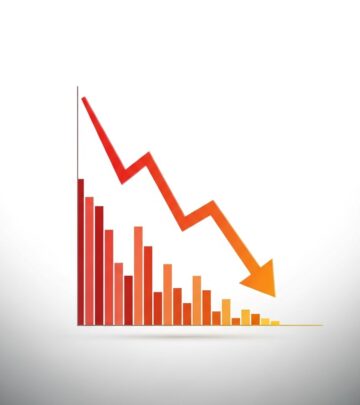
The relationship between cyclical unemployment and economic performance is inversely proportional: when the economy thrives and gross domestic product (GDP) grows, cyclical unemployment decreases significantly. Conversely, during recessions and periods of economic decline, cyclical unemployment rates rise sharply as businesses struggle with reduced consumer demand and lower profit margins.
Understanding Cyclical Unemployment
Cyclical unemployment represents the involuntary job loss that occurs when aggregate demand in the economy weakens. This differs fundamentally from voluntary job transitions or skills mismatches. When businesses experience declining revenues due to reduced consumer spending, they typically respond by implementing layoffs and hiring freezes to preserve profitability.
The mechanisms driving cyclical unemployment are rooted in macroeconomic conditions. As consumer confidence deteriorates—often triggered by events such as stock market crashes, financial crises, or geopolitical shocks—purchasing power diminishes. Businesses respond rationally by reducing production capacity, which necessitates workforce reductions. This creates a self-reinforcing negative cycle where unemployment leads to further reduced consumer spending, which deepens the economic contraction.
Key Characteristics of Cyclical Unemployment
Cyclical unemployment exhibits several distinguishing features that differentiate it from other unemployment types:
- Involuntary nature: Workers lose jobs through no fault of their own; their skills remain relevant and in-demand under normal economic conditions.
- Business cycle dependency: The rate directly correlates with phases of economic expansion and contraction.
- Broad-based impact: Unlike structural unemployment affecting specific sectors, cyclical unemployment affects multiple industries and regions simultaneously.
- Reversibility: When economic conditions improve, previously laid-off workers are often rehired by the same employers.
- Measurable through economic indicators: Cyclical unemployment can be identified by comparing current unemployment rates to natural unemployment rates.
How Cyclical Unemployment Works
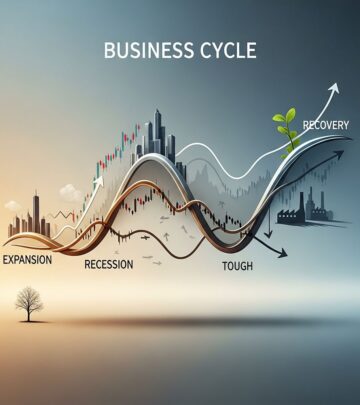
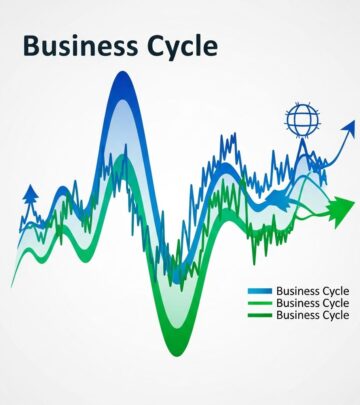
The mechanics of cyclical unemployment operate through straightforward economic principles. During economic expansions, businesses operate near or at full capacity, requiring maximum workforce levels to meet robust consumer demand. Employment rates climb, and job availability exceeds the number of jobseekers. This phase characterizes the peak of the business cycle.
The transition occurs when economic growth stalls. Initial warning signs include declining consumer confidence, reduced retail sales, and falling business investment. As businesses recognize the demand shift, they cut production schedules and reduce operational costs. Workforce reductions follow inevitably, beginning with temporary layoffs that may become permanent depending on economic recovery pace.
During recessions, the unemployment situation deteriorates as the contraction deepens. More businesses reduce hiring or implement additional layoffs. The unemployment rate rises above the natural rate of unemployment, with jobseekers vastly outnumbering available positions. This imbalance means that even workers with valuable skills struggle to find employment.
Recovery begins when economic stimulus—whether from government intervention, consumer confidence restoration, or renewed business investment—gradually restores demand. Businesses recall laid-off workers and resume hiring. As employment grows, cyclical unemployment decreases. This cycle repeats as part of the normal pattern of economic activity.
Calculating Cyclical Unemployment
Economists use a specific formula to isolate cyclical unemployment from overall unemployment statistics. This calculation removes the effects of frictional and structural unemployment, revealing the component directly attributable to business cycles.
The formula is:
Cyclical Unemployment Rate = Current Unemployment Rate – (Frictional Unemployment Rate + Structural Unemployment Rate)
To illustrate this calculation, consider an economy with a current unemployment rate of 8%. If frictional unemployment is estimated at 2% and structural unemployment at 3%, the cyclical unemployment rate would be 3%. This 3% represents workers unemployed specifically due to the business cycle downturn, while the other 5% results from normal job transitions and skill mismatches.
Obtaining accurate component measurements requires data from government statistical agencies. In the United States, the Bureau of Labor Statistics provides monthly unemployment figures and surveys that help economists estimate frictional and structural components, enabling more precise cyclical unemployment calculations.
Real-World Examples of Cyclical Unemployment
History provides numerous illustrations of cyclical unemployment’s impact. The most severe example remains the Great Depression of 1929, which followed a period of rapid economic growth during the 1920s. Stock market collapse triggered widespread financial panic, consumer spending plummeted, and unemployment exceeded 25%. Recovery took over a decade, requiring World War II military production to fully restore employment levels.
A more recent example emerged from the 2008 financial crisis following the subprime mortgage collapse. Unemployment in the United States climbed from 4.7% in November 2007 to 10% by October 2009. Millions of workers across construction, finance, manufacturing, and retail lost employment. The recovery proved gradual, with unemployment remaining elevated for several years. Many workers who lost jobs during this period took years to secure comparable positions.
The automobile industry provides a concrete sectoral example. During economic downturns, vehicle purchases decline sharply as consumers postpone major purchases. Manufacturers respond by implementing plant closures and worker layoffs. An automobile worker laid off during a recession experiences cyclical unemployment. When economic conditions improve and vehicle sales rebound, manufacturers recall workers to meet renewed demand, and the worker regains employment—confirming the cyclical nature of that job loss.
Causes of Cyclical Unemployment
Cyclical unemployment originates from fundamental economic imbalances. The primary cause is a mismatch between labor supply and demand at the macroeconomic level—the number of jobseekers exceeds available positions throughout the economy.
The catalysts triggering cyclical unemployment vary but typically involve significant economic shocks. Stock market crashes rank among the most consequential triggers, as sudden wealth destruction erodes consumer confidence and investment appetite. The 1987 Black Monday crash, the 2000 dot-com bubble collapse, and the 2008 financial crisis all preceded substantial cyclical unemployment increases.
Other triggering events include policy shifts (such as sudden interest rate increases), external shocks (oil price spikes, supply chain disruptions), geopolitical crises, or pandemic-related lockdowns. These events fundamentally alter economic expectations and spending patterns, reducing aggregate demand for goods and services.
Once triggered, cyclical unemployment perpetuates itself through negative feedback loops. Reduced employment lowers consumer income and spending, which decreases business revenues and profits. Companies respond with additional layoffs and investment cutbacks, further depressing demand. This self-reinforcing spiral continues until external stimulus—government intervention, consumer confidence recovery, or business investment revival—breaks the negative cycle.
Comparing Unemployment Types
Understanding cyclical unemployment requires distinguishing it from other unemployment categories:
| Unemployment Type | Cause | Duration | Nature |
|---|---|---|---|
| Frictional | Voluntary job transitions between positions | Short-term (weeks to months) | Voluntary |
| Structural | Skills mismatches, technological change | Medium-term (months to years) | Involuntary |
| Cyclical | Economic downturns and recessions | Variable (months to years) | Involuntary |
Government Policy Responses
Governments employ multiple policy tools to combat rising cyclical unemployment. The primary approach involves expansionary monetary policy, implemented by central banks to stimulate economic activity. Central banks reduce interest rates, increase money supply, and purchase government securities to inject liquidity into the financial system. These actions lower borrowing costs for businesses and consumers, encouraging investment and spending.
Expansionary fiscal policy represents another crucial tool. Governments increase spending on infrastructure projects, social programs, and public employment initiatives. This direct injection of purchasing power stimulates aggregate demand and creates jobs both directly (government positions) and indirectly (through increased business activity driven by higher consumer spending).
The effectiveness of these policies depends on economic conditions and implementation timing. Prompt policy response often minimizes cyclical unemployment duration and severity. Delayed responses allow negative cycles to deepen, requiring more aggressive stimulus to restore growth. Critics and proponents continue debating optimal policy approaches, though most economists acknowledge that some government intervention accelerates recovery from cyclical unemployment.
Duration and Recovery Timeframes
Cyclical unemployment duration varies substantially based on recession severity and policy effectiveness. Typical business cycles involving mild recessions may conclude in 12-18 months, with unemployment returning to natural rates relatively quickly. Severe recessions or depressions can create prolonged unemployment lasting many years.
The Great Depression demonstrated worst-case scenarios, with unemployment remaining elevated for over a decade. The 2008 financial crisis created more moderate but still significant duration, with unemployment remaining above 8% for nearly three years following the initial shock. Recovery speed depends on policy responses, business confidence restoration, consumer sentiment improvement, and the pace of credit availability expansion.
Economic Interconnectedness and Global Spread
Modern financial market integration means cyclical unemployment in developed economies quickly spreads to emerging markets and developing nations. When major economies enter recession, global trade declines, international investment flows reverse, and cross-border supply chains contract. This propagation effect transformed cyclical unemployment from localized sectoral issues into global economic concerns.
The 2008 financial crisis exemplified this dynamic. The initial subprime crisis in the United States rapidly escalated into a global phenomenon, with unemployment rising in Europe, Asia, and emerging markets simultaneously. Countries with substantial export dependence experienced particularly severe cyclical unemployment as external demand collapsed.
Frequently Asked Questions
Q: How does cyclical unemployment differ from structural unemployment?
A: Structural unemployment results from long-term skill mismatches or technological changes that persist regardless of economic conditions. Cyclical unemployment emerges specifically due to business cycle downturns and typically reverses when the economy recovers. Workers experiencing structural unemployment cannot easily transition to available positions, while cyclically unemployed workers typically possess relevant skills for jobs that will return as demand recovers.
Q: Why is cyclical unemployment considered more serious than other types?
A: Cyclical unemployment affects large populations simultaneously across numerous industries and regions. Unlike frictional or structural unemployment affecting smaller segments, cyclical unemployment can devastate entire economies. It triggers self-reinforcing negative spirals, creates persistent poverty and social disruption, and requires massive policy interventions for resolution.
Q: Can cyclical unemployment be completely eliminated?
A: No, cyclical unemployment cannot be completely eliminated because business cycles are inherent to market economies. However, its severity and duration can be substantially reduced through effective monetary and fiscal policies, automatic stabilizers, and business cycle management.
Q: What role do automatic stabilizers play in reducing cyclical unemployment?
A: Automatic stabilizers like unemployment insurance, progressive taxation, and welfare programs provide income support during downturns without requiring explicit policy changes. This maintains consumer spending, limiting demand collapse and cyclical unemployment severity.
Q: How can workers prepare for cyclical unemployment?
A: Workers can build financial reserves, develop diverse skills transferable across industries, maintain professional networks, and invest in ongoing education. These measures provide cushions during downturns and improve reemployment prospects when cyclical unemployment strikes.
References
- Cyclical Unemployment – Definition, Cause, Types — Corporate Finance Institute. 2024. https://corporatefinanceinstitute.com/resources/economics/cyclical-unemployment/
- Cyclical Unemployment – Definition, Causes and Cure — Management Study Guide. 2024. https://www.managementstudyguide.com/cyclical-unemployment.htm
- Bureau of Labor Statistics – Employment Situation — U.S. Department of Labor. 2025. https://www.bls.gov/news.release/empsit.htm
- Business Cycles and Economic Indicators — Federal Reserve Economic Data (FRED). 2025. https://fred.stlouisfed.org/
- Economic Report of the President — Executive Office of the President of the United States. 2024. https://www.whitehouse.gov/cea/
Similar Articles








Read full bio of Sneha Tete