Cyclical Unemployment: Definition, Causes, and Effects
Understanding cyclical unemployment and its impact on the economy during business cycles.
Understanding Cyclical Unemployment
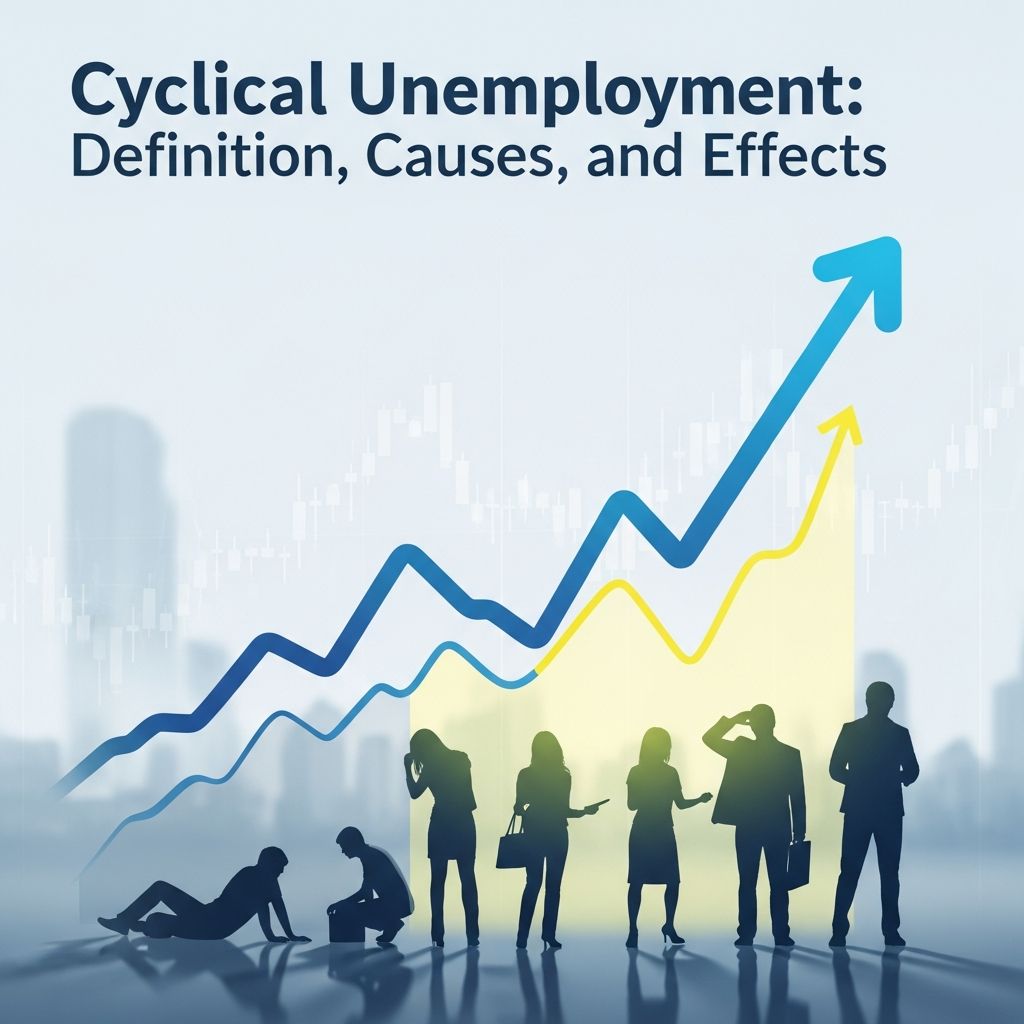
Cyclical unemployment is a form of joblessness that occurs when the economy experiences periods of contraction or negative economic growth. Unlike other types of unemployment that may persist regardless of economic conditions, cyclical unemployment is directly tied to the ups and downs of the business cycle. When the economy enters a recession or downturn, cyclical unemployment rises significantly. Conversely, during periods of economic expansion and growth, cyclical unemployment typically declines as businesses hire more workers to meet increased demand.
The concept of cyclical unemployment was developed by economists to explain the relationship between job loss and economic contractions. It represents the portion of total unemployment that fluctuates with the economy’s performance, distinct from structural or frictional unemployment that may exist even during robust economic periods.
What Causes Cyclical Unemployment?
Cyclical unemployment stems from fundamental imbalances in the economy that occur during business cycle downturns. The process typically unfolds through a chain of events that begins when the economy enters a recessionary phase.
The Chain of Events Leading to Cyclical Unemployment
The mechanism behind cyclical unemployment can be understood through several interconnected steps:
- Decreased Consumer Demand: When an economy enters recession, consumers have less disposable income and become more cautious about spending. They delay major purchases and reduce overall consumption of goods and services.
- Business Layoffs: As demand for products decreases, businesses face reduced sales and revenue. To maintain profitability and conserve cash, companies lay off workers to reduce operational expenses.
- Supply-Demand Adjustment: Businesses continue layoffs until their supply levels match the new, lower demand. This adjustment period creates significant unemployment as workers are displaced from their positions.
- Company Closures: In severe cases, some companies may fail entirely due to economic recession, leaving all their workers unemployed.
- Production Decline: With fewer goods being ordered across the economy, production inevitably decreases, requiring fewer workers.
- Negative Multiplier Effects: When production drops in one industry, related industries suffer as well. For example, a decline in automobile manufacturing reduces demand for steel, parts suppliers, and shipping services, creating a ripple effect of job losses.
Economic Factors Behind Cyclical Unemployment
Several economic conditions can trigger cyclical unemployment. A stock market crash can cause a loss of consumer confidence, leading people to postpone purchases and delay investments. Financial crises, such as bank failures or credit crunches, restrict the availability of loans and reduce spending power. Pandemics, geopolitical events, or sudden shocks to commodity prices can also precipitate economic downturns that result in cyclical unemployment.
Effects of Cyclical Unemployment
Cyclical unemployment creates widespread economic consequences that extend far beyond individual job loss. These effects often compound without intervention from government or other policy measures.
Primary Economic Impacts
Large-Scale Job Loss: The most immediate effect is widespread unemployment as companies across multiple industries reduce their workforce. Millions of workers may be displaced simultaneously, overwhelming the job market.
Decreased Consumer Spending: When unemployment rises, consumer confidence typically falls. People become hesitant to make large purchases like homes, vehicles, or appliances, further reducing demand for goods and services.
Reduced Production: With lower consumer demand, manufacturers and service providers reduce production levels. This contraction means fewer resources are needed, reinforcing the need for continued workforce reductions.
Diminished Stock Market Activity: During economic downturns, stock trading volume declines and asset values fall. This reduction in stock market activity negatively impacts investment returns and household wealth.
Service Sector Decline: Industries like hospitality, tourism, entertainment, and retail suffer disproportionately during cyclical unemployment as consumers cut discretionary spending.
Long-Term and Social Consequences
Cyclical unemployment can persist for extended periods if left unaddressed. The Great Depression lasted approximately 15 years until World War II military spending stimulated the economy. Extended unemployment leads to:
- Reduced household incomes and increased poverty
- Greater demand for social services and government assistance
- Increased rates of homelessness and food insecurity
- Mental health challenges and social instability
- Potential rise in radical political ideologies during severe crises
- Difficulty for young workers entering the labor market, who may face persistent unemployment
Historical Examples of Cyclical Unemployment
The Great Recession of 2008
One of the most significant modern examples of cyclical unemployment occurred during the 2008-2009 financial crisis. Housing prices had soared as lending standards loosened, allowing many borrowers to secure mortgages they couldn’t afford. When housing prices collapsed and borrowers defaulted on loans, the financial system experienced a severe crisis. Banks tightened lending standards dramatically, and credit became difficult to obtain.
The construction and real estate industries were hit hardest. New home building and remodeling projects nearly ceased, leaving millions of construction workers unemployed. The manufacturing sector also experienced significant layoffs as consumer demand for durable goods plummeted. However, the 2008 recession also featured structural unemployment as factories increasingly adopted computerized processes, permanently eliminating certain job categories.
The COVID-19 Pandemic Economic Impact
The COVID-19 pandemic triggered a sharp but initially shorter-term bout of cyclical unemployment. Lockdown measures and reduced consumer confidence led to massive layoffs, particularly in hospitality, travel, and tourism sectors. Unemployment spiked dramatically in 2020 before recovering as economic activity resumed and government stimulus measures supported businesses and workers.
The Housing Industry Example
Home builders provide an industry-specific illustration of cyclical unemployment. During periods of strong economic growth, consumer demand for new homes drives construction employment. However, when the economy slows and consumers have less money to spend, demand for new homes drops sharply. Home builders become reluctant to hire because construction projects are no longer profitable. Workers with expertise in residential construction face unemployment until economic conditions improve.
The Transition from Cyclical to Structural Unemployment
In economies experiencing prolonged distress, cyclical unemployment may transform into structural unemployment, creating a more persistent employment challenge. This occurs when workers’ skills no longer match available job opportunities even after the economy recovers.
For example, a programmer who developed expertise in computer languages during the late 1990s technology boom might have lost their job during the 2007-2009 financial crisis. While this initial job loss would be classified as cyclical unemployment, when the economy recovered, they might discover that the programming languages they specialized in had become obsolete. The job market had shifted toward different technologies, meaning their skills no longer aligned with employer needs. This transformation represents a transition from cyclical to structural unemployment, requiring retraining or career change.
Policy Responses to Cyclical Unemployment
Governments employ various policy tools to mitigate the effects of cyclical unemployment and expedite economic recovery:
- Stimulus Packages: Government spending on infrastructure, tax cuts, or direct payments to households can boost demand and encourage businesses to rehire workers.
- Monetary Policy: Central banks lower interest rates to reduce borrowing costs and encourage investment and consumer spending.
- Unemployment Benefits: Enhanced unemployment insurance provides income support to displaced workers, helping maintain consumer spending and reducing economic contraction.
- Job Training Programs: Government-funded retraining helps workers develop skills for available positions.
However, governments face a paradox with cyclical unemployment: the adjustment process requires employers to lay off workers, which temporarily worsens unemployment before the economy can rebalance. Some countries have adopted policies encouraging workforce reductions and reduced employment protections to accelerate this adjustment process, though such policies remain controversial.
Cyclical vs. Other Types of Unemployment
| Unemployment Type | Primary Cause | Duration | Policy Response |
|---|---|---|---|
| Cyclical | Economic downturns and recessions | Varies with business cycle | Stimulus, monetary policy, benefits |
| Structural | Skills mismatch or industry decline | Long-term without intervention | Retraining, education programs |
| Frictional | Job search time between positions | Short-term, natural process | Improved job matching services |
| Seasonal | Predictable industry fluctuations | Cyclical within year | Temporary employment solutions |
Frequently Asked Questions About Cyclical Unemployment
Q: How does cyclical unemployment differ from other types of unemployment?
A: Cyclical unemployment specifically results from economic downturns and recessions, rising and falling with the business cycle. Structural unemployment stems from skills mismatches and industry changes that persist even during economic growth. Frictional unemployment represents the normal time spent searching for jobs between positions, while seasonal unemployment reflects predictable industry fluctuations.
Q: Can cyclical unemployment be eliminated?
A: Complete elimination of cyclical unemployment is not realistic since business cycles are inherent to market economies. However, government policies can significantly reduce its severity and duration through stimulus measures, unemployment benefits, and monetary policy adjustments.
Q: How long does cyclical unemployment typically last?
A: Duration varies significantly depending on the severity of the economic downturn and policy responses. Mild recessions might last a few months to a year, while severe crises like the Great Depression or Great Recession can persist for several years.
Q: What industries are most affected by cyclical unemployment?
A: Construction, manufacturing, retail, and hospitality/tourism sectors are typically hardest hit during downturns because their demand is highly sensitive to consumer spending. Professional services and essential industries experience smaller employment fluctuations.
Q: How does cyclical unemployment affect government budgets?
A: Rising cyclical unemployment increases government spending on unemployment benefits and social services while reducing tax revenue from reduced business profits and lower wages. This typically increases budget deficits during recessions.
Q: What role does consumer confidence play in cyclical unemployment?
A: Consumer confidence is critical to cyclical unemployment. When confidence falls, people reduce spending and save more, reducing demand for goods and services. This reduction in demand prompts businesses to lay off workers, which further reduces confidence in a self-reinforcing cycle.
Conclusion
Cyclical unemployment remains an inherent challenge of market-based economies, emerging whenever business cycles enter downturns. Understanding its causes—decreased demand, business layoffs, production declines, and multiplier effects—helps policymakers and economists develop more effective responses. While cyclical unemployment cannot be entirely prevented, government policies including stimulus spending, monetary accommodations, and unemployment support can substantially reduce its severity and duration. The transition of cyclical unemployment into structural unemployment in prolonged crises highlights the importance of timely policy intervention to prevent temporary job losses from becoming permanent economic dislocations.
References
- Cyclical Unemployment Explained — Intelligent Economist. 2024. https://www.intelligenteconomist.com/cyclical-unemployment/
- What Is Cyclical Unemployment? Causes, Effects and Examples — Indeed Career Advice. 2024. https://www.indeed.com/career-advice/career-development/cyclical-unemployment
- Cyclical Unemployment – Definition, Causes and Cure — Management Study Guide. 2024. https://www.managementstudyguide.com/cyclical-unemployment.htm
- Cyclical Unemployment: Defined and Explained — Rocket Money. 2024. https://www.rocketmoney.com/learn/personal-finance/cyclical-unemployment
- Bureau of Labor Statistics: Employment Data and Analysis — U.S. Department of Labor. 2024. https://www.bls.gov/
- Macroeconomic Concepts: Business Cycles and Employment — Federal Reserve Board. 2024. https://www.federalreserve.gov/
Similar Articles








Read full bio of Sneha Tete