CV vs Resume: Key Differences and When to Use Each
Master the critical distinctions between CVs and resumes to advance your career effectively.
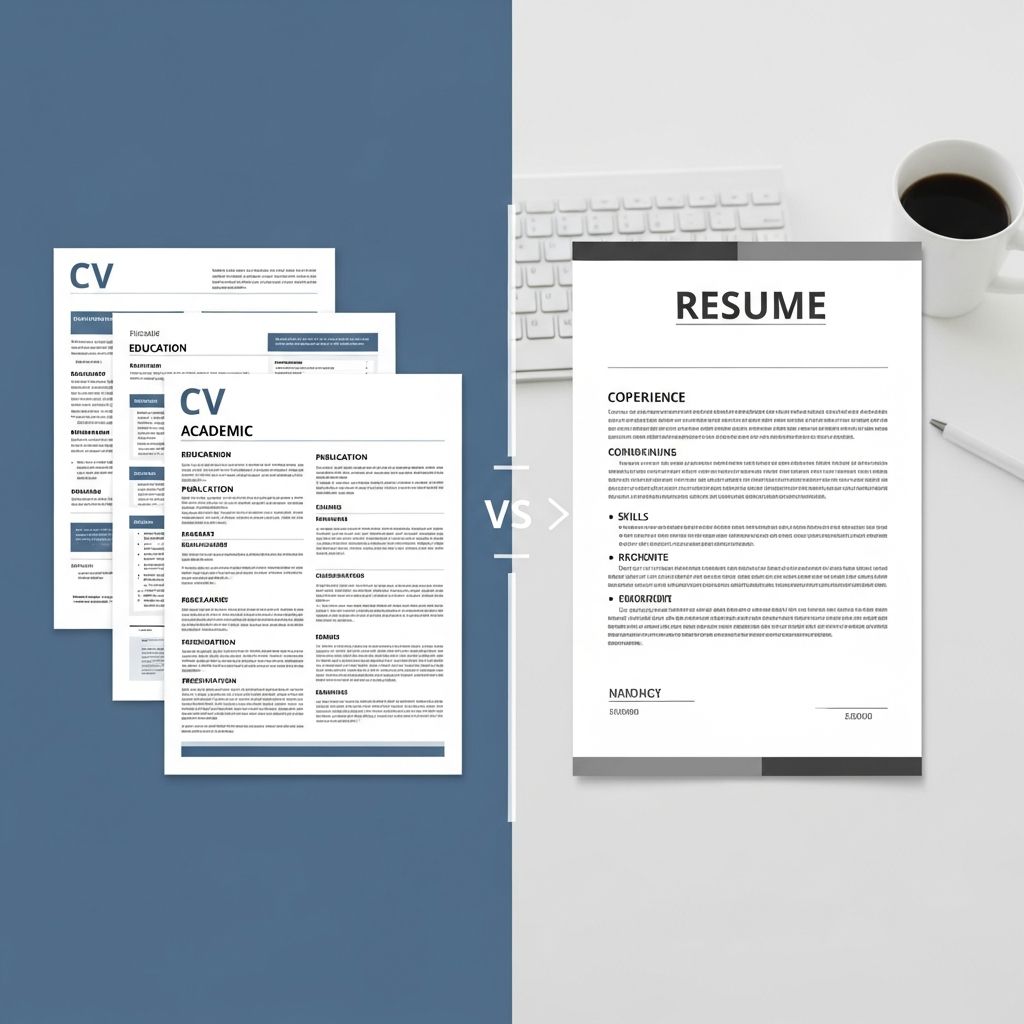
CV vs Resume: Understanding the Fundamental Differences
Whether you’re entering the job market for the first time or advancing your career, understanding the distinction between a curriculum vitae (CV) and a resume is essential. While these documents may seem interchangeable, they serve distinct purposes and are valued differently across industries and geographic regions. A CV is a detailed document chronicling your entire academic and professional journey, while a resume is a concise, targeted summary of your most relevant qualifications for a specific job. Choosing the right document for your situation can significantly impact your career prospects.
What is a Resume?
A resume is a concise, typically one to two-page document designed to give employers a quick overview of your most relevant experience and qualifications. Resumes work like targeted marketing tools that sell your qualifications for a specific job. Instead of listing your whole career, they showcase only the most meaningful experiences and accomplishments that match the position you want. The primary objective of a resume is to get you an interview by demonstrating your value to employers quickly and clearly.
Resumes are most commonly used in the private sector and are particularly popular in the United States and Canada. Corporate industries including finance, marketing, sales, and technology prefer brief resumes that emphasize measurable achievements over complete career histories. Creative fields like design and advertising also work well with resumes, often paired with portfolios to showcase your work.
What is a CV (Curriculum Vitae)?
A curriculum vitae, commonly abbreviated as CV, is a comprehensive document that can span multiple pages, sometimes exceeding ten pages for seasoned academics or researchers. CVs provide a detailed account of your full academic, professional, and research history without space limitations. The CV’s extended length allows for in-depth descriptions of each position, project, and publication. CVs are primarily used in academic, research, medical, and scientific roles, and are also standard for grant or fellowship applications. The tone of a CV is factual and credentials-focused, emphasizing the accumulation of academic and professional accomplishments.
Key Structural Differences
The most obvious difference between these documents appears in their length and organizational approach. Understanding these structural variations helps you select and create the appropriate document for your situation.
Resume Structure
Resumes follow a standardized format optimized for quick scanning and immediate impact:
– Contact information and professional title- Professional summary or objective- Work experience (most recent first)- Education and certifications- Relevant skills (technical and soft skills)- Optional sections (achievements, awards)
Resumes prioritize skills and results, displaying quantifiable outcomes and numbers prominently. The format emphasizes what you’ve accomplished rather than your complete history.
CV Structure
CVs follow a more detailed, chronological format:
– Contact information- Professional summary or objective- Academic credentials and full educational history- Research experience with detailed methods and outcomes- Publications and presentations- Teaching experience and course responsibilities- Grants, fellowships, and funding information- Professional affiliations and memberships- References with full contact details
CVs are organized chronologically, typically from oldest to newest or in reverse chronological order, with complete sections for teaching, research, and publications. The format remains mostly consistent regardless of the positions being described, maintaining an academic focus with detailed research methodologies and findings.
Length and Format Comparison
| Feature | Resume | CV |
|---|---|---|
| Length | 1-2 pages | 2-10+ pages |
| Primary Use | Corporate, private sector jobs | Academic, research, and scientific positions |
| Content Focus | Relevant work and skills summary | Full academic and professional history |
| Geographic Preference | U.S., Canada | Europe, Asia, Africa, and international markets |
| Tone | Self-promotional and results-driven | Factual and credential-focused |
| Target Audience | Corporate recruiters and hiring managers | Academic committees and research institutions |
Content Differences Between CV and Resume
What to Include in a Resume
Resumes must include five essential sections to be competitive:
– Professional summary or objective statement- Work experience with accomplishments and measurable results- Educational background with degrees and institutions- Relevant skills aligned with the job description- Certifications and licenses related to the position
Each phrase in a resume should be tailored to match the specific job’s requirements. Recruiters typically spend only 7.4 seconds scanning a resume initially, so they focus on qualification markers including job titles, companies, dates, education, and standout achievements. Hiring managers value measurable results and industry-specific keywords that showcase relevant expertise.
What to Include in a CV
A CV format is much more customizable than a resume and includes all resume sections plus additional comprehensive sections:
– Academic credentials with thesis titles- Research experience with methodologies- Publications with full citations in field-appropriate formats- Conference presentations and dates- Teaching experience and course responsibilities- Grants and fellowships with funding amounts- Professional affiliations and organizational roles- Awards, honors, and recognition- Complete references with contact details
This comprehensive approach offers a full narrative of your career, particularly within academic, medical, and research fields.
What NOT to Include
Avoid in Resumes
Resumes should skip personal information including marital status, age, and photographs. Objective statements are generally unnecessary unless you’re changing careers significantly. Avoid listing references directly on your resume—provide them only when requested. Additionally, exclude unrelated work experience and overly technical details or full publication citations that don’t demonstrate relevant expertise.
Avoid in CVs
CVs should exclude graphics, long personal statements, and salary information. Any content that doesn’t demonstrate your academic or research credibility doesn’t belong in a CV. While CVs can be longer, they should remain focused on professional and academic accomplishments relevant to your field.
Choosing Between CV and Resume: Geographic and Industry Considerations
Your geographic location and industry significantly influence which document you should use. In the United States and Canada, resumes are the standard for most job applications in the private sector. However, in Europe, Asia, Africa, and other international markets, CVs are the preferred document format. Location adds a crucial twist—what works well in North America might not be effective with employers in other regions.
Industry standards also play a decisive role. Academic institutions, research organizations, and medical facilities almost exclusively require CVs for job applications and funding opportunities. Corporate industries including finance, marketing, and technology prefer concise resumes. Understanding your target industry’s expectations ensures your application materials align with hiring practices.
Career Stage Considerations
Your career stage shapes whether a CV or resume is more appropriate. Entry-level candidates benefit from focused resumes that showcase relevant coursework, internships, and transferable skills when professional experience is limited. Mid-career professionals should base their choice on industry expectations rather than career length alone. Senior professionals may find CVs more suitable for academic and research positions, while those in corporate sectors typically maintain updated resumes.
Customization is Essential
Both documents require careful customization for maximum effectiveness. Generic applications rarely succeed when competition is fierce. Resumes should use language directly from the job description and highlight experiences that fit the specific role best. This targeted approach is essential because applicant tracking systems (ATS) screen for matching keywords, making keyword optimization critical for resume success.
CVs also need customization through section arrangement to showcase experiences valued in your target position. Research grant applicants should focus on research accomplishments first, while those seeking teaching positions should prioritize teaching experience at the beginning of their CV. This strategic arrangement helps hiring committees quickly identify relevant credentials.
Converting Between CV and Resume
Many professionals need both document formats during their career journey. Converting a detailed CV into a focused resume requires strategic editing. Start by identifying which core competencies and experiences match your target position best. Transform lengthy details into powerful statements that highlight achievements rather than responsibilities. The main difference between a CV and resume becomes clear during this conversion process—you’ll need to prioritize impact over comprehensiveness.
When converting a CV to a resume, eliminate extensive academic details, complete publication lists, and comprehensive research descriptions. Instead, highlight achievements with quantifiable results and outcomes. This streamlined approach makes your qualifications immediately clear to corporate recruiters reviewing your materials.
Key Takeaways for Job Seekers
Understanding when and how to use CVs versus resumes significantly impacts your career prospects. Your career goals, industry standards, and location all play crucial roles in making this decision. CVs highlight detailed academic and research achievements and are essential for academic, research, and international positions. Resumes focus on showcasing professional wins for specific corporate roles and are standard throughout North America. Both formats have their place in today’s competitive job market, but success comes down to matching the right type with your target role and location.
Frequently Asked Questions
Q: How long should my resume be?
A: Resumes should generally be one to two pages long, focusing on your most relevant experiences and achievements. If you have more than ten years of relevant work experience, you may extend to additional pages, but keep information concise and impactful.
Q: How long can a CV be?
A: CVs can be two pages or more, sometimes exceeding ten pages for seasoned academics or researchers. The CV’s extended length allows for a detailed account of your full academic, professional, and research history without space constraints.
Q: Should I include references on my resume?
A: No, references should not appear on your resume. Instead, prepare a separate reference list and provide it only when an employer requests it. CVs, however, typically include full reference details.
Q: What’s the best resume format to use?
A: Effective resumes use clean, professional templates that are easy to scan. You can use accent colors, but avoid overly decorated or multicolored designs that distract from your content.
Q: Can I use the same resume for every job application?
A: No, you should tailor your resume for each job application by matching language from the job description and highlighting relevant experiences. This customization significantly improves your chances of getting past ATS screening and securing an interview.
Q: When should I use a CV instead of a resume?
A: Use a CV when applying for academic positions, research opportunities, medical roles, or jobs in international markets, particularly in Europe and Asia. CVs are also required for grant and fellowship applications in academic and research fields.
References
- CV vs Resume: Which One Will Get You Hired? [Expert Guide 2025] — WOBO. 2025. https://www.wobo.ai/blog/cv-vs-resume-difference-2025/
- CV vs. Resume: Differences & When to Use Each (in 2025) — LiveCareer. 2025. https://www.livecareer.com/resources/cv-vs-resume
- Understanding the differences between a C.V. and a resume — Arizona State University Graduate School. 2024. https://graduate.asu.edu/graduate-insider/navigating-job-market-understanding-differences-between-cv-and-resume
- CV vs. Resume: What’s the Difference? — Coursera. 2024. https://www.coursera.org/articles/cv-vs-resume
- CV vs. Resume: Key Differences (Plus How To Write a CV) — Indeed. 2024. https://www.indeed.com/career-advice/resumes-cover-letters/what-is-a-cv
Similar Articles








Read full bio of Sneha Tete