CV Samples and Writing Tips: Complete Guide
Master the art of CV writing with comprehensive samples, expert tips, and proven strategies for job success.
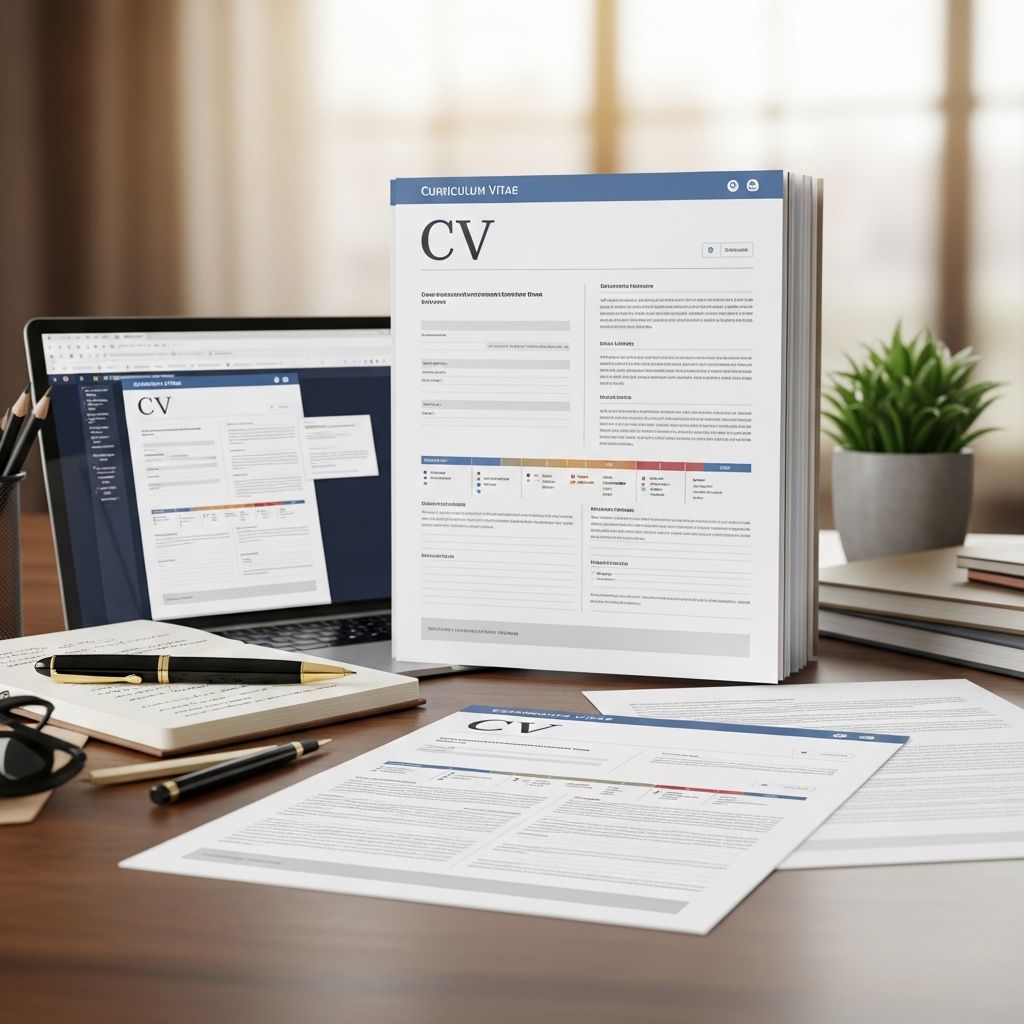
A curriculum vitae (CV) is one of the most important documents in your professional journey. Whether you’re applying for academic positions, research roles, or specialized career opportunities, your CV serves as a comprehensive snapshot of your qualifications, experience, and accomplishments. Unlike a resume, which is typically one to two pages, a CV can be longer and more detailed, allowing you to showcase the full breadth of your professional development. Understanding how to craft an effective CV and knowing what samples to reference can significantly increase your chances of landing interviews and advancing your career.
Understanding the Purpose and Format of a CV
A curriculum vitae—Latin for “course of life”—provides a detailed overview of your professional journey. The primary purpose of a CV is to convince employers, hiring committees, or admissions boards that you are the best candidate for the position or opportunity you’re pursuing. Unlike a resume, which summarizes your experience concisely, a CV allows you to provide comprehensive details about your education, professional experience, publications, research, grants, awards, and professional affiliations.
The format and emphasis of your CV should vary depending on your industry and the specific position you’re applying for. An academic CV, for instance, will heavily emphasize research contributions, publications, and teaching experience. In contrast, a professional CV in the business sector might focus more on leadership roles, project management, and quantifiable business outcomes. Understanding these distinctions and tailoring your CV accordingly is essential for making a strong impression.
Essential Sections to Include in Your CV
A well-structured CV typically includes several key sections that work together to present your professional profile comprehensively. Each section should be clearly labeled and organized logically to make it easy for readers to find relevant information.
Contact Information
Begin your CV with clear, professional contact information. Include your full name, current address, city and state with zip code, telephone number, cell phone number, and professional email address. Ensure your email address is professional—avoid nicknames or informal variations. This section appears at the top of your CV and should be formatted clearly so hiring managers can easily reach you.
Professional Summary or Objective Statement
While optional, a summary statement can help you stand out immediately. This brief section—typically three to five sentences—highlights your key qualifications and career goals. A well-crafted summary gives hiring managers a quick snapshot of why you’re an excellent candidate for the position. Focus on your most impressive achievements and relevant skills that directly align with the position you’re seeking.
Education
List your academic background in reverse chronological order, starting with your most recent degree. For each degree, include the institution name, location, degree type (B.A., M.S., Ph.D., etc.), and graduation date. If your degree is recent or ongoing, you may include your expected graduation date. Additionally, if applicable, include your dissertation or thesis title and the names of your advisors. For advanced degrees, you might also include relevant coursework or specializations.
Employment History
Detail your professional experience in reverse chronological order, beginning with your current or most recent position. For each role, include your job title, organization name, location, employment dates, and a description of your key responsibilities and achievements. Depending on your field, you might break this section into categories such as “Teaching Experience,” “Research Experience,” “Administrative Experience,” or “Professional Experience.” This organizational approach helps readers quickly identify relevant experience.
Postdoctoral Training and Research Experience
If applicable to your field, create a dedicated section for postdoctoral training, research fellowships, or clinical experiences. Include the institution or organization name, position title, location, dates, and a brief description of your work. This section is particularly important for academic and scientific CVs, as it demonstrates your commitment to professional development and research excellence.
Grants, Fellowships, and Awards
Academic and research-focused CVs should include a section dedicated to grants you’ve received and fellowships you’ve earned. List the funding organization, grant or fellowship title, award amount (if applicable), and dates. Include both competitive grants you’ve written and funding you’ve received. Additionally, document any honors, awards, or recognitions you’ve received that relate to your professional work. These achievements demonstrate your recognition within your field and your ability to secure funding.
Publications and Research
For academic positions, publications are often critical. List your publications in reverse chronological order, using the citation format standard in your field (APA, MLA, Chicago style, etc.). Include books, peer-reviewed journal articles, book chapters, and conference presentations. Some CVs also include a section for works in progress or submitted manuscripts. Be accurate and complete in your citations to maintain credibility.
Professional Affiliations and Memberships
Document your membership in professional organizations related to your field. Include the organization name and any leadership positions you hold or have held. If you serve on committees, editorial boards, or special task forces, highlight these roles. Active participation in professional communities demonstrates your commitment to your field and helps establish your professional network.
Skills and Interests
An optional skills and interests section can help personalize your CV and showcase additional qualifications. Include language proficiencies, technical skills, software expertise, or specialized training. Keep this section relevant to your industry and the positions you’re pursuing. Avoid listing trivial hobbies; instead, focus on skills that enhance your candidacy and demonstrate your versatility.
References
Depending on your field and the specific opportunity, you may include a list of references at the end of your CV or note that references are available upon request. If including references, provide their names, titles, institutional affiliations, phone numbers, and email addresses. Ensure you have permission from all references before listing them.
Key Principles for Effective CV Writing
Prioritize Structure Over Length
While CVs can be longer than resumes, length should never compromise clarity. A well-organized, clearly structured CV is far more effective than a lengthy document that’s difficult to navigate. Place your most important information at the top—typically your education and professional experience. Within each section, organize information in reverse chronological order, placing your most recent and relevant experience first.
Tailor Your CV to Your Audience
Customize your CV for each application. Research the institution or organization you’re applying to and understand their priorities. Does the department value teaching excellence or research productivity? Are publications or grants more important for advancement? Adjust the emphasis and detail in your CV accordingly. If applying to a teaching-focused institution, elaborate on your teaching experience and philosophy. If the organization values research, emphasize your publications and grants.
Ensure Readability and Visual Appeal
Make your CV easy to scan and read. Use ample margins—approximately one inch on all sides—and white space between sections. Consider using bullet points selectively to highlight key achievements and responsibilities. Choose a professional, easy-to-read font such as Times New Roman or Arial in 11 or 12-point size. Consistent formatting throughout your document enhances readability and creates a polished, professional appearance.
Maintain Consistency in Formatting
Consistency signals professionalism and attention to detail. If you bold section headings, bold all section headings. If you italicize institution names in one section, italicize them in all sections. Use the same date format throughout. Consistent bullet point formatting and spacing make your CV easier to follow and demonstrate your organizational skills.
Emphasize Achievements and Impact
Rather than simply listing responsibilities, highlight your achievements and the impact of your work. Use action verbs and quantifiable results when possible. Instead of “Responsible for teaching undergraduate courses,” write “Developed and taught four undergraduate courses annually, receiving average student evaluations of 4.6/5.0 and mentoring 50+ students.” Specific achievements and measurable outcomes make your experience more compelling.
Proofread Meticulously
Your CV reflects your attention to detail and professionalism. Spelling errors, grammatical mistakes, or inconsistent formatting can eliminate you from consideration. Read your CV multiple times, checking for errors. Ask colleagues, mentors, or friends to review it as well. A fresh set of eyes often catches mistakes you might miss. Use spell-check tools, but don’t rely on them exclusively—they can miss errors like incorrect word choices.
CV Formatting Best Practices
| Formatting Element | Best Practice | Why It Matters |
|---|---|---|
| Font Type | Times New Roman, Arial, or Calibri | Professional and universally readable |
| Font Size | 11 or 12 points | Large enough to read easily, small enough for comprehensive content |
| Margins | 1 inch on all sides | Provides white space for readability and professional appearance |
| Line Spacing | Single or 1.15 spacing | Balances readability with space efficiency |
| Section Headings | Bold, consistent formatting | Helps readers quickly locate information |
| Color Usage | Minimal; accent color optional for conservative fields | Maintains professional appearance while adding subtle visual interest |
Common CV Mistakes to Avoid
Understanding what not to include in your CV is as important as knowing what to include. Avoid these common pitfalls that can undermine your candidacy:
– Irrelevant Information: Don’t include personal details unrelated to your professional qualifications, such as height, weight, or marital status. Unless directly relevant to the position, exclude social media profiles, personal hobbies, or non-professional interests.- Inconsistent Formatting: Formatting inconsistencies create confusion and suggest carelessness. Maintain uniform styling throughout your document.- Unexplained Employment Gaps: Address significant gaps in your employment history briefly. If you took time for further education, family responsibilities, or other legitimate reasons, include a brief note to provide context.- Vague Descriptions: Avoid generic descriptions of responsibilities. Use specific, measurable achievements that demonstrate your value.- Excessive Length: While longer than resumes, CVs should still be concise. Edit ruthlessly and eliminate outdated or minimally relevant information.- Typos and Grammatical Errors: These mistakes are inexcusable and suggest lack of attention to detail.
Adapting Your CV for Different Fields
Academic CV
An academic curriculum vitae emphasizes research, publications, teaching, and service to the discipline. This format typically includes extensive sections on research activities, peer-reviewed publications, conference presentations, grants, and teaching experience. Academic CVs can be longer than professional CVs and should highlight your scholarly contributions and leadership in your field.
Industry Professional CV
In business and industry, your CV should emphasize relevant professional experience, technical skills, and measurable business impact. Focus on your ability to drive results, lead teams, and contribute to organizational goals. Include certifications, relevant software proficiencies, and industry-specific achievements.
Research and Scientific CV
Scientific CVs prioritize research experience, publications, and technical expertise. Include details about your research focus, methodologies, equipment proficiency, and collaboration with other researchers. Highlight funding you’ve obtained and any patents or intellectual property you’ve contributed to.
Frequently Asked Questions About CVs
How long should a CV be?
There’s no strict length requirement for a CV, unlike resumes. However, a typical academic or professional CV ranges from two to four pages. Early-career professionals might have a one to two-page CV, while established academics might have five or more pages. The key is including all relevant, significant information without unnecessary padding.
Should I include a photo on my CV?
In the United States, it’s generally not recommended to include a photo unless specifically requested. In some European and international contexts, photos are more commonly included. Check the specific requirements of the organization or position you’re applying for.
How often should I update my CV?
Update your CV regularly—at least annually or whenever you have significant new accomplishments, publications, or experiences. Keeping your CV current ensures you’re always ready to apply for opportunities and makes it easier to complete job applications.
What’s the difference between a CV and a resume?
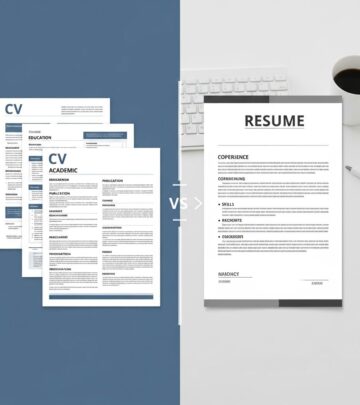
The primary differences are length, detail, and purpose. A resume is typically one to two pages and summarizes relevant experience for a specific position. A CV is more comprehensive, can be longer, and provides a complete overview of your professional journey. CVs are common in academic, research, and international contexts, while resumes are standard in most U.S. business positions.
How do I explain employment gaps on my CV?
If you have significant employment gaps, provide brief context. You might include a line such as “Focused on advanced professional development” or “Pursued specialized training in [field].” If the gap resulted from education, family responsibilities, or health issues, a brief explanation prevents misunderstandings.
Should I include references on my CV?
This depends on your field and the specific opportunity. Academic CVs often include references, while professional CVs might note “References available upon request.” Follow the guidelines provided in the job posting or application instructions.
Final Thoughts on CV Success
Your curriculum vitae is a powerful tool for advancing your career. By following these guidelines, carefully selecting what to include, and tailoring your document to specific opportunities, you create a compelling professional portrait that opens doors. Remember that your CV is a living document—update it regularly, refine it continuously, and ensure it always represents your best self. With attention to structure, clarity, and content, your CV will effectively communicate your qualifications and help you achieve your career goals.
References
- Academic Curriculum Vitae (CV) Example and Writing Tips — University of Arizona Career Services. 2022. https://career.arizona.edu/blog/academic-curriculum-vitae-cv-example-and-writing-tips
- How to Write a Resume — American Psychological Association Career Center. https://www.apa.org/careers/resources/resume
- Resume and CV Writing Guide — The Muse. https://www.themuse.com/advice/the-ultimate-resume-guide
Similar Articles








Read full bio of Sneha Tete