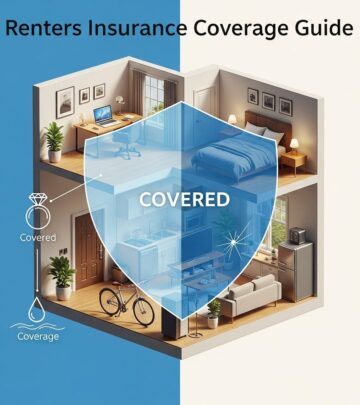
Cut Renters Insurance Costs Effectively
Discover proven strategies to lower your renters insurance premiums without sacrificing essential protection for your belongings and liability.

Renters insurance provides crucial protection for personal property, liability, and additional living expenses, yet its affordability remains a concern for many tenants. Average annual premiums hover around $150 to $300, but strategic adjustments can yield significant savings of 10% to 25% or more. This guide explores actionable methods to minimize expenses while preserving adequate coverage.
Understanding Renters Insurance Basics
Before diving into cost-cutting tactics, grasp what renters insurance entails. It typically covers three main areas: personal property against theft, fire, or water damage; personal liability for injuries or property damage caused to others; and loss of use for temporary housing if your rental becomes uninhabitable. Policies are priced based on location, coverage limits, deductible amounts, and risk factors like crime rates or building features.
Factors influencing premiums include your zip code’s burglary statistics, the value of insured items, and claims history. High-risk areas command higher rates, but proactive steps can counteract this. By evaluating your policy annually, you ensure it aligns with current needs and market rates.
Compare Providers for Competitive Rates
The most straightforward path to savings begins with obtaining multiple quotes. Rates vary widely among insurers due to differing underwriting standards and pricing models. Contact at least three to five companies, providing identical details about your rental unit, possessions, and desired limits.
Online comparison tools streamline this process, but verify policy fine print for exclusions and caps. A policy appearing cheapest might skimp on reimbursement limits or add-ons like flood coverage. Aim for the optimal balance of price and protection.
- Request quotes during off-peak seasons, like winter, when demand dips.
- Highlight positive factors such as a clean claims record or security features.
- Re-shop every 6-12 months, as loyalty doesn’t always pay.
Leverage Multi-Policy Discounts
Combining renters insurance with auto, motorcycle, or other policies from the same provider unlocks substantial discounts, often 10-25% on both. For instance, pairing a $700 auto policy with $250 renters coverage could save $75 annually on the total.
Insurers incentivize bundling to retain customers and reduce administrative costs. Even if switching providers, the net savings frequently outweigh any initial hassle. Confirm eligibility for additional perks like a multi-line discount alongside good driver reductions.
| Policy Bundle | Average Annual Savings | Example Premium Reduction |
|---|---|---|
| Auto + Renters | $130 | $700 auto → $630; $250 renters → $225 |
| Homeowners + Renters | $100-$200 | 10-20% off total |
| Multiple Vehicles + Renters | $150+ | 15-25% bundle discount |
Adjust Deductibles Strategically
Raising your deductible—the out-of-pocket amount before coverage activates—directly lowers premiums. Switching from $500 to $1,000 might cut costs by 15-20%. For a $5,000 fire loss, you’d pay $1,000, with the insurer covering $4,000.
This tactic suits those with emergency savings, as it shifts minor claims’ burden to you. Consult an agent to model scenarios: compare premium drops against potential claim payouts. Never exceed what you can afford upfront.
Opt for Actual Cash Value Coverage
Replacement cost policies reimburse new item prices, inflating premiums. Actual cash value (ACV) accounts for depreciation, yielding lower rates but smaller payouts. A five-year-old laptop worth $1,200 new might fetch $600 under ACV post-loss.
Suitable for low-value or older items, ACV reduces premiums by 10-15%. Hybrid options exist, covering high-value electronics at replacement cost while using ACV elsewhere. Inventory possessions to decide wisely.
Install Security and Safety Features
Enhancing your rental’s defenses signals lower risk to insurers, earning discounts up to 15%. Deadbolts, window locks, smoke detectors, and monitored alarms qualify. Renters face 50% higher burglary odds than homeowners, making these upgrades impactful.
Landlords may install building-wide systems like fire alarms or sprinklers, passing savings via policy adjustments. Document installations with photos and receipts for verification. Smart devices, such as doorbell cameras, increasingly qualify for telematics discounts.
- Upgrade to smart locks and motion-sensor lights.
- Install carbon monoxide and smoke detectors in kitchens/bedrooms.
- Seek landlord approval for non-permanent fixes like security bars.
Choose Payment Plans Wisely
Paying annually upfront often nets 5-10% discounts, avoiding monthly fees of $5-10. Autopay from checking further reassures insurers of timely payments.
While monthly suits cash flow, calculate total-year costs. For a $200 policy, annual payment might save $20 versus six $35 installments. Some carriers offer trial periods for refunds if canceling early.
Maintain a Claim-Free Record
Avoiding claims preserves ‘preferred’ status, preventing surcharges of 20-50% post-filing. Minor incidents under your deductible warrant self-payment.
Build savings for small repairs. Long-term claim-free status (3-5 years) unlocks loyalty discounts up to 10%. Track policy anniversaries to review without filing.
Reduce Coverage Where Possible
Inflated limits for rarely used items like jewelry drive up costs. Audit possessions: insure $30,000 in property if that’s your total value, not $50,000.
Schedules for valuables offer targeted protection at lower rates. If building insurance covers structure, focus on contents and liability ($100,000 minimum recommended).
Lifestyle Choices That Lower Rates
Non-smoking households qualify for 5-10% fire-risk discounts. Relocating to low-crime neighborhoods cuts base rates by 20% or more.
Strong credit scores correlate with lower premiums in most states, as reliable payers pose less risk. Improve via timely bills and low debt utilization.
FAQs
How much can I save on renters insurance?
Savings range from 10-25% via bundling, deductibles, and security, potentially $50-100 yearly on a $200 policy.
Is renters insurance required?
Not federally, but many leases mandate it. It protects your assets beyond landlord policies.
Does bundling always save money?
Typically yes, but compare quotes. Savings average $130 for auto + renters combos.
Can I lower rates mid-policy?
Yes, mid-term changes like adding security or bundling often apply prorated credits.
What if I have high-value items?
Schedule them separately for full replacement cost without hiking overall premiums.
Final Thoughts on Long-Term Savings
Combining tactics—bundling, higher deductibles, security—maximizes reductions. Annual reviews ensure ongoing optimization amid life changes like moves or purchases. Consult licensed agents for personalized advice, balancing cost with robust protection.
References
- Secrets to Reducing Renters Insurance Cost — Southern Harvest Insurance. 2023. https://www.southernharvestinsurance.com/blog/renters/secrets-to-reducing-renters-insurance-premiums/
- 10 Ways to Reduce the Cost of Your Renters Insurance — Experian. 2024. https://www.experian.com/blogs/ask-experian/ways-to-reduce-renter-insurance-cost/
- 9 Tricks to Reduce the Cost of Your Renters Insurance — Ferguson McGuire. 2023. https://www.fergusonmcguire.com/9-tricks-to-reduce-the-cost-of-your-renters-insurance
- How to Save Money on Renters Insurance — Driscoll & Driscoll. 2022. https://www.driscollanddriscoll.com/blog/how-to-save-money-on-renters-insurance.aspx
- 3 Ways to Reduce Renters Insurance Rates — RCU Insurance Services. 2023. https://www.rcuinsuranceservices.com/blog/3-ways-to-reduce-renters-insurance-rates.aspx
Similar Articles








Read full bio of medha deb