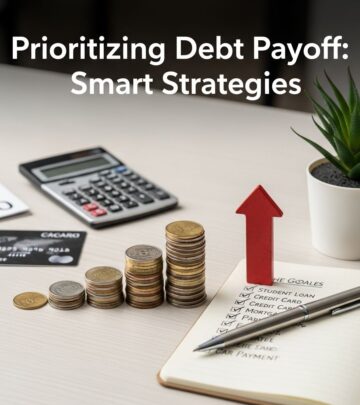
Cut Monthly Debt Payments Effectively
Discover proven strategies to lower your monthly debt obligations, save on interest, and regain control of your finances without extending repayment timelines unnecessarily.

High monthly debt payments can strain your budget and limit your financial flexibility. Fortunately, several proven approaches allow you to lower these obligations while minimizing long-term costs. This guide outlines actionable steps, from accelerating principal reduction to restructuring loans, helping you achieve relief without unnecessary risks.
Assess Your Debt Landscape First
Before implementing any changes, compile a complete inventory of your debts. List each account’s balance, interest rate, minimum payment, and due date. This snapshot reveals high-interest burdens and payment overlaps that complicate cash flow.
Tools like spreadsheets or free budgeting apps simplify this process. Categorize debts into secured (e.g., auto, mortgage) and unsecured (e.g., credit cards, personal loans). Prioritize based on interest rates or balances to inform your strategy selection.
- High-interest debts like credit cards often exceed 20% APR, amplifying costs over time.
- Lower-rate loans, such as federal student loans, may offer more flexibility for restructuring.
- Track variable vs. fixed rates, as market shifts can impact future payments.
Boost Payments Beyond the Minimum
Directly attacking principal accelerates payoff and cuts interest accrual. Even modest increases—$50 extra monthly on a $5,000 credit card balance at 18% APR—can shave years off repayment and save hundreds in interest.
Consistency matters: Automate extra payments to avoid temptation. Direct windfalls like bonuses or tax refunds here for maximum impact. For example, on a $10,000 loan at 15% interest, adding $100 monthly reduces the term from 10 to 7 years, saving over $1,500 in interest.
| Debt Amount | Interest Rate | Min Payment | With $100 Extra | Interest Saved |
|---|---|---|---|---|
| $5,000 | 18% | $150 | Paid in 28 months | $800 |
| $10,000 | 15% | $300 | Paid in 32 months | $1,500 |
| $20,000 | 12% | $500 | Paid in 42 months | $3,200 |
Adopt the Avalanche Approach for Savings
This method targets highest-interest debts first while maintaining minimums elsewhere. Order debts by APR descending, then funnel extras to the top one. Once cleared, roll payments to the next.
Ideal for mathematically inclined individuals, it minimizes total interest. On multiple cards totaling $15,000 with rates from 10% to 24%, avalanche clears debt 6-12 months faster than minimums alone, saving $2,000+ in interest.
- List debts by interest rate, highest first.
- Pay minimums on all.
- Apply surplus to top debt.
- Repeat with freed funds.
Build Momentum with the Snowball Technique
Focus on smallest balances first for psychological wins. Pay minimums on larger debts, directing extras to the tiniest. Celebrate payoffs, then advance.
Motivation sustains long-term adherence, especially with numerous small accounts. A $25,000 total debt across five cards sees full clearance in under three years, versus four with random payments.
Compare methods:
| Method | Best For | Key Benefit | Potential Drawback |
|---|---|---|---|
| Avalanche | Interest minimization | Lowest total cost | Slower initial wins |
| Snowball | Motivation boost | Quick victories | Higher overall interest |
Streamline with Debt Consolidation
Combine multiple debts into one loan or balance transfer at lower rates. A $20,000 consolidation at 8% versus 20% card rates drops payments from $800 to $500 monthly, simplifying management.
Options include personal loans, home equity lines, or 0% intro APR cards. Benefits: single payment, fixed terms, potential savings. Risks: fees or qualification hurdles if credit is weak.
- Verify eligibility; good credit (670+ FICO) unlocks best rates.
- Avoid extending terms excessively to prevent interest creep.
- Close old accounts post-transfer to protect credit utilization.
Negotiate Rates and Terms Directly
Contact creditors for hardship programs or rate reductions. Long-term customers with on-time history often secure 2-5% cuts, redirecting more to principal.
Script: Explain situation, highlight payment record, request adjustment. Success rates rise with polite persistence. Example: 18% to 14% on $8,000 balance saves $15 monthly, $562 total interest without term extension.
Switch to Bi-Weekly Payments
For mortgages or auto loans, halve monthly amounts paid every two weeks. This yields 26 half-payments annually—equivalent to 13 full ones—accelerating payoff.
On a $200,000 mortgage at 4%, bi-weekly saves $30,000 interest and shortens term by 8 years. Confirm lender acceptance to avoid fees.
Refinance for Better Terms
Replace existing loans with lower-rate versions, especially post-credit improvement. Auto refinance at 3% versus original 7% halves payments on $15,000 balance.
Extend terms cautiously: Monthly drop from $400 to $300 on $20,000 loan adds $5,000 interest over life. Weigh immediate relief against total cost.
Optimize Your Budget for Debt Freedom
Track income versus expenses, targeting 20% for debt/savings. Cut discretionary spending: Brew coffee at home ($100/month saved), cancel unused subscriptions ($50/month).
50/30/20 rule: 50% needs, 30% wants, 20% debt/savings. Redirect savings immediately.
Potential Pitfalls and Protections
Avoid scams promising instant relief. Steer clear of debt settlement firms charging upfront fees; FTC advises against. Monitor credit reports weekly via AnnualCreditReport.com.
If overwhelmed, consult nonprofit counselors like NFCC affiliates for free plans.
FAQs
What’s the fastest way to lower payments?
Consolidation or refinancing often provides immediate drops, paired with extra principal attacks for speed.
Does extending loan terms hurt?
It lowers monthly outlay but raises total interest; use sparingly.
Can bad credit qualify for consolidation?
Limited options exist via credit unions or secured loans; improve score first.
How much extra should I pay?
Start with $25-50 per debt; scale with budget comfort.
Is balance transfer safe?
Yes, if paid before promo ends; watch fees (3-5%).
References
- 5 Debt Repayment Strategies That Could Change Your Life — Navy Federal Credit Union. 2023. https://www.navyfederal.org/makingcents/credit-debt/debt-repayment-strategies.html
- How to Lower Your Loan Payments Without Hurting Your Credit — Veridian Credit Union. 2024. https://www.veridiancu.org/news/advice/how-to-lower-your-loan-payments-without-hurting-your-credit
- Strategies to Lower Your Monthly Payments — Wells Fargo. 2025. https://www.wellsfargo.com/goals-credit/smarter-credit/manage-your-debt/lower-monthly-payments/
- Debt Payoff Methods — Horizon Credit Union. 2024. https://advice.hzcu.org/credit-and-debt/debt/article/debt-payoff-strategies
- Financial Guide for Paying Off Debt — Military OneSource. 2025. https://www.militaryonesource.mil/resources/millife-guides/paying-off-debt/
- How to Pay Off Credit Cards & Get out of Debt Faster — United Midwest Credit Union. 2024. https://www.umcu.org/learn/resources/blogs/how-to-pay-off-credit-card-debt
- How Can I Prioritize Repaying Multiple Debts? — Equifax. 2025. https://www.equifax.com/personal/education/debt-management/articles/-/learn/prioritize-debt-payments/
Similar Articles








Read full bio of Sneha Tete