Cut Your Electric Bill: Smart Savings Guide
Discover proven strategies and incentives to slash your electricity costs through efficient upgrades and daily habits for lasting financial relief.
High electricity costs strain household budgets, but targeted home modifications and behavioral changes can deliver substantial reductions. Federal incentives and utility programs amplify these savings, making upgrades more accessible than ever.
Understanding Your Electricity Usage Patterns
Electricity consumption varies by climate, home size, and appliance efficiency. Heating, cooling, water heating, and lighting often account for the majority of bills. Analyzing your usage through utility apps or smart meters reveals peak offenders, enabling focused interventions.
- Heating and Cooling: Up to 50% of energy use in many homes.
- Water Heating: Typically 15-20% of total consumption.
- Appliances and Lighting: Remaining share, often reducible with modern replacements.
Tracking patterns monthly helps prioritize upgrades for maximum impact.
Enhance Insulation and Seal Air Leaks
Under-insulated homes lose heat rapidly, forcing HVAC systems to overwork. Upgrading attic and wall insulation, combined with air sealing, creates a tight thermal envelope. Studies indicate up to 45% energy waste reduction from these measures.
Professionals use blower door tests to identify leaks around windows, doors, and ducts. Materials like fiberglass, cellulose, or spray foam suit different areas. Expect 10-30% bill reductions in drafty homes.
| Area | Recommended R-Value | Estimated Savings |
|---|---|---|
| Attic | 38-60 | 15-25% |
| Walls | 13-21 | 10-15% |
| Floors | 25-30 | 5-10% |
Switch to High-Efficiency Heating and Cooling
Traditional furnaces and AC units guzzle power. Air-source heat pumps offer superior efficiency, using one-third the energy of conventional systems by transferring heat rather than generating it. They provide both heating and cooling, ideal for varied climates.
Electric heat pump water heaters further cut costs, qualifying for enhanced tax credits. Pairing with sealed homes maximizes performance, potentially adding thousands to resale value.
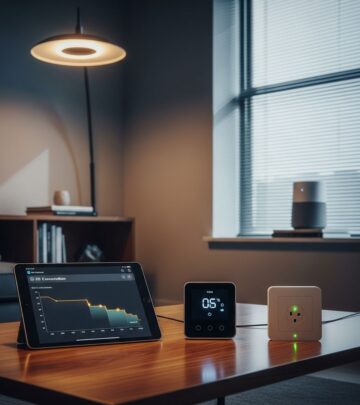
Adopt Smart Thermostats for Automated Control
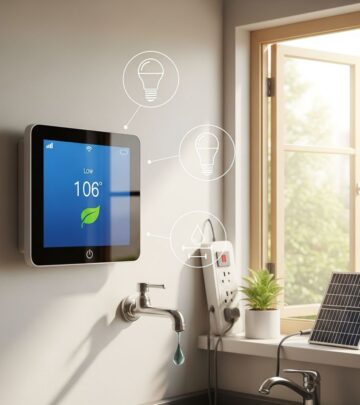
Programmable devices learn routines and adjust temperatures remotely via apps. Smart thermostats can save 10-15% on heating/cooling by optimizing schedules. Surveys show 81% of buyers prefer homes with pre-installed smart tech.
- Set back 7-10°F when away or asleep.
- Integrate with occupancy sensors.
- Monitor humidity for comfort without excess energy.
Upgrade Lighting and Everyday Appliances
LED bulbs use 75% less energy than incandescents and last 25 times longer. Replace old refrigerators, washers, and dryers with Energy Star-rated models eligible for rebates.
Utility programs like California’s Energy Savings Assistance offer free high-efficiency appliances for qualifying households, including washers, refrigerators, and thermostats.
Harness Solar Power and Battery Storage
Solar panels generate free electricity, offsetting grid reliance. Systems sized to home needs can achieve near net-zero usage. Pair with batteries to store excess for evenings or outages.
Homebuyers increasingly seek solar-equipped properties for long-term savings. Federal credits cover 30% of installation costs with no upper limit for clean energy property.
Optimize Windows, Doors, and Weatherization
Single-pane windows leak 10-25% of conditioned air. Double- or triple-pane Energy Star windows with low-E coatings reduce this dramatically, improving curb appeal too.
Add weatherstripping, caulk gaps, and low-flow showerheads. Programs provide these at no cost for income-qualified residents.
Leverage Government Incentives and Rebates
The Energy Efficient Home Improvement Credit offers up to $3,200 annually for qualifying upgrades post-January 1, 2023. This includes 30% on insulation, air sealing, windows (up to $1,200), and $2,000 for heat pumps.
Residential Clean Energy Credit covers 30% of solar, wind, geothermal, and battery costs. State programs like SoCalGas and SCE deliver free insulation, appliances, and HVAC tune-ups.
| Upgrade Type | Credit Amount | Annual Limit |
|---|---|---|
| Insulation & Windows | 30% up to $1,200 | $1,200 |
| Heat Pumps | 30% up to $2,000 | $2,000 |
| Solar Panels | 30% | None |
File using Form 5695; consult IRS guidelines for principal residence requirements.
Daily Habits for Immediate Savings
- Unplug vampire devices drawing standby power.
- Wash clothes in cold water; air-dry when possible.
- Use ceiling fans to feel 4°F cooler without lowering thermostat.
- Maintain HVAC filters monthly for peak efficiency.
Long-Term Investments That Pay Off
Combine upgrades for compounded effects: insulation plus heat pumps yield 30-50% savings. ROI often recoups costs in 5-10 years via lower bills and credits, plus higher property values.
FAQs
Do renters qualify for energy rebates?
Yes, many utility programs like SCE’s ESA provide free upgrades for renters with landlord approval.
How much can I save with a smart thermostat?
Typically 10-15% on HVAC costs, or $100-200 annually for average homes.
Are heat pumps suitable for cold climates?
Modern models operate efficiently down to -15°F, outperforming traditional systems.
What documentation is needed for tax credits?
Receipts showing costs, manufacturer certifications for Energy Star/CONSERV standards, and Form 5695.
Can I combine multiple credits?
Yes, energy improvement ($1,200 max) and clean energy credits stack up to $3,200+ total.
References
- The 8 Best Energy Efficient Home Upgrades — Sealed. 2024. https://sealed.com/resources/energy-efficient-home-improvements/
- Federal Tax Credits for Energy Efficiency — ENERGY STAR (U.S. EPA). 2025-02-01. https://www.energystar.gov/about/federal-tax-credits
- Energy Efficient Home Improvement Credit — Internal Revenue Service. 2025. https://www.irs.gov/credits-deductions/energy-efficient-home-improvement-credit
- Energy Savings Assistance Program — Southern California Gas Company. 2025. https://www.socalgas.com/billing-payment/assistance-programs/energy-savings-assistance-program
- Energy Savings Assistance Program — Southern California Edison. 2025. https://www.sce.com/save-money/income-qualified-programs/energy-savings-assistance-program
Similar Articles








Read full bio of medha deb