Current Ratio: Definition, Formula, and Calculation
Master the current ratio: Essential liquidity metric for assessing business financial health.

The current ratio, also known as the working capital ratio, is a fundamental financial metric used by investors, creditors, and business analysts to evaluate a company’s short-term financial health. This liquidity ratio measures a company’s ability to pay off its short-term obligations using its current assets. Understanding how to calculate and interpret the current ratio is essential for anyone making investment decisions or assessing the viability of a business.
What Is the Current Ratio?
The current ratio is a liquidity measurement that indicates whether a company has enough short-term assets to cover its short-term liabilities. These short-term obligations include debt, accounts payable, and other payments due within one year. By comparing current assets to current liabilities, the current ratio provides a snapshot of a company’s operational efficiency and financial stability.
A higher current ratio generally suggests that a company is in a better position to meet its immediate financial obligations. However, the interpretation of what constitutes a “good” current ratio can vary significantly depending on the industry in which a company operates. Different sectors have different capital requirements and cash flow patterns, making industry-specific analysis crucial.
Current Ratio Formula
Calculating the current ratio is straightforward and requires only two pieces of information from a company’s balance sheet:
Current Ratio = Current Assets ÷ Current Liabilities
This simple formula divides total current assets by total current liabilities to produce a ratio that indicates how many times a company can cover its short-term obligations with its short-term resources.
Current Assets Explained
Current assets are resources that a company can quickly convert into cash within a 12-month period. These assets are highly liquid and represent the company’s most accessible financial resources. Understanding what qualifies as a current asset is essential for accurate ratio calculation.
Common examples of current assets include:
- Cash and cash equivalents, including money market accounts and short-term investments
- Accounts receivable from customers who owe money for goods or services provided
- Inventory and merchandise held for sale
- Prepaid expenses that will benefit the company within the next year
- Short-term investments and marketable securities
- Other liquid assets that can be converted to cash quickly
Current Liabilities Explained
Current liabilities represent obligations that a company must pay within one year. These are debts and payables owed to suppliers, creditors, employees, and other parties. Accurately identifying and summing current liabilities is critical for calculating a meaningful current ratio.
Typical current liabilities include:
- Accounts payable owed to suppliers and vendors
- Short-term debt and the current portion of long-term debt
- Accrued expenses for wages, taxes, and interest
- Unearned revenue or advance customer payments
- Current portion of lease obligations
- Dividends payable to shareholders
Current Ratio Example
Let’s examine a practical example to illustrate how the current ratio works in real-world scenarios. Suppose a manufacturing company presents the following balance sheet information:
The company’s current assets total $60 million, comprising $15 million in cash, $20 million in accounts receivable, and $25 million in inventory. The current liabilities amount to $30 million, consisting of $15 million in accounts payable and $15 million in short-term debt.
Using the current ratio formula:
Current Ratio = $60 million ÷ $30 million = 2.0
This result means the company has $2.00 in current assets for every $1.00 of current liabilities. In practical terms, the company can pay off each dollar of short-term obligations twice over using its current assets. A ratio of 2.0 is generally considered healthy and indicates the company is in a comfortable position to meet its near-term financial obligations.
Interpreting the Current Ratio
Interpreting the current ratio requires understanding what different ratio levels signify about a company’s financial health. The ratio provides critical insights for stakeholders making business decisions.
Current Ratio Above 1.0
A current ratio greater than 1.0 indicates that a company has more current assets than current liabilities. This suggests the company has sufficient liquid resources to cover its short-term obligations. Generally, a ratio above 1.0 is viewed favorably by creditors and investors as it demonstrates financial stability and operational capability.
Current Ratio Below 1.0
When the current ratio falls below 1.0, it signals that current liabilities exceed current assets. This situation suggests potential difficulty in meeting short-term obligations and may raise concerns among creditors and suppliers. Companies with ratios below 1.0 may face challenges obtaining credit or financing at favorable terms.
Industry Variations
The appropriate current ratio benchmark varies significantly by industry. Retail companies with rapid inventory turnover may operate efficiently with lower ratios, while utilities and other capital-intensive industries may require higher ratios. Comparing a company’s current ratio to industry averages provides more meaningful context than absolute benchmarks.
Limitations of the Current Ratio
While the current ratio is a valuable analytical tool, it has important limitations that users should understand. The ratio can sometimes provide a misleading picture of financial health if analyzed without considering other factors.
One significant limitation is that the current ratio treats all current assets equally, regardless of their liquidity. For instance, inventory may take longer to convert to cash compared to accounts receivable or cash equivalents. A company with substantial inventory might appear more liquid than it actually is based solely on the current ratio.
Additionally, the current ratio only provides a snapshot based on balance sheet values at a specific point in time. Seasonal fluctuations in working capital can significantly impact the ratio, potentially distorting a company’s true financial position. A single calculation may not accurately represent typical operating conditions.
The ratio also doesn’t account for the quality of receivables or the salability of inventory. It treats all current assets uniformly in its calculation, which may not reflect the actual convertibility of assets into cash.
Related Liquidity Ratios
Financial analysts often use several complementary liquidity ratios alongside the current ratio to gain comprehensive insight into a company’s financial position. These ratios provide different perspectives on liquidity and working capital management.
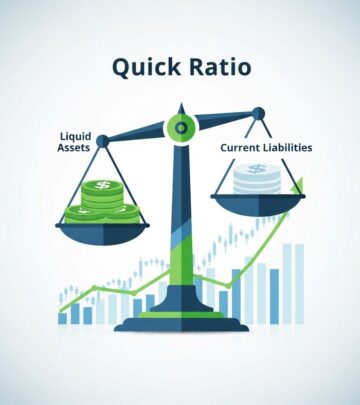
Quick Ratio (Acid-Test Ratio): This more conservative measure excludes inventory from current assets, providing a stricter test of liquidity. The quick ratio divides only the most liquid current assets by current liabilities.
Cash Ratio: The most conservative liquidity measure, the cash ratio includes only cash and cash equivalents in the numerator. It indicates the company’s ability to cover liabilities with only its most liquid assets.
Working Capital Ratio: This measure examines the relationship between total current assets and total current liabilities, similar to the current ratio, but emphasizes the absolute dollar amount available for operations.
Using the Current Ratio in Financial Analysis
The current ratio serves multiple purposes in financial analysis and decision-making. Investors use it to assess whether a company can sustain operations and pay dividends. Creditors evaluate whether a company can service debt payments. Suppliers determine whether to extend credit terms.
When performing comprehensive financial analysis, the current ratio should be examined alongside other financial metrics such as debt-to-equity ratio, return on assets, and cash flow statements. Combining multiple metrics provides a more complete picture of financial health than any single ratio.
Trend analysis is also valuable when evaluating the current ratio. Observing how the ratio changes over consecutive quarters or years reveals whether a company’s liquidity position is improving, deteriorating, or remaining stable. Improving trends may indicate strengthening financial management, while declining trends warrant investigation.
Industry Benchmarks and Comparisons
Comparing a company’s current ratio to industry peers and historical benchmarks provides important context. Industries with different business models require different working capital structures. Technology companies with minimal inventory may operate with lower current ratios than retail operations. Understanding industry norms helps distinguish between concerning and typical financial structures.
Historical comparison shows whether a company’s liquidity position is improving or deteriorating relative to its own past performance. Significant deviations from a company’s historical average warrant investigation to understand underlying causes.
Frequently Asked Questions
What is considered a good current ratio?
Generally, a current ratio between 1.5 and 3.0 is considered healthy, indicating that a company has sufficient current assets to cover short-term liabilities. However, the appropriate ratio varies by industry, so comparisons with industry peers are important.
Why does a very high current ratio sometimes indicate problems?
While a higher current ratio generally suggests better liquidity, an extremely high ratio may indicate that a company is not efficiently using its assets. It might suggest that excess cash is sitting idle rather than being invested in growth initiatives or returned to shareholders.
How does seasonality affect the current ratio?
Seasonal businesses experience significant working capital fluctuations throughout the year. The current ratio calculated at year-end during peak season may differ substantially from ratios calculated during slow periods, requiring analysts to consider seasonal patterns.
Should I use the current ratio alone for financial analysis?
No, the current ratio should be used as part of a comprehensive financial analysis that includes other liquidity ratios, profitability metrics, and operational efficiency measures. Using multiple metrics provides a more complete and accurate assessment.
How do I find current assets and current liabilities?
Current assets and current liabilities are found on a company’s balance sheet, typically listed separately at the top of the liabilities section. Public companies file these statements with the Securities and Exchange Commission in quarterly and annual reports.
Can the current ratio predict bankruptcy?
While a declining current ratio may be a warning sign, it cannot predict bankruptcy on its own. Bankruptcy prediction requires analyzing multiple financial indicators, operational trends, and market conditions in combination.
References
- Current Ratio Formula — Corporate Finance Institute. 2025. https://corporatefinanceinstitute.com/resources/accounting/current-ratio-formula/
- Liquidity Ratios and Working Capital Management — U.S. Securities and Exchange Commission. https://www.sec.gov/
- Financial Ratio Analysis — Financial Accounting Standards Board. https://www.fasb.org/
Similar Articles








Read full bio of medha deb