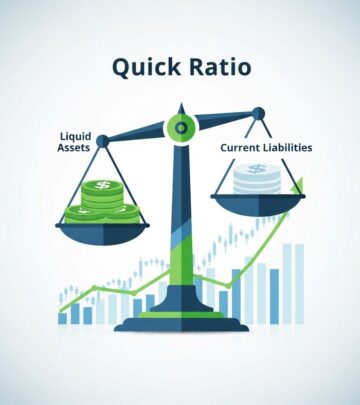
Current Ratio Calculator: Measure Your Business Liquidity
Calculate your current ratio to assess your business's ability to pay short-term obligations.
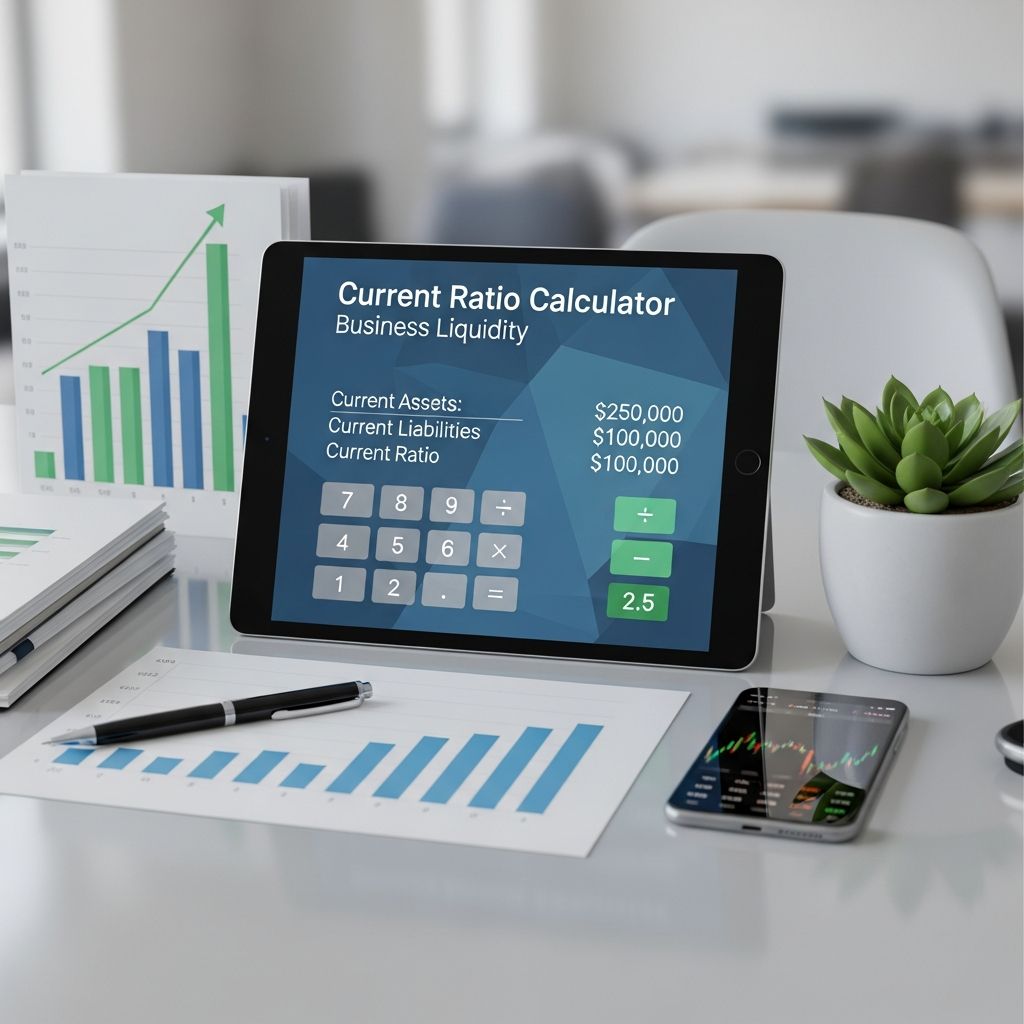
Understanding the Current Ratio Calculator
The current ratio is one of the most important financial metrics for business owners and investors who want to understand a company’s financial health. It provides a clear picture of whether a business has sufficient current assets to cover its short-term liabilities. A current ratio calculator streamlines this process, allowing you to quickly determine your business’s liquidity position and make informed financial decisions.
What Is a Current Ratio?
The current ratio measures a company’s ability to pay its short-term obligations that are due within one year. This liquidity metric is crucial for understanding whether your business can meet its immediate financial obligations. A higher current ratio indicates that your company has more resources available to cover its debts, while a lower ratio may suggest potential liquidity challenges.
Current assets include cash, accounts receivable, inventory, and other resources that can be converted into cash within a year. Current liabilities, on the other hand, encompass accounts payable, wages, accrued expenses, and short-term debt that must be paid within the same timeframe.
The Current Ratio Formula
Calculating your current ratio is straightforward with the right formula. The basic equation divides your total current assets by your total current liabilities:
Current Ratio = Current Assets ÷ Current Liabilities
This simple calculation provides a numerical representation of how many dollars of current assets you have available for every dollar of current liabilities. For example, if your business has $120,000 in current assets and $70,000 in current liabilities, your current ratio would be 1.7, indicating a relatively healthy financial position.
How to Use a Current Ratio Calculator
Using a current ratio calculator eliminates manual computation errors and provides instant results. Here’s how to effectively use one:
- Gather your balance sheet information, specifically your total current assets and current liabilities
- Input your current assets figure into the calculator
- Enter your current liabilities amount
- The calculator automatically computes your current ratio
- Compare your result against industry benchmarks and your historical performance
What Is a Good Current Ratio?
Understanding what constitutes a healthy current ratio is essential for business owners. Financial professionals generally agree that banks prefer to see a current ratio of more than 1.0, with 1.2 to 1 or slightly higher being generally considered acceptable. However, the ideal current ratio varies based on several factors.
Industry-Specific Standards
Different industries have varying expectations for current ratios. An acceptable range for most businesses falls between 1.0 and 2.0, indicating that the company has enough current assets to cover its debts with some cushion. A current ratio lower than your industry average may indicate a higher risk of financial distress or default.
Business Model Considerations
Your business model significantly impacts what current ratio is appropriate. A retail store with weekly cash inflows from sales might operate effectively with a current ratio just above 1.0, since cash is constantly flowing in to cover immediate obligations. Conversely, a project-based business like a construction company might need a higher ratio, such as 1.3 to 1, because they may not receive payment until project completion while having substantial upfront expenses for materials, labor, and equipment.
Interpreting Your Current Ratio Results
Your current ratio result tells an important story about your business’s financial health. A ratio of 1.0 or higher generally indicates that your company can cover its short-term obligations. However, context matters significantly.
Current Ratio Above 1.5
A current ratio above 1.5 is often viewed as healthy and indicates strong liquidity. This suggests your business has sufficient assets to meet its short-term obligations comfortably. However, an excessively high ratio, above 3.0, might indicate that your company is not effectively deploying its capital and is leaving too much cash sitting idle on the balance sheet.
Current Ratio Between 1.0 and 1.5
This range is typically considered acceptable for most businesses, showing a reasonable ability to meet short-term obligations while maintaining reasonable operational efficiency.
Current Ratio Below 1.0
A current ratio below 1.0 signals potential liquidity concerns, suggesting your current liabilities exceed current assets. This doesn’t necessarily mean your business is in crisis, but it warrants immediate attention and investigation into your cash flow management.
Monitoring Current Ratio Trends
Rather than focusing solely on a single calculation, financial experts recommend tracking your current ratio over time. Calculating your current ratio monthly, or at minimum quarterly, helps you identify trends and early warning signs of financial difficulty. A temporary dip below 1.0 might be acceptable if it’s an exception rather than a persistent trend, but consistently low ratios warrant corrective action.
Annual calculations may be insufficient because you could discover problems too late to take effective remedial action. By monitoring your ratio more frequently, you maintain better control over your business’s financial health and can adjust operations before serious issues develop.
The Quick Ratio: A Related Metric
Beyond the standard current ratio, the quick ratio (also called the acid-test ratio) provides additional insight. This metric excludes inventory from current assets since inventory can be less liquid than other assets. The quick ratio formula is:
Quick Ratio = (Cash + Accounts Receivable) ÷ Current Liabilities
For example, if a company has $5,000 in cash and $55,000 in accounts receivable with $70,000 in current liabilities, the quick ratio would be 0.86, meaning the company has 86 cents of highly liquid assets for every dollar of bills it must pay. This more conservative measure can help identify whether a company’s liquidity position is truly healthy or dependent on selling inventory.
Why Calculate Your Current Ratio Regularly
Regular current ratio calculations provide several important benefits for your business:
- Early Warning System: Tracking trends helps you identify financial difficulties before they become critical
- Creditor and Lender Confidence: Banks and other lenders often review current ratios when evaluating loan applications
- Investor Relations: Current ratios are important metrics for potential investors assessing your business’s stability
- Operational Decisions: Understanding your liquidity position helps guide decisions about expansion, inventory purchases, and hiring
- Competitive Benchmarking: Comparing your ratio to competitors helps you understand your relative financial position
Factors That Can Affect Your Current Ratio
Several factors can influence your current ratio beyond simple operational performance. Seasonal businesses often experience fluctuations in their current ratios due to varying cash inflows and outflows throughout the year. Large one-time expenses, such as emergency building repairs or equipment purchases, can temporarily depress your ratio. Special projects that require significant upfront investment without immediate revenue generation can also impact your liquidity metrics.
It’s important to understand these contextual factors when interpreting your current ratio. A temporarily low ratio due to strategic investment might be less concerning than a declining trend suggesting operational difficulties.
Using Your Current Ratio for Business Planning
Your current ratio results should inform your overall financial planning and decision-making. If your ratio is lower than desired, consider strategies to improve it, such as accelerating accounts receivable collection, negotiating longer payment terms with suppliers, or refinancing short-term debt into longer-term obligations. Conversely, if your ratio is exceptionally high, you might explore opportunities to deploy excess capital into business growth or improvement initiatives.
Frequently Asked Questions
Q: How often should I calculate my current ratio?
A: Financial experts recommend calculating your current ratio at minimum quarterly, though monthly calculations provide better insight into trends and allow for quicker identification of problems.
Q: Is a current ratio of 2.0 always better than 1.0?
A: Not necessarily. While a ratio of 2.0 indicates strong liquidity, an excessively high ratio might suggest inefficient use of capital. The ideal ratio depends on your industry and business model.
Q: What should I do if my current ratio is below 1.0?
A: While not ideal, occasional ratios below 1.0 can be acceptable if they’re temporary exceptions. However, if this becomes a trend, you should take action such as improving collections, negotiating payment terms, or seeking additional financing.
Q: How does my current ratio compare to other financial metrics?
A: The current ratio is one of several liquidity metrics. The quick ratio is more conservative, while other metrics like the working capital ratio provide complementary information about your financial health.
Q: Can I compare my current ratio directly to my competitors?
A: Yes, comparing your current ratio to industry peers and competitors provides valuable context. However, remember that different business models may warrant different ratios.
References
- Current Ratio Calculator (Working Capital Ratio) — Business Development Bank of Canada. 2024. https://www.bdc.ca/en/articles-tools/entrepreneur-toolkit/financial-tools/current-ratio
- Current Ratio: What It Is And How To Calculate It — Bankrate. 2024. https://www.bankrate.com/investing/current-ratio/
- Current Ratio Explained: A Vital Liquidity Metric — Business Insider. 2024. https://www.businessinsider.com/personal-finance/investing/current-ratio
- How to Calculate & Use Liquidity Ratios — Harvard Business School Online. 2024. https://online.hbs.edu/blog/post/liquidity-ratios
Similar Articles








Read full bio of Sneha Tete