Current Liabilities: Definition, Examples, and Importance
Master current liabilities: Understanding short-term financial obligations and their impact on business liquidity.
Current liabilities represent the financial obligations that a company must satisfy within a specific timeframe, typically one year or one normal operating cycle, whichever is longer. Understanding current liabilities is essential for business owners, accountants, investors, and financial analysts because they directly impact a company’s liquidity position and overall financial health. These short-term obligations form a critical component of the balance sheet and influence key financial ratios used to assess a business’s ability to meet its immediate financial commitments.
What Are Current Liabilities?
Current liabilities are defined as obligations that arise from past transactions and must be settled within one year or one operating cycle of the business. They represent amounts of money or resources that a company has committed to pay to creditors, employees, suppliers, or other stakeholders in the near term. Unlike long-term liabilities, which extend beyond the one-year timeframe, current liabilities require immediate attention and careful management to ensure the company maintains adequate liquidity.
The fundamental characteristic of a current liability is that it creates an expectation for a future outflow of economic resources, typically cash. A liability does not necessarily have to result in an outflow immediately, but it must be reasonably expected to occur within the designated timeframe. This distinction is important for accurate financial reporting and understanding a company’s true financial obligations.
How Current Liabilities Are Classified
Current liabilities are typically categorized into several distinct types based on their nature and source. This classification helps accountants and financial managers track and manage different types of obligations more effectively.
Accounts Payable
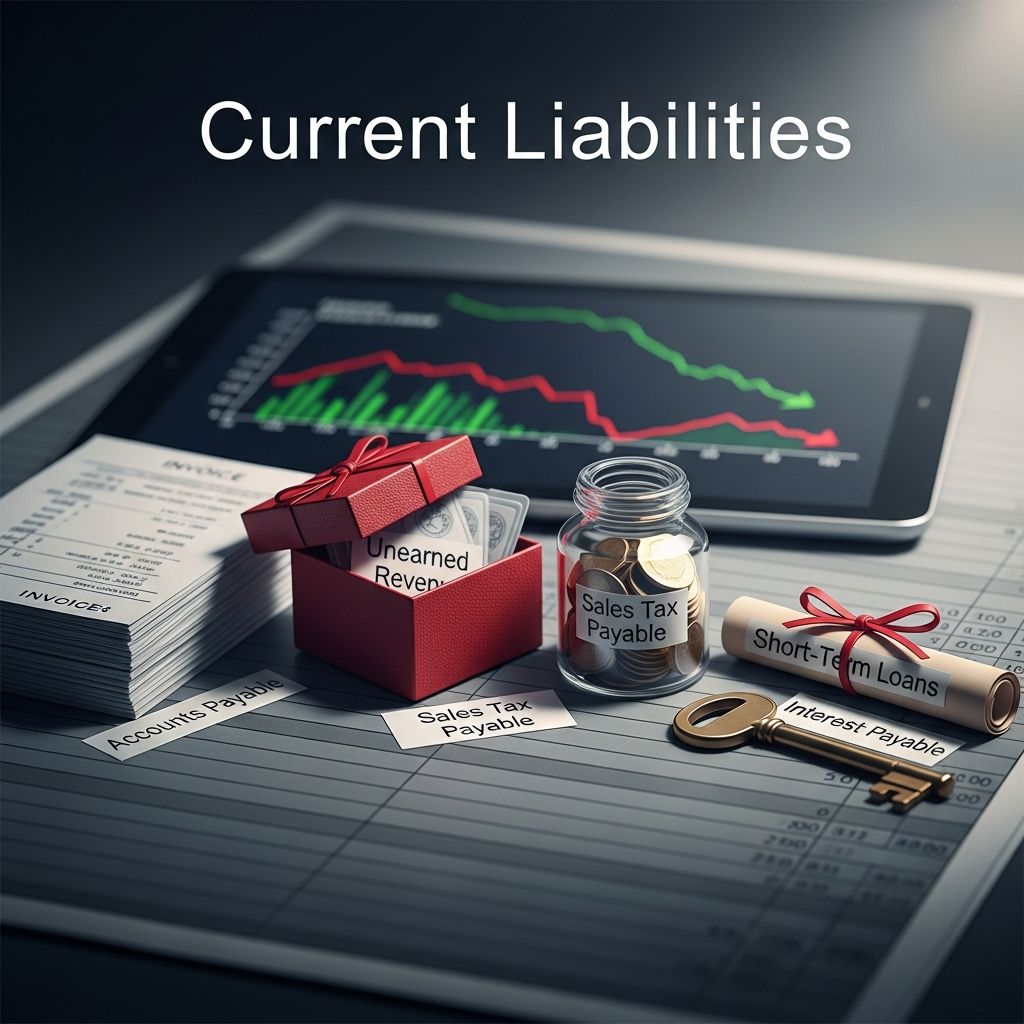
Accounts payable represents money owed to suppliers and creditors for goods or services that have been received but not yet paid for. This is typically the largest current liability for most businesses. When a company receives an invoice from a supplier, it records the amount in its accounting system as an account payable, creating an obligation to pay within an agreed-upon timeframe.
Short-Term Notes Payable
Short-term notes payable refer to formal debt obligations that are due within one year. These may include loans from banks, lines of credit, or promissory notes to other parties. Unlike accounts payable, which are typically unsecured, notes payable often involve formal documentation and interest charges.
Sales Tax and Federal Excise Tax Payable
When a company collects sales tax or federal excise tax from customers, it becomes responsible for remitting those funds to the appropriate government agency. These amounts are recorded as current liabilities because they must be paid within a specified period. For example, a retailer collecting a 6% sales tax on $100,000 in sales would record $6,000 as sales tax payable.
Accrued Expenses
Accrued expenses represent costs that have been incurred but not yet paid. Common examples include accrued wages, accrued utilities, and accrued interest. These expenses are recorded in the accounting system to ensure accurate financial reporting even though the actual cash payment may occur in a subsequent period.
Unearned Revenue
When a company receives payment for goods or services that will be delivered or performed in the future, this creates an obligation classified as unearned revenue or deferred revenue. This represents a current liability because the company must either deliver the promised goods or perform the services within the coming year.
Current Portions of Long-Term Debt
When long-term debt becomes due within the next year, accountants reclassify that portion as a current liability on the balance sheet. For instance, if a company has a five-year loan and the final payment is due within the next twelve months, that final payment amount would be moved to the current liabilities section.
Calculating Total Current Liabilities
The formula for calculating total current liabilities is straightforward: sum all amounts that the company has incurred and must pay within one year. However, identifying all current liabilities requires careful analysis because some obligations may not be immediately obvious or recorded in the general ledger.
The basic calculation includes:
– Accounts Payable- Short-term Notes Payable- Accrued Expenses- Unearned Revenue- Current Portions of Long-Term Debt- Other Short-Term Liabilities
Most of these amounts are already recorded in a company’s general ledger accounts, but additional obligations that will be due within a year may require adjustment or estimation, particularly for accrued expenses and taxes payable.
Current Liabilities vs. Long-Term Liabilities
The balance sheet divides all liabilities into two categories: current and long-term. Understanding the distinction between these categories is crucial for financial analysis and reporting.
| Aspect | Current Liabilities | Long-Term Liabilities |
|---|---|---|
| Time Frame | Due within one year or one operating cycle | Due beyond one year or one operating cycle |
| Examples | Accounts payable, short-term loans, accrued expenses | Mortgages, long-term bonds, deferred tax liabilities |
| Impact on Liquidity | Directly affects near-term cash availability | Less immediate impact on current operations |
| Balance Sheet Position | Listed first on the liabilities section | Listed after current liabilities |
Why Current Liabilities Matter for Business Liquidity
Current liabilities are fundamentally important to assessing a business’s liquidity—its ability to convert assets to cash to pay obligations. Liquidity analysis relies heavily on comparing current assets to current liabilities through financial ratios.
The Current Ratio
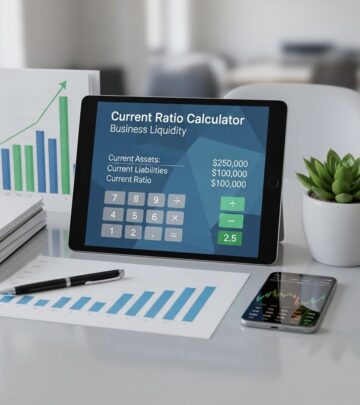
The current ratio is one of the most important liquidity measures, calculated by dividing current assets by current liabilities. A current ratio higher than one is generally preferred because it indicates the business can comfortably meet its upcoming expenses and obligations. For example, a company with $200,000 in current assets and $100,000 in current liabilities would have a current ratio of 2.0, suggesting strong liquidity.
Working Capital
Working capital, calculated as the difference between current assets and current liabilities, represents the amount of resources available to fund daily operations. Positive working capital indicates a company can pay its bills as they come due. Negative working capital, while sometimes acceptable for certain business models, generally signals financial stress.
Lender Perspective
Lenders carefully examine a business’s current liabilities when evaluating loan applications or credit lines because these obligations indicate whether the company can repay new debt. A company with excessive current liabilities relative to its current assets may face difficulty obtaining additional financing.
Managing Current Liabilities Effectively
Successful businesses manage their current liabilities strategically to maintain healthy liquidity while maximizing operational efficiency. Paying off current liabilities is mandatory, but the timing and strategy matter significantly.
Companies must carefully balance several competing priorities when managing current liabilities. Paying obligations too quickly may deplete cash reserves needed for operations or investments. Delaying payments too long can damage supplier relationships, increase interest charges, and harm the company’s credit rating. Effective management requires forecasting cash flows, negotiating favorable payment terms with suppliers, and maintaining communication with creditors about the company’s financial situation.
Examples of Current Liabilities in Practice
Understanding current liabilities becomes clearer through practical examples. Consider a retail business that purchases inventory on credit from suppliers with 30-day payment terms. The amount owed to suppliers is recorded as accounts payable—a current liability. Similarly, when the retailer collects sales tax from customers, that amount becomes sales tax payable until remitted to the state government. If the company has employees who earn wages, the accrued wages represent another current liability until payday. Additionally, any short-term bank loans or lines of credit used to manage seasonal fluctuations in business would appear as current liabilities until repaid.
Current Liabilities on the Balance Sheet
On the balance sheet, current liabilities appear in their own section, typically after current assets. The balance sheet presents the company’s financial position at a specific point in time, showing what the company owns (assets), what it owes in the short term (current liabilities), and what it owes in the long term (long-term liabilities). The format typically shows current assets first, then current liabilities, allowing readers to quickly assess liquidity by comparing the two figures.
Current Assets vs. Current Liabilities
Current assets and current liabilities work together as a matched pair in financial analysis. Current assets include cash, accounts receivable, inventory, and short-term investments—resources that can be converted to cash within one year. Current liabilities are the obligations that must be paid with those resources. The ideal scenario is having sufficient current assets to cover current liabilities comfortably, providing a cushion for unexpected challenges or opportunities.
Frequently Asked Questions
Q: What is the difference between current and noncurrent liabilities?
A: Current liabilities are obligations due within one year, while noncurrent (long-term) liabilities extend beyond one year. Current liabilities directly impact near-term liquidity, while long-term liabilities affect long-term financial planning and solvency.
Q: Why is a current ratio above 1.0 considered healthy?
A: A current ratio above 1.0 means current assets exceed current liabilities, indicating the company has sufficient resources to pay its short-term obligations and maintain operational flexibility.
Q: How do accrued expenses become current liabilities?
A: Accrued expenses are costs incurred but not yet paid. They are recorded as current liabilities because they represent obligations to pay within the coming year, even though payment hasn’t yet occurred.
Q: Can current liabilities change significantly month to month?
A: Yes, current liabilities can fluctuate considerably based on business activity, seasonal patterns, and payment schedules. A retailer might have higher current liabilities before holiday inventory purchases and lower ones after the season ends.
Q: What happens if current liabilities exceed current assets?
A: This indicates a potential liquidity crisis. The company may struggle to pay obligations as they come due and might need to seek additional financing, liquidate assets, or negotiate extended payment terms with creditors.
References
- Accounting for Current Liabilities — Lumen Learning. 2024. https://courses.lumenlearning.com/suny-finaccounting/chapter/accounting-for-current-liabilities/
- What are Current Liabilities? — Accounting Coach. 2024. https://www.accountingcoach.com/blog/what-is-a-current-liability
- What Are Current Liabilities? Definition — Xero US. 2024. https://www.xero.com/us/glossary/current-liabilities/
- Current Liabilities: Definition, How To Calculate, Examples — Corporate Finance Institute. 2024. https://corporatefinanceinstitute.com/resources/accounting/current-liabilities/
- What Are Current Liabilities? Definition (2025) — QuickBooks by Intuit. 2025. https://quickbooks.intuit.com/r/accounting/current-liabilities/
- Current Liabilities: Definition, Examples and Formula — Career Principles. 2024. https://www.careerprinciples.com/resources/current-liabilities-definition-examples
- What are Current Liabilities — Business Development Canada. 2024. https://www.bdc.ca/en/articles-tools/entrepreneur-toolkit/templates-business-guides/glossary/current-liabilities
Similar Articles








Read full bio of Sneha Tete