Current ARM Mortgage Rates & Trends November 2025
Compare today's adjustable-rate mortgage rates and find the best ARM loan for your financial situation.
Understanding Current ARM Mortgage Rates in November 2025
Adjustable-rate mortgages (ARMs) continue to offer borrowers an alternative to traditional fixed-rate loans, with introductory rates that are typically lower than their fixed-rate counterparts. As of Saturday, November 29, 2025, the mortgage market presents several compelling ARM options for homebuyers and refinancers alike. The national average 5/1 ARM interest rate stands at 5.57%, reflecting recent market adjustments driven by economic factors and Federal Reserve policy decisions.
ARMs have gained renewed attention among homeowners seeking to manage their initial mortgage payments while navigating an uncertain economic landscape. These loans work by offering a lower, fixed interest rate for an introductory period, after which the rate adjusts periodically based on market conditions. Understanding the nuances of ARM rates and how they compare to fixed-rate mortgages is essential for making an informed borrowing decision.
Today’s ARM Mortgage Rate Overview
The current mortgage rate environment reflects a dynamic market influenced by Treasury bond rates, economic uncertainty, and Federal Reserve policy. As of November 29, 2025, the national average rates for various ARM products are as follows:
| Product | Interest Rate | APR |
|---|---|---|
| 3/1 ARM Rate | 5.48% | 6.15% |
| 5/1 ARM Rate | 5.57% | 6.08% |
| 7/1 ARM Rate | 6.03% | 6.26% |
| 10/1 ARM Rate | 6.40% | 6.35% |
| 30-Year Fixed Rate | 6.25% | 6.31% |
| 15-Year Fixed Rate | 5.60% | 5.69% |
The 5/1 ARM continues to represent one of the most popular choices among borrowers, with rates that have decreased from the previous week’s 5.60% to the current 5.57%. This decline reflects ongoing market adjustments and changing economic conditions that influence mortgage pricing.
Weekly National Mortgage Interest Rate Trends
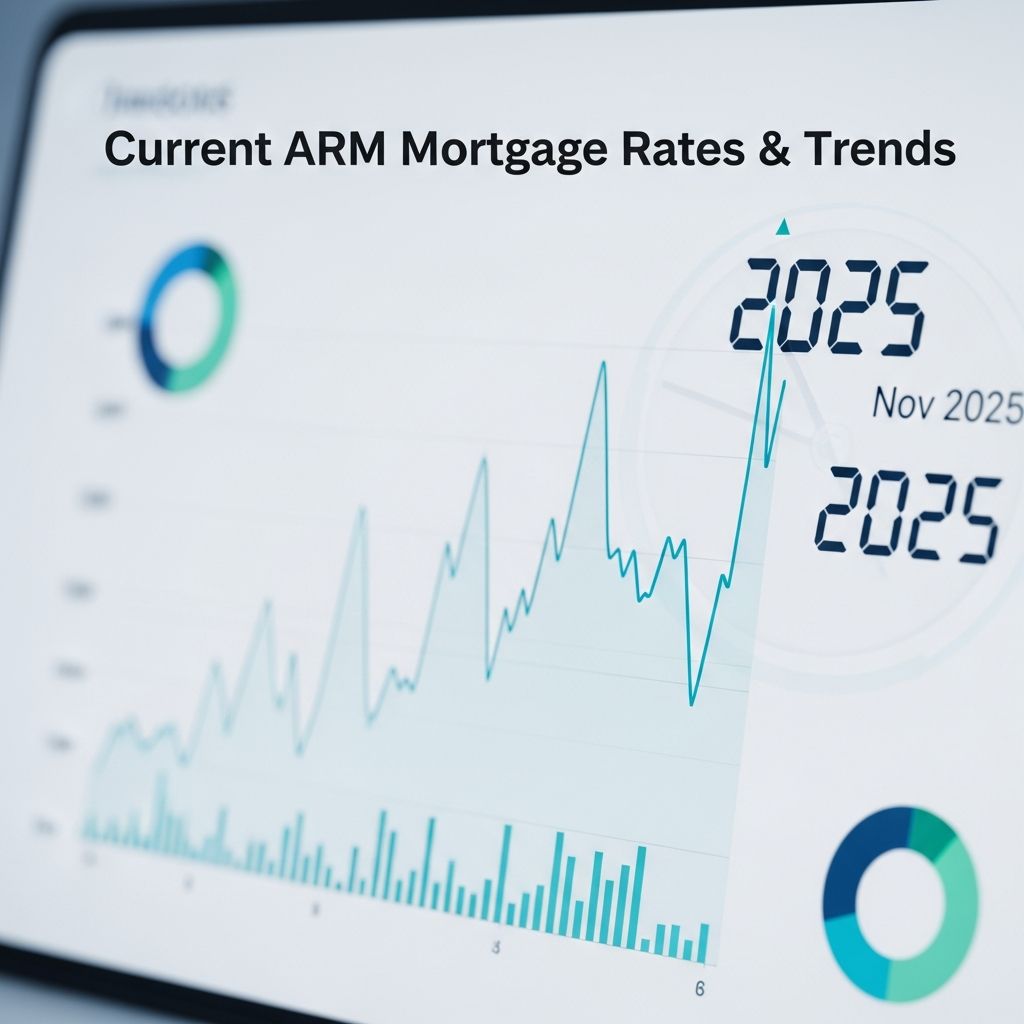
Recent mortgage rate trends demonstrate the volatility inherent in the current market environment. The Federal Reserve’s policy decisions continue to play a significant role in shaping mortgage rates, though the Fed has not changed its benchmark rate so far in 2025. Market analysts anticipate potential rate cuts later in the year, which could influence ARM rates moving forward.
Similar to fixed-rate mortgages, ARM rates have increased substantially from pandemic-era lows. However, recent months have witnessed a correction in rates due to economic uncertainty and shifting market dynamics. The introductory rates on ARMs today remain favorably positioned compared to fixed-rate mortgage options, making them an attractive consideration for qualified borrowers.
ARM Refinance Rates and Options
For homeowners considering refinancing their existing mortgages into ARM products, current refinance rates present a different landscape compared to purchase mortgage rates. The national average 5/1 ARM refinance interest rate currently stands at 6.03%, down from the previous week’s 6.07%. Refinance APRs for various ARM products are as follows:
| Product | Interest Rate | APR |
|---|---|---|
| 3/1 ARM Refinance | 5.80% | 6.15% |
| 5/1 ARM Refinance | 6.03% | 6.15% |
| 7/1 ARM Refinance | 6.57% | 6.48% |
| 10/1 ARM Refinance | 7.01% | 6.70% |
Refinance rates typically differ from purchase rates due to market factors and lender considerations. Last year, in 2024, adjustable-rate mortgage rates fluctuated considerably in the 6 to 7 percent range. Despite multiple rate cuts by the Federal Reserve beginning in September, refinance rates did not fall significantly, maintaining relative stability within this range.
Types of ARM Loans Explained
Understanding the different ARM loan structures is crucial for selecting the right mortgage product. ARMs are classified based on their initial fixed-rate period and adjustment frequency. The most common types are known as hybrid ARMs, which feature an initial fixed-rate period followed by a floating rate for the remainder of the loan.
ARM nomenclature follows a straightforward pattern. When you see a loan described as a 5/6 ARM or 7/1 ARM, the first number indicates how many years the fixed rate lasts, while the second number indicates how often the rate adjusts”6″ for every six months, or “1” for annually.
3/1 ARM or 3/6 ARM
The 3/1 ARM offers a fixed interest rate for the first three years of the loan term, after which the rate becomes adjustable for the remainder of the loan period. This shorter initial fixed period makes it an attractive option for borrowers who plan to sell or refinance within a few years, or those seeking the lowest possible initial rate to minimize early mortgage payments.
5/1 ARM or 5/6 ARM
The 5/1 ARM provides a fixed rate for the first five years, followed by an adjustable rate for the remaining loan term. Currently, the 5/1 ARM typically carries the lowest rates among ARM options, making it one of the most popular choices for homebuyers. The five-year initial period provides moderate stability while allowing borrowers to benefit from lower introductory rates.
7/1 ARM or 7/6 ARM
With a 7/1 ARM, borrowers enjoy a fixed rate for the first seven years before the rate adjusts annually. This option appeals to those seeking a longer period of rate stability while still taking advantage of the lower initial rates that ARMs offer compared to fixed-rate mortgages.
10/1 ARM or 10/6 ARM
The 10/1 ARM extends the fixed-rate period to ten years, providing extended rate stability while maintaining the benefits of ARM structure. Borrowers choosing this option receive more predictability over a longer period, though current rates for 10/1 ARMs are generally higher than shorter-term ARM products.
ARM Rate Determination and Structure
Understanding how ARM rates are calculated helps borrowers grasp the mechanics of rate adjustments. Mortgage lenders determine ARM rates by taking an index rate and adding a stated number of percentage points, commonly referred to as the margin. While the index rate fluctuates based on market conditions, the margin remains fixed throughout the loan term.
For example, if a lender’s index rate is 4.25 percent and the margin is 3 percentage points, the resulting interest rate would be 7.25 percent. If the index rises to 4.5 percent one year later, the interest rate on the loan would adjust upward to 7.5 percent. This mechanism illustrates how ARM rates remain tied to broader market movements while maintaining a consistent lender margin.
Key Qualification Requirements for ARM Loans
Obtaining an ARM mortgage requires meeting specific credit and financial criteria established by lenders and regulatory guidelines. These requirements ensure that borrowers have the capacity to manage both the initial fixed-rate payments and the potentially higher adjusted-rate payments that follow.
Credit Score Requirements: You’ll need a minimum credit score of 620 to qualify for a conventional ARM. For FHA ARMs, the threshold is lower at 580, or 500 if you’re prepared to make a 10% down payment. A higher credit score generally results in more competitive interest rate offers.
Debt-to-Income Ratio: Generally, the DTI ratio for conventional ARM mortgage loans cannot exceed 45 percent, though some lenders may approve borrowers with higher debt levels if they maintain substantial cash reserves. Most FHA loans go to borrowers with DTI ratios of 43 percent or less, while the VA prefers borrowers with a ratio of 41 percent or less.
Down Payment: Most conventional ARM loans require as little as 5 percent down, making them accessible to borrowers with limited capital for upfront investment. This flexibility contrasts with some other loan products that may require larger down payments.
Loan Amount Limits: In 2025, the conforming loan limit for an ARM is $806,500 in most areas, with higher limits of $1,209,750 available in more expensive housing markets. Jumbo or nonconforming ARM loans exceed these limits and generally require higher credit scores and down payments.
Comparing ARM Rates Versus Other Loan Types
When evaluating mortgage options, comparing ARM rates directly to fixed-rate products provides essential context for decision-making. As of November 29, 2025, the rate advantages of ARMs over fixed-rate mortgages remain apparent, particularly during the initial fixed-rate period.
A 5/1 ARM with a 5.57% interest rate offers substantially lower initial payments compared to a 30-year fixed-rate mortgage at 6.25%. Similarly, a 3/1 ARM at 5.48% provides even greater savings during the first three years. These rate differentials can translate to meaningful monthly payment reductions and potential savings on interest during the initial period.
Factors Influencing ARM Pricing
Several key factors determine the rates offered for ARM products. Understanding these influences helps borrowers anticipate potential rate movements and make informed decisions about ARM suitability for their circumstances.
Loan Amount: In 2025, the conforming limit remains at $806,500 for most areas, though higher-cost markets support limits up to $1,209,750. Jumbo ARMs exceeding these limits may be more difficult to secure and could carry different rate structures.
Credit and Income: Lenders evaluate credit scores and income stability to assess borrower risk. Those with higher credit scores typically receive more competitive rates. Lenders also consider existing debt obligations and income level when determining pricing.
Economic Conditions: Broader economic factors, including inflation expectations, employment trends, and Federal Reserve policy, influence ARM pricing. The current economic environment remains a primary driver of mortgage rate movements in 2025.
Frequently Asked Questions About ARM Rates
Q: How do ARM rates differ from fixed-rate mortgage rates?
A: ARM rates start lower during the initial fixed-period but adjust periodically afterward, whereas fixed-rate mortgages maintain the same rate throughout the entire loan term. ARMs offer lower initial payments but carry the risk of higher payments after the fixed period ends.
Q: Which ARM type currently offers the lowest rates?
A: The 3/1 ARM typically offers the lowest rates, followed by 5/1 and 7/1 ARMs. As of November 2025, the 3/1 ARM rate is 5.48%, while the 5/1 ARM is 5.57% and the 7/1 ARM is 6.03%.
Q: What is the difference between interest rate and APR?
A: The interest rate is the cost of borrowing the principal loan amount, while the APR includes the interest rate plus other fees and costs associated with obtaining the loan. The APR provides a more complete picture of the total borrowing cost.
Q: Can ARM rates increase indefinitely?
A: No. Adjustable-rate mortgages are limited in how much they can adjust the rate each time and over the loan’s lifetime. These caps protect borrowers from extreme rate increases and provide some predictability regarding maximum payment obligations.
Q: Is an ARM suitable for long-term homeowners?
A: ARMs are generally better suited for borrowers who plan to sell or refinance within 5-10 years. Long-term homeowners may face significantly higher payments after the initial fixed period and should carefully evaluate their risk tolerance before choosing an ARM.
Q: How do Federal Reserve decisions impact ARM rates?
A: ARM rates are more directly influenced by Federal Reserve decisions than fixed-rate mortgages. Changes in the Fed’s benchmark rate affect the index rates that lenders use to calculate ARM adjustments. Although the Fed has not changed its rate in 2025, potential future cuts could influence ARM pricing.
References
- Current ARM Mortgage Rates — Bankrate. 2025-11-29. https://www.bankrate.com/mortgages/arm-loan-rates/
- Adjustable-Rate Mortgage (ARM) Requirements In 2025 — Bankrate. 2025-11-29. https://www.bankrate.com/mortgages/arm-loan-requirements/
- Today’s Adjustable-Rate Mortgage Refinance Rates — Bankrate. 2025-11-29. https://www.bankrate.com/mortgages/arm-refinance-rates/
- What Is An Adjustable-Rate Mortgage (ARM)? — Bankrate. 2025. https://www.bankrate.com/mortgages/basics-of-adjustable-rate-mortgages/
- Compare Today’s 5/1 ARM Rates — Bankrate. 2025-11-29. https://www.bankrate.com/mortgages/5-1-arm-rates/
Similar Articles








Read full bio of Sneha Tete