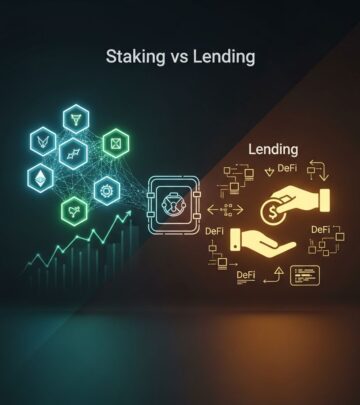
Crypto Lending: Earn Up to 25% Interest on Holdings
Discover how crypto holders are generating high yields by lending digital assets through innovative platforms, unlocking passive income opportunities.

Cryptocurrency owners have a unique opportunity to generate passive income by lending their digital assets on specialized platforms. These services allow lenders to earn competitive interest rates, sometimes reaching as high as 25% annually, without selling their holdings. This approach provides liquidity to borrowers while rewarding holders for providing capital.
Understanding the Basics of Crypto Lending
Crypto lending connects individuals with excess digital assets to those needing short-term liquidity. Lenders deposit cryptocurrencies into platforms, which then facilitate loans to borrowers who provide collateral, typically overcollateralized to mitigate volatility risks. Interest accrues to lenders based on supply, demand, and platform algorithms.
The process is straightforward: deposit assets, select terms, and watch earnings compound. Unlike traditional savings accounts, crypto lending offers significantly higher yields due to the nascent market and high borrowing demand. Platforms handle matching, risk assessment, and payouts automatically.
Centralized vs. Decentralized Lending Platforms
Crypto lending divides into two primary categories: centralized finance (CeFi) and decentralized finance (DeFi). Each offers distinct advantages tailored to different user preferences.
| Feature | CeFi Platforms | DeFi Platforms |
|---|---|---|
| Control | Custodial (platform holds keys) | Non-custodial (user retains keys) |
| Interest Rates | Fixed or variable, up to 15-20% | Algorithmic, often 10-25%+ |
| Accessibility | KYC required, user-friendly | Wallet-based, permissionless |
| Support | 24/7 customer service | Community-driven |
| Risks | Platform insolvency | Smart contract vulnerabilities |
CeFi platforms mimic traditional banks with regulatory compliance and insurance options, appealing to beginners. DeFi, powered by blockchains like Ethereum, emphasizes transparency and user sovereignty through smart contracts.
Top Centralized Crypto Lending Options
CeFi platforms provide polished interfaces and robust security. Nexo, launched in 2017, supports over 65 assets including BTC, ETH, and stablecoins, offering loans up to $2 million with no platform fees. Lenders earn up to 12% APY on holdings.
BlockFi, another leader, enables interest earning on crypto deposits and low-cost USD loans backed by collateral. It integrates regulatory protocols for secure custody.
- Nexo: High security with 256-bit encryption; supports fiat and crypto loans.
- BlockFi: Competitive rates; deposit insurance available.
- Binance Lending: Integrated with the exchange; flexible terms for traders.
Leading DeFi Protocols for High Yields
DeFi platforms dominate high-interest opportunities. Aave leads with its pool-based model where lenders receive aTokens representing deposits, earning variable yields. Rates adjust dynamically based on utilization.
Compound offers similar mechanics on Ethereum, distributing interest from borrowers. MakerDAO focuses on stablecoin lending via DAI collateral vaults. dYdX provides perpetual contracts alongside lending.
- Aave: Flash loans and multi-chain support; yields up to 25% on volatile assets.
- Compound: Algorithmic rates; battle-tested smart contracts.
- MakerDAO: Stability-focused; overcollateralized DAI generation.
These protocols operate without intermediaries, using liquidity pools where supply and demand dictate rates.
How Interest Rates Are Determined
Rates in crypto lending fluctuate based on market dynamics. In CeFi, platforms set fixed or tiered rates influenced by global borrowing demand. DeFi uses algorithmic models: low utilization boosts rates to attract lenders, while high utilization caps them to encourage more supply.
For example, during bull markets, borrowing surges for leverage, pushing lender APYs higher. Stablecoins often yield 5-10%, while altcoins can hit 20-25% amid volatility.
Strategies to Maximize Lending Returns
To optimize earnings, diversify across platforms and assets. Start with stablecoins for lower risk, then allocate to high-yield pairs.
- Pool Hopping: Monitor rates via aggregators like DeFiLlama; shift funds to highest APYs.
- Yield Farming: Combine lending with liquidity provision for extra rewards, though impermanent loss applies.
- Leveraged Positions: Borrow against holdings to amplify exposure, cautiously.
- Auto-Compounding: Use vaults on platforms like Yearn.finance for reinvestment.
Tax implications vary; track rewards as income using tools like Koinly.
Key Risks and Mitigation Tactics
High yields come with elevated risks. Platform failures, as seen in past CeFi collapses, underscore custodial dangers. DeFi faces smart contract exploits and oracle failures leading to liquidations.
- Counterparty Risk: Mitigate with insured platforms or non-custodial DeFi.
- Volatility: Overcollateralization (150-200%) protects lenders.
- Liquidation: Borrowers risk asset sales if collateral drops; lenders rarely affected directly.
- Regulatory: Evolving rules may impact access; choose compliant providers.
Always use hardware wallets for DeFi and enable two-factor authentication on CeFi.
Getting Started: Step-by-Step Guide
Begin with research: assess platform audits, TVL (total value locked), and user reviews.
- Choose a platform (e.g., Nexo for CeFi, Aave for DeFi).
- Create an account or connect wallet; complete KYC if required.
- Deposit collateral or lending assets.
- Select loan terms or supply to pools.
- Monitor dashboard for earnings and adjust as needed.
Start small to test waters, scaling with experience.
Future Trends in Crypto Lending
Institutional adoption and cross-chain interoperability will drive growth. Layer-2 solutions like Optimism reduce fees, boosting DeFi accessibility. Real-world asset tokenization may introduce stable yields backed by traditional collateral.
Regulatory clarity from bodies like the SEC could stabilize CeFi, while Bitcoin DeFi on networks like Stacks expands options.
Frequently Asked Questions
What is the average interest rate for crypto lending?
Rates range from 5-25% APY, varying by asset and platform utilization.
Is crypto lending safe?
It involves risks like hacks or volatility; opt for audited platforms and diversify.
Do I need to sell my crypto to lend it?
No, lending keeps ownership while earning interest; borrowers post collateral.
What’s the difference between CeFi and DeFi lending?
CeFi is custodial with support; DeFi is non-custodial via smart contracts.
Are crypto lending rewards taxable?
Yes, typically as interest income; consult local laws and use tracking software.
References
- Crypto Lending Explained: A Comprehensive Guide — Nordark. 2023. https://www.nordark.com/posts/crypto-lending-explained
- What Is Crypto Lending? Explained — TradeSanta. 2021. https://tradesanta.com/blog/crypto-lending-explained
- Crypto lending: How it works and different types — CoinTracker. N/A. https://www.cointracker.io/blog/crypto-lending
- Crypto Loans: How Does Crypto Lending Work? — Gemini. N/A. https://www.gemini.com/cryptopedia/peer-to-peer-lending-crypto-loans-crypto-lending
- Understanding the crypto-backed lending opportunity — LoanPro. N/A. https://www.loanpro.io/blog/your-guide-to-understanding-crypto-backed-lending-opportunities/
- What is Defi Lending and How Does it Work? — Crypto.com. N/A. https://crypto.com/us/crypto/learn/what-is-defi-lending-and-how-does-it-work
- What Is Crypto Lending and How Does It Work? — Experian. N/A. https://www.experian.com/blogs/ask-experian/what-is-crypto-lending/
Similar Articles








Read full bio of medha deb