Cruise Control: Mastering Speed Automation, Essential Guide
Discover how cruise control maintains your speed, from basic mechanics to advanced adaptive systems revolutionizing highway driving.
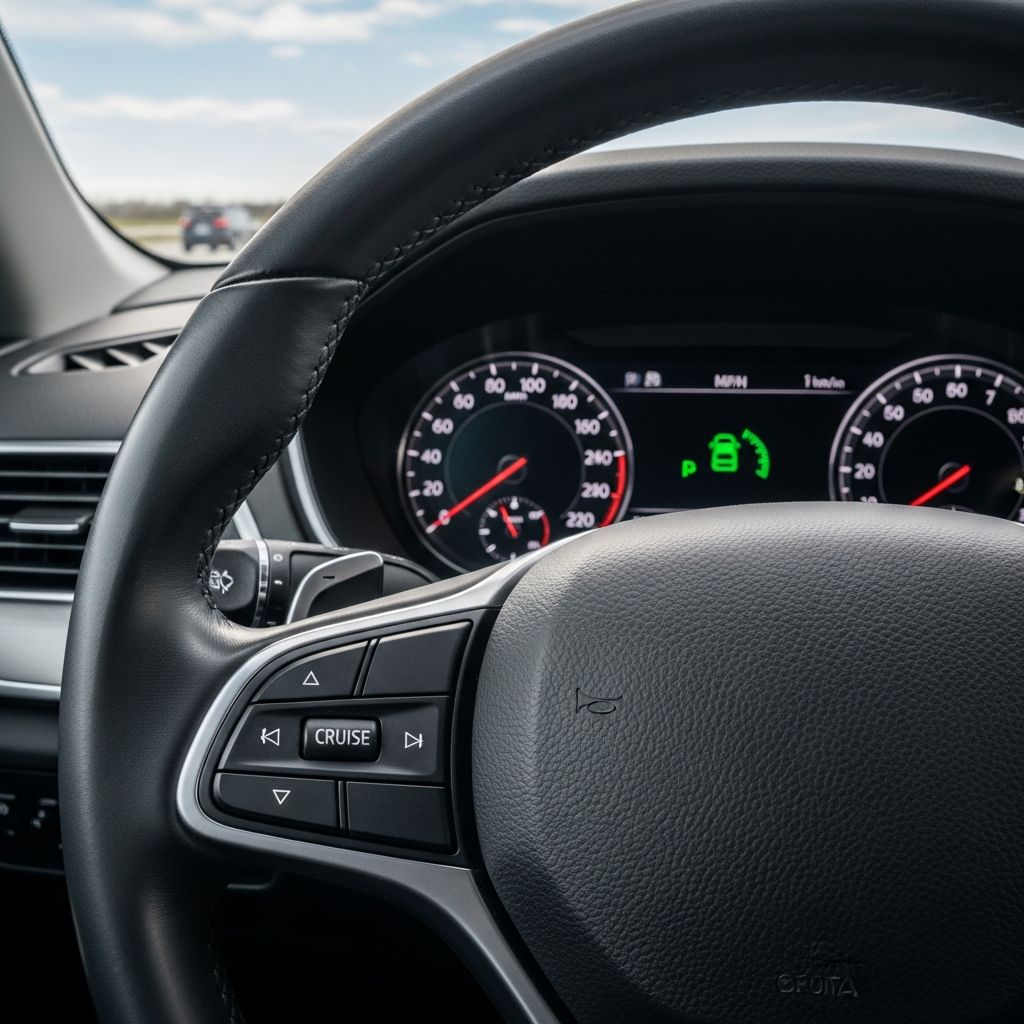
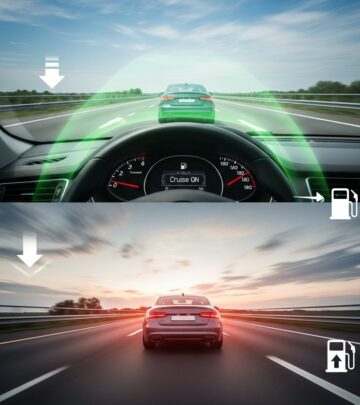
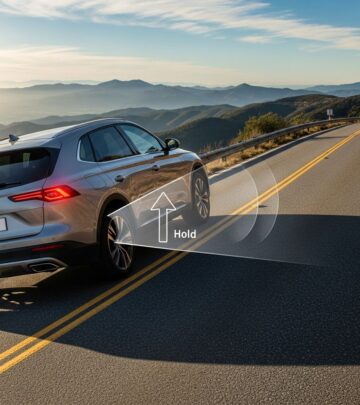
Cruise control systems automatically regulate a vehicle’s speed by modulating the throttle, allowing drivers to maintain consistent highway speeds without constant pedal input.
The Fundamentals of Speed Maintenance Technology
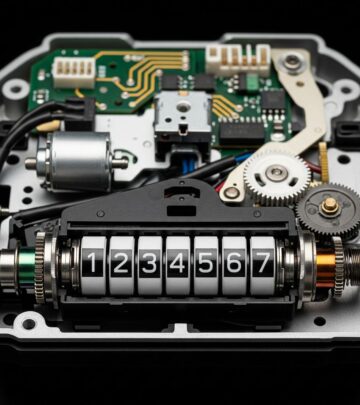
At its core, cruise control functions as a feedback mechanism that monitors vehicle speed and adjusts engine power output accordingly. The system relies on sensors to detect current speed from sources like wheel sensors, driveshaft rotation, or the transmission. A control unit compares this data against the driver’s preset value and commands actuators to open or close the throttle valve.
Early designs used mechanical linkages or vacuum servos connected to the speedometer cable. Pressing a dashboard button engaged the system, which then pulled a cable to hold the throttle steady. Modern iterations leverage electronic throttle control (ETC), or drive-by-wire, where electronic signals directly govern fuel delivery and ignition timing for precise adjustments.
Evolution from Mechanical Origins to Digital Precision
The concept emerged in the 1940s when inventor Ralph Teetor developed the ‘Speedostat’ after observing his lawyer’s inconsistent driving rhythm during meals. Patented in 1951, it debuted commercially in the 1958 Chrysler Imperial as ‘Auto-Pilot,’ employing a dashboard dial and speedometer-driven motor to adjust throttle via a screw mechanism.
By 1965, American Motors offered an affordable vacuum-based ‘Cruise Command’ on models with automatics, activated by dashboard buttons and disengaged by braking. The 1980s brought electronic integration with Motorola’s MC14460 chip, enabling seamless ties to engine management and safety systems.
Today’s systems build on this legacy, incorporating CAN bus networks for vehicle-wide communication. Adaptive variants, introduced in the 1990s, add radar and cameras for traffic-aware operation.
Core Components Powering Seamless Operation
Cruise control comprises several interconnected parts:
- Speed Sensors: Typically Hall-effect or variable reluctance types at wheels or transmission, providing pulses proportional to velocity.
- Controller/ECU: Microprocessor that processes sensor data, executes PID algorithms to minimize speed error, and outputs commands.
- Throttle Actuator: Solenoid, vacuum servo, or electronic signal in ETC systems to modulate butterfly valve position.
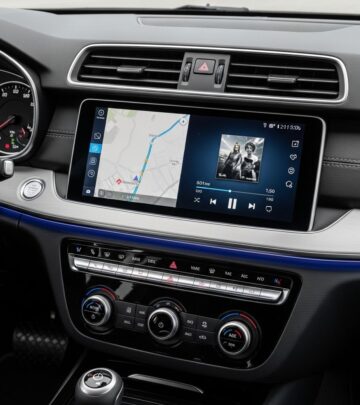
- User Interface: Steering wheel buttons for on/off, set, resume, accel/decel functions.
- Safety Overrides: Brake/clutch switches that instantly disengage the system.
In mathematical terms, the system models as a first-order differential equation: ( m dot{v} = u – b v ), where ( m ) is vehicle mass, ( v ) speed, ( u ) control force, and ( b ) drag coefficient. The controller solves for ( u ) to track reference speed.
Step-by-Step Guide to Engaging and Using Cruise Control
- Activate: Locate steering column or wheel controls; press ‘On’ once at highway speeds (usually 25-30 mph minimum).
- Set Speed: Accelerate to desired velocity, tap ‘Set’ to lock it in. Display confirms engagement.
- Adjust: Tap ‘+’/’Accel’ for +1-5 mph increments; ‘-‘/’Decel’ to reduce. Hold for continuous change.
- Resume: After braking (which cancels), press ‘Resume’ to regain prior speed.
- Disengage: Brake, clutch, or press ‘Off/Cancel’. Manual throttle overrides temporarily.
Manual transmissions pose challenges as clutching disengages the system, requiring resume post-shift, though newer designs momentarily pause and recover.
Traditional vs. Adaptive: A Comparative Overview
| Feature | Traditional Cruise | Adaptive Cruise Control (ACC) |
|---|---|---|
| Speed Maintenance | Fixed speed regardless of traffic | Adjusts to match leading vehicle speed |
| Sensors | Wheel/speedometer only | Radar, lidar, cameras for forward detection |
| Hills/Grades | Compensates via throttle/engine braking | Enhanced with predictive algorithms |
| Stop-Go Capability | No | Yes in advanced low-speed ACC |
| Ideal Use | Clear highways | Heavy traffic, congested roads |
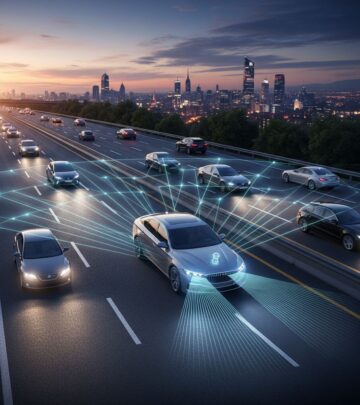
ACC uses forward-facing radar (typically 77 GHz millimeter-wave) to measure relative speed and distance, applying time-gap following (e.g., 1-3 seconds).
Benefits Enhancing Driver Comfort and Efficiency
Beyond fatigue reduction on long drives, cruise control delivers tangible gains:
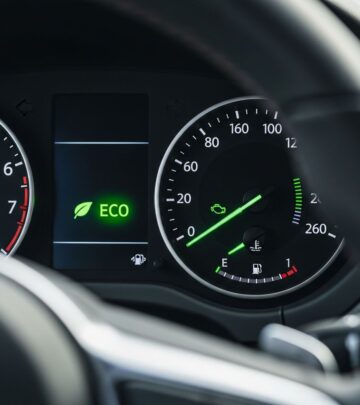
- Fuel Savings: Steady speeds optimize efficiency, cutting consumption by 5-10% on highways versus variable pedal input.
- Reduced Wear: Consistent throttle minimizes engine and transmission stress.
- Safety Boost: ACC variants lower collision risk by maintaining safe gaps, with studies showing 20-30% rear-end crash reductions.
- Legality Compliance: Many regions mandate speed limiters; cruise aids adherence.
Safety Considerations and Best Practices
While invaluable, misuse poses risks. Never engage in rain, fog, heavy traffic, or urban areas where quick stops demand full control. ACC may struggle with cut-ins or erratic drivers, requiring vigilant override.
Maintenance is key: Calibrate sensors annually, check vacuum lines in older cars, and update ECU software for ETC systems. Faulty wheel speed sensors (common in ABS-integrated setups) trigger failures.
Frequently Asked Questions
Does cruise control work on hills?
Yes, it automatically increases throttle uphill and may apply engine braking downhill to hold speed.
Can cruise control save gas?
Absolutely, by avoiding speed fluctuations; expect 4-7% highway MPG improvement.
What’s the difference between cruise control and speed limiter?
Cruise maintains exact speed; limiters cap maximum but allow manual slowing.
Is adaptive cruise control safe in rain?
Rain can impair radar/camera accuracy; drivers should disengage and drive manually.
How do I fix cruise control not working?
Common issues: blown fuses, bad speed sensors, or throttle body faults. Consult a mechanic for diagnostics.
Future Horizons: Integration with Autonomous Driving
Cruise control foreshadows Level 2+ autonomy. Systems like Traffic Jam Assist combine ACC with lane centering for hands-free low-speed travel. Emerging tech fuses V2V communication and AI for predictive adjustments to traffic flow or speed limits via GPS.
By 2030, expect ubiquitous Level 3 highway autonomy building on these foundations, where vehicles self-navigate merges and exits.
In summary, from Teetor’s vacuum pioneer to radar-savvy ACC, cruise control exemplifies engineering ingenuity, blending comfort, efficiency, and safety for millions of drivers daily.
References
- Cruise control – Wikipedia — Wikipedia. 2023-10-15. https://en.wikipedia.org/wiki/Cruise_control
- Cruise Control: System Modeling — University of Michigan Control Tutorials. N/A. https://ctms.engin.umich.edu/CTMS/index.php?example=CruiseControl§ion=SystemModeling
- How Cruise Control Systems Work — HowStuffWorks. 2023-05-20. https://auto.howstuffworks.com/cruise-control.htm
- Cruise Control: How Does It Work? — Kelley Blue Book. 2024-01-12. https://www.kbb.com/car-advice/cruise-control-how-does-it-work/
- Adaptive Cruise Control — My Car Does What. 2023-08-05. https://www.mycardoeswhat.org/deeper-learning/adaptive-cruise-control/
Similar Articles








Read full bio of Sneha Tete