Cross-Elasticity of Demand: Definition and Formula
Understanding how price changes in one good affect demand for another good.
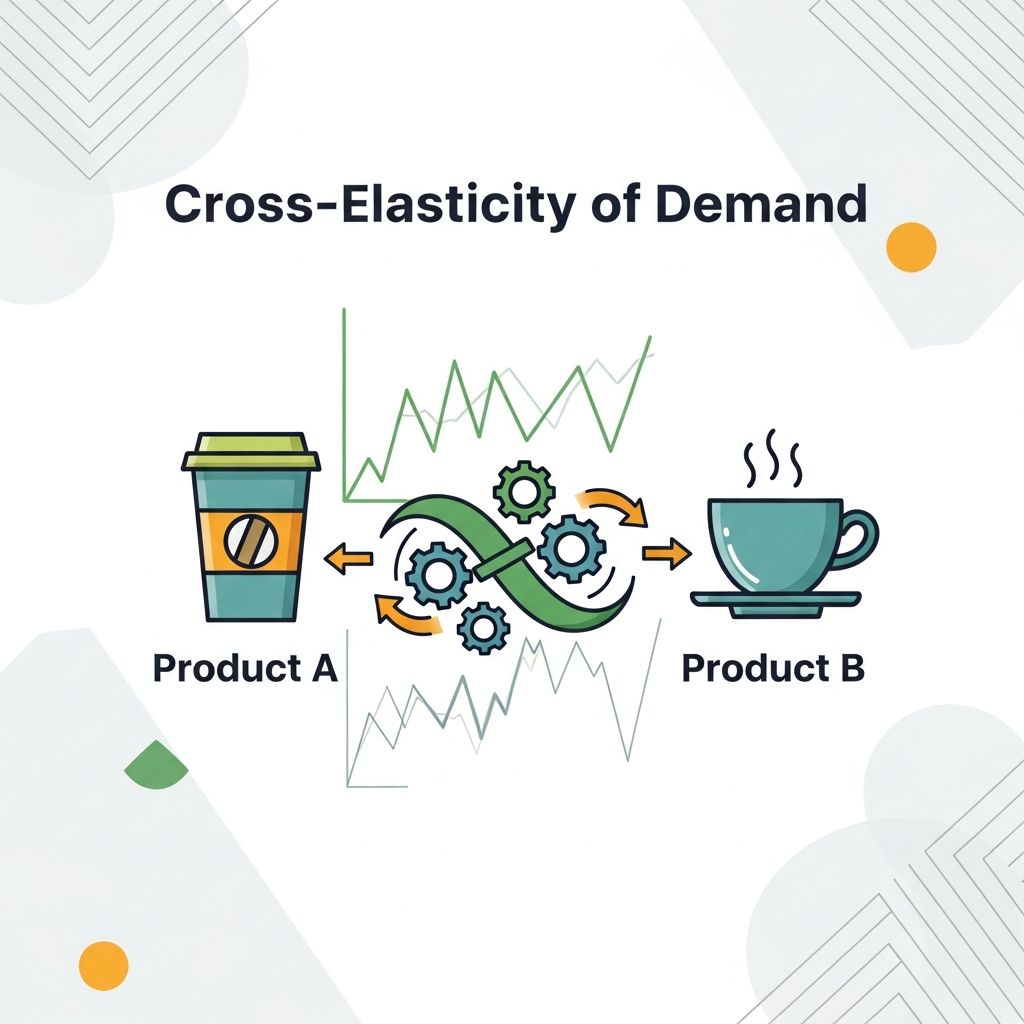
Cross-Elasticity of Demand: Understanding Price Relationships Between Goods
In the world of economics, understanding how consumers respond to price changes is fundamental to business success and market analysis. One crucial concept that helps explain these relationships is cross-elasticity of demand (XED). This economic measure reveals how the demand for one good changes in response to price changes in another good. Rather than looking at how a product’s own price affects its demand, cross-elasticity of demand examines the interconnectedness of different products in the marketplace.
Businesses, economists, and policymakers use this metric to understand competitive dynamics, set pricing strategies, and predict consumer behavior. Whether two products are substitutes (like different brands of coffee) or complements (like hot dogs and buns), cross-elasticity of demand provides quantifiable insights into these relationships.
What Is Cross-Elasticity of Demand?
Cross-elasticity of demand (XED) measures the sensitivity of the quantity demanded for one good to changes in the price of another good. In simpler terms, it answers the question: “If the price of Product B increases by 10%, how will the quantity demanded for Product A change?”
This concept builds on the foundation of price elasticity of demand but adds a relational dimension. While price elasticity of demand examines a single product in isolation, cross-elasticity of demand recognizes that consumers make purchasing decisions in a complex marketplace where related products influence one another.
The relationship between two goods can be understood through three primary categories: substitute goods, complementary goods, and independent goods. Each category demonstrates different cross-elasticity characteristics that reveal market dynamics and consumer preferences.
The Cross-Elasticity of Demand Formula
The mathematical formula for calculating cross-elasticity of demand is:
XED = (% Change in Quantity Demanded of Good A) ÷ (% Change in Price of Good B)
Breaking down this formula:
- Percentage Change in Quantity Demanded: This represents how much the quantity demanded for Good A has changed, expressed as a percentage of the original quantity.
- Percentage Change in Price: This represents how much the price of Good B has changed, expressed as a percentage of the original price.
- The Ratio: Dividing these two percentages gives us the cross-elasticity coefficient, which reveals the strength and direction of the relationship.
For example, if the price of margarine increases by 1%, and the quantity demanded for butter increases by 0.81%, the cross-elasticity of demand would be 0.81. This indicates a moderate substitution effect between these two products.
Interpreting Cross-Elasticity Values
The sign and magnitude of the cross-elasticity coefficient tell us different stories about the relationship between two goods.
Positive Cross-Elasticity: Substitute Goods
When cross-elasticity of demand is positive, it indicates that the two goods are substitutes. A positive value means that as the price of one good increases, consumers demand more of the other good. This occurs because consumers view the goods as interchangeable alternatives.
Consider the relationship between different coffee brands. If Starbucks Coffee raises its prices, some consumers will switch to Costa Coffee. The positive cross-elasticity reflects this substitution behavior. Similarly, if margarine prices rise, consumers may purchase more butter as an alternative.
Negative Cross-Elasticity: Complementary Goods
A negative cross-elasticity of demand indicates that two goods are complements—products typically purchased and consumed together. When the price of one complementary good increases, demand for the other tends to decrease.
Think about hot dogs and hot dog buns. If the price of hot dogs rises significantly, consumers will buy fewer hot dogs overall, and consequently, they will also purchase fewer hot dog buns. The negative cross-elasticity captures this inverse relationship. Similarly, smartphones and mobile apps demonstrate strong complementary relationships; higher smartphone prices reduce demand for both phones and apps.
Zero Cross-Elasticity: Independent Goods
When cross-elasticity of demand equals zero or approaches zero, the two goods are independent. Price changes in one good have no meaningful effect on demand for the other. A snowboard price increase will not affect calculator demand because consumers do not view these products as related in any meaningful way.
Elasticity Degrees: From Elastic to Inelastic
Beyond just determining whether goods are substitutes or complements, the magnitude of cross-elasticity reveals the strength of these relationships.
Elastic Cross-Elasticity
When the absolute value of cross-elasticity is greater than 1, the relationship is considered elastic. This means that a price change in one good produces a more than proportionate change in quantity demanded for the other good. Strong substitutes typically demonstrate elastic cross-elasticity.
For instance, if two sugar brands are nearly identical, a 1% price decrease in Brand A might trigger a 2% increase in quantity demanded, resulting in a cross-elasticity of 2. Consumers easily switch between these highly substitutable products.
Inelastic Cross-Elasticity
Cross-elasticity between 0 and 1 (in absolute value) indicates inelastic relationships. In this case, price changes produce less than proportionate changes in quantity demanded. These are typically weak substitutes or weak complements.
Tea and coffee demonstrate inelastic cross-elasticity. Although they are substitutes, many consumers have strong preferences for one over the other. A 10% price increase in tea might only increase coffee demand by 2%, yielding a cross-elasticity of 0.2.
Unitary Cross-Elasticity
When cross-elasticity equals exactly 1, the relationship is unitary. This means the percentage change in quantity demanded exactly matches the percentage change in price. Such perfectly proportionate relationships are relatively rare in real markets but serve as a useful reference point.
Practical Examples in the Marketplace
Understanding cross-elasticity of demand helps explain real-world pricing dynamics and consumer behavior patterns.
Substitute Goods Examples
- Coffee Brands: Starbucks and Costa Coffee operate as substitutes with relatively high positive cross-elasticity. When one raises prices, customers switch to competitors.
- Butter and Margarine: With a cross-elasticity of 0.81, these products show meaningful but not extreme substitution.
- Transportation Options: Buses and taxis represent substitutes; higher taxi fares increase demand for public transportation.
Complementary Goods Examples
- Hot Dogs and Buns: These strong complements show low negative cross-elasticity because they are always purchased together.
- Smartphones and Apps: A strong complementary relationship exists; higher phone prices reduce demand for both phones and applications.
- Peanut Butter and Jelly: These products demonstrate significant negative cross-elasticity due to their common pairing.
Business Applications and Strategic Pricing
Understanding cross-elasticity of demand enables businesses to make sophisticated pricing decisions that maximize profitability.
Loss Leader Strategy
Companies can deliberately price complementary goods below cost to boost sales of higher-margin products. Sony famously sells PlayStation consoles at a loss to encourage software purchases. The low console price increases demand for games, where profit margins are substantial. This strategy leverages negative cross-elasticity to create an overall profit advantage.
Competitive Pricing
Businesses selling substitute goods must carefully consider competitor pricing. If your product has high positive cross-elasticity with competitors, you cannot raise prices without losing significant market share. However, businesses offering unique, non-substitutable products enjoy greater pricing power because consumers have fewer alternatives.
Brand Differentiation and Advertising
Advertising aims to reduce cross-elasticity of demand by building brand loyalty. When consumers view your product as truly distinct from competitors, they become less willing to switch even if prices rise. This strategy effectively reduces the positive cross-elasticity between your product and substitutes.
Factors Affecting Cross-Elasticity of Demand
Several factors influence the magnitude and sign of cross-elasticity between goods:
- Product Similarity: Highly similar products show higher cross-elasticity. Generic brands of nearly identical products demonstrate higher substitution effects than differentiated products.
- Consumer Preferences: Strong brand loyalty and personal preferences reduce cross-elasticity. Tea drinkers will not easily switch to coffee despite price changes.
- Necessity vs. Luxury: Necessities and complements show lower negative cross-elasticity because consumers purchase both regardless of price, while luxury goods may show higher substitution rates.
- Availability of Alternatives: Markets with many competitors experience higher cross-elasticity than markets with few alternatives.
- Time Horizon: Short-term cross-elasticity often differs from long-term elasticity as consumers adjust consumption patterns over time.
Cross-Elasticity vs. Own-Price Elasticity
It is important to distinguish between cross-elasticity of demand and own-price elasticity of demand. Own-price elasticity measures how quantity demanded for a good changes when that good’s own price changes. Cross-elasticity, by contrast, measures the impact of another good’s price change.
Both metrics provide valuable but different information. Own-price elasticity helps businesses understand their individual pricing power, while cross-elasticity reveals how their pricing decisions affect related products and how competitors might impact their sales.
Limitations and Considerations
While cross-elasticity of demand provides valuable insights, it has limitations. Cross-elasticity cannot simply be concluded from observing price changes because price changes arise from both cost and demand factors. A price increase might reflect rising production costs rather than market power, leading to incomplete conclusions about substitution relationships.
Additionally, cross-elasticity is typically measured between only two goods at a time, while real consumer decisions involve complex choices among many products. The relationship between goods may also change over time as consumer preferences evolve and new products enter the market.
Frequently Asked Questions
Q: How is cross-elasticity of demand different from price elasticity of demand?
A: Price elasticity of demand measures how quantity demanded changes when a product’s own price changes, while cross-elasticity of demand measures how quantity demanded for one good changes when another good’s price changes. Cross-elasticity reveals relationships between different products, whereas price elasticity examines individual product price sensitivity.
Q: What does a cross-elasticity of 0 mean?
A: A cross-elasticity of demand equal to zero indicates that two goods are independent. Price changes in one product have no effect on demand for the other. This typically occurs when goods serve completely different purposes and consumers do not view them as related.
Q: How can businesses use cross-elasticity of demand in pricing strategy?
A: Businesses can use cross-elasticity to determine optimal pricing for related products. Companies selling strong complements might use loss-leader pricing on one product to boost sales of high-margin complements. Firms selling substitutes must be cautious about price increases to avoid losing market share to competitors.
Q: Are all substitute goods equally substitutable?
A: No. Weak substitutes show low positive cross-elasticity (like tea and coffee), while strong substitutes show high positive cross-elasticity (like different sugar brands). The degree of substitutability depends on how similar the goods are and consumer preferences for each product.
Q: Can cross-elasticity values change over time?
A: Yes. Cross-elasticity can change as consumer preferences evolve, new competitors enter the market, technological innovations occur, and brand loyalty strengthens or weakens. Long-term cross-elasticity often differs from short-term values as consumers adjust their behavior.
References
- Cross elasticity of demand — Wikipedia. Accessed November 2025. https://en.wikipedia.org/wiki/Cross_elasticity_of_demand
- Cross Elasticity Demand (XED) – Definition, Calculation — Corporate Finance Institute. Accessed November 2025. https://corporatefinanceinstitute.com/resources/economics/cross-elasticity-demand-xed/
- Cross elasticity of demand — Economics Help. Accessed November 2025. https://www.economicshelp.org/microessays/equilibrium/cross-elasticity-demand/
- Cross-price elasticity of demand (video) — Khan Academy. Accessed November 2025. https://www.khanacademy.org/economics-finance-domain/ap-microeconomics/unit-2-supply-and-demnd/25/v/cross-elasticity-of-demand
- Cross-Price Elasticity of Demand: Definition and Formula — MasterClass. 2025. https://www.masterclass.com/articles/cross-price-elasticity-explained
Similar Articles








Read full bio of Sneha Tete