Credit Utilization Ratio: Expert Strategies To Lower It
Master your credit utilization ratio to boost scores, secure better rates, and achieve financial freedom with proven strategies.

Your
credit utilization ratio
is a key metric that reveals how much of your available revolving credit you’re actively using, directly influencing your credit score and lending opportunities. Keeping this ratio low demonstrates responsible credit management to lenders, potentially unlocking lower interest rates and higher approval odds.Understanding the Fundamentals of Credit Utilization
Credit utilization applies specifically to revolving accounts like credit cards and lines of credit, where balances fluctuate unlike fixed installment loans such as mortgages. It quantifies the proportion of your total credit limits occupied by current balances, serving as a snapshot of your debt reliance.
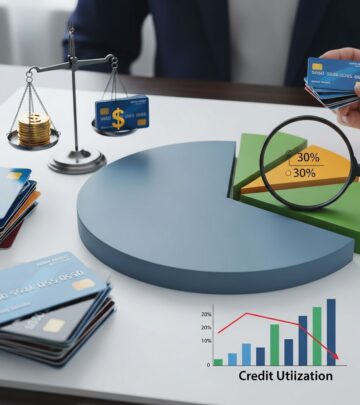
Lenders view high ratios as red flags, suggesting overextension or potential repayment risks. Conversely, low ratios signal financial discipline, positively affecting models like FICO (where utilization comprises 30% of the score) and VantageScore (20%).
Step-by-Step Guide to Calculating Your Ratio
Computing your credit utilization is straightforward and requires only your account balances and limits from your credit report. Follow these steps:
- Compile balances from all revolving accounts.
- Sum the credit limits across those accounts.
- Divide total balances by total limits.
- Multiply the result by 100 for the percentage.
For instance, with $10,000 total balances against $18,000 limits, the ratio is ($10,000 / $18,000) × 100 = 55.6%.
| Account | Credit Limit | Balance | Per-Account Ratio |
|---|---|---|---|
| Card A | $5,000 | $500 | 10% |
| Card B | $3,000 | $1,200 | 40% |
| Card C | $10,000 | $2,000 | 20% |
| Total | $18,000 | $3,700 | 20.6% |
Both overall and per-account ratios matter; a single maxed card can drag down your score despite a favorable aggregate.
Optimal Levels for Maximum Credit Benefits
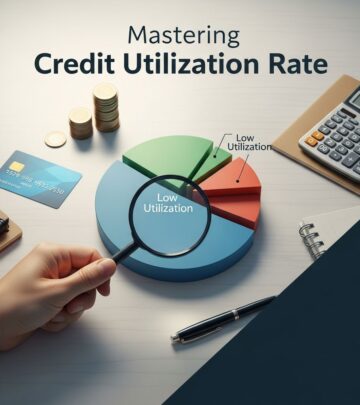
Aim for under 30% overall, with top scorers averaging single digits—often below 10%. U.S. averages hovered around 29% in late 2024, but those with excellent credit (800+ FICO) maintain far lower figures.
- 0-9%: Elite range, maximizes score potential.
- 10-29%: Strong, minimal negative impact.
- 30%+: Risky, score declines accelerate.
- 50%+: Severe penalty, limits new credit access.
Lower isn’t always better—zero utilization might suggest inactivity, but maintaining low activity is preferable.
Why High Utilization Harms Your Financial Profile
Excessive utilization ranks as the second-biggest credit score factor after payment history. It implies reliance on credit for daily needs, raising default fears among issuers. High ratios can:
- Drop scores by 50-100+ points rapidly.
- Block premium card approvals or loans.
- Increase perceived risk, hiking rates by 2-5%.
- Prolong recovery post-balance spikes.
Scoring algorithms update monthly based on reported balances, so timing payments before statement dates is crucial.
Proven Strategies to Reduce Your Ratio
Lowering utilization boosts scores quickly without new credit applications. Key tactics include:
- Accelerate payments: Pay multiple times monthly to minimize reported balances.
- Request limit increases: Boosts denominator if approved, without hard inquiries.
- Retain old accounts: Preserves credit history length and total limits.
- Avoid new debt: Steer clear of impulse charges that inflate numerator.
- Balance transfers: Shift to 0% promo cards temporarily, paying aggressively.
Track progress via free credit monitoring; improvements appear within 30 days.
Per-Account vs. Aggregate: Key Differences
Models evaluate both totals and individuals. A 90% loaded card hurts even if overall is 20%, as it highlights isolated risk. Diversify usage across cards to cap any at 10-20%.
| Scenario | Overall Ratio | Highest Per-Account | Score Impact |
|---|---|---|---|
| Balanced | 15% | 20% | Positive |
| Skewed | 15% | 80% | Negative |
Common Pitfalls and How to Avoid Them
Many overlook statement balances dictating reports—pay before closing dates. Closing unused cards shrinks limits, spiking ratios unless balances drop proportionally. Annual fees on dormant accounts? Negotiate waivers first.
Don’t chase 0% by closing everything; age of accounts (15% of FICO) suffers. New apps add inquiries (10% factor), so space requests.
Real-World Examples and Case Studies
Consider Jane: $15,000 limits, $6,000 balances (40%). She requested two limit bumps (+$5,000 total) and paid $3,000 extra monthly. Ratio fell to 18% in 60 days, score rose 85 points[Inspired by 1].
Contrast Mike: Ignored a maxed store card (100% on $500 limit), overall 25%. Score stagnated at 680 despite on-time payments. Transferring and closing post-payoff freed limits without harm.
Long-Term Habits for Sustained Low Utilization
Build budgets tying spending to 20% of limits. Automate payments exceeding minimums. Review statements weekly, disputing errors promptly via reports from AnnualCreditReport.com.
Incorporate utilization into goals: Pre-qualify for mortgages only after optimizing. Educate via tools from FICO or bureaus for personalized insights.
Frequently Asked Questions
What counts toward my credit utilization ratio?
Only revolving balances like credit cards and HELOCs drawn amounts. Ignore installment loans.
Does paying before the statement date help?
Yes, issuers report statement snapshots, so early payments lower visible utilization.
Can I improve my score without paying down debt?
Yes, via limit increases or adding positive accounts, but debt reduction is most direct.
Is 1% utilization better than 10%?
Single digits are ideal, but 1-10% range performs similarly for scores.
How often do changes affect my score?
Monthly after issuer reporting cycles, typically statement close.
Tools and Resources for Monitoring
Leverage apps from credit bureaus (Experian, Equifax, TransUnion) for real-time ratios. FICO Score 8 simulators predict impacts of adjustments.
References
- Credit Utilization Ratio — Achieve. 2024. https://www.achieve.com/glossary/c/credit-utilization-ratio
- Credit utilization ratio: What you need to know — Capital One. 2024-09-19. https://www.capitalone.com/learn-grow/money-management/credit-utilization-and-credit-score/
- What Is a Credit Utilization Rate? — Experian. 2024. https://www.experian.com/blogs/ask-experian/credit-education/score-basics/credit-utilization-rate/
- What is Credit Utilization Ratio? — U.S. Bank. 2025-07-23. https://www.usbank.com/credit-cards/credit-card-insider/credit-card-basics/what-is-credit-utilization-ratio.html
- What Is Credit Utilization Ratio? How to Calculate Yours — NerdWallet. 2024. https://www.nerdwallet.com/finance/learn/how-is-credit-utilization-ratio-calculated
Similar Articles








Read full bio of Sneha Tete