Credit Utilization and Full Payment: What You Need to Know
Understanding how credit card balances affect your score even when paid in full monthly.
Many credit card holders believe that paying their balance in full each month eliminates concerns about credit utilization. While this approach demonstrates responsible financial management, the relationship between utilization and credit scoring is more nuanced than this assumption suggests. Understanding how credit utilization affects your score, regardless of payment habits, is essential for maintaining optimal creditworthiness.
Understanding the Mechanics of Credit Utilization
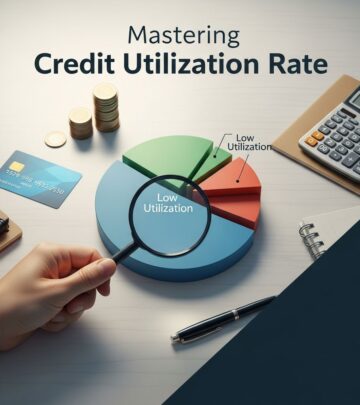
Credit utilization represents the percentage of available revolving credit you are actively using at any given time. This metric is calculated by dividing your total credit card balances by your total credit limits, then multiplying by 100 to express it as a percentage. For instance, if you have a combined credit limit of $10,000 across all cards and carry a total balance of $3,000, your utilization rate would be 30%.
This calculation matters because credit scoring models interpret utilization as an indicator of your creditworthiness and financial responsibility. When you use a smaller percentage of your available credit, lenders view you as someone who manages debt conservatively and maintains financial discipline.
How Utilization Differs from Payment History
A critical distinction exists between your utilization rate and your payment history. These are two separate factors that influence your credit score independently. Your payment history reflects whether you pay on time, while utilization reflects how much of your available credit you’re using at any snapshot in time. The fact that you pay your balance in full monthly affects your payment history positively, but it does not eliminate the utilization factor from consideration.
The Impact on Credit Scores: What the Numbers Show
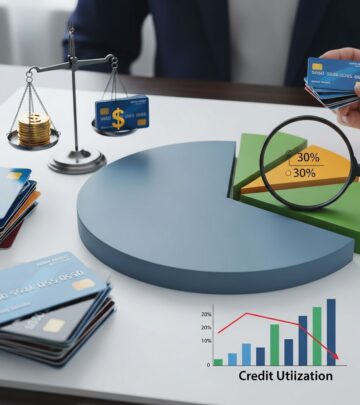
Credit utilization accounts for approximately 20% to 30% of your credit score, depending on which scoring model is being used. This percentage places utilization among the most significant factors affecting your creditworthiness, second only to payment history in most models.
When Your Utilization Gets Reported
The timing of when utilization gets reported to credit bureaus is crucial. Credit card issuers typically report your balance to credit bureaus on a specific date each month, often referred to as the statement closing date. This reported balance is what appears on your credit report and influences your utilization ratio used in scoring calculations. Even if you pay this balance in full before the due date, the reported balance remains the same for that reporting cycle.
This means if your statement closing date is the 25th of each month, and your card issuer reports that you had a $5,000 balance on that date, your utilization will be calculated based on that $5,000 figure—regardless of whether you pay it in full on the 30th. The timing between the statement closing date and your payment can therefore impact how your utilization appears to credit scoring models.
Utilization Ranges and Their Credit Impact
| Utilization Range | Credit Impact | Recommended Action |
|---|---|---|
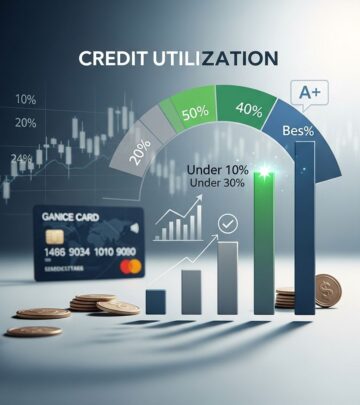
| 0-10% | Excellent – demonstrates strong credit management | Optimal range to maintain |
| 11-30% | Good – generally acceptable for most borrowers | Recommended threshold |
| 31-50% | Fair – beginning to negatively affect score | Consider reduction strategies |
| 51-70% | High – significant negative impact on score | Actively reduce utilization |
| Above 70% | Very High – substantial damage to creditworthiness | Urgent reduction needed |
Why Full Payment Doesn’t Eliminate Utilization Concerns
Even conscientious credit users who pay balances in full each month may see their credit scores affected by high utilization at the time of reporting. Here’s why: credit bureaus capture a snapshot of your balance on the statement closing date, not your end-of-month behavior after payment. This creates a timing mismatch that can work against you.
The Reported Balance Phenomenon
Consider this scenario: You receive your credit card statement showing a $4,000 balance on March 25th. Your credit card company reports this $4,000 balance to the credit bureaus on or around that date. On March 28th, you pay the full $4,000. From a credit utilization perspective, however, the credit bureaus see you as having used $4,000 of your available credit for that reporting period, even though you ultimately paid it in full.
This distinction explains why many people who pay in full still experience fluctuations in their credit scores. The utilization metric operates on reported balances, not actual balances you maintain long-term.
Different Credit Scoring Models and Their Approaches
Not all credit scoring models treat utilization identically, which adds another layer of complexity to this topic.
Short-Term Utilization Models
Traditional scoring models like FICO Score 8 focus primarily on your most recently reported utilization data. These models evaluate your credit profile based on current information, making them sensitive to month-to-month changes in your utilization ratio. If you had high utilization in the current month, even if you paid it off, the model will reflect that in its current scoring.
Long-Term Utilization Models
Newer models such as FICO Score 10T and VantageScore 4.0 incorporate trended data, meaning they analyze your utilization patterns over time rather than relying on a single snapshot. These models examine your average utilization and historical patterns across multiple months. For people who consistently pay in full, this approach can be advantageous because it demonstrates a pattern of responsible credit use. Conversely, individuals with sporadic high utilization followed by full payments may find these models more forgiving than traditional models.
Individual Card Utilization vs. Overall Portfolio Utilization
An important consideration is that credit scoring models evaluate utilization on two levels: individual account and overall portfolio.
Per-Card Analysis
The utilization rate on your individual cards matters. If you have three credit cards with $5,000 limits each and you carry $4,000 on one card while keeping the others at $0, that card shows 80% utilization. This high per-card utilization can negatively impact your score even if your overall utilization across all three cards is only 26.67%.
Portfolio-Wide Analysis
Your total utilization across all revolving credit accounts also factors into scoring calculations. This is calculated by summing all balances and dividing by the sum of all credit limits. Most experts recommend keeping both your overall utilization and your highest individual card utilization below 30%.
Strategies for Optimizing Utilization While Paying in Full
Timing Your Payments Strategically
- Pay your balance before the statement closing date to ensure a lower reported balance
- Contact your card issuer about changing your statement closing date if current timing creates utilization issues
- Make multiple payments throughout the month rather than one lump sum at month’s end
Spreading Credit Across Multiple Cards
- Distribute spending across multiple cards to lower the utilization on any single card
- Maintain multiple credit accounts to increase your total available credit limit
- Avoid closing unused credit cards, as this reduces your total available credit and increases utilization percentage
Requesting Credit Limit Increases
- Ask your credit card issuers for higher credit limits to increase available credit without changing your spending
- Be aware that some issuers perform hard inquiries for limit increases, which can temporarily impact your score
- Soft inquiries for limit increases won’t affect your credit
The Broader Context: Payment History Remains Primary
While utilization matters significantly, it’s important to remember that payment history is the most important factor in credit scoring, accounting for approximately 35% of your FICO score. Paying bills on time, whether you pay in full or make minimum payments, is more critical to your credit score than utilization levels. However, this doesn’t mean utilization should be ignored—it simply means that perfect on-time payment combined with managed utilization creates the optimal credit profile.
Common Questions About Utilization and Full Payment
FAQ Section
- Q: Does paying my full balance immediately after my statement closes prevent utilization from being reported?
- A: No. The reported balance is typically captured on your statement closing date, before you make your payment. Paying immediately after doesn’t change what was already reported to credit bureaus.
- Q: Can I improve my utilization ratio instantly?
- A: Yes, unlike some credit factors that take time to change, lowering your utilization through increased payments or credit limit increases can improve your score relatively quickly, particularly with models that use short-term data.
- Q: Does carrying a zero balance on all credit cards hurt my credit score?
- A: Carrying zero balances is beneficial for utilization purposes, but some creditors prefer to see that you can responsibly manage active accounts. Having a small reported balance on one or two cards while maintaining zero balances elsewhere represents a good middle ground.
- Q: How long does it take for lower utilization to improve my credit score?
- A: With traditional credit scoring models, improvements can appear within one or two billing cycles once lower utilization is reported. Newer models considering trended data may take longer to fully reflect the positive pattern.
Conclusion: A Comprehensive Credit Strategy
Paying your credit card balance in full each month is an excellent financial practice that demonstrates responsible credit management and saves you money on interest charges. However, this practice alone does not eliminate the impact of credit utilization on your credit score. Your reported balance at the statement closing date influences your utilization calculation, regardless of whether you subsequently pay that balance in full.
To optimize your credit profile, combine full monthly payments with conscious attention to reported utilization. Monitor your statement closing dates, distribute spending across multiple cards, request credit limit increases, and consider timing your payments strategically. By understanding that utilization and payment history operate as distinct factors in credit scoring, you can develop a comprehensive strategy that maximizes your creditworthiness and maintains the strong financial position your full monthly payments represent.
References
- How Does Credit Utilization Affect Your Credit Score? — Centier Bank. Accessed 2026. https://www.centier.com/resources/articles/article-details/how-does-credit-utilization-affect-your-credit-score
- What is Credit Card Utilization and How Does it Affect Your Credit Scores? — Credit Karma. Accessed 2026. https://www.creditkarma.com/credit/i/credit-card-utilization-and-your-credit-score
- What Is a Credit Utilization Rate? — Experian. Accessed 2026. https://www.experian.com/blogs/ask-experian/credit-education/score-basics/credit-utilization-rate/
- Why Your Credit Utilization Ratio Matters — First Mutual Holding. Accessed 2026. https://www.firstmutualholding.com/resources/why-your-credit-utilization-ratio-matters/
- How Credit Card Utilization Impacts Your Credit Score — First Federal Loan. Accessed 2026. https://www.ffl.bank/resources/how-credit-card-utilization-impacts-your-credit-score/
Similar Articles








Read full bio of medha deb