Credit Utilization Ratio: 5 Proven Ways To Lower It
Master the art of credit utilization to boost your credit score and achieve financial freedom through smart borrowing habits.
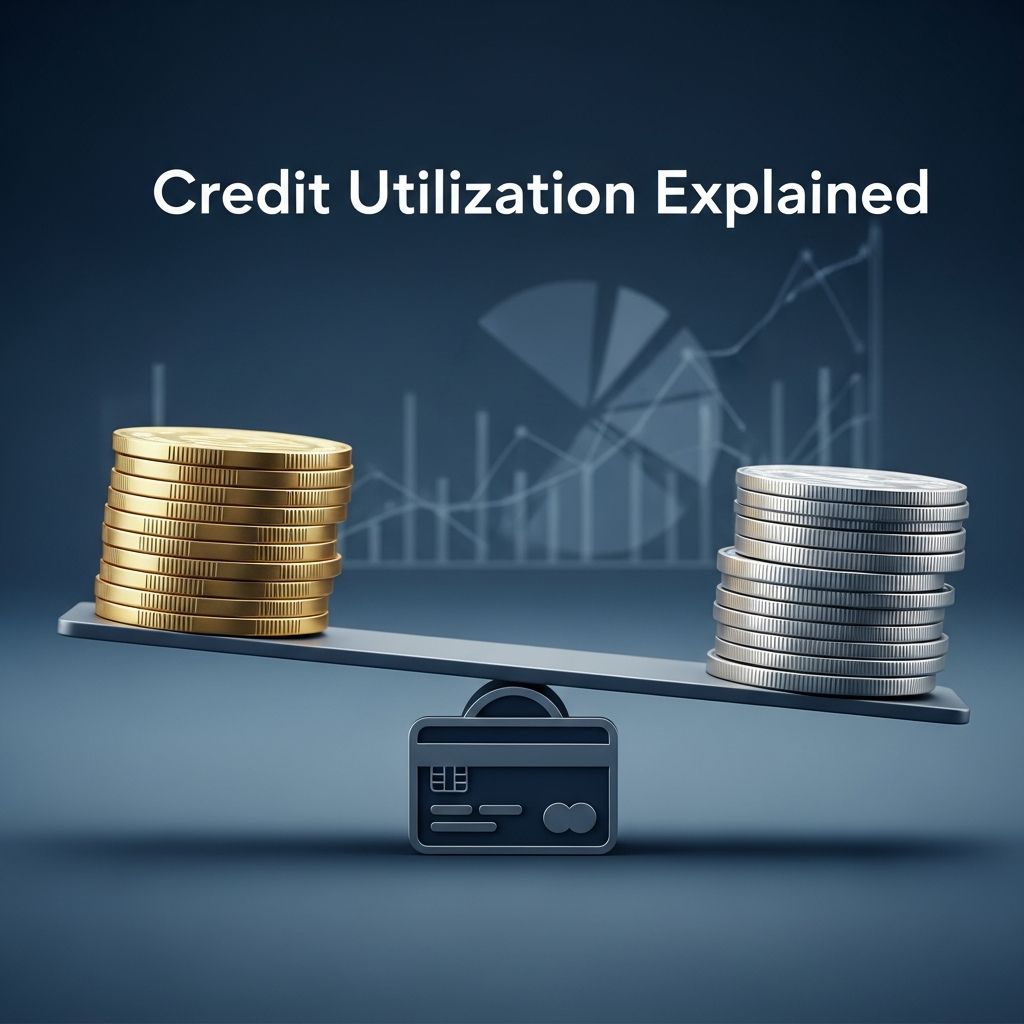
Your
credit utilization ratio
is a pivotal metric in personal finance that reveals how much of your available revolving credit you’re actively using. This percentage directly influences your credit score, often accounting for around 30% of the FICO model. Mastering this ratio can unlock lower interest rates, higher credit limits, and stronger financial standing.Defining Credit Utilization and Its Core Components
Credit utilization measures the balance on revolving accounts—like credit cards or lines of credit—against the total credit limits available. It’s expressed as a percentage and calculated using data from your credit reports, which may lag behind your actual account status due to reporting cycles.
Revolving credit differs from installment loans (e.g., mortgages or auto loans) because it allows repeated borrowing up to a limit without a fixed repayment term. Key elements include:
- Balances: Outstanding amounts reported to bureaus like Experian, Equifax, or TransUnion.
- Credit Limits: Maximum borrowing capacity per account.
- Reporting Timing: Balances snapshot at statement closing dates.
Understanding these ensures accurate self-assessment and proactive management.
Step-by-Step Guide to Calculating Your Ratio
Computing your credit utilization is straightforward math accessible to anyone. Follow these steps for both overall and per-account ratios.
- Gather Data: Review your latest statements or credit report for balances and limits on all revolving accounts.
- Sum Balances: Add up all reported balances (e.g., $500 + $300 = $800).
- Sum Limits: Total available credit (e.g., $2,000 + $3,000 = $5,000).
- Divide and Convert: ($800 / $5,000) × 100 = 16% overall utilization.
For individual cards, apply the formula per account: Balance ÷ Limit × 100. A card with $450 on a $1,000 limit yields 45%.
| Account | Balance | Limit | Per-Card Utilization |
|---|---|---|---|
| Card A | $450 | $1,000 | 45% |
| Card B | $300 | $2,000 | 15% |
| Total | $750 | $3,000 | 25% |
This table illustrates a real-world scenario where overall utilization remains manageable despite one higher per-card figure.
Per-Account vs. Overall Utilization: Which Matters More?
Credit scoring models, such as FICO and VantageScore, evaluate both metrics. High per-account usage—even if overall is low—can penalize your score. For instance, maxing one card at 100% hurts more than spreading debt evenly.
Strategy tip: Aim for under 30% on every card to naturally optimize overall utilization. Closing unused cards risks spiking ratios by shrinking total limits, as seen in examples where utilization jumps from 70% to 100%.
Ideal Credit Utilization Targets Backed by Data
Lower is better, but precision matters. Data from Q3 2024 shows clear patterns across score ranges:
| FICO Score Range | Average Utilization |
|---|---|
| Poor (300-579) | 80.7% |
| Fair (580-669) | 61.4% |
| Good (670-739) | 38.6% |
| Very Good (740-799) | 15.2% |
| Exceptional (800-850) | 7.1% |
Source: Experian Q3 2024 data. Strive for under 30% overall and 10% or less for top-tier scores. These thresholds correlate with better loan approvals and rates.
Why Credit Utilization Heavily Impacts Your Score
As the second-largest FICO factor (after payment history), utilization signals credit risk to lenders. High ratios suggest over-reliance on credit, increasing default odds. Low ratios demonstrate control and capacity for more debt.
Bureaus update reports monthly, so timing payments before statement dates lowers reported balances. Models prioritize recent data, ignoring historical trends.
Practical Strategies to Lower Your Utilization
Improving this ratio doesn’t require eliminating debt—targeted actions suffice:
- Pay Down Balances Aggressively: Focus on high-utilization cards first. Multiple payments per month can report lower figures.
- Request Limit Increases: Boosts denominator without raising numerator; notify issuers of responsible use.
- Avoid New Debt: Curb spending to prevent balance creep.
- Keep Old Accounts Open: Preserves total limits for lower ratios.
- Become an Authorized User: Gains access to another’s low-utilization history (with permission).
Pro Tip: Estimate monthly spending, multiply by 10, and maintain that much available credit for ~10% utilization.
Common Mistakes That Spike Your Ratio
Avoid these pitfalls:
- Closing cards post-payoff, reducing limits.
- Ignoring per-card highs while fixating on overall.
- Applying for credit during high-balance periods, triggering hard inquiries.
- Missing that reported balances ≠ current balances due to timing.
Tools and Resources for Monitoring Utilization
Free credit reports from AnnualCreditReport.com (weekly) let you track ratios. Apps from issuers or services like Credit Karma provide estimates, though official FICO via Experian offers precision.
Online calculators simplify math: Input balances/limits for instant per-card and overall results.
Long-Term Financial Benefits of Optimal Utilization
Maintaining low ratios builds score momentum, easing access to premium rewards cards, mortgages, and auto loans. Over time, it fosters disciplined habits, reducing interest costs and enhancing wealth-building.
For businesses or high earners, elite scores (800+) from 7% utilization open VIP financial products.
Frequently Asked Questions (FAQs)
What counts as revolving credit for utilization?
Credit cards, personal lines, HELOCs, and authorized user accounts. Installment loans excluded.
Does paying before the statement date help?
Yes—reports lower balances to bureaus.
Is 0% utilization ideal?
Not always; some activity shows credit management. 1-10% optimal.
How often do bureaus update?
Monthly, per issuer schedule.
Can I improve score quickly?
Yes, paying down debt reflects in 30 days.
Advanced Tips for Power Users
Leverage balance transfers to 0% APR cards temporarily. Negotiate limits annually. Use tools like spreadsheets for projections:
Overall Utilization = (SUM(Balances) / SUM(Limits)) * 100Simulate scenarios to plan payments.
In summary, proactive utilization management transforms credit health. Regular checks and strategic payments yield compounding benefits for years.
References
- What Is Credit Utilization Ratio? How to Calculate Yours — NerdWallet. 2024. https://www.nerdwallet.com/finance/learn/how-is-credit-utilization-ratio-calculated
- What Is a Credit Utilization Rate? — Experian. 2024-10-01. https://www.experian.com/blogs/ask-experian/credit-education/score-basics/credit-utilization-rate/
- What Is a Credit Utilization Ratio? — Equifax. 2024. https://www.equifax.com/personal/education/debt-management/articles/-/learn/credit-utilization-ratio/
- Credit utilization ratio: What you need to know — Capital One. 2024. https://www.capitalone.com/learn-grow/money-management/credit-utilization-and-credit-score/
- Understanding Credit Utilization — American 1 Credit Union. 2024. https://www.american1cu.org/financial-resources/understanding-credit-utilization
- What is Credit Utilization Ratio? — U.S. Bank. 2024. https://www.usbank.com/credit-cards/credit-card-insider/credit-card-basics/what-is-credit-utilization-ratio.html
- What is Your Credit Utilization Ratio? — Discover. 2024. https://www.discover.com/credit-cards/card-smarts/what-is-your-credit-utilization-ratio/
Similar Articles








Read full bio of medha deb