Credit Unions vs Banks: Mortgage Rates Face-Off
Discover why credit unions often beat banks on mortgage rates, fees, and flexibility—saving homebuyers thousands over the loan term.
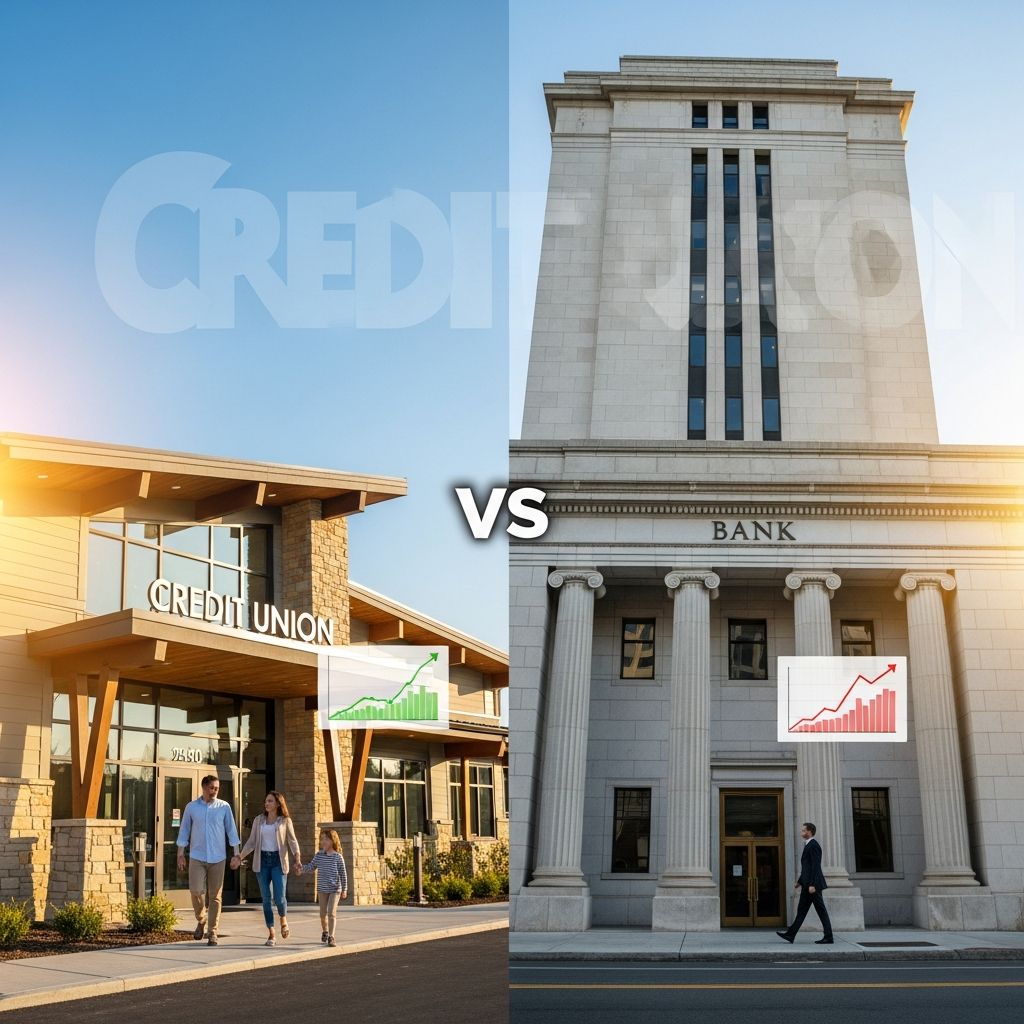
Choosing between a credit union and a bank for your mortgage can significantly impact your long-term finances. Credit unions, as member-owned not-for-profit institutions, frequently provide lower interest rates and reduced fees compared to for-profit banks, potentially saving borrowers thousands over a 30-year loan. This article breaks down the key differences, supported by data and expert insights, to guide your decision.
Understanding the Core Differences in Structure
Credit unions and banks operate under fundamentally different models. Credit unions are owned by their members, meaning profits are returned to users through better rates and services rather than distributed to shareholders. Banks, conversely, prioritize shareholder returns, which can lead to higher costs passed onto customers.
This structural divergence affects every aspect of mortgage lending. For instance, credit unions maintain loans in-house, fostering long-term member relationships, while banks often sell mortgages to servicers, potentially complicating borrower experiences.
| Feature | Credit Union | Bank |
|---|---|---|
| Ownership | Member-owned, not-for-profit | Shareholder-owned, for-profit |
| Loan Servicing | Often in-house | Frequently sold to third parties |
| Focus | Member benefits | Profit generation |
Mortgage Interest Rates: Where Credit Unions Shine
Interest rates are the biggest factor in mortgage costs. Data shows credit unions consistently offer lower rates. In Q2 2025, credit unions averaged 6.74% on 30-year fixed mortgages, versus 6.84% at banks, per NCUA data—a 0.10% difference that compounds substantially.
Over a $300,000 loan, this gap means about $23,000 in savings over 30 years. Credit unions’ not-for-profit status allows them to prioritize affordability, passing operational savings directly to members.
- Lower baseline rates: Member-focused pricing avoids profit margins.
- Competitive on jumbo loans: Flexible underwriting keeps rates attractive for larger amounts.
- Historical trends: NCUA comparisons confirm credit unions lead across loan products.
Banks may match or beat rates occasionally, especially large ones with scale, but averages favor credit unions. Always compare current quotes, as rates fluctuate with markets.
Fees and Closing Costs: Significant Savings Potential
Closing costs typically range from 2% to 5% of the home price—$6,000 to $15,000 on a $300,000 purchase. Credit unions often charge at the lower end or waive certain fees due to their structure.
Common fees like origination, appraisal, and underwriting are reduced or eliminated at many credit unions. Banks, driven by revenue goals, impose higher charges. Experian notes credit unions’ fees are generally lower, aligning with their member-first approach.
| Fee Type | Credit Union Average | Bank Average |
|---|---|---|
| Origination Fee | 0.5% or less | 1% or more |
| Closing Costs Total | 2-3% of loan | 3-5% of loan |
| Application Fee | Often $0-$250 | $300-$500 |
Eligibility and Credit Flexibility
Credit unions adopt a holistic view of applicants, often approving with lower credit scores. Banks enforce stricter minimums, like 660+ for conventional loans. This flexibility helps first-time buyers or those with past credit issues.
Membership is required for credit unions but is usually simple—often just opening a savings account with a small deposit. Banks have no such barrier, making them more accessible initially.
- Credit unions: More lenient on credit history, local decision-making.
- Banks: Standardized criteria, higher score thresholds.
Loan Products and Accessibility
Banks offer diverse options like jumbo loans, ARMs, and government-backed products (FHA, VA). Credit unions focus on core fixed-rate mortgages but may limit variety. However, their personalized service compensates, with local underwriters tailoring terms.
Branch networks differ too: Banks have widespread locations and robust apps; credit unions emphasize community presence but may lag in digital tools. For tech-savvy borrowers, banks excel; for personal touch, credit unions win.
Pros and Cons: Side-by-Side Evaluation
Credit Union Advantages
- Lower rates and fees save money long-term.
- Personalized, member-centric service.
- Flexible eligibility boosts approval odds.
Credit Union Drawbacks
- Membership required.
- Fewer branches and loan varieties.
- Potentially slower digital processes.
Bank Advantages
- Broad product range and nationwide access.
- Advanced online banking and apps.
- No membership hurdles.
Bank Drawbacks
- Higher rates and fees increase costs.
- Stricter credit requirements.
- Impersonal, volume-driven service.
Real-World Rate Comparison Example
For a $400,000, 30-year fixed mortgage at 6.74% (credit union) vs. 6.84% (bank):
| Metric | Credit Union | Bank | Savings |
|---|---|---|---|
| Monthly Payment | $2,592 | $2,618 | $26/month |
| Total Interest (30 yrs) | $533,120 | $542,480 | $9,360 |
Assumes no fees for simplicity; actual savings grow with lower closing costs.
Steps to Choose the Right Lender
- Check eligibility: Verify credit union membership and your score.
- Shop rates: Get quotes from 3-5 lenders, including both types.
- Calculate total costs: Use APR for true comparison.
- Assess service needs: Prioritize digital vs. personal interaction.
- Read reviews: Focus on local experiences.
Frequently Asked Questions (FAQs)
Do credit unions always have lower mortgage rates than banks?
Not always, but data shows they average lower. Shop around for current offers.
Can I get a mortgage from a credit union without perfect credit?
Yes, credit unions often have flexible criteria, viewing your full financial picture.
Are credit union mortgages insured like bank ones?
Yes, by the NCUA up to $250,000 per account, similar to FDIC for banks.
How do I join a credit union for a mortgage?
Typically, deposit $5-$25 into a savings account; many are open to all via community charters.
Which is better for jumbo loans?
Credit unions often compete well due to lower overhead, but banks have more experience.
Final Thoughts on Making Your Choice
Weigh your priorities: If saving on rates and fees matters most, start with credit unions. For extensive options and convenience, consider banks. Pre-approval from multiple sources reveals the best fit. In a competitive market, these differences can unlock homeownership or refinance savings.
References
- Credit Union vs. Bank Mortgage: What’s the Difference? — Experian. 2023-10-15. https://www.experian.com/blogs/ask-experian/credit-union-vs-bank-mortgage/
- Credit Union Vs. Bank Mortgage: How To Choose — Bankrate. 2025-07-20. https://www.bankrate.com/mortgages/get-mortgage-from-credit-union/
- Should you get a mortgage from a credit union or a bank — MIDFLORIDA Credit Union. 2024-05-10. https://www.midflorida.com/resources/insights-and-blogs/insights/mortgage/should-you-get-a-mortgage-from-a-credit-union-or-a-bank
- Credit Union and Bank Rates — NCUA (National Credit Union Administration). 2026-03-01. https://ncua.gov/analysis/cuso-economic-data/credit-union-bank-rates
- Credit Union Mortgage Rates: Why They Are Often Lower Than Banks — Idaho Falls Credit Union. 2024-08-12. https://www.ifcu.com/about/who-we-are/the-ifcu-blog/detail.html?title=credit-union-mortgage-rates-why-they-are-often-lower-than-banks
Similar Articles








Read full bio of Sneha Tete