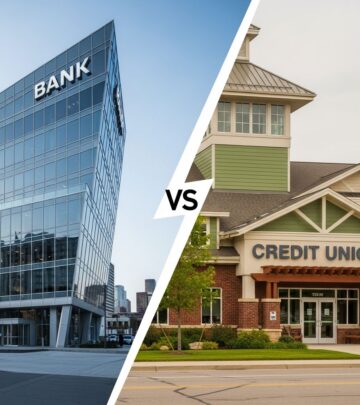
Credit Union vs Bank Mortgages
Discover key differences in rates, fees, eligibility, and service to choose the best mortgage lender for your home purchase.

Securing a mortgage is one of the largest financial decisions most people make. With numerous lenders available, understanding the distinctions between credit unions and banks can help you select the option that aligns with your financial goals. Credit unions, as member-owned not-for-profit entities, prioritize returning value to members through competitive terms. Banks, operating as for-profit businesses, often emphasize expansive networks and diverse products. This guide examines these differences across key areas like rates, fees, eligibility, and service to empower your decision-making.
Fundamental Differences in Structure and Ownership
The core variance between credit unions and banks lies in their organizational models. Credit unions are cooperatives owned by their members, meaning profits are reinvested into better services rather than distributed to shareholders. This structure enables them to offer advantages like reduced costs on loans. Banks, conversely, are shareholder-driven corporations focused on profitability, which can influence their pricing and policies.
| Aspect | Credit Union | Bank |
|---|---|---|
| Ownership | Member-owned, not-for-profit | Shareholder-owned, for-profit |
| Profit Focus | Member benefits | Shareholder returns |
| Loan Servicing | Often retains loans in portfolio | Frequently sells to secondary market |
These structural differences impact everything from interest pricing to customer interactions. For instance, credit unions typically service mortgages long-term, fostering ongoing relationships, while banks may transfer servicing post-origination.
Interest Rates: Where Savings Add Up Over Time
Interest rates profoundly affect total loan costs, especially over 15- or 30-year terms. A small rate differential can save thousands. Data shows credit unions consistently provide lower mortgage rates. In Q2 2025, credit unions averaged 6.74% for 30-year fixed mortgages versus 6.84% at banks, per NCUA statistics.
Credit unions achieve this through their not-for-profit status, passing operational savings directly to members. Banks, needing to meet profit margins, often set higher baselines. Factors like credit score and loan type influence final rates, but credit unions generally edge out competitors.
- Long-term impact: On a $300,000 loan, a 0.10% lower rate saves over $20,000 in interest over 30 years.
- Rate types: Both offer fixed and adjustable options, but credit unions shine on competitive fixed rates.
Fees and Closing Costs: Minimizing Upfront Expenses
Mortgage fees, encompassing origination, appraisal, and closing costs, typically range from 2% to 5% of the loan amount. Credit unions minimize these by waiving or reducing charges, aligning with their member-centric model. Banks, with higher overheads, impose steeper fees to bolster revenues.
Common fees include:
- Origination fees: Often lower or absent at credit unions.
- Appraisal and title fees: Negotiable or bundled favorably.
- Underwriting costs: Streamlined processes cut expenses.
Shoppers report closing costs 10-20% lower with credit unions, enhancing affordability for first-time buyers.
Eligibility and Approval: Flexibility Meets Standards
Banks enforce stringent criteria, often demanding FICO scores above 660 for conventional loans. Credit unions adopt holistic reviews, accommodating lower scores, irregular income, or smaller down payments if membership exists.
| Criteria | Credit Union | Bank |
|---|---|---|
| Credit Score Minimum | More flexible (e.g., 620+) | Stricter (e.g., 660+) |
| Income Verification | Considers full picture | Standardized metrics |
| Membership Required | Yes, but easy to join | No |
Membership, usually via a small deposit or local tie, unlocks these benefits. Existing members face smoother approvals.
Loan Products and Variety: Options for Every Borrower
Banks boast extensive portfolios, including jumbo loans, FHA, VA, and specialized programs. Credit unions focus on core offerings like fixed-rate and portfolio loans but may lack niche products.
- Credit unions excel in jumbo loans with competitive APRs due to narrower margins.
- Banks provide broader access to government-backed loans.
Customer Service and Accessibility: Personalized vs. Scalable
Credit unions deliver tailored service through local decision-making and fewer branches, ideal for relationship banking. Banks offer vast branch/ATM networks and robust online platforms, suiting tech-savvy or mobile borrowers.
Drawbacks: Credit unions may have limited hours or digital tools; banks can feel impersonal amid high volumes.
Application Process: Similar Yet Distinct
Both involve submitting documents (W-2s, tax returns), underwriting, and closing. Credit unions process faster due to localized underwriting, often closing in 30-45 days versus banks’ 45-60.
- Gather financial docs.
- Pre-qualify online/in-branch.
- Underwriting review.
- Lock rate and close.
Pros and Cons: Balanced Comparison
Credit Union Advantages
- Lower rates and fees save money long-term.
- Flexible eligibility aids diverse borrowers.
- Personalized, community-focused service.
- Retained servicing ensures consistency.
Credit Union Drawbacks
- Membership prerequisite.
- Fewer branches and digital features.
- Limited exotic loan types.
Bank Advantages
- Extensive branch/online access.
- Wide loan variety.
- No membership needed.
Bank Drawbacks
- Higher costs erode savings.
- Rigid approval standards.
- Potential servicing transfers disrupt continuity.
Who Should Choose What? Scenarios and Tips
Opt for credit unions if: You prioritize savings, have imperfect credit, value personal touch, or seek jumbo loans.
Choose banks if: You need diverse products, frequent travel, advanced digital tools, or quick national access.
Hybrid approach: Join a credit union for rates, use bank for extras. Always compare multiple quotes; rates fluctuate daily.
Frequently Asked Questions
Do credit unions have lower mortgage rates than banks?
Yes, on average. Q2 2025 data: 6.74% vs. 6.84% for 30-year fixed.
Can anyone join a credit union?
Most have open charters via donation or association; check eligibility.
Are bank mortgages easier to get?
No, credit unions often approve more flexibly for members.
What about online banks or national lenders?
They blend bank scale with competitive rates but lack credit union personalization.
How do closing costs differ?
Credit unions: 2-4% typically; banks: 3-5% or more.
Steps to Secure Your Ideal Mortgage
1. Check credit report and score.
2. Join viable credit unions.
3. Get pre-approved from 3+ lenders.
4. Compare APRs, not just rates.
5. Review total costs and terms.
By weighing these factors, you position yourself for optimal financing. Credit unions often lead for cost-conscious buyers, while banks suit those needing breadth.
References
- Credit Union vs. Bank Mortgage: What’s the Difference? — Experian. 2025. https://www.experian.com/blogs/ask-experian/credit-union-vs-bank-mortgage/
- Credit union vs. bank mortgage: Which is best for you? — Fortune. 2025. https://fortune.com/article/credit-union-vs-bank-mortgage/
- Should you get a mortgage from a credit union or a bank — MIDFLORIDA Credit Union. 2025. https://www.midflorida.com/resources/insights-and-blogs/insights/mortgage/should-you-get-a-mortgage-from-a-credit-union-or-a-bank
- Credit Union vs. Bank Mortgages: What’s the Difference? — Credit Union of America. 2025. https://www.cuofamerica.com/News/Credit-Union-vs-Bank-Mortgages-What-s-the-Differen
- Credit Union Vs. Bank Mortgage: How To Choose — Bankrate. 2025-07-01. https://www.bankrate.com/mortgages/get-mortgage-from-credit-union/
- Credit Union Mortgage vs. Bank Mortgage: Which Is Better? — SoFi. 2025. https://www.sofi.com/learn/content/credit-union-vs-bank-mortgage/
Similar Articles








Read full bio of Sneha Tete