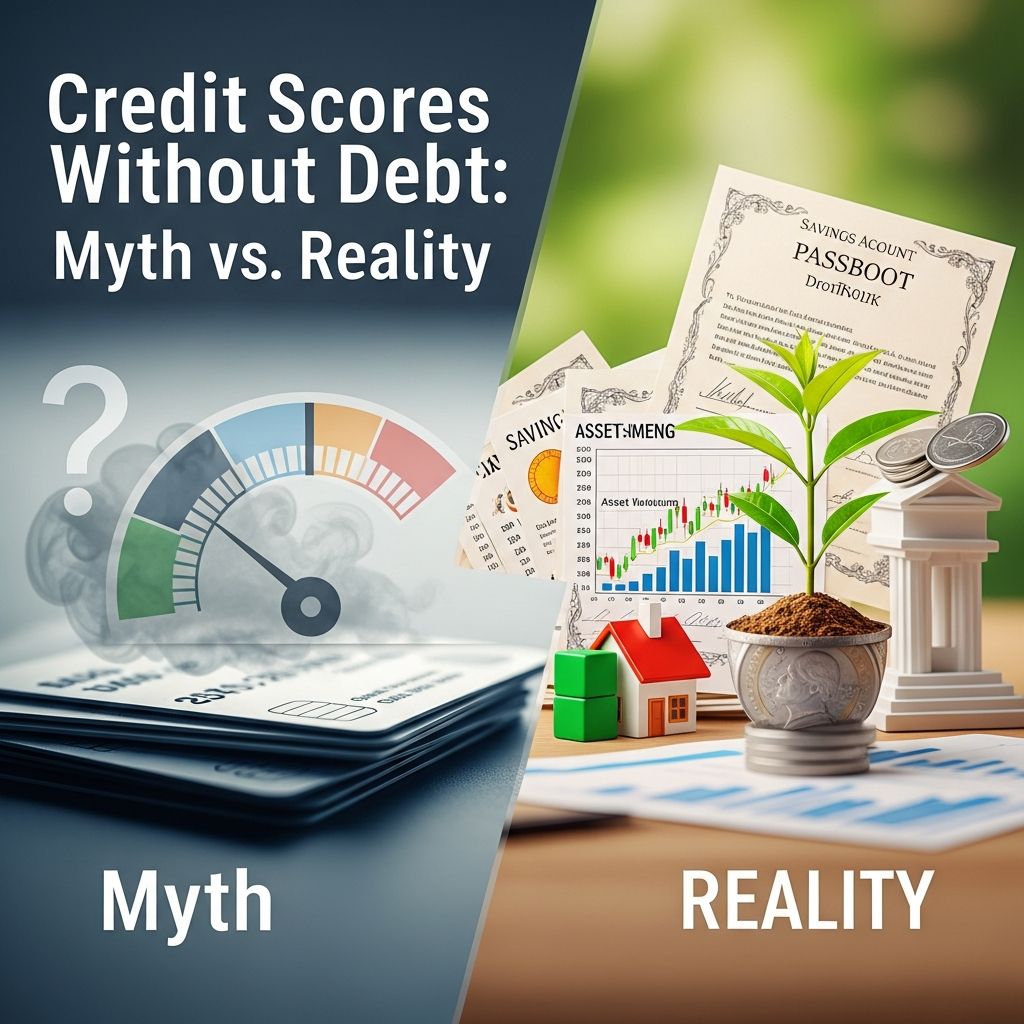
Credit Scores Without Debt: Myth vs. Reality
Discover how to maintain excellent credit while staying completely debt-free.
Understanding the Debt-Credit Score Connection
One of the most pervasive misconceptions in personal finance is that carrying debt is necessary to maintain a healthy credit score. Many individuals worry that paying off their debts entirely will damage their creditworthiness, leaving them in a worse financial position than before. This belief, while understandable, is fundamentally misguided and prevents many people from achieving their financial goals. The truth is more nuanced and ultimately empowering: you can achieve and maintain excellent credit without owing a single dollar to creditors.
Credit scoring models evaluate your creditworthiness based on multiple factors, each contributing a specific percentage to your overall score. Understanding these components is essential to dispelling the debt myth and recognizing that financial health extends far beyond simply carrying balances.
The Five Pillars of Credit Score Calculation
FICO scores, the most widely used credit scoring model, evaluate borrowers across five distinct categories that collectively determine creditworthiness:
- Payment History (35%) — Your track record of making on-time payments across all credit accounts
- Amounts Owed (30%) — The total debt you currently carry relative to your available credit limits
- Length of Credit History (15%) — How long you have maintained active credit accounts
- Credit Mix (10%) — The variety of credit types in your portfolio, including revolving and installment accounts
- New Credit Inquiries (10%) — Recent applications for new credit and newly opened accounts
While amounts owed represents 30% of your score calculation, it is only one component of the larger picture. The existence of debt alone does not determine credit quality; rather, how you manage available credit and the overall composition of your credit profile matters significantly more.
The Data Behind Debt-Free Credit Excellence
Recent research from FICO provides compelling evidence that contradicts the debt-necessity myth. In a representative sample analysis conducted in April 2023, individuals with zero current debt reported an average FICO score of 737—approximately 20 points higher than the national average of 718. This finding is particularly striking because it demonstrates that debt-free individuals consistently outperform the broader population in credit scoring.
Even more remarkably, more than 80% of people with no debt currently reported on their credit files achieved scores of 700 or above, placing them in the “good” to “excellent” range. These statistics fundamentally challenge the assumption that debt is prerequisite to creditworthiness. Instead, they suggest that responsible credit management and debt elimination are markers of financial responsibility that lenders recognize and reward.
Distinguishing Between Debt Elimination and Credit Inactivity
The critical distinction that often gets overlooked in discussions about debt and credit scores is the difference between having no debt and having no credit activity. These are entirely different scenarios with vastly different implications for your credit profile.
An individual who maintains credit card accounts, uses them regularly, and pays balances in full each month technically carries no debt while maintaining active credit history. This person benefits from positive payment records, demonstrates creditworthiness to lenders, and keeps credit accounts in good standing. Conversely, someone who avoids credit entirely—neither using credit cards nor taking out loans—may develop no credit history at all. In this scenario, the absence of credit history can be more damaging than the presence of debt.
Credit bureaus rely on account activity to maintain information on your credit report. If you completely abandon credit for an extended period, existing accounts may be closed due to inactivity, and your payment history can eventually age off your report after approximately 10 years. This creates a paradox: the most thorough approach to avoiding debt can inadvertently harm your credit score if not managed strategically.
Strategic Credit Use Without Debt Accumulation
The optimal path forward for individuals seeking both financial wellness and strong credit involves using credit deliberately while avoiding debt accumulation. This approach requires intentionality and discipline but delivers superior results across both financial metrics.
Several strategies enable you to maintain active credit accounts while keeping balances at zero:
- Use credit cards for regular purchases and pay balances in full each billing cycle
- Maintain older credit cards in active status through occasional small purchases
- Set up automatic payments to ensure you never miss due dates
- Monitor credit utilization to ensure balances remain well below credit limits
- Avoid closing credit cards, especially older accounts that contribute to your credit history length
By implementing these tactics, you generate positive payment history while maintaining a healthy credit profile. Your credit report reflects consistent on-time payments, low balances relative to available credit, and responsible account management—precisely the indicators lenders use to identify low-risk borrowers.
The Credit Utilization Factor in Debt-Free Living
Credit utilization—the ratio of your current balances to your total available credit limits—comprises approximately 30% of your FICO score calculation and represents one area where debt-free individuals can excel. When you carry no balances on credit cards, your utilization ratio is essentially zero, which is optimal from a scoring perspective.
Financial experts typically recommend maintaining utilization below 25% of your available credit, as this demonstrates responsible credit management. For debt-free individuals maintaining active credit accounts with zero balances, utilization automatically falls well within this recommended range. This advantage alone can contribute meaningfully to credit score improvements, particularly when combined with strong payment history and appropriate credit mix.
Payment History: The Cornerstone of Credit Building
While paying off debt can theoretically reduce a credit score temporarily—primarily due to changes in your amounts owed and credit mix—the effect is typically minimal and temporary. More importantly, consistent on-time payments form the foundation of credit quality, representing 35% of your score calculation. Debt-free individuals who actively use credit and pay accounts on time build an exceptionally strong payment history that far outweighs any temporary score fluctuations from debt elimination.
Research indicates that credit scores typically improve 30 to 45 days after paying off debts, as creditors and lenders report updated account information to credit bureaus. This timeline means that while you might experience minor short-term score variations, lasting improvements emerge as your accounts reflect reduced balances and responsible management patterns.
Building Credit Mix Without Debt
Credit mix—the variety of credit types you maintain—accounts for 10% of your FICO score. Lenders view borrowers who responsibly manage different credit types (revolving accounts like credit cards and installment accounts like loans) as more reliable than those with limited credit experience.
While completely debt-free individuals might not have active installment loans, they can develop strong credit mix through multiple credit cards, secured credit cards, credit-builder loans, or other credit products designed specifically for credit development. The key is demonstrating that you can manage various credit types responsibly, not necessarily that you currently carry debt across all categories.
When Paying Off Debt Might Temporarily Impact Your Score
Understanding why paying off debt might cause minor, temporary score reductions helps contextualize the overall relationship between debt elimination and credit quality. Several mechanisms can contribute to short-term score changes:
- Closed accounts reduce available credit, which can increase your utilization ratio on remaining accounts
- Reduced account diversity if you eliminate your only installment loan or credit card
- Changes in the age of your credit mix if you close older accounts
- Hard inquiries from new credit accounts opened to replace closed ones
These effects are typically modest and temporary. Within weeks to months, as your new credit management pattern establishes itself, scores generally rebound and ultimately improve, particularly if you maintain active credit accounts and continue making on-time payments.
The Long-Term Advantage of Debt-Free Credit Management
Examining the complete picture reveals that debt-free individuals who strategically maintain credit activity enjoy substantial long-term advantages. Beyond the statistical evidence showing their above-average scores, they benefit from:
- Reduced financial stress and improved overall well-being from debt elimination
- Stronger access to credit when genuinely needed at favorable interest rates
- Greater negotiating power with lenders due to demonstrated creditworthiness
- Immunity to debt-related emergencies or financial shocks
- Flexibility to pursue major financial goals without debt constraints
Addressing the Credit History Challenge
The primary genuine risk for debt-free individuals concerns maintaining sufficient credit history length. If you eliminate all debt but also eliminate all credit accounts, you risk developing no credit history that lenders can evaluate. This scenario can be rectified through strategic credit card use without debt accumulation or through credit-builder programs designed specifically for this purpose.
For individuals rebuilding credit or establishing it for the first time, secured credit cards provide an excellent pathway. These cards require a cash deposit that serves as collateral, making approval likely regardless of credit history. By using secured cards responsibly and paying balances in full, you generate positive credit history while eliminating debt accumulation risk.
Practical Implementation: Your Debt-Free Credit Strategy
Creating a personalized approach to maintaining excellent credit without debt requires attention to several key practices. First, maintain at least one primary credit card in active status, using it for regular purchases and paying the full balance monthly. Second, keep older accounts open even if you do not use them frequently, as they contribute to your credit history length. Third, monitor your credit reports annually through free services to identify any errors or inaccuracies that might affect your score. Fourth, avoid unnecessary new credit applications, which generate hard inquiries that can temporarily lower your score. Finally, automate payments to ensure you never accidentally miss due dates, as payment history remains your most important score component.
FAQ: Debt-Free Living and Credit Scores
Can I have an excellent credit score with absolutely no debt?
Yes. Research shows that individuals with no current debt average a FICO score of 737, and more than 80% achieve scores of 700 or above, which qualifies as “good” credit or better.
Will paying off my credit cards hurt my credit score?
Paying off credit card balances may cause a minor, temporary reduction in your score, but this effect typically reverses within 30-45 days as updated account information is reported to credit bureaus. The long-term impact is positive.
How can I maintain credit activity if I am completely debt-free?
Use credit cards for regular purchases and pay balances in full each month. This creates positive payment history and account activity without accumulating debt.
What happens to my credit score if I close all my credit cards?
Closing credit accounts can reduce your credit history length and available credit, potentially lowering your score. It is generally better to keep accounts open even if you do not actively use them.
Is there a minimum amount of debt I need to maintain a good credit score?
No. You do not need to carry any debt to maintain a high credit score. Responsible credit use and payment history matter far more than debt existence.
References
- Is Having No Debt Bad for My Credit Score? — Experian. https://www.experian.com/blogs/ask-experian/is-having-no-debt-bad-for-credit-score/
- Why Is My Credit Score So Low If I Have No Debt? — MoneyLion. https://www.moneylion.com/learn/why-is-my-credit-score-so-low-if-i-have-no-debt
- FICO Fact: You Can Have No Debt and a High Credit Score! — FICO. https://www.fico.com/blogs/fico-fact-you-can-have-no-debt-and-high-credit-score
- Impact to Your Credit If You Don’t Manage Your Debt Wisely — Experian. https://www.experian.com/blogs/ask-experian/what-happens-to-credit-score-if-you-dont-manage-debt-wisely/
- Why Your Credit Scores May Drop After Paying Off Debt — Equifax. https://www.equifax.com/personal/education/credit/score/articles/-/learn/why-credit-scores-may-drop-after-paying-off-debt/
- How Owing Money Can Impact Your Credit Score — myFICO. https://www.myfico.com/credit-education/credit-scores/amount-of-debt
- Understanding Debt & Credit Scores — American Medical Association. https://www.ama-assn.org/medical-residents/medical-residency-personal-finance/understanding-debt-credit-scores
Similar Articles








Read full bio of Sneha Tete