Understanding Credit Scores and FICO: Key Distinctions
Learn how FICO scores differ from other credit scoring models and why it matters.
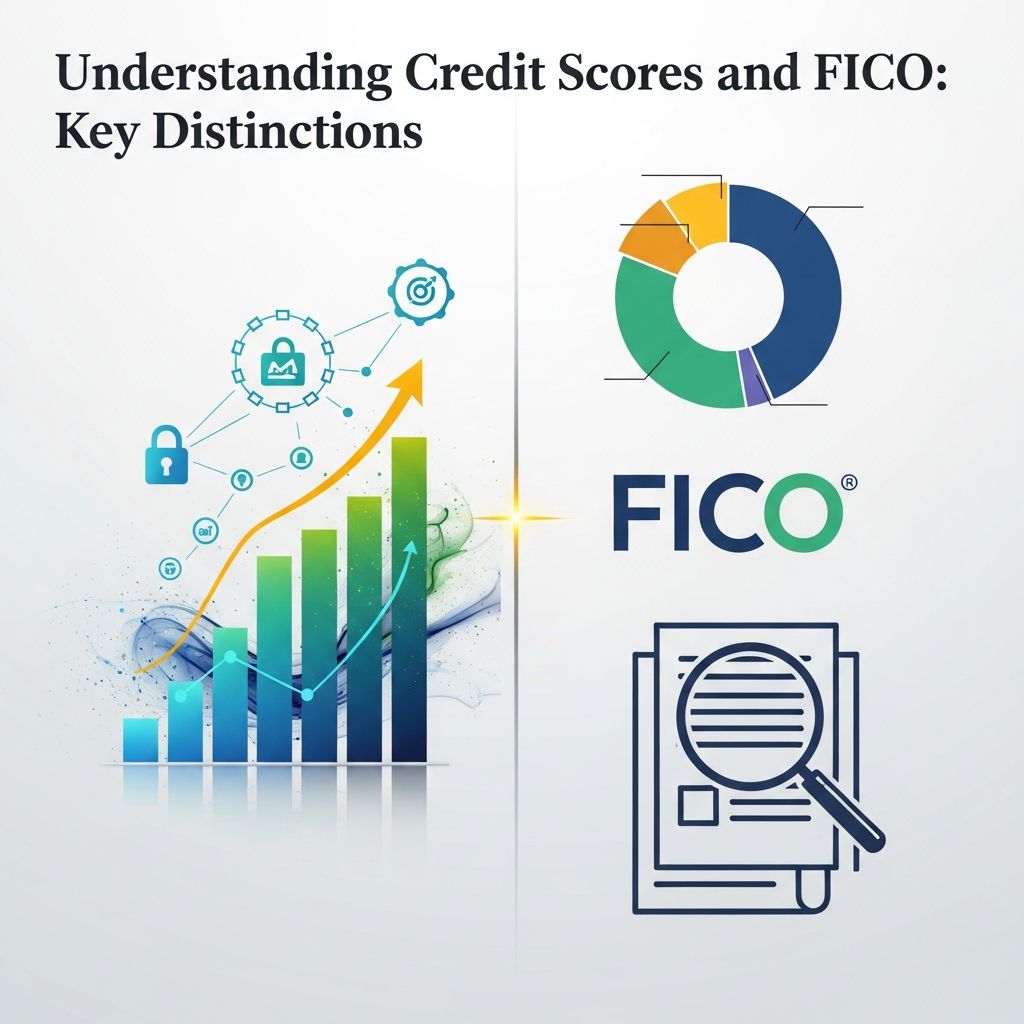
When navigating the world of personal finance, understanding your creditworthiness is essential. Two terms you’ll frequently encounter are “credit score” and “FICO score,” and while they sound similar, they represent different concepts in the lending landscape. Many consumers use these terms interchangeably, but recognizing the distinctions between them can significantly impact your financial decisions and outcomes. This guide will help you understand what separates these scoring systems and why the differences matter for your financial future.
The Fundamental Relationship Between Credit Scores and FICO Scores
At their core, credit scores and FICO scores are connected but distinct entities. A credit score is a broad category that encompasses any numerical rating used by lenders to assess your creditworthiness based on information in your credit report. These scores are calculated by various financial institutions and credit bureaus using different methodologies and algorithms.
A FICO score, by contrast, is a specific type of credit score developed by the Fair Isaac Corporation (FICO). Think of it this way: all FICO scores are credit scores, but not all credit scores are FICO scores. FICO has become the industry standard because it provides a standardized measurement that lenders have relied on for more than 25 years, with approximately 90% of top lenders using FICO scores in their lending decisions.
This distinction is crucial because it affects how potential lenders evaluate your application and what terms you receive. Understanding which scoring model is being used when you apply for credit can help you set realistic expectations about your approval odds and interest rates.
How Scoring Models Diverge in Their Approach
While credit scores and FICO scores both assess your creditworthiness, they arrive at their conclusions through different pathways. FICO uses proprietary algorithms that have been refined over decades, creating a standardized approach that makes lending decisions more consistent and predictable.
Other credit scoring models, such as VantageScore, employ different mathematical formulas to evaluate the same underlying credit information. These alternative models may weigh factors differently, consider different time periods of your financial history, or incorporate variables that FICO does not emphasize. This fundamental difference in methodology means that your FICO score and another credit score—even if based on the same credit report—can vary significantly, sometimes by up to 100 points.
The reason for these variations lies in how each model prioritizes different aspects of your credit profile. Some models place greater emphasis on recent payment behavior, while others focus more heavily on your overall credit history. These algorithmic differences are intentional, as different scoring companies believe their approach more accurately predicts lending risk.
Numerical Ranges and What They Indicate
Understanding the scoring ranges for different credit models is vital for assessing where you stand financially.
FICO Score Ranges
FICO scores operate on a standard scale that has become the benchmark for the industry:
- Exceptional: 800 and above
- Very Good: 740 to 799
- Good: 670 to 739
- Fair: 580 to 669
- Poor: 579 and below
A score in the “good” range (670-739) typically allows you to qualify for a wide variety of loans and credit products with favorable interest rates. Scores in the “very good” or “exceptional” categories generally unlock the most competitive rates and terms available.
VantageScore Ranges
VantageScore, another popular credit scoring model, uses different terminology and breakpoints:
- Superprime: 781 to 850
- Prime: 661 to 780
- Near Prime: 601 to 660
- Subprime: 300 to 600
The different terminology used by VantageScore can be confusing, but it’s important to remember that a “prime” score from VantageScore may still be considered “good” on the FICO scale. Lenders familiar with VantageScore understand their terminology, but most major lenders prioritize FICO scores for decision-making.
Industry-Specific FICO Scores
Beyond the standard FICO range of 300 to 850, FICO offers specialized scoring models for specific types of lending. Auto-focused scores and bankcard scores operate on a broader range of 250 to 900, allowing for more granular differentiation among borrowers in those specific credit categories.
The Five Factors That Shape Your Credit Profile
Both FICO scores and other credit scoring models evaluate similar components of your financial behavior, though they weight these factors differently. Understanding what goes into your score empowers you to make strategic decisions about your credit management.
Payment History: The Foundation of Your Credit
Your payment history—the record of whether you’ve paid your bills on time—carries the most weight in credit scoring. For FICO scores, payment history accounts for 35% of your score, while VantageScore weights it at 40%. This reflects a simple but profound truth: lenders want to know that you reliably meet your financial obligations. A single late payment can impact your score, though the damage diminishes over time as you rebuild your payment record.
Credit Utilization: How Much You’re Using vs. What’s Available
The second most significant factor in FICO scoring is your credit utilization ratio—the percentage of your available credit that you’re actively using. FICO weights this at 30%, while VantageScore considers it under “percentage of credit limit used” at 20%.
If you have a credit card with a $5,000 limit and carry a $1,500 balance, your utilization ratio is 30%. Generally, keeping your utilization below 30% is considered optimal for your credit score. High utilization can signal financial strain or risk to lenders, even if you’re making all your payments on time.
Length of Credit History: The Value of Longevity
The age of your credit accounts matters because it demonstrates a track record over time. FICO weights this at 15%, while VantageScore incorporates this as part of “age and type of credit” at 21%. Older accounts with positive histories are valuable to your score, which is why closing old credit cards—even unused ones—can sometimes hurt your score.
Credit Mix: Demonstrating Diverse Financial Management
Having different types of credit—such as credit cards, auto loans, mortgages, and personal loans—demonstrates that you can manage various forms of borrowing responsibly. FICO weights credit mix at 10%, making it a smaller factor but still meaningful. VantageScore also considers this within the 21% allocated to account type and age.
New Credit Inquiries: The Impact of Seeking Credit
When you apply for new credit, lenders typically conduct a “hard inquiry,” which temporarily lowers your score. FICO weights new credit at 10%, while VantageScore allocates only 5% to this factor. Multiple applications within a short period can signal financial desperation, even though inquiries for the same type of credit (like mortgage shopping) within 45 days typically count as a single inquiry.
Why Lenders Overwhelmingly Prefer FICO
The dominance of FICO in lending decisions isn’t arbitrary. FICO scores have earned their market position through decades of proven reliability. When a lender reviews a FICO score, they know exactly what they’re getting: a standardized assessment of credit risk that has been validated across millions of lending transactions.
This consistency allows lenders to make faster, more confident decisions. They can set clear thresholds for approval and interest rates because they understand how FICO scores correlate with default risk. In contrast, lenders using alternative credit scores face more uncertainty because these models haven’t been as extensively validated in real-world lending situations.
Additionally, FICO’s flexibility in evaluating borrowers’ circumstances—including consideration of extenuating factors like medical hardships—means that more Americans can access credit than might be possible under more rigid traditional bureau scoring systems. This broader approach to creditworthiness assessment has contributed to FICO’s acceptance across the lending industry.
Comparing Credit Score Models: A Side-by-Side Analysis
| Characteristic | FICO Scores | Other Credit Scores |
|---|---|---|
| Industry Standard Duration | Over 25 years | Variable; newer models may be less established |
| Lender Adoption Rate | ~90% of top lenders | Varies; typically lower |
| Standard Score Range | 300-850 | VantageScore: 300-850; varies by model |
| Payment History Weight | 35% | 40% (VantageScore) |
| Credit Utilization Weight | 30% | 20% (VantageScore) |
| Consistency | Highly standardized | Can vary significantly from FICO scores |
| Potential Score Variance | N/A (reference point) | Up to 100 points from FICO score |
| Lender Confidence Level | High; established track record | Lower; less historical validation |
The Real-World Impact of Score Differences
Understanding that your FICO score might differ from your VantageScore or other credit scores isn’t merely academic—it has tangible financial consequences. A score that’s 50 or 100 points lower could be the difference between qualifying for a loan at 4.5% interest versus 6.0% interest. Over the life of a 30-year mortgage on a $300,000 home, that 1.5% difference translates to roughly $150,000 in additional interest payments.
Similarly, a lower score might result in denial of your credit application entirely, or approval with less favorable terms like higher interest rates or higher annual fees. This is why many financial experts recommend focusing on your FICO score as the primary metric, since that’s what the majority of lenders will use in their decision-making process.
Building and Maintaining a Strong Credit Profile
Regardless of which scoring model is used, the strategies for improving your creditworthiness are consistent:
- Pay all bills on time: Even one late payment can significantly impact your score, so set up automatic payments or reminders
- Reduce credit utilization: Pay down existing balances or request credit limit increases to lower your utilization ratio
- Maintain account age: Keep older accounts open even if you’re not actively using them
- Diversify credit types: If possible, maintain a healthy mix of revolving and installment credit
- Limit new credit applications: Only apply for credit when necessary to minimize hard inquiries
- Monitor your credit reports: Check for errors and dispute any inaccuracies with the credit bureaus
Accessing Your Credit Information
Modern technology has made it easier than ever to monitor your credit scores. Many financial institutions now offer free access to FICO scores as a benefit of banking or credit card membership. Additionally, services like myFICO provide detailed FICO score information and guidance on how your specific behaviors affect your score.
For a comprehensive view, you can access your free credit reports annually from each of the three major credit bureaus—Equifax, Experian, and TransUnion—through AnnualCreditReport.com. While these reports don’t include your FICO score, they do contain the underlying information used to calculate it, allowing you to identify potential errors or areas for improvement.
Making Informed Financial Decisions
The distinction between FICO scores and other credit scores ultimately matters because it affects your financial opportunities. When you’re preparing to apply for a mortgage, auto loan, or other significant credit product, understanding that lenders will likely use your FICO score allows you to better predict your approval likelihood and expected terms.
Rather than being discouraged by seeing multiple different scores across various platforms, use this knowledge to focus your efforts on behaviors that improve your creditworthiness across all models. Paying bills on time, managing your credit utilization, and maintaining a diverse credit portfolio will strengthen your FICO score, which remains the most important number for most lending decisions.
Frequently Asked Questions
Is a FICO score more important than other credit scores?
While FICO scores are not inherently more important than other credit scores, they are more widely used by lenders. Since approximately 90% of lending decisions rely on FICO scores, focusing on your FICO score should be your priority.
Can my FICO score and credit score be very different?
Yes. Different scoring models use different algorithms and weighting schemes, which can result in scores that differ by up to 100 points. This variance underscores the importance of understanding which score a specific lender will use.
What’s considered a good FICO score?
A FICO score in the “good” range is typically 670 to 739, though the specific standards vary by lender. Scores in the “very good” (740-799) or “exceptional” (800+) ranges generally provide access to the best interest rates and terms.
How often do credit scores change?
Credit scores can change frequently as new information is added to your credit report. Your payment behavior, credit utilization, and new credit applications all affect your score immediately or within a billing cycle.
Should I use a different strategy to improve my FICO score versus other credit scores?
The fundamental strategies are the same across all scoring models, though they may weight factors differently. Focus on consistent on-time payments and low credit utilization, and you’ll see improvements across all scoring systems.
References
- FICO Scores vs. Credit Scores: What’s the Difference? — Credit Karma. 2024. https://www.creditkarma.com/credit/i/fico-score-vs-credit-score
- FICO® Score vs. Credit Score: What’s the Difference? — Capital One. 2024. https://www.capitalone.com/learn-grow/money-management/fico-score-vs-credit-score/
- How are FICO Scores Different than Credit Scores? — myFICO. 2024. https://www.myfico.com/credit-education/fico-scores-vs-credit-scores
- FICO® Score vs. Credit Score. What is a FICO Score? — Empeople. 2024. https://empeople.com/learn/empeople-insights/fico-score-vs-credit-score/
- FICO Score vs. Credit Score: What’s the Difference? — Citi. 2024. https://www.citi.com/credit-cards/understanding-credit-cards/fico-score-vs-credit-score
- How Credit / FICO Scores Work — Truliant Federal Credit Union. 2024. https://www.truliantfcu.org/learn/personal-finance/difference-between-credit-score-and-fico-score
Similar Articles








Read full bio of Sneha Tete