Credit Scores For Student Loans: Essential Guide For 2025
Unlock the credit score essentials for securing federal and private student loans without surprises.
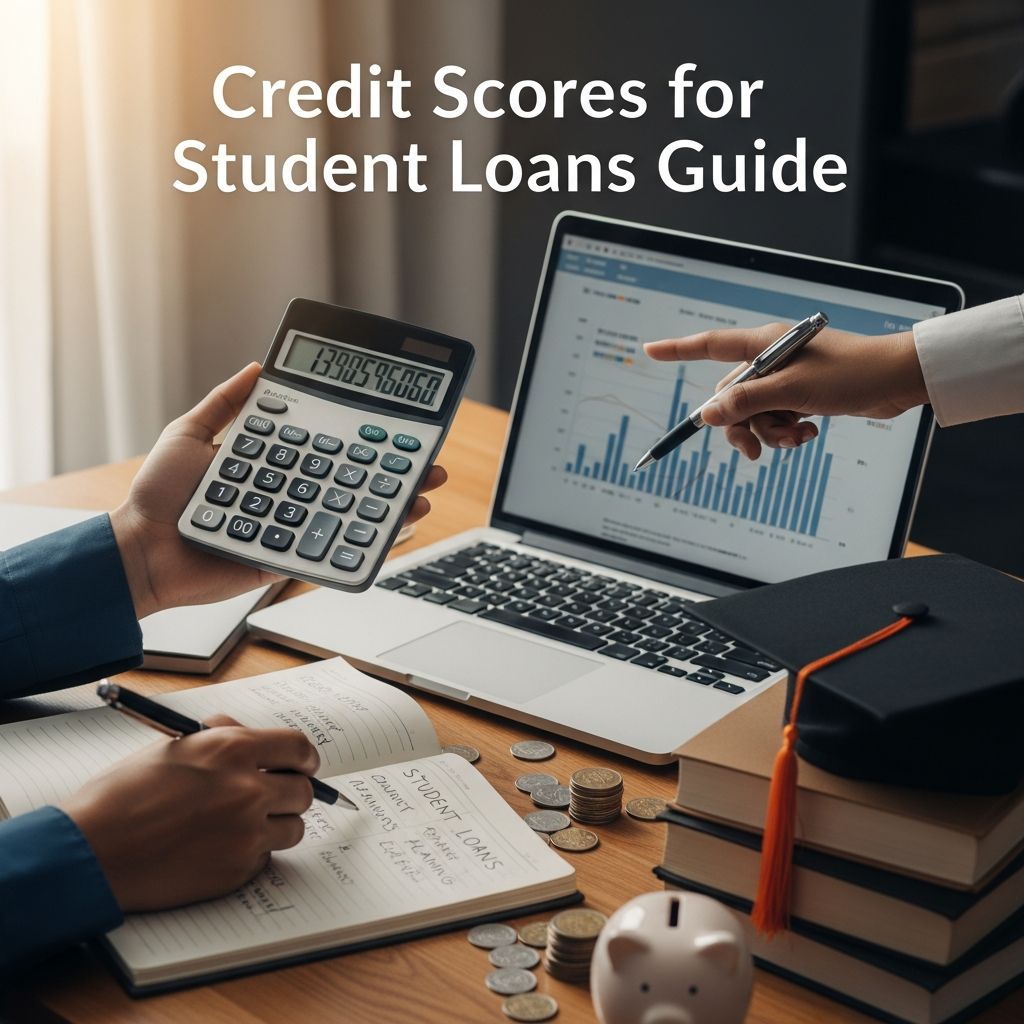
Securing funding for higher education often hinges on understanding credit requirements across loan types. Federal loans typically bypass strict credit checks, while private options demand solid scores for better terms. This guide breaks down the essentials, helping you navigate approvals, rates, and strategies effectively.
Understanding Credit Scores in the Loan Landscape
Credit scores serve as financial health indicators, ranging from 300 to 850 on models like FICO. Scores above 670 signal good standing, influencing loan approvals and interest costs significantly. For student borrowers, often young with limited history, grasping these metrics proves crucial before applying.
Federal loans prioritize need and enrollment over scores, offering accessibility. Private lenders, however, scrutinize scores to assess risk, potentially requiring cosigners for those below key thresholds. Building awareness here empowers informed decisions amid rising tuition pressures.
Federal Student Loans: Minimal Credit Barriers
Direct Subsidized and Unsubsidized loans stand out for their leniency—no minimum score needed, no credit pull required. Eligibility rests on FAFSA submission, financial aid status, and enrollment in qualified programs. Subsidized variants even cover interest during school for need-based recipients, easing early burdens.
Interest rates remain fixed annually: recent undergraduate rates at 2.75%, graduate at 4.30%, with a modest origination fee of 1.062%. These terms apply uniformly, regardless of credit profile, making them ideal starters for most students.
PLUS Loans: Credit Check with Exceptions
Parent PLUS and Grad PLUS loans introduce a credit evaluation, but not via scores alone. Lenders flag “adverse history” like recent delinquencies over $2,085, defaults, bankruptcies, foreclosures, or similar within set periods. Absent these, approval follows irrespective of score.
Options exist for flagged applicants: add an endorser (cosigner) or document extenuating circumstances. These loans carry higher rates but offer larger sums for remaining gaps post other aid.
Private Student Loans: Score-Driven Decisions
Private loans fill shortfalls after federal limits, yet demand creditworthiness. Lenders review scores, income, and debt ratios. A FICO score of 670+ often secures solo approval; below that, cosigners become essential.
| Credit Range | FICO Score | Typical Private Loan Impact |
|---|---|---|
| Poor | 300-579 | High rates, cosigner likely required |
| Fair | 580-669 | Possible approval with cosigner, moderate rates |
| Good | 670-739 | Solo approval feasible, competitive rates |
| Very Good | 740-799 | Better terms, lower rates |
| Excellent | 800-850 | Best rates, highest limits |
Higher scores unlock lower rates—potentially saving thousands over repayment—and flexible terms like extended periods. Lenders vary; some demand 700+ sans cosigner.
Building and Checking Your Credit Profile
Students with thin files face hurdles. Start by obtaining free weekly reports from AnnualCreditReport.com, then scores via banks or services like myFICO. Monitor for errors and dispute inaccuracies promptly.
- Pay bills on time—35% of FICO weight.
- Keep utilization under 30%.
- Avoid new inquiries pre-application.
- Secure a secured card for history building.
Consistent habits elevate scores over months, aiding not just loans but lifelong finance.
Cosigners: Boosting Approval Odds
A creditworthy cosigner—typically with 670+ score—assumes equal liability, reassuring lenders. This route accesses larger amounts, reduced rates, and solo-ineligible products. Post-graduation release clauses let primary borrowers assume full control after milestones like 12-24 on-time payments.
Choose cosigners wisely; defaults harm both profiles. About 90% of private loans involve cosigners initially, underscoring their prevalence.
Loan Impacts on Your Credit Health
Once disbursed, all loans report to bureaus, affecting payment history (35% FICO), utilization, and mix. Timely payments build positive history; delinquencies tank scores. Federal servicers mandate reporting, ensuring transparency.
Hard inquiries from private apps ding scores temporarily (5-10 points), fading in 12 months. Manage by prequalifying where possible—soft pulls preserve scores.
Strategies to Maximize Loan Success
Beyond credit, explore alternatives first: scholarships, grants, work-study. For loans:
- Compare multiple private offers via platforms assessing without hard pulls.
- Demonstrate income via part-time jobs.
- Target lenders flexible on non-score factors.
Federal caps apply per year/program; exhaust before privates. Income-driven plans cap federal payments at 10-20% discretionary income.
Common Pitfalls and Disqualifiers
Avoid these red flags:
- Prior student loan defaults.
- Academic progress shortfalls.
- Drug convictions impacting aid.
- Selective Service non-registration (males).
- Grant refund debts.
Bankruptcy filings or high debt-to-income ratios hinder privates. Recovery involves rehabilitation programs for federal defaults.
Frequently Asked Questions
Do all student loans check credit?
No—federal Direct Subsidized/Unsubsidized skip checks; PLUS and privates do not.
What’s a good score for private student loans?
670+ for standalone approval; 740+ yields prime rates.
Can I get a loan with no credit history?
Yes, via federal loans or private with cosigner.
How do loans affect my credit score?
Positively with on-time payments; new accounts may dip scores initially.
Are cosigners always needed for bad credit?
Often for privates, but federal options exclude this need.
Long-Term Financial Planning
Post-graduation, prioritize repayment to safeguard credit. Federal forgiveness like PSLF aids public servants; privates lack such perks. Budgeting tools and apps track progress, while refinancing later—post-score improvement—lowers rates.
Average borrowers carry $30,000+ debt; strong credit mitigates costs via refinancing at 4-6% vs. initial 10%+. Invest early in habits yielding enduring benefits.
References
- What Credit Score Do You Need To Get a Student Loan? — myFICO. 2023. https://www.myfico.com/credit-education/blog/credit-score-for-student-loans
- What Credit Score Do You Need for a Private Student Loan? — Ascent Funding. 2024. https://www.ascentfunding.com/blog/what-credit-score-is-needed-for-student-loan/
- How Your Credit Score Affects Your Student Loan — StudentChoice.org. 2023. https://www.studentchoice.org/how-your-credit-score-affects-your-student-loan/
- Private Student Loan Credit Score – What You Need — Stratus Financial. 2024. https://stratus.finance/private-student-loan-credit-score-what-you-need/
- Qualifying for Student Loans With Bad Credit — Citizens Bank. 2023. https://www.citizensbank.com/learning/qualifying-for-student-loans-with-bad-credit.aspx
- Basic Eligibility Requirements for Federal Student Aid — Federal Student Aid (U.S. Department of Education). 2026-02-01. https://studentaid.gov/understand-aid/eligibility/requirements
Similar Articles








Read full bio of Sneha Tete