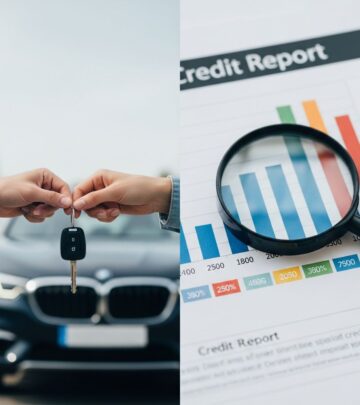
Credit Scores for Car Loans
Discover which credit scores lenders check for auto financing and how to secure the best rates with strong credit.

Your credit score plays a pivotal role when applying for a car loan, influencing approval chances and interest rates. Lenders evaluate various scoring models to assess risk, with higher scores unlocking better terms.
Understanding Credit Scoring Models in Auto Lending
Lenders rely on established credit scoring systems to predict repayment ability. The two primary models are FICO and VantageScore, each with versions tailored for automotive financing.
FICO scores, ranging from 300 to 850, dominate the industry. A score of 661 or higher qualifies as prime, improving loan prospects. VantageScore, also 300-850, considers 661+ as prime, though some lenders prefer FICO’s precision for vehicles.
Auto-specific variants like FICO Auto Score (250-900) weigh factors such as auto payment history more heavily, providing lenders a focused risk assessment.
- FICO Score 8/9: Most common at dealerships for new loans.
- VantageScore 3.0/4.0: Used for many leases and some financing.
- FICO Auto Score: Emphasizes vehicle-related credit behavior.
Credit Tiers and Their Loan Implications
Credit scores segment borrowers into tiers, each linked to distinct financing outcomes. Recent data highlights distribution and rate differences.
| Credit Tier | Score Range | % of New Car Loans | % of Used Car Loans |
|---|---|---|---|
| Super Prime | 781-850 | 46.68% | 23.30% |
| Prime | 661-780 | 35.81% | 36.23% |
| Nonprime | 601-660 | 11.24% | 18.82% |
| Subprime | 501-600 | 5.78% | 18.72% |
| Deep Subprime | 300-500 | 0.48% | 2.93% |
| Source: Experian State of the Automotive Finance Market, Q3 2025 | |||
About 70% of financed vehicles go to prime or super prime borrowers (661+), underscoring lender preference for lower risk.
Interest Rate Differences by Credit Tier
Score tiers directly affect average APRs, with prime borrowers enjoying rates under 10% while subprime face double digits.
| Credit Tier | New Car APR | Used Car APR |
|---|---|---|
| Super Prime (781-850) | 4.88% | 7.43% |
| Prime (661-780) | 6.51% | 9.65% |
| Nonprime (601-660) | 9.77% | 14.11% |
| Subprime (501-600) | 13.34% | 19.00% |
| Deep Subprime (300-500) | 15.85% | 21.60% |
| Source: Experian State of the Automotive Finance Market, Q3 2025 | ||
For a $20,000 five-year used car loan, a prime borrower pays ~$419 monthly and $5,138 total interest, versus $518 monthly and $11,063 interest for subprime— a $5,925 difference.
No Universal Minimum Score Exists
No strict minimum credit score mandates car ownership via financing; lenders set internal thresholds. Traditional loans favor 661+, but subprime options exist for lower scores at higher costs.
Even deep subprime (300-500) secures ~2% of loans, though with steep rates and scrutiny on income or down payments. Building credit before applying often yields superior outcomes.
Factors Beyond Scores in Approvals
While scores are central, lenders review full credit reports, debt-to-income ratio, employment stability, and down payment size.
- Payment History: 35% of FICO; late payments harm auto-specific scores.
- Amounts Owed: High utilization signals risk.
- Length of History: Longer profiles build trust.
- New Credit: Multiple inquiries can drop scores temporarily.
- Credit Mix: Auto loans diversify positively if managed well.
Stable income and reserves bolster applications, especially for nonprime borrowers.
Steps to Check Your Auto-Relevant Score
Free weekly reports from AnnualCreditReport.com reveal FICO/VantageScore data. Services like Experian provide VantageScore; others offer FICO 8.
- Review reports for errors and dispute inaccuracies.
- Obtain your score from credit bureaus or banks.
- Ask lenders pre-application about their model (e.g., FICO Auto Score).
Dealerships pull scores upon application; soft inquiries won’t impact your score.
Strategies to Improve Credit Before Financing
Elevating your score enhances terms. Prime range (661+) typically halves rates versus subprime.
- Pay bills on time—most influential factor.
- Reduce credit card balances below 30% utilization.
- Avoid new applications to limit inquiries.
- Dispute report errors promptly.
- Consider secured cards or credit-builder loans if starting low.
Gains appear in 1-3 months; wait 6+ for optimal impact.
New vs. Used Car Financing Dynamics
New car loans favor higher scores (average ~730), with super prime dominating 46%. Used loans accommodate broader ranges, subprime at 18.72% due to lower amounts and dealer flexibility.
Leases often require 661+ for VantageScore 4.0, mirroring prime standards.
Impact of Multiple Credit Pulls
Shopping rates triggers hard inquiries, dropping scores 5-10 points temporarily. Group auto inquiries within 14-45 days (model-dependent) to count as one.
Pre-qualify with soft pulls from banks to compare without harm.
Alternative Financing for Low Scores
Subprime lenders, credit unions, or buy-here-pay-here lots serve scores under 600. Expect 15-20%+ APRs, larger down payments (10-20%), and shorter terms.
Cosigners with strong credit can bridge gaps but share liability.
Long-Term Cost of Poor Credit
Beyond rates, low scores raise insurance premiums in many states and limit dealer incentives. Lifetime extra interest on multiple loans compounds thousands.
Frequently Asked Questions
What credit score do I need for a car loan?
No minimum, but 661+ (prime) secures best rates; subprime options exist for lower.
Do car loans use FICO or VantageScore?
Both, plus FICO Auto Score; FICO 8/9 most common at dealers.
Can I get a car loan with bad credit?
Yes, via subprime lenders, but at higher rates (15%+).
How does credit score affect car loan rates?
Higher scores mean lower APRs; prime ~6-9%, subprime 13-21%.
What’s a good credit score for an auto loan?
661+ for prime terms; 781+ super prime for lowest rates.
References
- What Is a Good Credit Score for an Auto Loan? — Experian. 2025. https://www.experian.com/blogs/ask-experian/what-is-a-good-credit-score-for-an-auto-loan/
- What Credit Score Do You Need To Buy A Car? — Bankrate. 2025. https://www.bankrate.com/loans/auto-loans/what-credit-score-do-you-need-to-buy-a-car/
- What Minimum Credit Score Do You Need to Buy a Car? — NerdWallet. 2025. https://www.nerdwallet.com/finance/learn/credit-score-needed-to-buy-car
- What’s the minimum credit score to get a car loan? — Santander Consumer USA. 2025. https://santanderconsumerusa.com/blog/whats-the-minimum-credit-score-to-get-a-car-loan
- Credit Score Needed to Buy a Car — Chase. 2025. https://www.chase.com/personal/credit-cards/education/credit-score/credit-score-needed-to-buy-a-car
- What Credit Score Is Needed to Buy a Car? — Navy Federal Credit Union. 2025. https://www.navyfederal.org/makingcents/credit-debt/credit-score-to-buy-a-car.html
Similar Articles








Read full bio of Sneha Tete