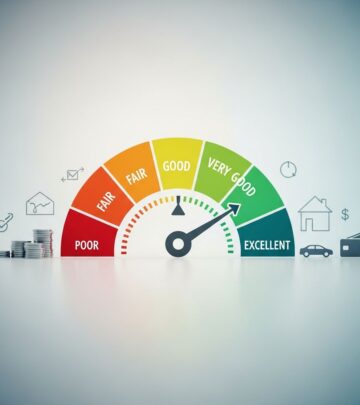
Understanding Credit Score Tiers and Financial Impact
Decode your credit score tier and unlock better financial opportunities today
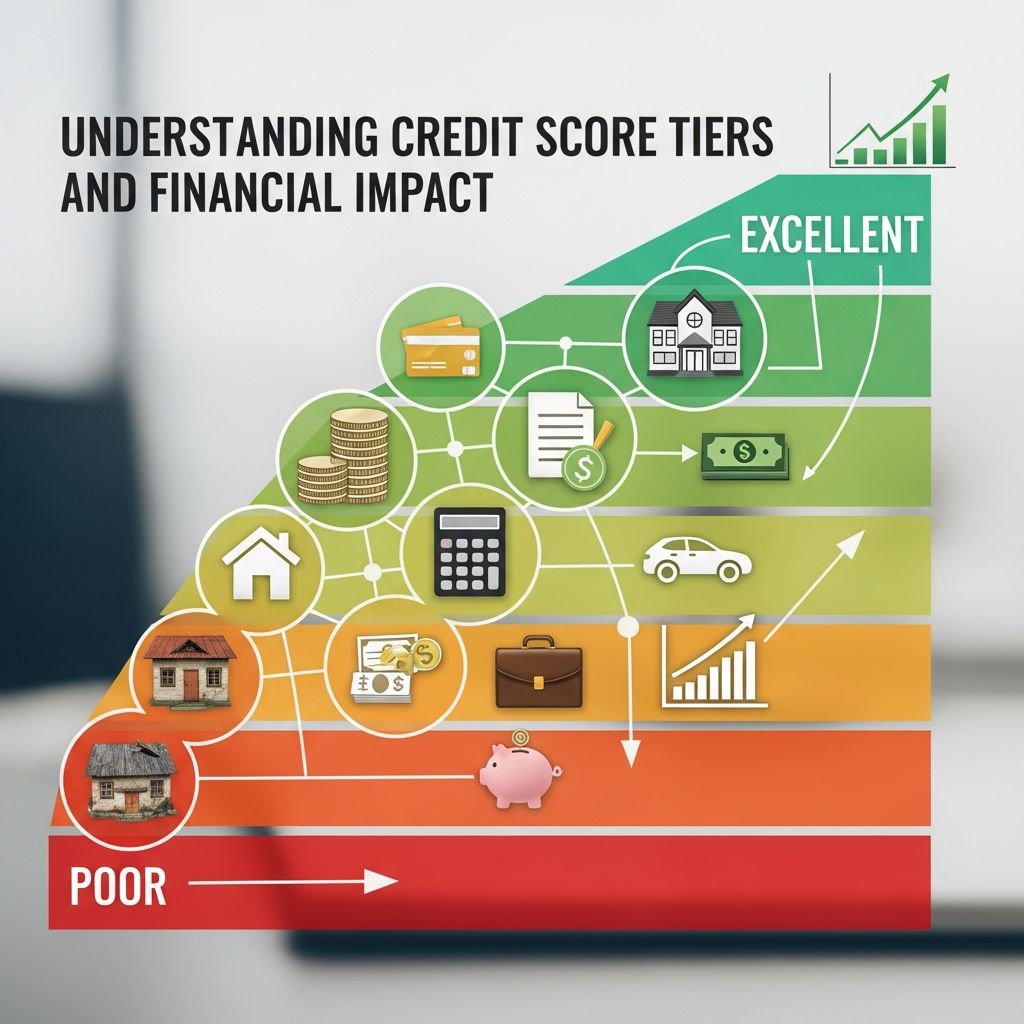
Your credit score is far more than a three-digit number—it represents your financial track record and serves as a critical gateway to your borrowing future. When you apply for a mortgage, car loan, credit card, or even a cell phone plan, lenders scrutinize this score to make decisions that directly affect your life. Understanding where your score falls within established tiers and what those tiers mean for your financial opportunities is essential for anyone seeking to build wealth and achieve major financial goals.
The Foundation: Understanding the Credit Score Scale
Credit scores operate on a standardized scale that spans from 300 to 850, creating a framework that lenders worldwide recognize and use. This numeric range isn’t arbitrary—it’s designed to capture the spectrum of creditworthiness from the most financially responsible individuals to those struggling with serious credit challenges. Within this 550-point range, scores cluster into distinct categories that tell a story about your financial habits and reliability as a borrower.
Two primary scoring systems dominate the consumer credit landscape: FICO and VantageScore. While both utilize the same 300-850 scale, they classify scores into tiers using different naming conventions and boundaries. This distinction matters because lenders may use either system, meaning your exact tier classification can vary slightly depending on which score a creditor references.
The Two Major Scoring Models: Key Differences in Classification
FICO scores, developed by Fair Isaac Corporation, remain the most widely adopted scoring model among lenders. VantageScore, created through collaboration between the three major credit bureaus (Equifax, Experian, and TransUnion), offers an alternative framework that sometimes produces different numerical results for the same individual.
These differences stem from how each model weights different credit factors. Payment history, for instance, comprises 40% of VantageScores but only 35% of FICO scores. Credit utilization ratios, account age, credit mix, and recent inquiries all factor into calculations, but the emphasis varies between systems. This variance explains why your VantageScore might differ from your FICO score by 50 points or more, even though both capture your underlying creditworthiness.
| Score Range | FICO Classification | VantageScore Classification | Lender Perception |
|---|---|---|---|
| 800+ | Exceptional | Excellent (781-850) | Lowest risk, premium terms |
| 740-799 | Very Good | Excellent (781-850) | Low risk, favorable rates |
| 670-739 | Good | Good (661-780) | Acceptable risk, standard rates |
| 580-669 | Fair | Fair (601-660) | Higher risk, elevated rates |
| Below 580 | Poor | Poor/Very Poor (300-600) | Significant risk, limited options |
Superior Creditworthiness: The Exceptional and Excellent Tiers
Individuals who achieve scores in the 740-850 range occupy the upper echelon of creditworthiness. Those with FICO scores of 800 or above, or VantageScores of 781 and higher, demonstrate exceptional financial discipline and responsibility.
Borrowers in these tiers enjoy significant advantages:
- Access to the most competitive interest rates across mortgages, auto loans, and credit cards
- Approval for larger loan amounts with more favorable repayment terms
- Lower or waived fees on financial products
- Greater negotiating power when discussing loan terms with lenders
- Easier qualification for premium credit cards with substantial rewards and benefits
These individuals are considered low-risk borrowers, meaning lenders believe they’re statistically more likely to repay their obligations on time. This perception translates directly into savings—someone with an exceptional credit score might receive a mortgage interest rate 1-2% lower than someone with fair credit, potentially saving hundreds of thousands of dollars over the life of the loan.
Solid Performance: The Good and Very Good Range
The 670-799 range represents solid creditworthiness where the majority of American consumers cluster. According to recent data, this range captures approximately one-third of the U.S. population, with these borrowers considered “prime” candidates by lenders.
Scores within this tier indicate:
- Consistent payment history with few or no delinquencies
- Responsible credit management over an extended period
- A healthy mix of credit types (installment loans, credit cards, mortgages)
- Reasonable credit utilization rates (typically below 30% of available credit)
Borrowers here find themselves in a favorable position relative to the general population. They receive approval for most credit products and generally qualify for interest rates that are reasonably competitive. While they don’t receive the premium pricing offered to those with exceptional scores, they avoid the elevated rates and restrictive terms that lower-tier borrowers face. For someone considering major purchases or refinancing, moving from the “good” tier into the “very good” range could result in substantial interest savings over time.
Challenging Circumstances: Fair Credit and the Subprime Zone
Credit scores falling between 580-669 (FICO) enter the territory where lenders classify borrowers as “subprime”—a designation indicating higher perceived risk. These individuals may have experienced past financial difficulties, including missed payments, high credit card balances, or collections accounts.
Borrowers in this range face real obstacles:
- Significantly higher interest rates across all credit products
- Fewer available credit options, particularly for mortgages and auto loans
- Requirement for larger down payments on major purchases
- Potential denial for premium credit cards and certain financial services
- Additional fees and less favorable terms on approved accounts
However, scores in this range aren’t permanent. Individuals here can take concrete steps to improve their position by establishing consistent on-time payment patterns, reducing outstanding debt balances, and correcting any errors on their credit reports.
Severe Credit Challenges: The Poor Credit Zone
Scores below 580 place borrowers in the poor credit category, where obtaining new credit becomes genuinely difficult. These individuals typically have experienced significant credit events including multiple missed payments, bankruptcies, charge-offs, or accounts in collections.
The realities of poor credit status include:
- Very few traditional lenders willing to extend credit
- Predatory lending from subprime lenders at exorbitant rates
- Frequent denial for mainstream financial products
- Difficulty renting housing, as landlords check credit scores
- Possible impacts on employment in finance-sensitive positions
- Need for secured credit cards or credit builder loans to start rebuilding
Individuals with scores this low must prioritize credit rehabilitation through debt resolution, payment plan establishment, and aggressive credit rebuilding strategies.
How Lenders Use Credit Score Tiers in Decision-Making
Credit score ranges serve a critical function in the lending industry—they enable quick, consistent, and objective evaluation of credit risk. Rather than subjectively assessing each borrower individually, lenders apply standardized criteria based on score tiers, which increases efficiency and enables fairer treatment across borrower populations.
When you apply for credit, the lender’s system automatically places your score within its tier framework and then applies pre-determined lending rules. These rules specify:
- Whether your application will be automatically approved, automatically denied, or manually reviewed
- What interest rate tier applies to your approved credit product
- What fees, if any, will apply to your account
- What credit limit you’ll receive (for credit cards and lines of credit)
- What terms and conditions govern your specific loan
This systematic approach means that your score doesn’t just influence whether you get approved—it directly determines the financial terms you’ll live with for years.
Age-Based Variations in Credit Score Distribution
Credit score patterns vary significantly across age demographics. Research shows that middle-aged consumers (ages 40-49) present a bimodal distribution, where 34% carry subprime scores below 620 (VantageScore) or 580 (FICO), while simultaneously 39% qualify for superprime status with scores above 720. This pattern suggests that by mid-career, consumers have diverged significantly into either strong credit management practices or ongoing financial struggles.
These age-based variations reflect the cumulative nature of credit history—older borrowers have more payment history to show, but also more time for negative events to occur. Building and maintaining excellent credit becomes increasingly important as consumers age and face larger financial decisions.
Practical Steps for Score Tier Improvement
Understanding your tier classification should motivate action. Consider these evidence-based strategies for tier advancement:
- Payment perfection: Establish automatic payments for all obligations to eliminate missed payment risk
- Utilization reduction: Keep credit card balances below 10-20% of available credit limits
- Account diversification: Maintain different credit types (credit cards, installment loans, mortgage) if feasible
- Error correction: Dispute inaccuracies on your credit report regularly
- Account retention: Keep older accounts open to maintain longer average account age
- Limited new applications: Space out credit applications to avoid multiple hard inquiries
Frequently Asked Questions About Credit Score Tiers
How long does it take to move from one tier to another?
Timeline varies based on starting position and actions taken. Moving from poor to fair tier typically requires 6-12 months of perfect payment history. Jumping multiple tiers requires consistent effort over 1-2+ years, depending on severity of past issues.
Do all lenders use the same tier classifications?
While most lenders use FICO or VantageScore, some create proprietary scoring models or apply different tier boundaries. However, scores near tier boundaries show relatively consistent outcomes across lenders.
Can I check my score without harming it?
Yes. Soft inquiries (when you check your own score) don’t impact your credit. Only hard inquiries from lenders when you apply for credit affect your score.
What’s the average American credit score?
According to recent data, the average FICO score in the U.S. is approximately 715, placing most Americans in the “good” tier.
How do industry-specific FICO scores differ from base scores?
Industry-specific scores like FICO Auto Scores and Bankcard Scores use a 250-900 range instead of 300-850. These focus on predicting default risk for specific loan types rather than general creditworthiness.
References
- Credit Score Ranges & What They Mean — JPMorgan Chase & Co. 2024. https://www.chase.com/personal/credit-cards/education/credit-score/credit-score-ranges-and-what-they-mean
- What are the Different Ranges of Credit Scores? — Equifax Inc. 2024. https://www.equifax.com/personal/education/credit/score/articles/-/learn/credit-score-ranges/
- Credit Score Ranges Explained: Where You Fall and How to Improve — NerdWallet. 2024. https://www.nerdwallet.com/finance/learn/credit-score-ranges-and-how-to-improve
- Your guide to credit score ranges — Intuit Credit Karma. 2024. https://www.creditkarma.com/credit/i/credit-score-ranges
- What Is a Good Credit Score? — Experian. 2024. https://www.experian.com/blogs/ask-experian/credit-education/score-basics/what-is-a-good-credit-score/
- What is a Credit Score? — myFICO. 2024. https://www.myfico.com/credit-education/credit-scores
- Understand your credit score — Consumer Financial Protection Bureau. 2024. https://www.consumerfinance.gov/consumer-tools/credit-reports-and-scores/understand-your-credit-score/
Similar Articles








Read full bio of medha deb